A handwoven cotton yoga mat usually lasts several years of daily practice and considerably longer with lighter use, provided it is washed cold, dried in shade and never stored damp. The part that wears first is not the cotton but the thin natural latex grip on the underside, which softens after many washes and can be refreshed with a thin new coat. We cannot promise a number of years, because sweat, floors, sun and washing habits vary so much, but the ranges below are honest.
Honest ranges by use
These come from how our own practice mats wear. They are expectations, not a guarantee.
| How you practise | Weave and surface | Latex grip | Plant colour |
|---|---|---|---|
| Daily, sweaty, on hard floors | Several years before it thins where hands and feet land | Softens first, with frequent washing; recoat | Softens gradually; a patina, not wear |
| Three or four times a week | Considerably longer | Softens slowly; recoat | Gradual softening over years |
| Weekly, or for meditation | Many years | Many years if washed rarely | Slow fading, mostly from light |
A cotton mat does not fail the way a foam mat does. There is no flaking, no crumbling edge, no sudden loss of grip. It thins and softens slowly, so you decide when it is done, not the mat.
Signs of wear, and what each one means
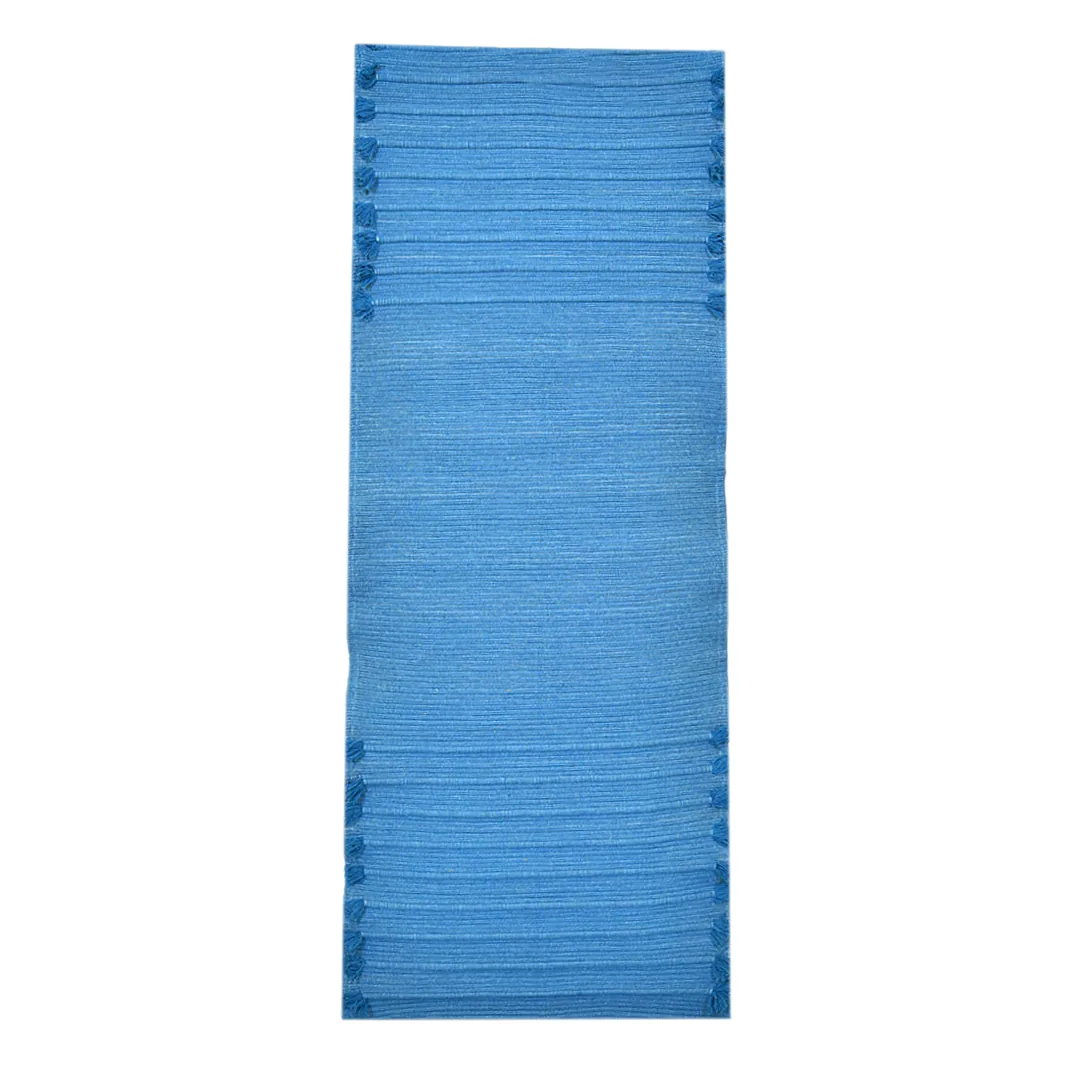
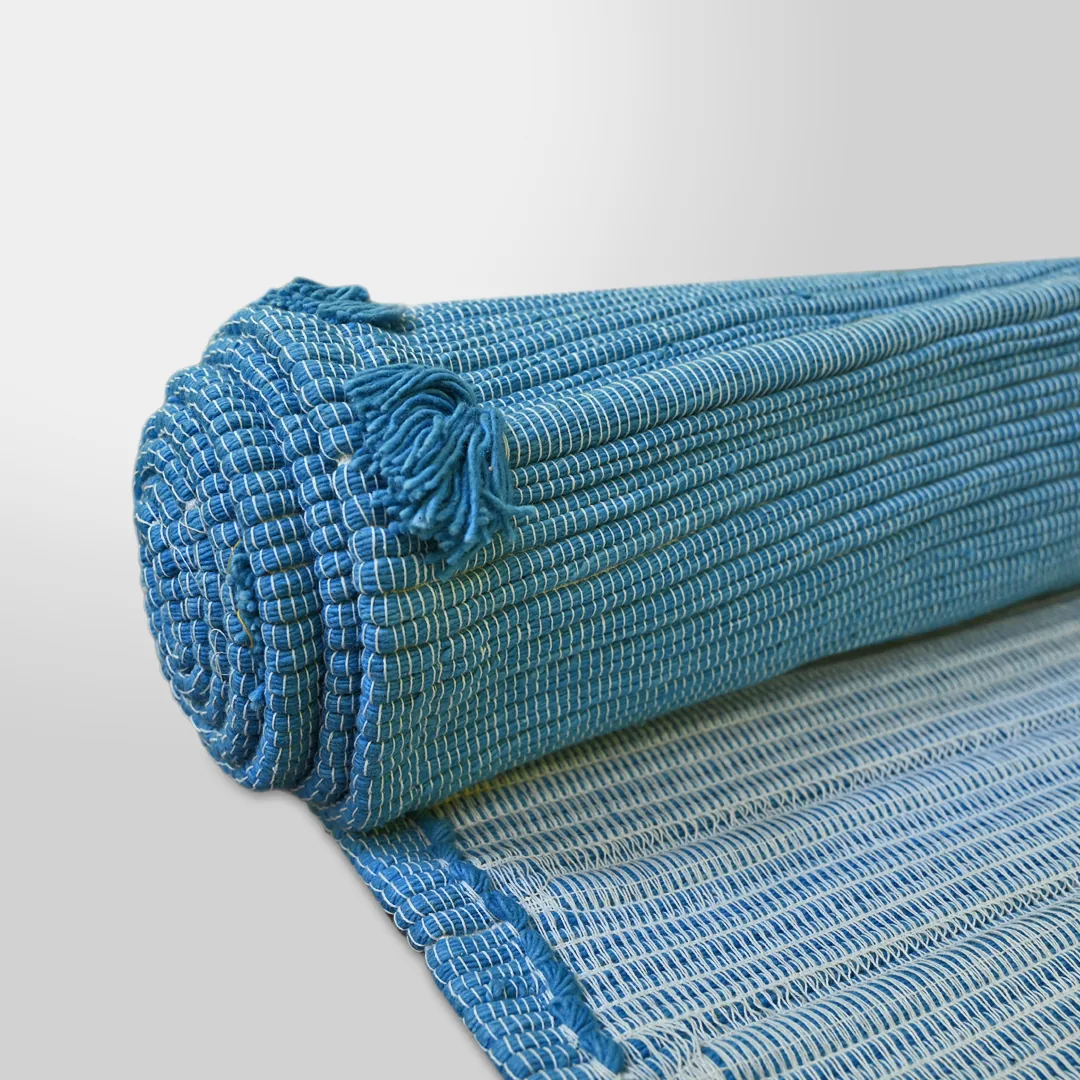
- Tassels fraying or coming loose. Cosmetic. The hand-knotted tassels on the Indico and Prithvi can be re-knotted by hand in minutes.
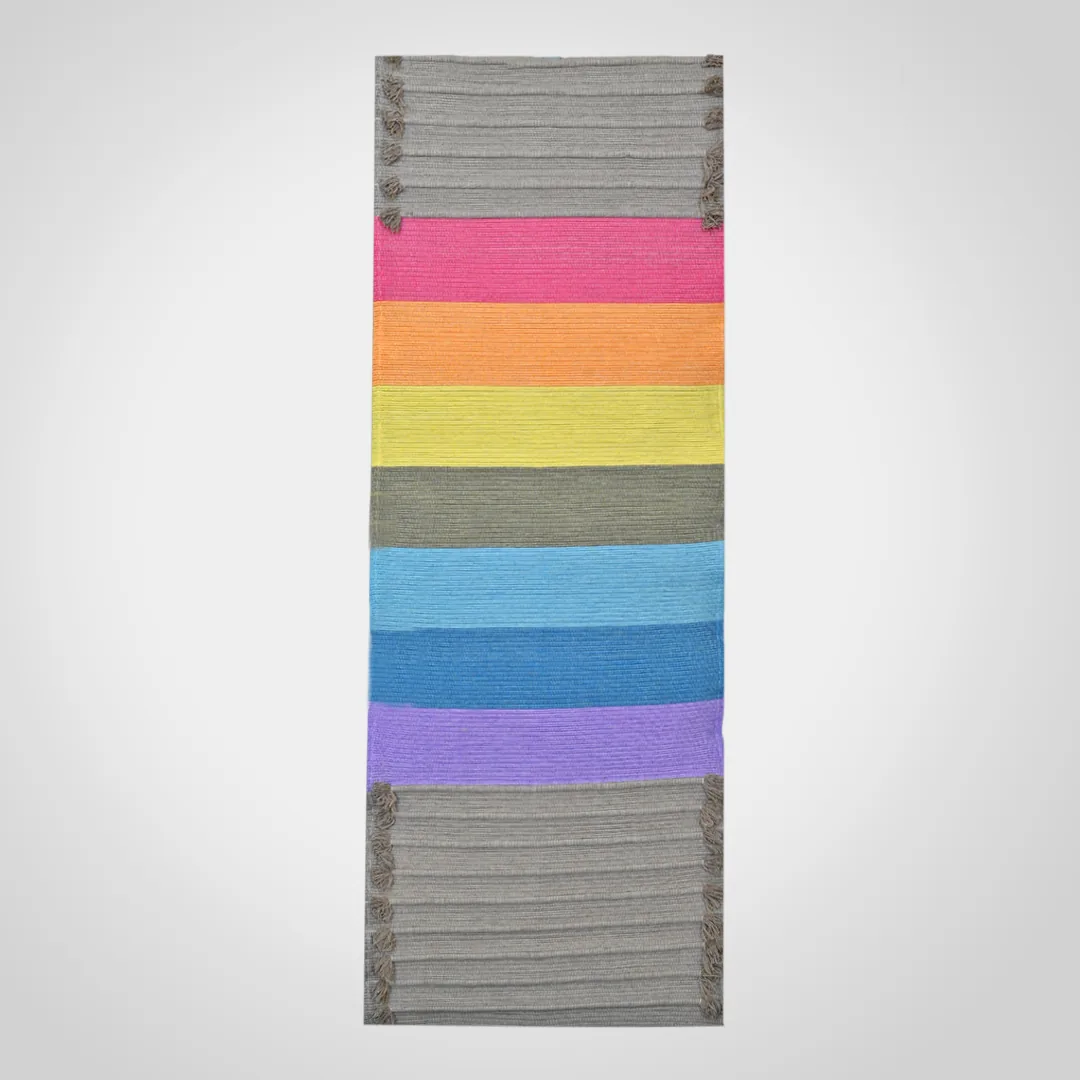
- Thinning under hands and feet. Normal after years. The six-ply chakra rugs are dense and take a long time to show it; when the ribs flatten and the mat feels papery at those spots, it is in its last stretch.
- The mat slides on tile. The latex underside has softened, usually from washing. This is the most common "my mat is worn out" we hear, and a thin fresh coat of natural latex restores the grip; see how to restore the latex grip. If you are allergic to natural latex, choose with care and write to us first.
- Colour has softened or lightened unevenly. Plant dyes do this. It is character, not damage.
- A musty smell or dark spots. Mildew from damp storage. Caught early it airs out; left for months it weakens the fibre more than years of practice would.
- Loose binding or a pulled thread at the edge. Catch it early with a needle and strong cotton thread.

Step by step: making a cotton mat last
- Air it after every practice. Unroll it over a chair for an hour before it goes away. Most mat damage starts with damp.
- Wash only when needed, and cold. Hand wash with a mild natural detergent, separately for the first few washes, and dry flat in shade. Each wash softens the latex and the colour a little.
- Keep it out of direct sun. Dry and store the mat in shade. Light is the main thing that fades plant colour.
- Sweep the floor first. Grit under the mat abrades the latex and the weave every time you move.
- Store it loosely rolled in a dry room. Not a damp cupboard, not sealed in plastic.
- Recoat the latex when it softens. A thin brushed coat of natural latex, dried well, gives the underside years more grip.
- Mend small things early. Re-knot a tassel or stitch a loose edge before a small fault runs.
What shortens a mat's life
- Machine washing a plant-dyed mat (the Diamond mats are the exception, on a delicate 30 °C cycle in a laundry bag).
- Hot water, bleach, fabric softener or a tumble dryer.
- Drying or storing in direct sun.
- Rolling it damp, or keeping it in a closed bag.
- Practising in shoes, or pets with claws.
- Dragging it across rough concrete or a terrace floor.
Repairs and the end of the road
Before you retire a mat, ask us. Loose tassels, a lifting edge and a softened grip are all mendable. Write to us through the Contact page at /page.html?p=contact with a photo and we will tell you honestly what can be done.
When a cotton mat really is finished, it is still cotton and natural latex rather than foam: it can become a door mat, a garden kneeler or a pet bed. We cover the options, and where latex and dyes complicate them, in what happens to your mat at the end of its life.
Frequently asked questions
How long does a cotton yoga mat last compared with a foam mat?
A handwoven cotton mat typically lasts several years of daily use and much longer with lighter use, wearing slowly and evenly rather than flaking or losing grip suddenly. Foam mats vary widely by quality and usually end when the surface flakes or compresses. A cotton mat thins gradually and can be mended and recoated, so you choose when it is done.
When should I replace my cotton yoga mat?
When the weave is thin and papery where your hands and feet land, or when mildew has weakened the fibre, it is time. Sliding on the floor is not a reason to replace it; that is the latex grip softening, and a thin fresh coat of natural latex restores it. Faded colour is not a reason either; plant dyes are meant to soften.
Does washing a cotton yoga mat wear it out?
Every wash softens the latex grip and the plant colour a little, so wash only when the mat needs it and air it the rest of the time. Hand wash cold with a mild natural detergent, dry flat in shade, and skip bleach, softener, heat and sun. Cared for like this, washing is a small part of a mat's wear; damp storage and sunlight do far more damage.
Can a worn cotton yoga mat be repaired?
Often, yes. Tassels can be re-knotted, a loose edge can be stitched with strong cotton thread, and a softened grip can be recoated with a thin layer of natural latex. Thinning in the weave itself cannot be reversed, but a thin mat still works for meditation or as a layer over another mat. If you are unsure, write to us through the Contact page with a photo.
If your mat has started to slide, start with the latex: read how to restore the latex grip before you think about replacing anything. And if you are choosing a mat to keep for years, the dense six-ply Prithvi is the one we weave to outlast the rest.