When a foam yoga mat wears out it is still plastic, and in most of India it goes to landfill or is burnt. When one of our mats wears out it is cotton, sambhu grass or banana fibre bound with cotton, with a thin coat of natural tree latex underneath and plant dye in the colour. We have not had our mats tested or certified as biodegradable or compostable, so we do not say they are; what we can say, layer by layer, is below.

The material decides the ending
A mat does not change its nature when you throw it away. Whatever it was made of is what you are disposing of, so the first question is the one you should ask before buying: what is this, layer by layer?
| Mat material | What it is | What is honestly known about the end |
|---|---|---|
| PVC foam | Polyvinyl chloride softened with plasticisers; flexible PVC can hold more than 85 per cent plasticiser by mass | PVC recycling schemes exist in Europe; a worn foam mat is rarely accepted anywhere in India. Landfill or burning is the usual end. |
| TPE foam | A thermoplastic elastomer, a plastic that can be remelted | Recyclable in principle; in practice it needs a collector, which is uncommon. See TPE yoga mats explained. |
| Natural rubber | Latex from the rubber tree, foamed and vulcanised | A plant product, but vulcanised rubber does not degrade in typical home or industrial composting conditions. |
| Cotton | Woven plant fibre | Mechanical recycling is particularly well developed for cotton textiles; worn cotton is also cut down for rags. |
| Grass and banana fibre | Plant stems and bark bound with cotton | Plant matter throughout, apart from the latex coat and any dye. No certification. |
Our mats, layer by layer
The fibre
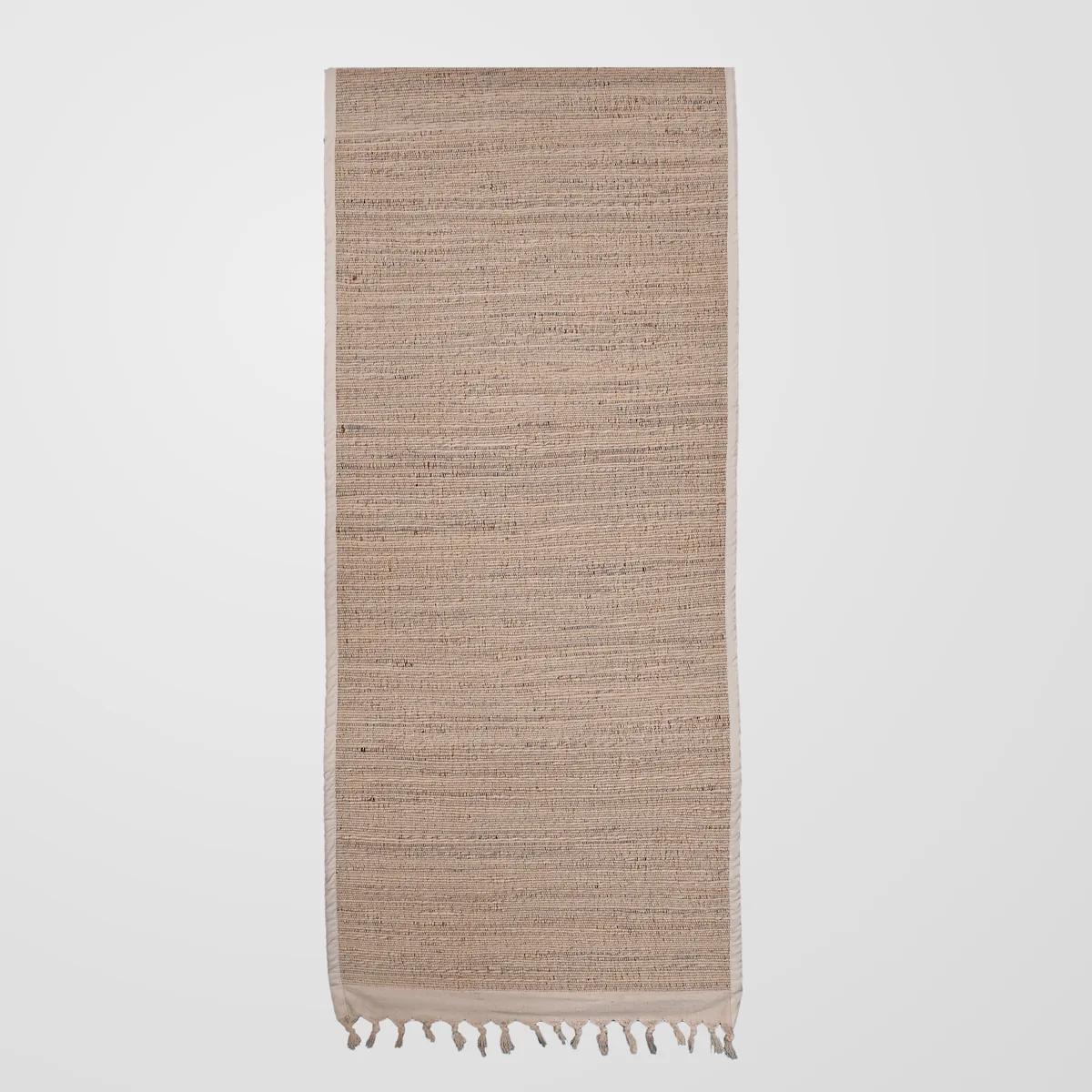
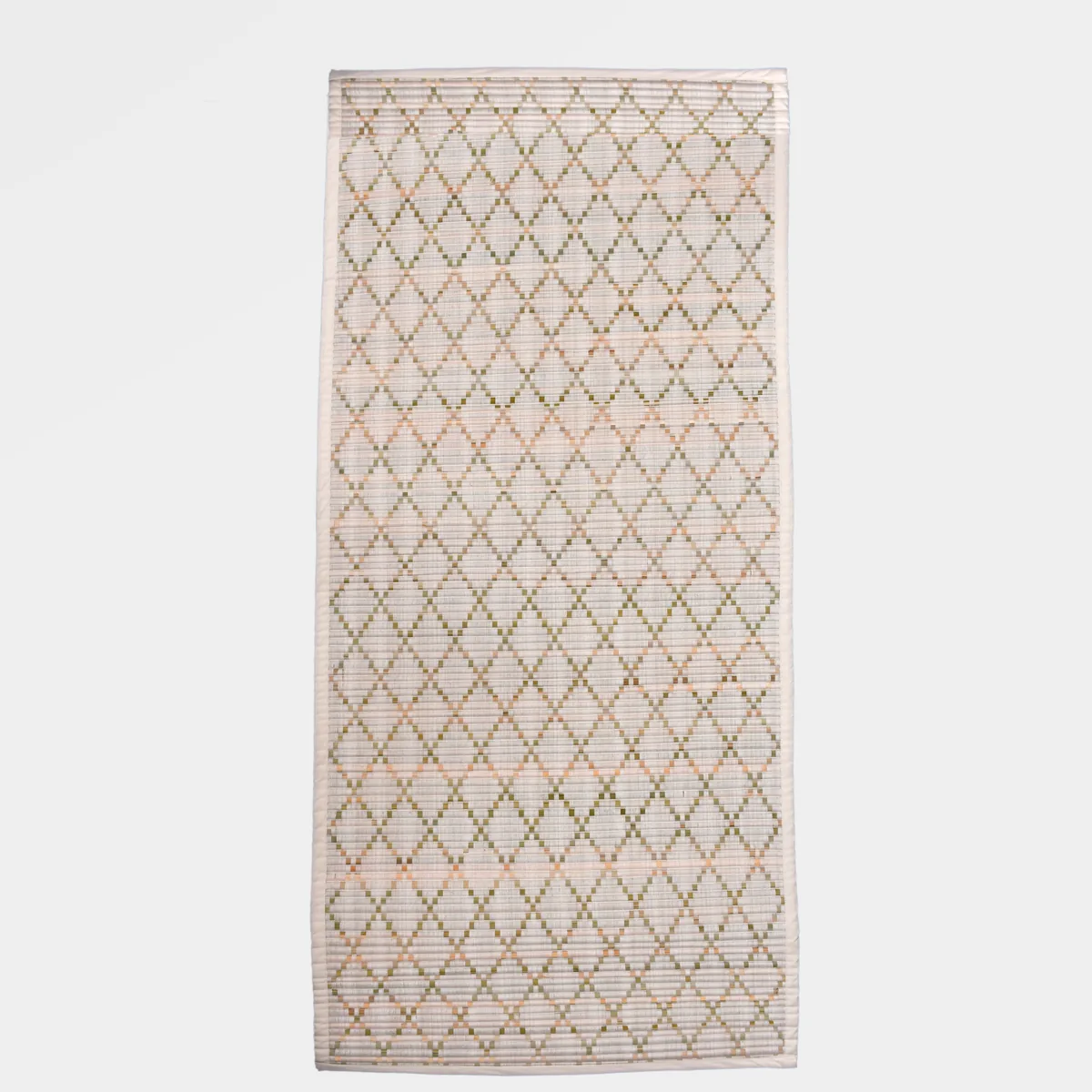
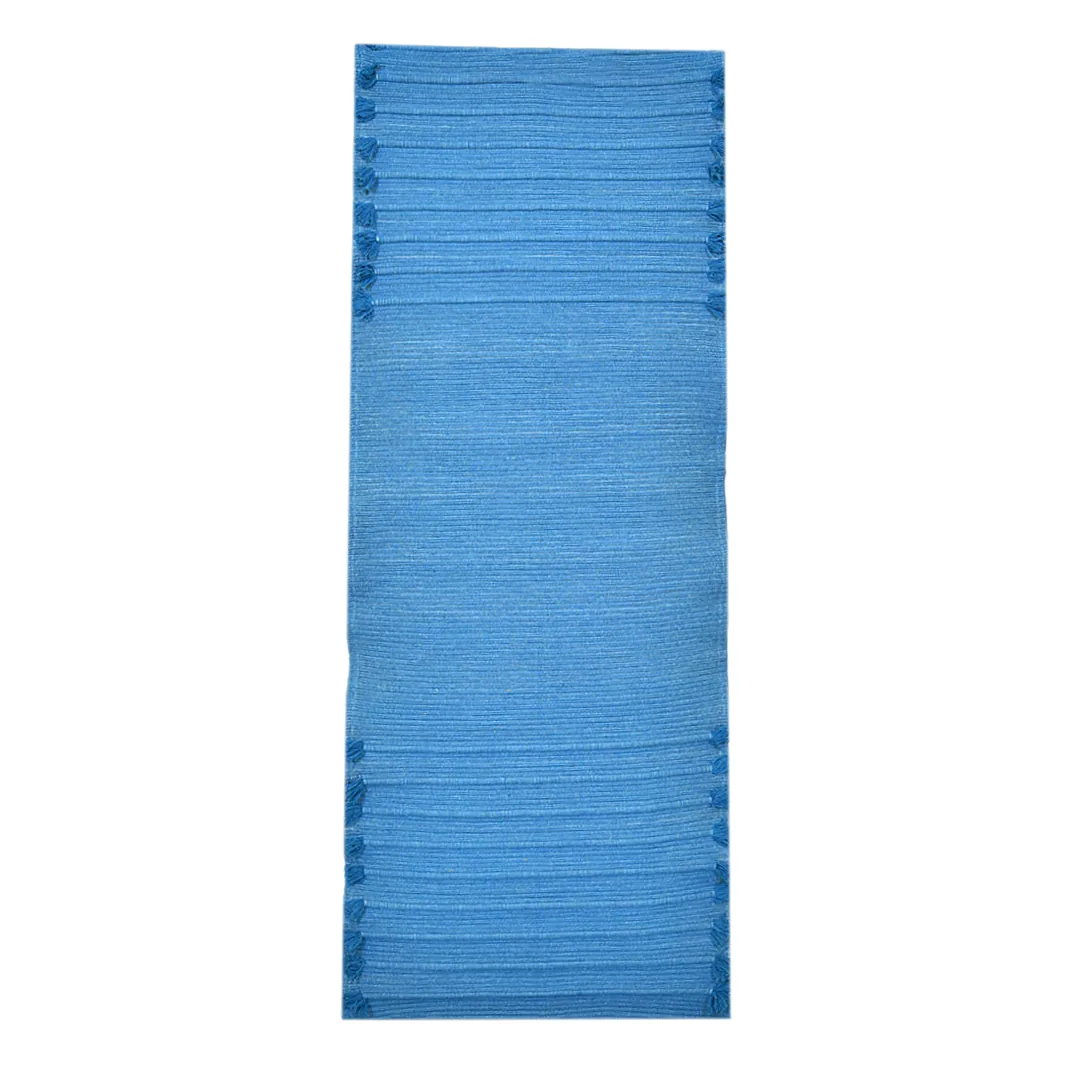
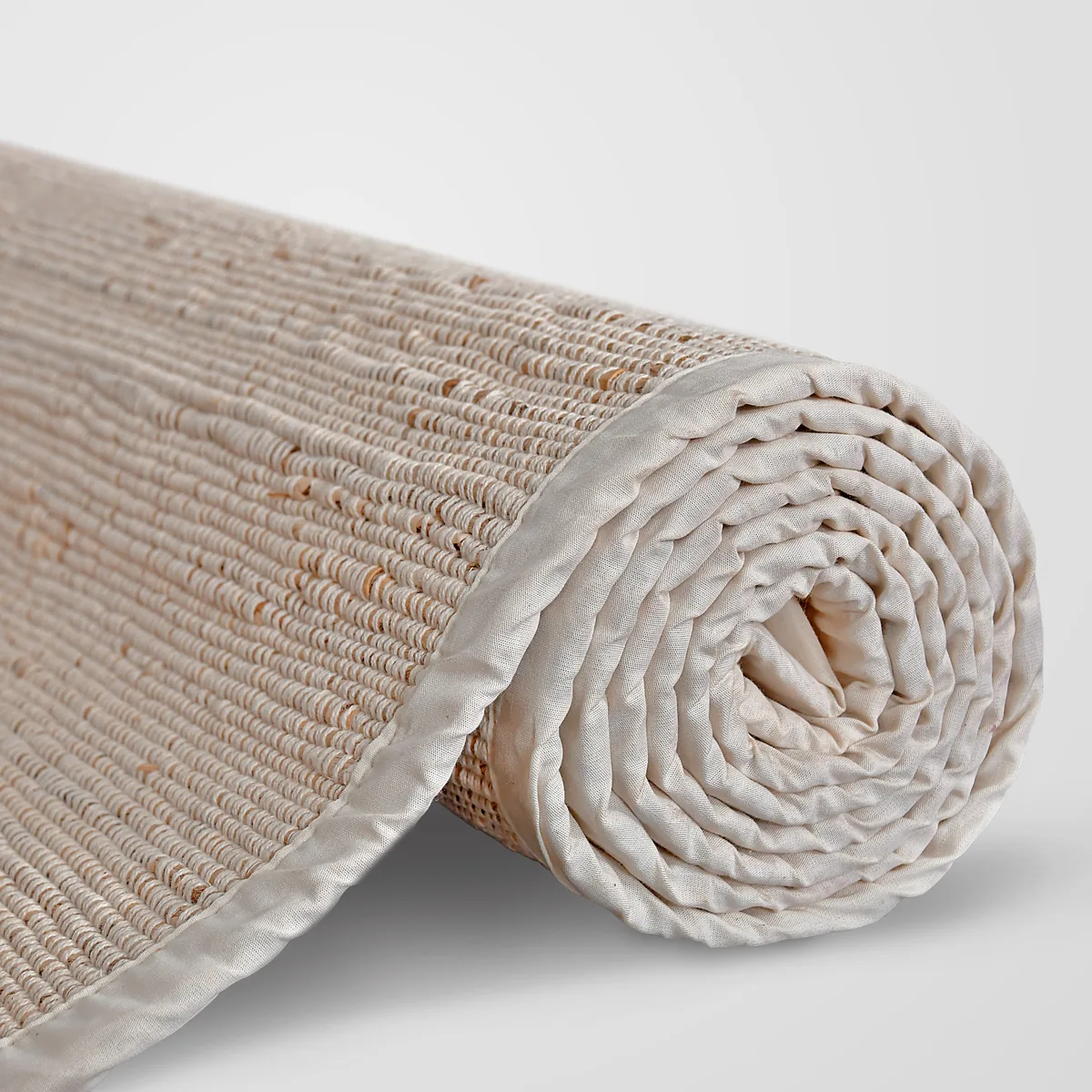
The Indico and our other cotton mats are GOTS-certified organic cotton, nothing else in the weave. The Sambu Diamond is sambhu grass woven with organic cotton. The Banana Fibre mat is banana bark and fibre, cotton-bound and undyed. There is no PVC, no synthetic foam and no plastic backing in any of them. When the fibre thins past use, what is left is plant material, and plant material has far more second lives than foam, which we list in how to reuse or recycle an old yoga mat.
The latex underside
Every cotton, sambhu grass and banana fibre mat we make has a thin layer of natural tree latex brushed onto the underside by hand, which holds the mat on tile, marble and wood. It is tapped from a tree, but the honest position is that we do not know how a thin, aged coat of it behaves in soil, and the encyclopaedia entry above cautions that rubber does not break down under ordinary composting. The coat is thin relative to the fibre above it; it is not nothing. If you are allergic to natural latex, choose with care and write to us first. The Darbha mat is the exception: it is backed in cotton cloth and has no latex.
The dyes
Our colours come from plants: indigo, turmeric, alkanet root, tulsi and neem among others, with more than twenty herbs across the chakra rugs. Apart from indigo, most of them are fixed with a mordant, and we have not tested what remains in the fibre at the end of a mat's life. We would rather say so than call the dye harmless. The Banana Fibre mat is undyed, which is one reason it is the simplest mat we make.
What we will not claim
"Biodegradable" and "compostable" are testable claims with published standards behind them, and we have not put our mats through those tests, so we do not use the words. We also do not know how long a mat takes to break down in a Komarapalayam field, a Mumbai landfill or your garden, and nobody who has not measured it does either. What we can say precisely is what the mat is made of, and that is what matters when you decide what to do with it.
A better ending than the bin
A cotton or grass mat that is past practice use is still a useful piece of woven cloth. Cut it into kneelers for the garden, a door mat, a liner for a pet basket, or strips to tie saplings. Pass a washed cotton mat on to someone who practises less hard than you. Disposal is the last option, not the first.
Frequently asked questions
Are TwinsPoles yoga mats biodegradable?
We have not had them tested or certified as biodegradable or compostable, so we do not claim it. They are cotton, sambhu grass or banana fibre bound with cotton, coloured with plant dyes and finished underneath with a thin coat of natural tree latex; the Darbha is grass backed in cotton cloth with no latex. The fibre is plant matter; the latex and the dyes are the parts whose end we cannot vouch for.
Can I compost a cotton yoga mat?
We do not recommend composting ours, because the natural latex coat on the underside is unlikely to break down in a home compost and we have no test data on the dyes. A worn mat is better cut down into kneelers, door mats or pet bedding, which keeps it in use.
What happens to a PVC yoga mat when it is thrown away?
It stays plastic. Flexible PVC is made soft with a large proportion of plasticiser, and while PVC recycling schemes exist in Europe, a used foam mat in India is very rarely collected, so it ends in landfill or is burnt. If you own one, keep using it, for practice or as an under-mat, for as long as it holds together.
Does the latex layer stop a natural mat being natural?
Natural latex is tapped from a tree, so the mat remains a plant-fibre product with a plant-derived grip. But vulcanised rubber does not compost under normal conditions, so we describe the layer plainly rather than pretending it disappears. If you are allergic to natural latex, choose with care and write to us first.
If you are choosing a mat with its ending in mind, the undyed Banana Fibre mat is the simplest we make and the sambhu grass mats, at about a kilogram, are among the lightest; browse the banana fibre and sambhu grass collections.