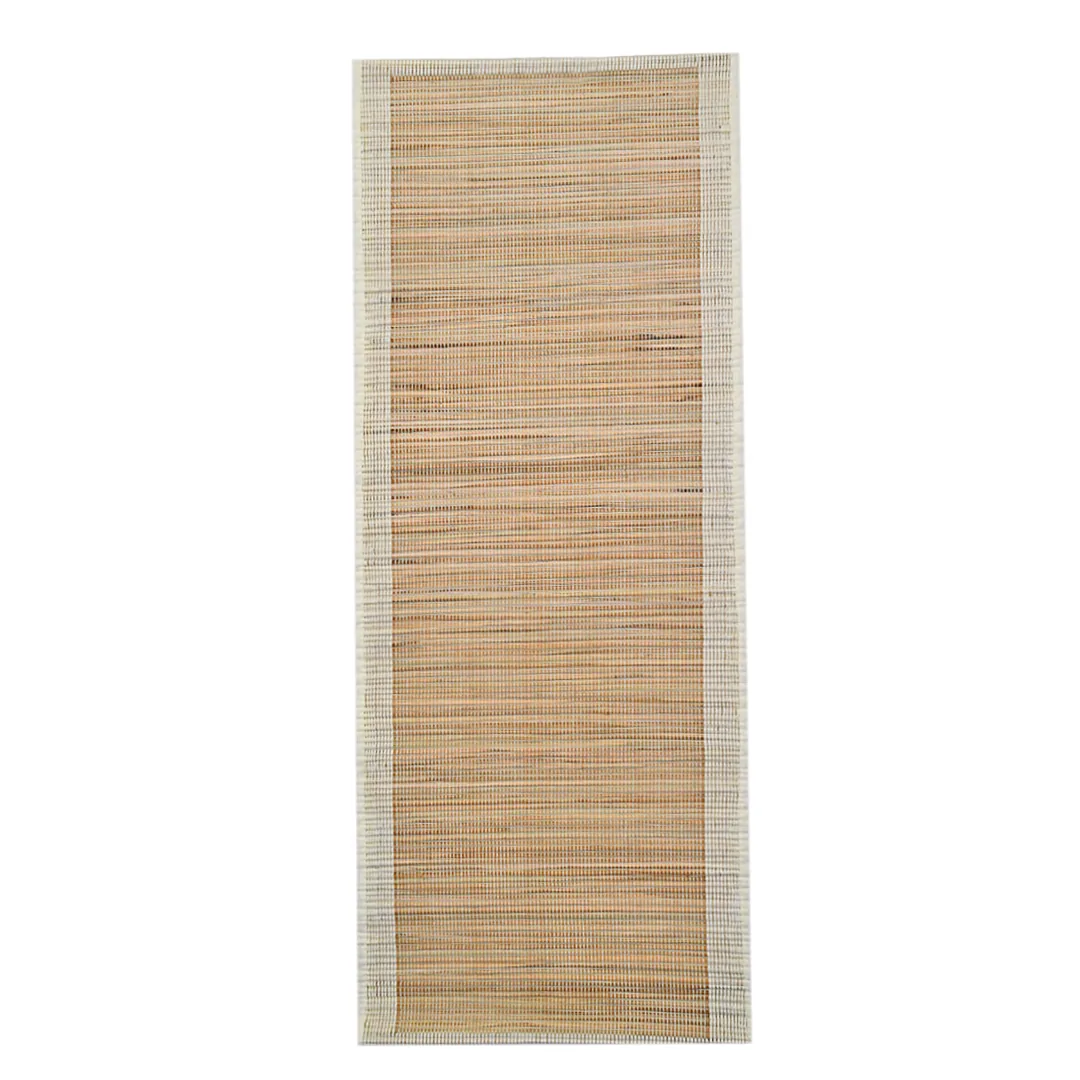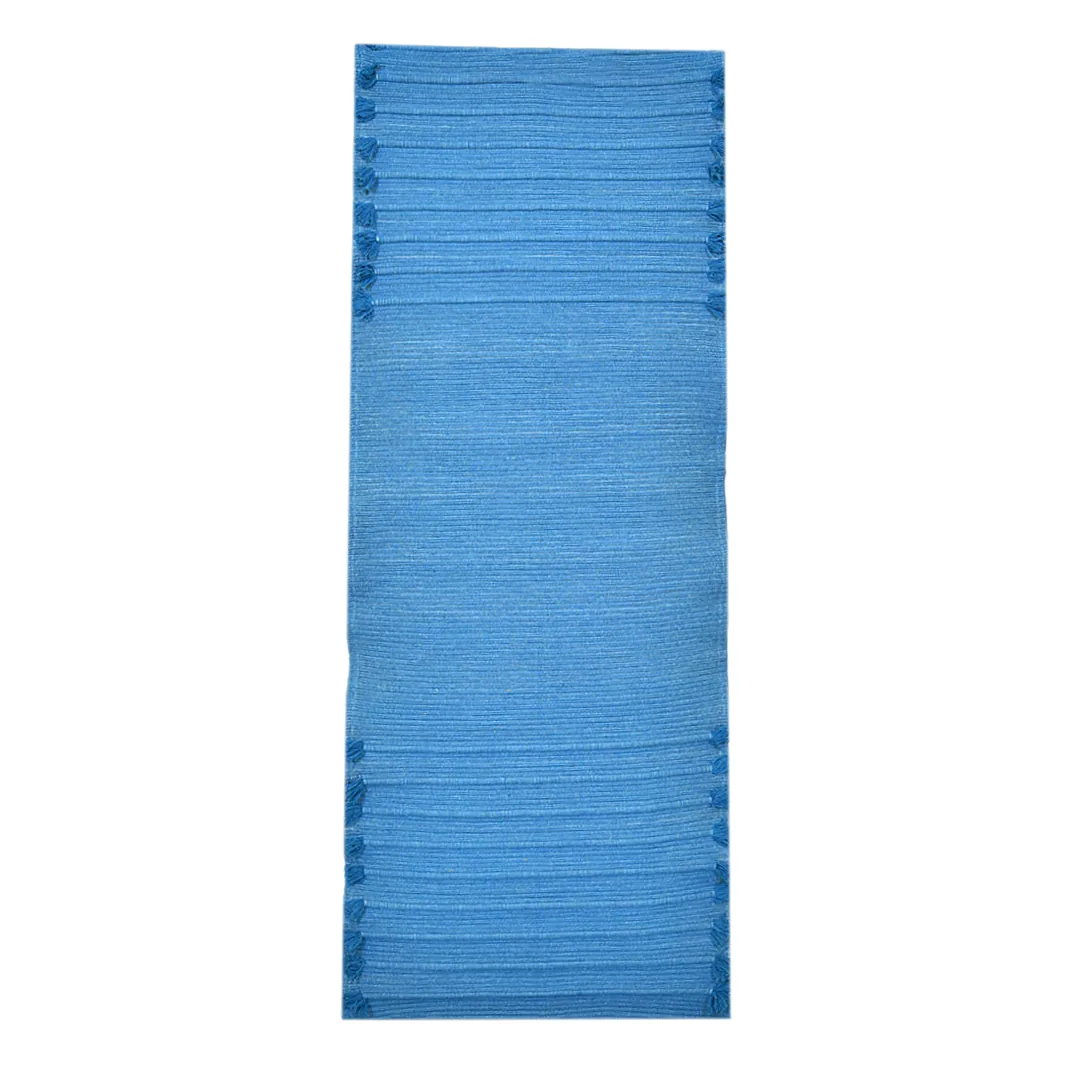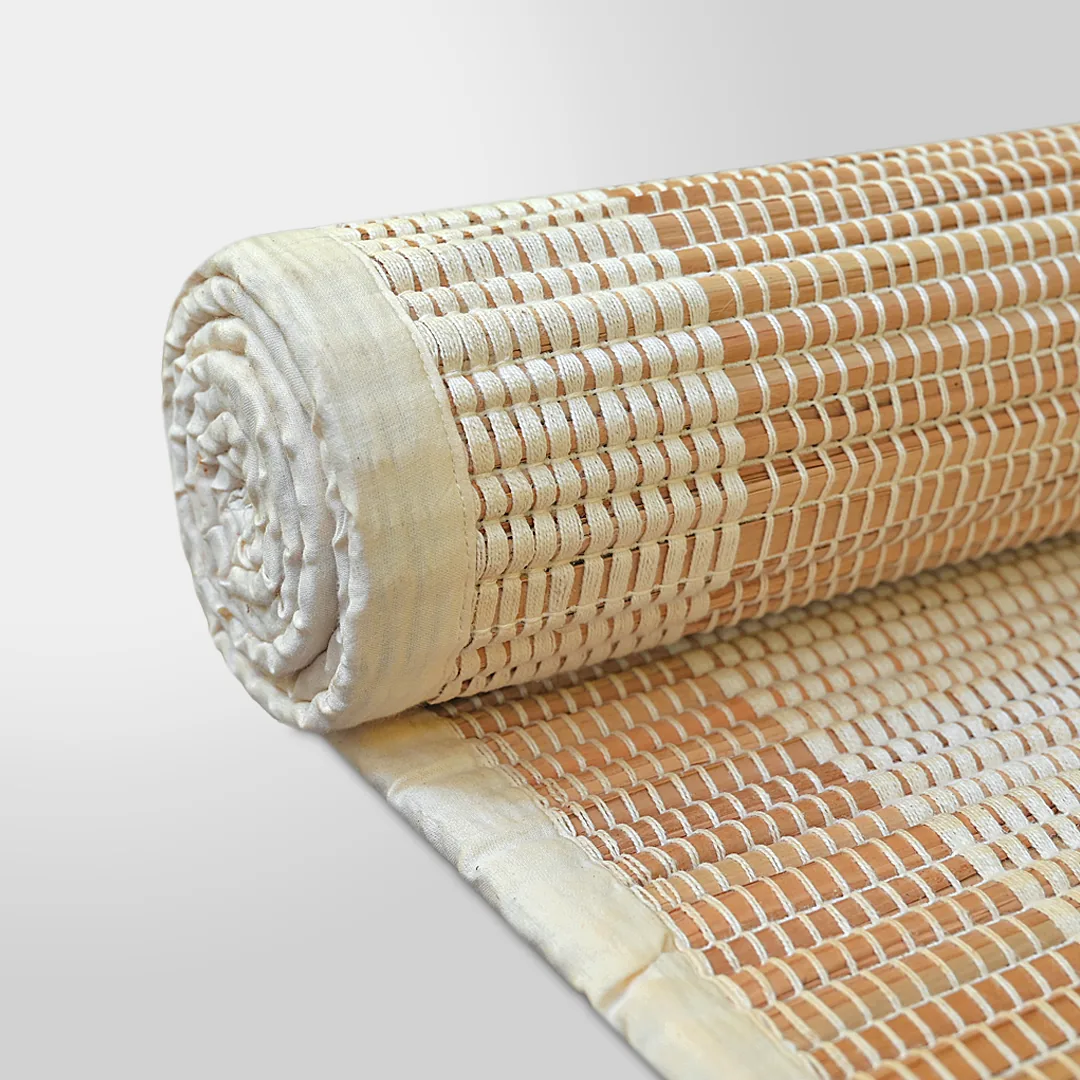
Every mat we send leaves Kattur rolled, wrapped in paper and cloth, and tied, with no plastic film, bubble wrap or foam added by us. That is the part we control. The courier who carries it across India may add a pouch, tape or a label of their own, and we would rather tell you that than let a photo of a paper parcel suggest the whole journey is plastic-free.

What we put around the mat
A woven mat is its own best protection. Rolled tightly, a Sambu Frame or an Indico is a firm cylinder that does not crush, so it needs no foam corners or air pillows. We roll it, wrap it in paper, add a cloth layer, tie it and write the address. Nothing in that list is plastic, and nothing is a one-off: the cloth can be used again at home, and the paper goes out with paper waste.
Paper takes scuffs so the mat does not have to. Cloth gives a second skin against rubbing in a courier bag. Both are things our weaving town already works with every day.
What we do not control
Once the parcel is handed over, it travels like any other. Couriers commonly put a parcel inside their own plastic pouch, close it with plastic tape and stick a printed label on it; sometimes a hub re-wraps a parcel that has been knocked about. We cannot promise none of this will happen to yours, and we will not call our shipping plastic-free when the last mile is out of our hands.
What still needs improving
- The outer layer in transit. The courier's pouch and tape are theirs, not ours, and we have not yet found a way to avoid them on every route.
- Rain. Paper is not waterproof, and in the monsoon a parcel can meet rain between hubs. If a mat arrives damp, unroll it, dry it flat in shade with a fan as described in how to dry a yoga mat in the monsoon, and write to us through the Contact page if there is any mark on it.
- Labels. A parcel needs a label that survives handling, and we are still working out the most reliable plastic-free way to do that.
- No audit. We have not weighed or counted our packaging across a year, so we quote no figure for plastic saved.
What to do with the packaging
Keep the cloth; it is useful for wiping down a grass mat or wrapping the mat for travel. Fold the paper for reuse or put it out with paper waste, where a kabadiwala or dry-waste collection will take it. If the courier added a pouch, that goes with plastic waste. Unroll the mat and air it for an hour before first use, as it has been rolled tight for the journey.
Why this matters for a natural mat
A mat woven from cotton or grass, dyed with plants and finished without PVC or synthetic foam, undoes part of its own argument if it arrives shrink-wrapped. Packaging is a small part of a mat's life, but it is the first thing you see, and it should match what is inside. It also belongs to a slower way of buying altogether, which we write about in buying less, buying better.
Frequently asked questions
Is TwinsPoles packaging completely plastic-free?
What we put around the mat is: paper, cloth and tie, with no film, bubble wrap or foam. What the courier adds in transit, a pouch, tape or a printed label, is not in our control, so we describe our packing as plastic-free and our shipping, honestly, as not guaranteed to be.
Does a yoga mat need protective packaging?
A tightly rolled handwoven mat is firm enough to travel without foam or air cushions; paper protects it from scuffs and cloth from rubbing. A foam mat is softer and more easily dented, which is partly why foam mats so often arrive in plastic.
What if my mat arrives wet or with a damaged wrap?
Unroll it, dry it flat in shade with air moving over it, and never dry a plant-dyed mat in direct sun. If the mat itself is marked, write to us through the Contact page with a photo and see the Returns page for how we handle it.
If you would like to see how a mat arrives, the Sambu Frame is among the lightest to ship at about a kilo; the full range is in the collection, and current delivery terms are on the Shipping page.