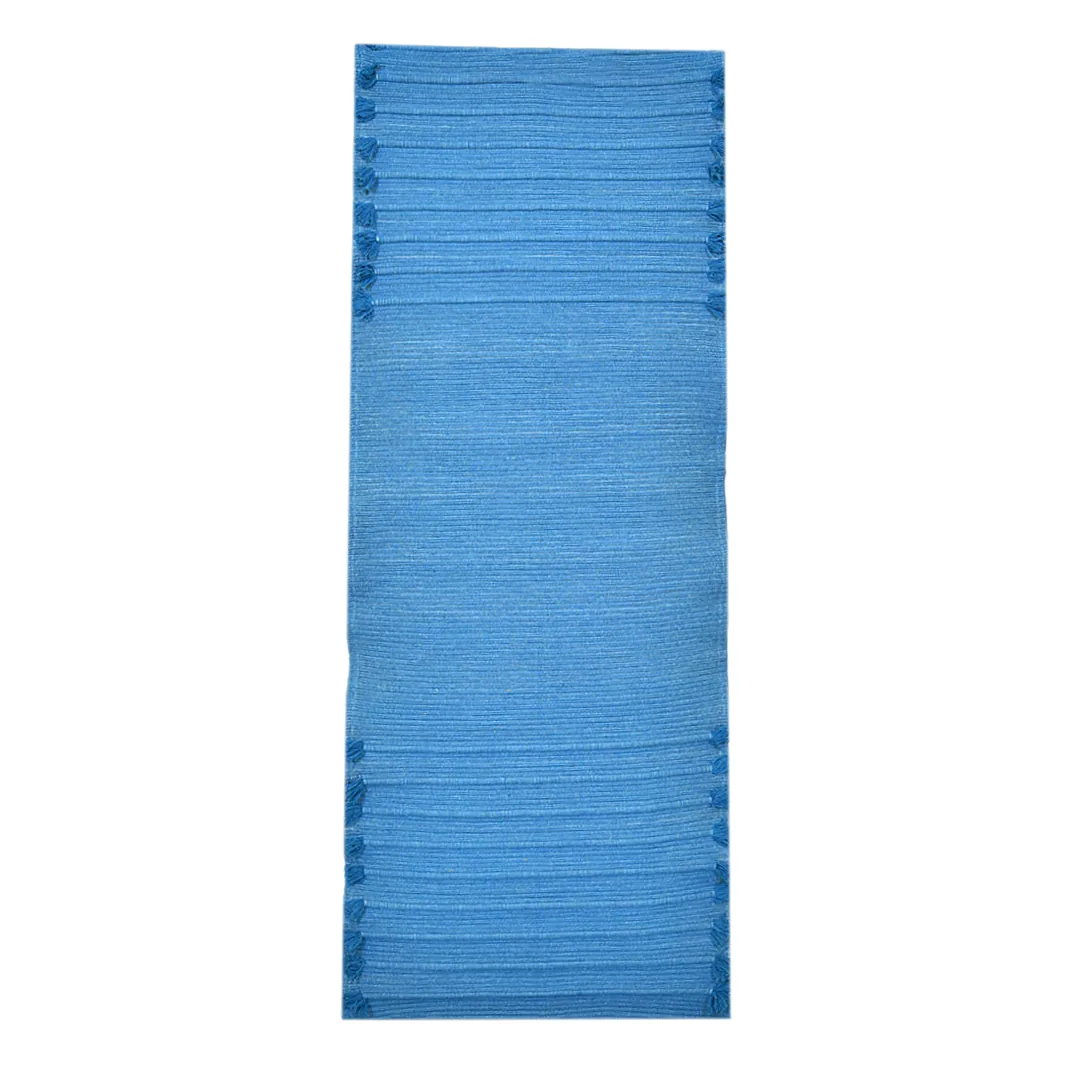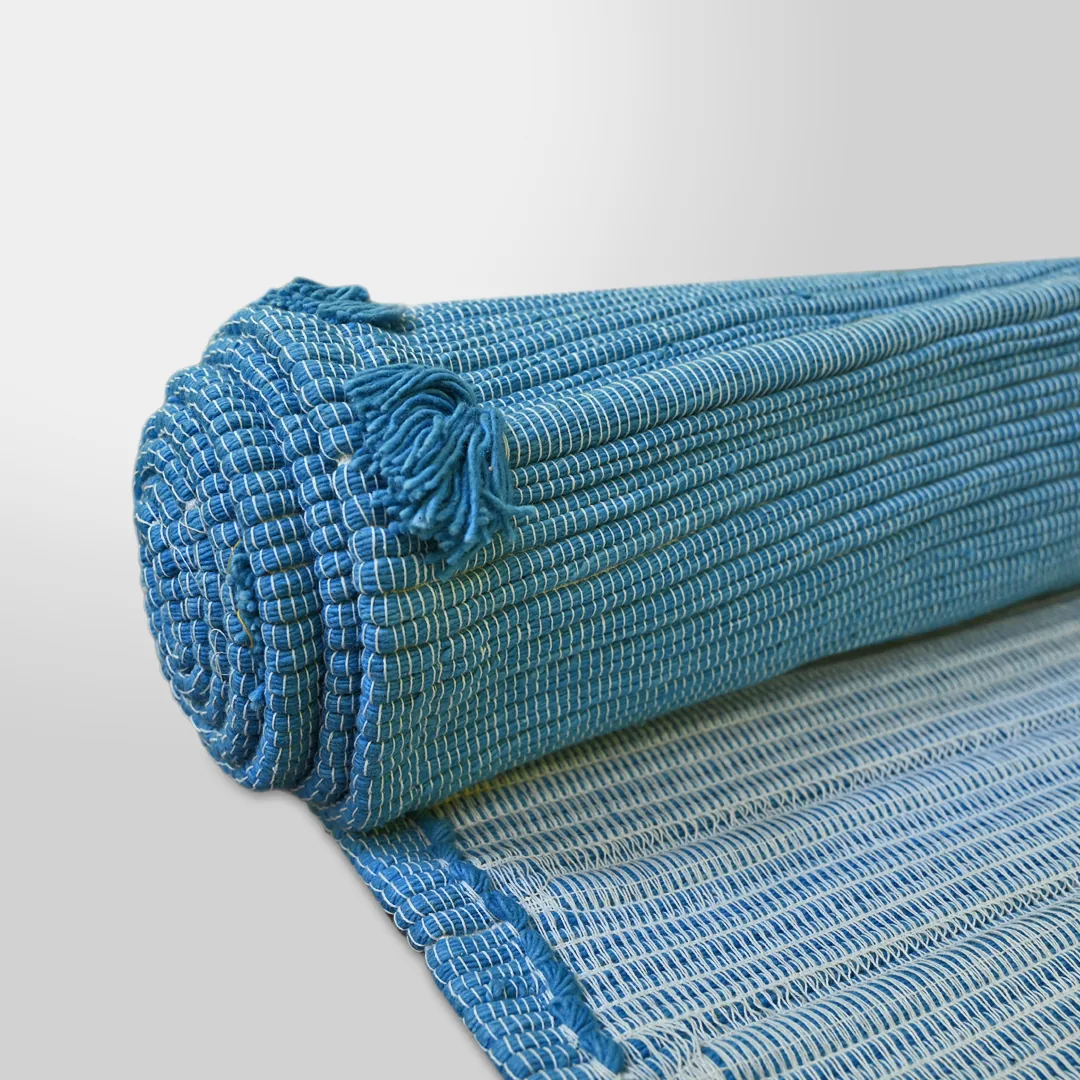
The best thing to do with an old yoga mat is to keep it in use. A cotton mat that still holds together can be washed and passed on; a worn one can be cut into kneelers, door mats, pet bedding and plant ties. A foam mat is harder, because very few places in India collect PVC or TPE mats for recycling, so its most useful second life is as an under-mat, a kneeling pad or a liner. Here are the options in order of preference, including the ones that do not work.

First, decide whether it is really finished
A cotton mat rarely fails all at once. Most "worn out" cotton mats have a softened latex grip underneath, which a thin fresh coat of natural latex restores (if you are allergic to natural latex, choose with care and write to us first), or loose tassels that re-knot in minutes. Our guide to how long a cotton yoga mat lasts lists the signs of real wear. If the weave is thin and papery where your hands and feet land, read on.
Pass it on
A washed cotton mat with life left in it suits someone who practises less hard than you: a beginner, a relative, a community class, a studio that keeps spare mats. Wash it cold, dry it flat in shade, and roll it. A foam mat can be passed on if it is not flaking; a flaking one should not go to anyone, since it sheds plastic wherever it is used.
Cut it down
Woven cotton and grass mats are cloth, and cloth can be cut. Sharp scissors and an hour give you:
- Kneelers. A piece about 40 by 30 cm, folded double, for garden work or kneeling in practice.
- A door mat. The Diamond mats, with their raised lattice, make a good scraping surface at a back door.
- Pet bedding. Cotton is washable and sheds no foam. Cut to the basket size and hem the edge with strong cotton thread.
- A seat strip. A piece the width of the mat and 60 cm long, rolled inside your main mat as a seat for pranayama.
- Plant ties. Narrow strips tie saplings without cutting the bark.
Grass mats cut less neatly than cotton because the stems spring, so cut along the cotton binding and bind the new edge with cloth tape.
Compost: the honest answer
Cotton, grass and banana fibre are plant matter, but our mats have a thin coat of natural tree latex on the underside and plant dyes fixed with mordants, and we have not tested how either behaves in a compost heap. Vulcanised rubber in general does not degrade in home or industrial compost conditions. So we do not recommend composting our mats and do not describe them as compostable. Cutting them down keeps the fibre in use, which is the better outcome anyway; the fuller account is in what happens to your mat at the end of its life.
Textile recycling for cotton
Mechanical recycling, shredding cloth and respinning the fibre, is particularly well developed for cotton textiles, and India has a long-standing recycled-textile trade centred on Panipat. In practice a single thick mat is unlikely to reach that trade directly. The realistic route is a local kabadiwala or municipal dry-waste centre that takes old cloth for rags. Cut the latex-backed side away first if you can, and tell them what it is.
Foam mats: what actually happens in India
PVC and TPE mats are plastics. TPE can be remelted in principle and PVC schemes exist in Europe, but a used foam mat is very rarely accepted by a recycler in India, and most municipal collection sends it to landfill. So the useful options are reuse:
| Use | Why it works |
|---|---|
| Under-mat beneath a cotton rug | Adds cushioning; the cotton on top absorbs sweat |
| Kneeling pad for cleaning or gardening | Waterproof and soft; cut to size |
| Drawer, shelf or boot liner | Stops things sliding |
| Pad under a washing machine | Dampens vibration |
| Picnic ground sheet | Waterproof |
If a foam mat is flaking, bag the flakes rather than sweeping them into a drain, and retire it from any use where it will be rubbed.
Frequently asked questions
Can I donate an old yoga mat in India?
Yes, if it is clean and not flaking. Wash a cotton mat cold and dry it flat in shade before passing it to a beginner, a community class or a studio that keeps spare mats; a foam mat should only be passed on if the surface is intact.
Can a cotton yoga mat be composted?
We do not recommend composting ours. The underside has a thin coat of natural latex, which is unlikely to break down in ordinary compost conditions, and we have no test data on the plant dyes. Cutting a worn mat into kneelers, door mats or pet bedding keeps the cotton in use instead.
Where can I recycle a PVC or TPE yoga mat in India?
Very few recyclers accept used foam mats, and most municipal collection sends them to landfill. Ask your kabadiwala or dry-waste centre, but expect a no; the more useful route is a second life as an under-mat, kneeling pad or liner until it falls apart.
What is the easiest reuse for a worn cotton mat?
Fold it double as a kneeler, or cut it to fit a pet basket. Both take minutes, need little or no sewing, and use the mat's two best remaining qualities: it is washable and it sheds no plastic.
When the time comes to replace a mat, choose one you can do all of this with: the Indico is single-fibre cotton that cuts and washes cleanly, and the Diamond Clay makes the best door mat of anything we weave. Browse the cotton mats.