A yoga practice needs a mat, a floor and you. Most of the rest, blocks, straps, towels, bolsters and bags, can be replaced by things already in your house, and the one thing worth spending on is a mat that will last years and can be repaired. We make mats for a living, so we have an interest here; even so, our honest advice is to buy one good mat, look after it, and stop.

What you actually need
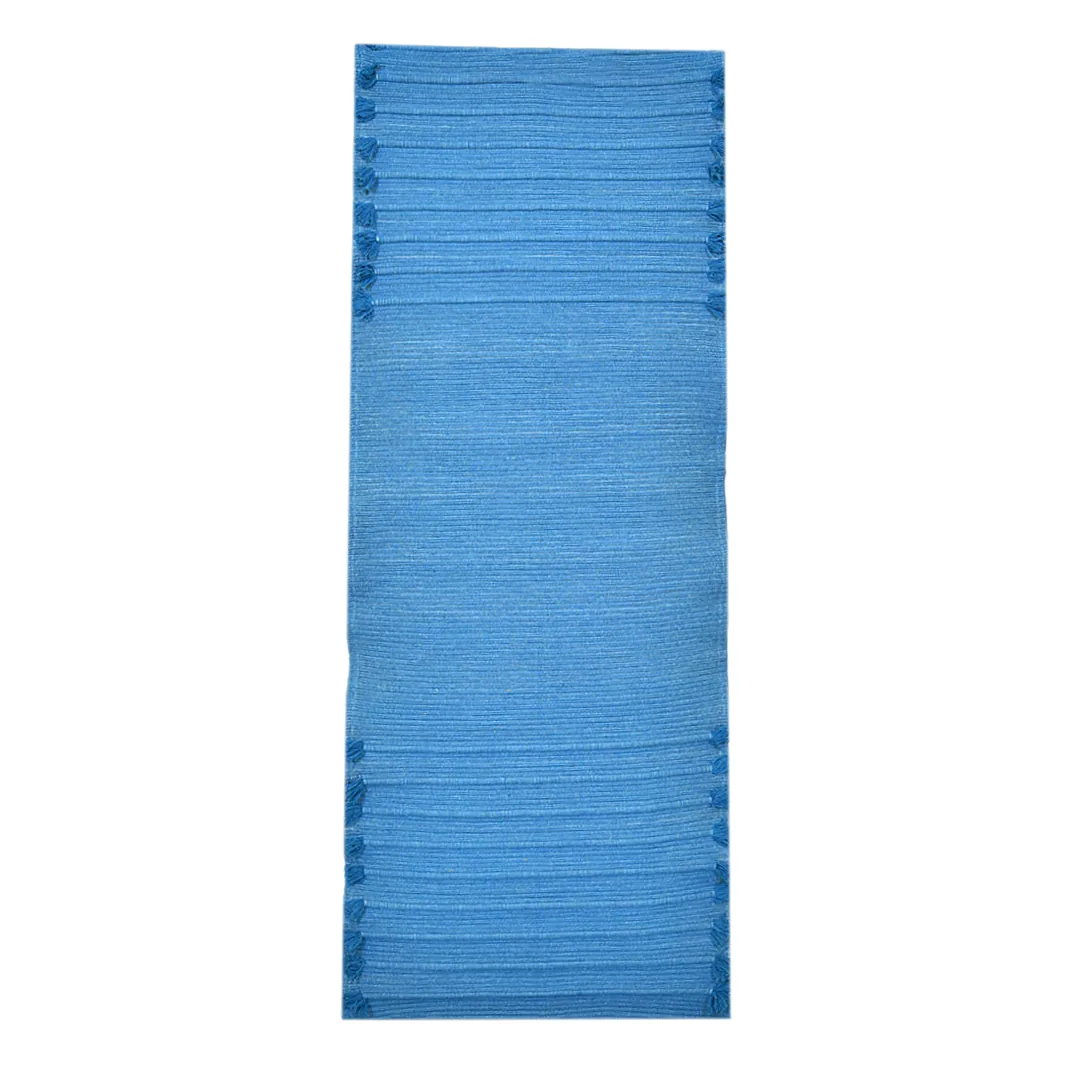
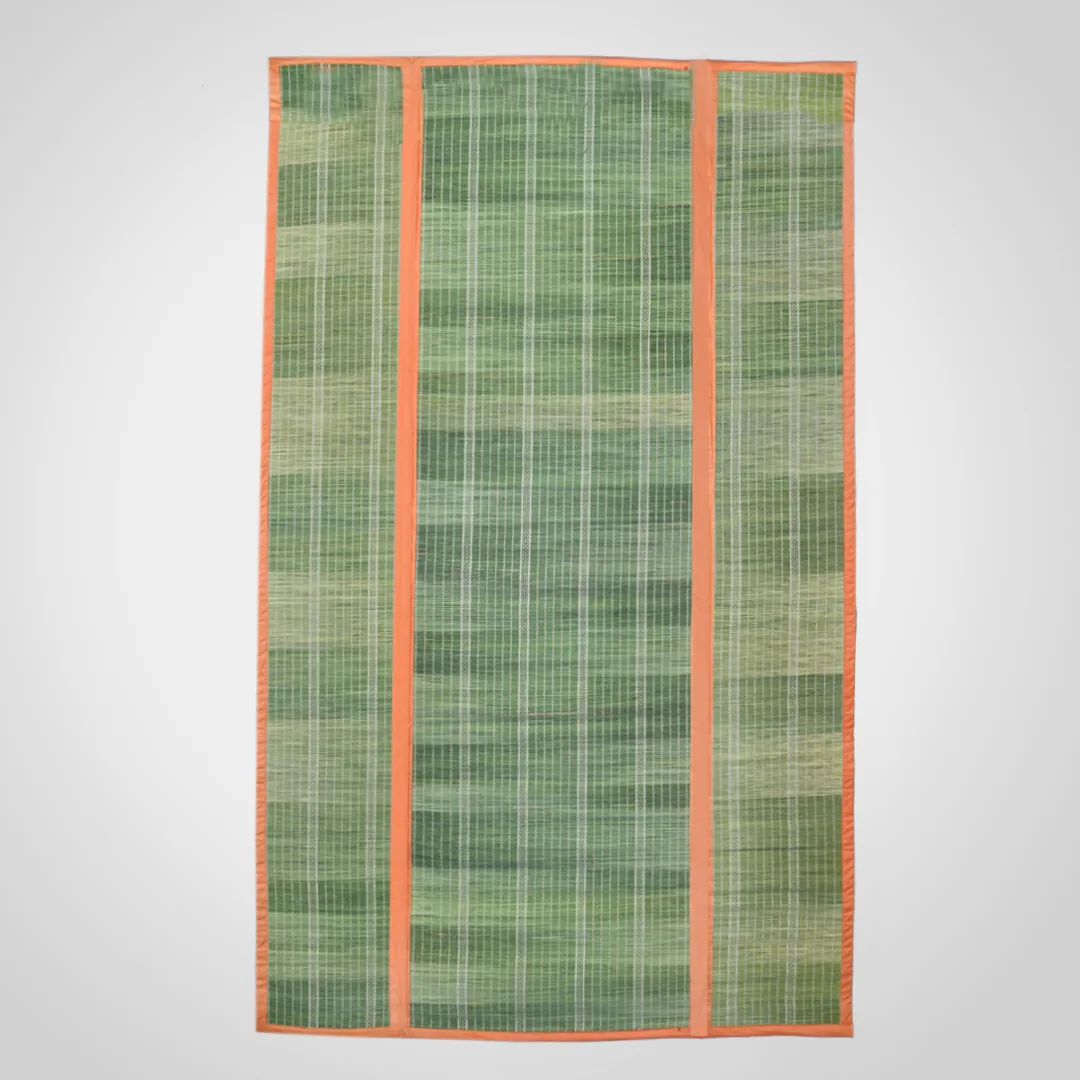
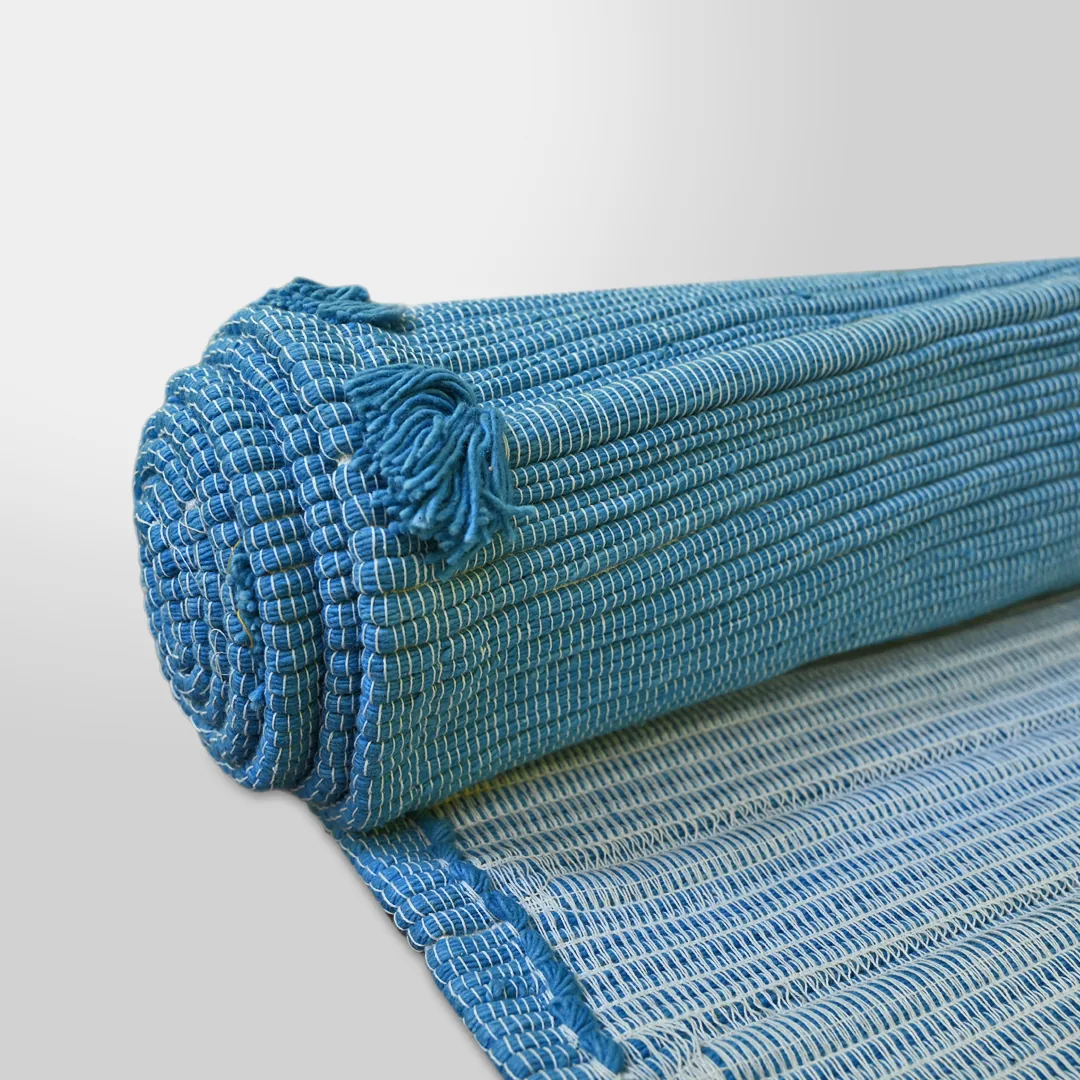
A mat. One. The right one depends on your floor and your practice, not on a trend; our checklist for choosing a yoga mat walks through it. For standing and flowing sequences on a hard floor, a cotton mat such as the Indico does the job for years: 5 mm of ribbed, GOTS-certified organic cotton, hand-washable, with a thin natural latex grip underneath that can be renewed. For a practice that is mostly seated, pranayama and rest, the Darbha is a firm, cool grass mat that folds flat and has no latex layer at all.
Something to sit on. A folded blanket raises the hips as well as a bought cushion. A rolled towel is a bolster. Two thick books are a pair of blocks.
A strap, if you want one. A dupatta, a belt or a length of cloth does the same thing.
That is the list. Everything else is a convenience, and conveniences are fine, but they are not requirements, and they are usually sold as if they were.
What you do not need
- A second mat for travel, if your first is light enough to carry. Our grass mats are about a kilo.
- A mat towel, if your mat is cotton. The mat is the towel.
- A mat bag, if a strap or a cloth tie holds the roll.
- A new mat because the colour has softened. Plant colour softening is the mat ageing, not failing.
- A new mat because it slips. A softened latex grip is renewed with a thin fresh coat; see how to restore the latex grip. If you are allergic to natural latex, choose with care and write to us first.
Repair before replace
Handwoven cotton rewards repair in a way foam cannot. A loose tassel is re-knotted by hand. A pulled thread at the selvedge is caught with a needle and strong cotton thread. A softened grip is recoated. A thinning patch under the hands is a sign to rotate the mat end for end, which spreads the wear. Foam cannot be re-knotted, stitched or recoated; when it flakes, it is finished. Our guide to how long a cotton yoga mat lasts lists what wears, in what order, and what to do about it.
Care is the cheapest gear
Many mats die of damp, not of practice. Unroll yours over a chair for an hour after you finish. Wash only when it needs it, cold, with a mild natural detergent, and dry it flat in shade, out of direct sun. These habits cost nothing and help a mat last; the notes per mat are on the Mat care page.
When a second mat is honest
Sometimes two mats really are better than one bought twice: two people practising in one household; a standing practice on a cotton rug and a long seated practice on a grass mat, because the surfaces suit different work; a hot season when cool grass is kinder than cotton. In each case the second mat has its own job, which is the test. If you cannot name the job, you do not need the mat.
Buying better, specifically
When you do buy, buy from someone who will tell you what the mat is made of layer by layer, how it was made and what to do when it wears. Prefer a mat you can wash, repair and cut down over one you can only throw away. Prefer a single material to a bonded sandwich. Expect to pay more per mat and less per year. And ask how it is packed; a natural mat in shrink-wrap has undone part of its own argument, which is why we wrap in paper and cloth, as described in how we pack a mat without plastic.
Frequently asked questions
What is the minimum equipment for a home yoga practice?
A mat and a clear patch of floor. A folded blanket serves as a cushion, a rolled towel as a bolster, books as blocks and a belt or dupatta as a strap. Add bought props only when you have practised long enough to know which one you are actually missing.
Is one yoga mat enough?
For most people, yes. A cotton mat handles standing, flowing and floor work on hard floors and can be washed and regripped for years. A second mat is justified when it has a distinct job, such as a cool grass mat for seated practice or summer, or when two people practise.
How do I make a yoga mat last longer?
Air it after every practice, wash it only when needed and always cold, dry it flat in shade, keep it out of direct sun, and rotate it end for end so the wear points change. Renew the latex grip when it softens rather than replacing the mat.
Is buying a handwoven mat really "buying less"?
Only if you keep it. A handwoven cotton mat costs more than foam at the till and less over the years it lasts, provided you care for and repair it. Buying one and replacing it in a season would be the opposite of the point.
If you are choosing your one mat, start with the Indico for a full practice or the Darbha for seated work, and read the care notes on each page before you decide.