To choose a yoga mat, decide what you need before you look at what is for sale: the style of practice, the floor at home, how much you sweat, how your knees feel on the floor, and whether you want to wash the mat. Then check the practical numbers (weight, length, thickness), ask what the mat is actually made of, set a price band and read the returns policy. Ten questions, and the right mat usually chooses itself.

1. What practice will you do on it?
A mat for flowing hatha or Ashtanga, where hands and feet move constantly, needs grip above everything. A mat for seated meditation and pranayama needs to be firm, quiet and cool, and grip hardly matters. Yin and restorative practice reward warmth and a little softness. Pilates wants cushioning under the spine. If your practice is a mix, choose for the one you do most weeks and add a blanket or cushion for the rest.
2. What floor will it lie on?
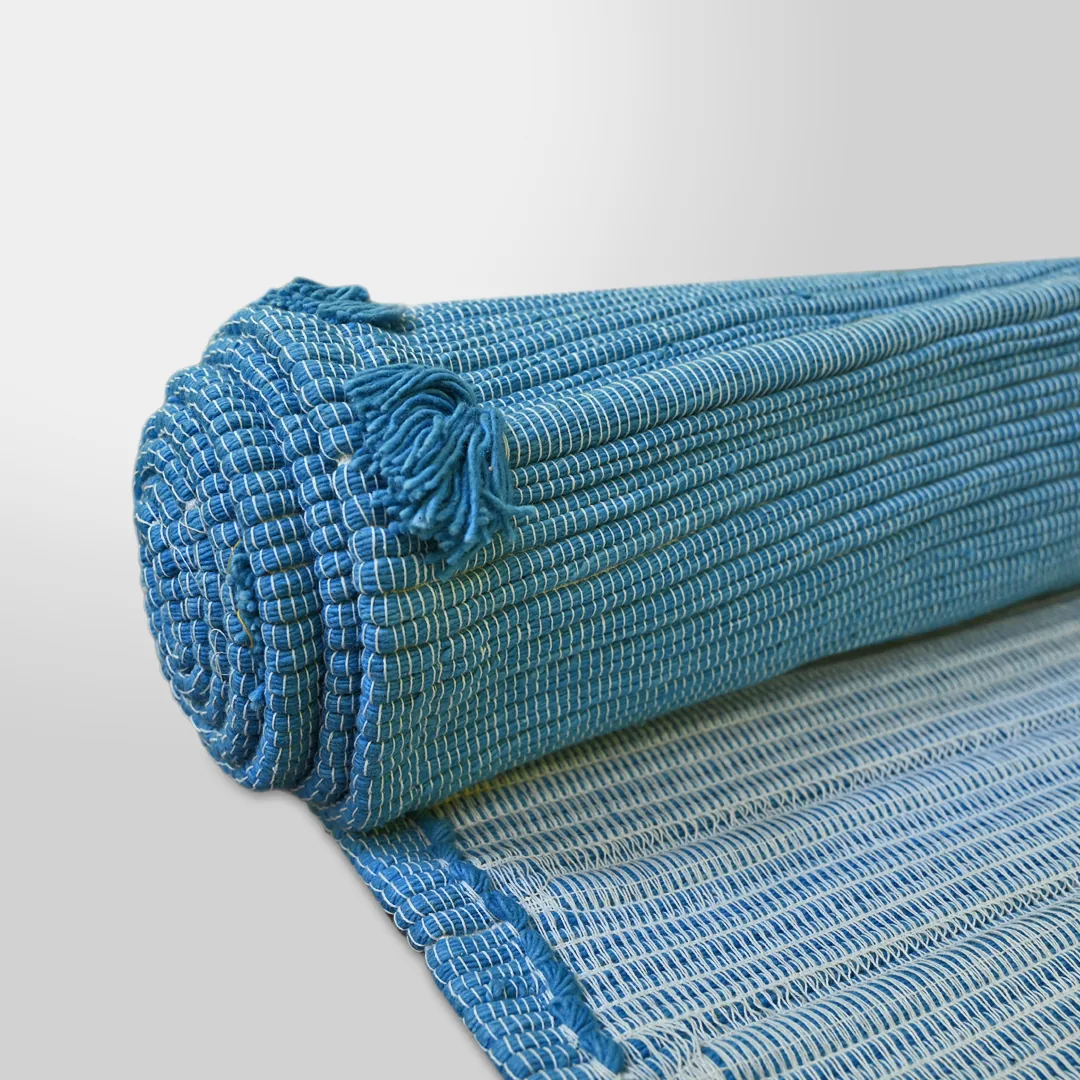
Many Indian homes have tile, marble or polished stone. These floors are hard, cool and often slightly dusty, and a mat has to hold on to them. Our cotton, sambhu grass and banana fibre mats have a thin layer of natural tree latex brushed by hand onto the underside, which holds on tile, marble and wood. If you are allergic to natural latex, choose with care and write to us first.
Carpet is a different problem: a thin, firm mat is more stable on carpet than a thick, soft one, because the carpet already gives.
3. How much do you sweat?
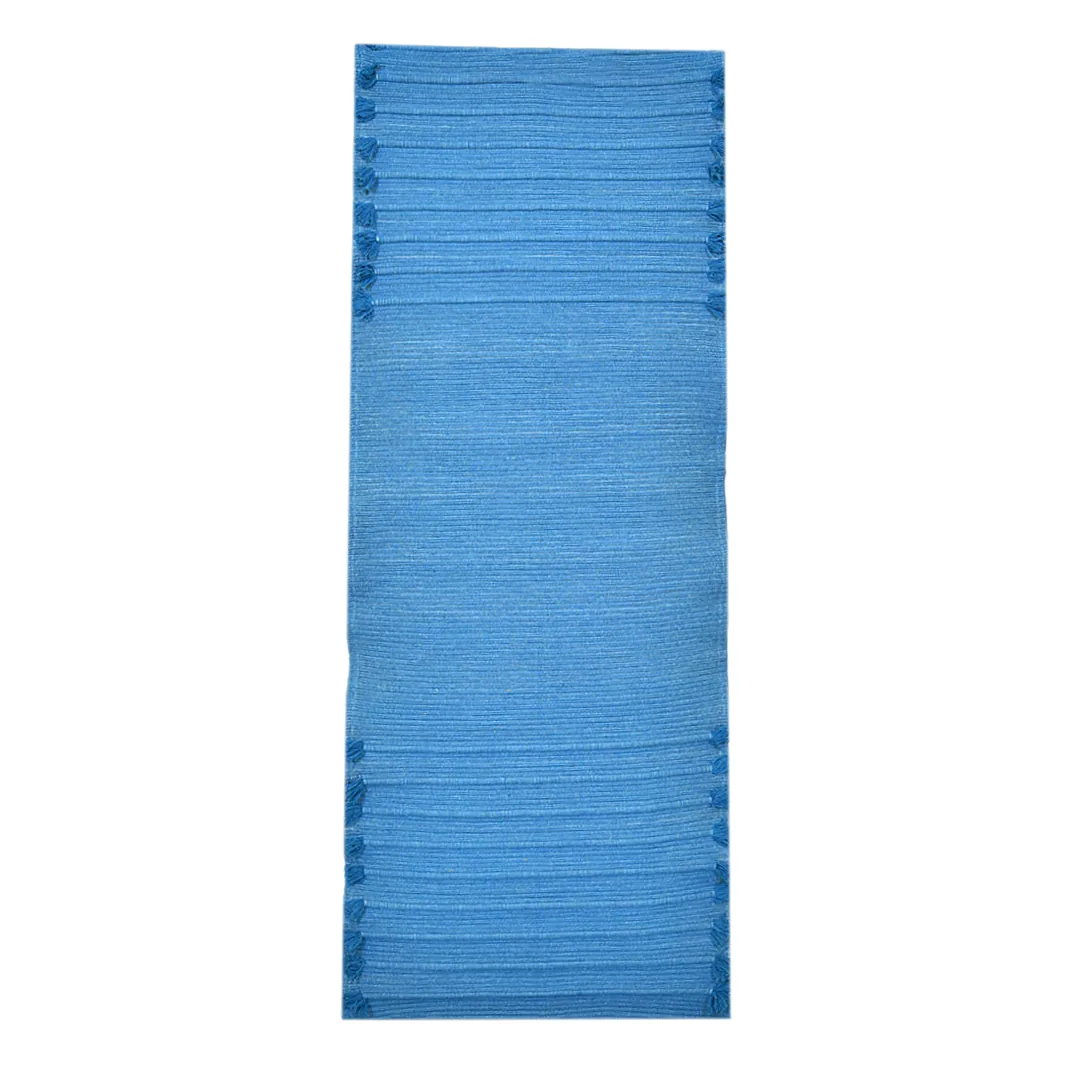
This is the question that divides mat materials most sharply. Rubber and foam are grippy when dry and slippery when wet, which is why people add towels. Woven cotton behaves the other way round: it can slip a little when bone dry, and grips better as it takes up moisture from your palms. If you sweat a lot, or practise in a warm room, an absorbent mat like the Indico stops being a compromise and becomes the sensible choice. If you barely sweat, dampening your palms before Surya Namaskar gives a cotton mat the same effect.
4. How do your knees feel on the floor?
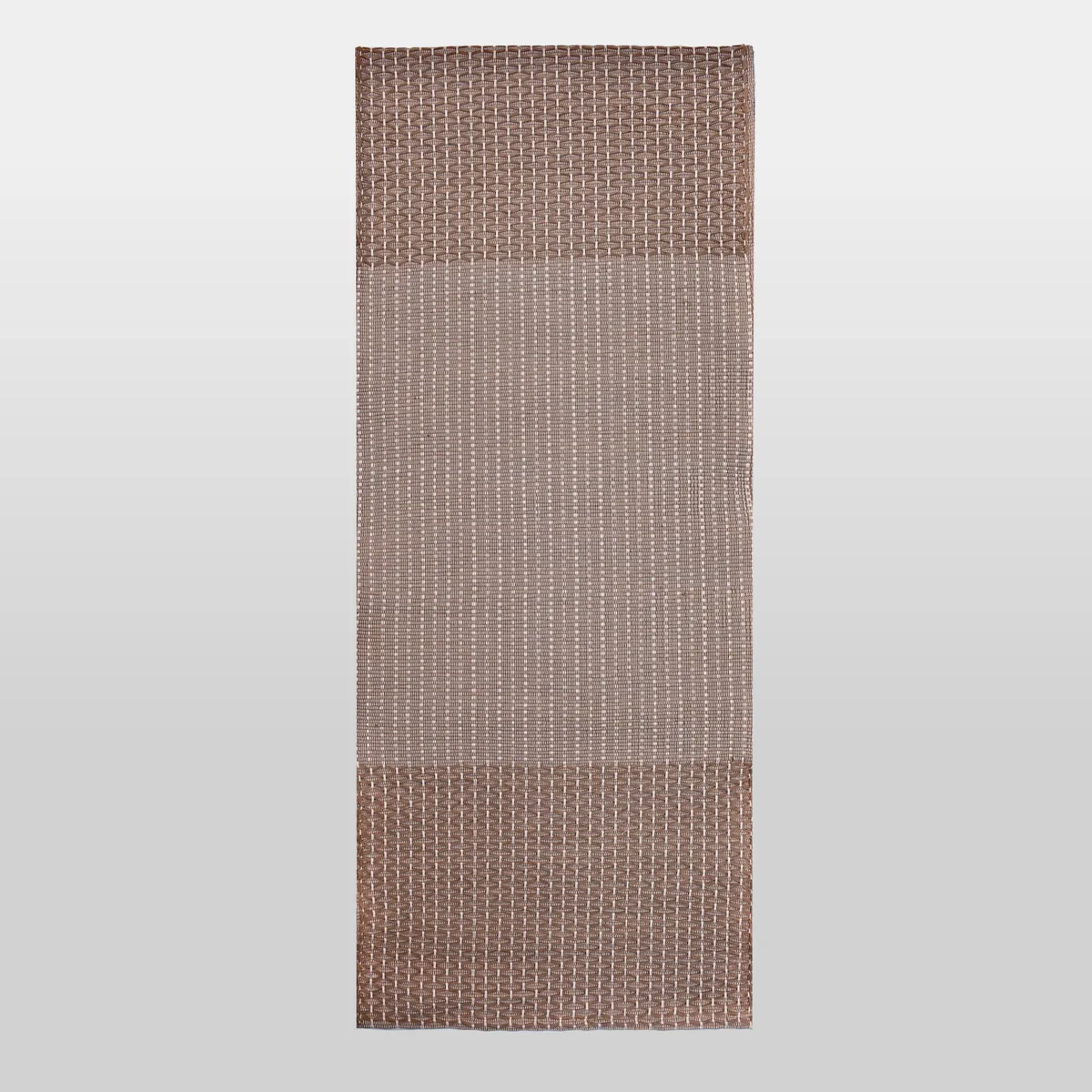
Kneeling and lying poses are where thickness earns its keep. Our mats run from 3 mm (grass) to 5 mm (six-ply cotton and the Indico) to 7 mm (the Diamond Clay and Diamond Orange). Woven cotton is dense, so 5 mm of cotton feels firmer than 5 mm of foam and does not sink under a standing foot in balances. Our thickness guide goes into the trade-off between padding and stability; the short version is that 7 mm is the kind choice for knees, 5 mm the all-rounder, and 3 mm for travel and seated practice.
If you have an existing knee condition, folding the mat edge under the knee or using a blanket helps more than any mat, and a teacher or doctor is the right person to ask.
5. Will you wash it?
Every mat gets sweat, dust and skin on it. Foam and rubber mats are wiped; most cannot be soaked or machine washed. Cotton can be washed properly. The Diamond mats take a delicate 30 °C machine cycle in a laundry bag; the chakra rugs and the Indico prefer a cold hand wash and drying flat in the shade, because plant dyes can fade in a machine. Grass and banana fibre mats are never soaked; they are shaken out and wiped with a damp cloth.
If hygiene is a priority, or the mat will be shared in a household, washability should sit high on your list. Our Mat care page has the instructions mat by mat.
6. How heavy is it, and where will it go?
A mat you carry to a class every day should weigh around a kilo. One that lives unrolled in a corner at home can be heavier. For reference, our grass mats weigh about 1 kg, the cotton mats 1.4–1.8 kg, and a full-thickness natural rubber mat from most makers is heavier again. Weight also tells you about density: a very light 6 mm mat is mostly air.
7. Is it long and wide enough?
Lie down. If your heels or head are off the mat, it is too short. The standard mat is about 180 × 61 cm; ours are 183–188 cm long and 68–69 cm wide, which suits most people up to about 180 cm tall. Our size guide has a height table and notes on width for wide stances.
8. What is it actually made of?
Ask, and expect a specific answer. "Eco", "natural" and "non-toxic" are not materials. PVC, TPE, natural rubber, cork bonded to rubber, jute over a plastic backing, woven cotton, grass: each behaves differently and ages differently. Learn to read a spec sheet with our guide to reading a yoga mat spec sheet, and treat a missing material line as a red flag.
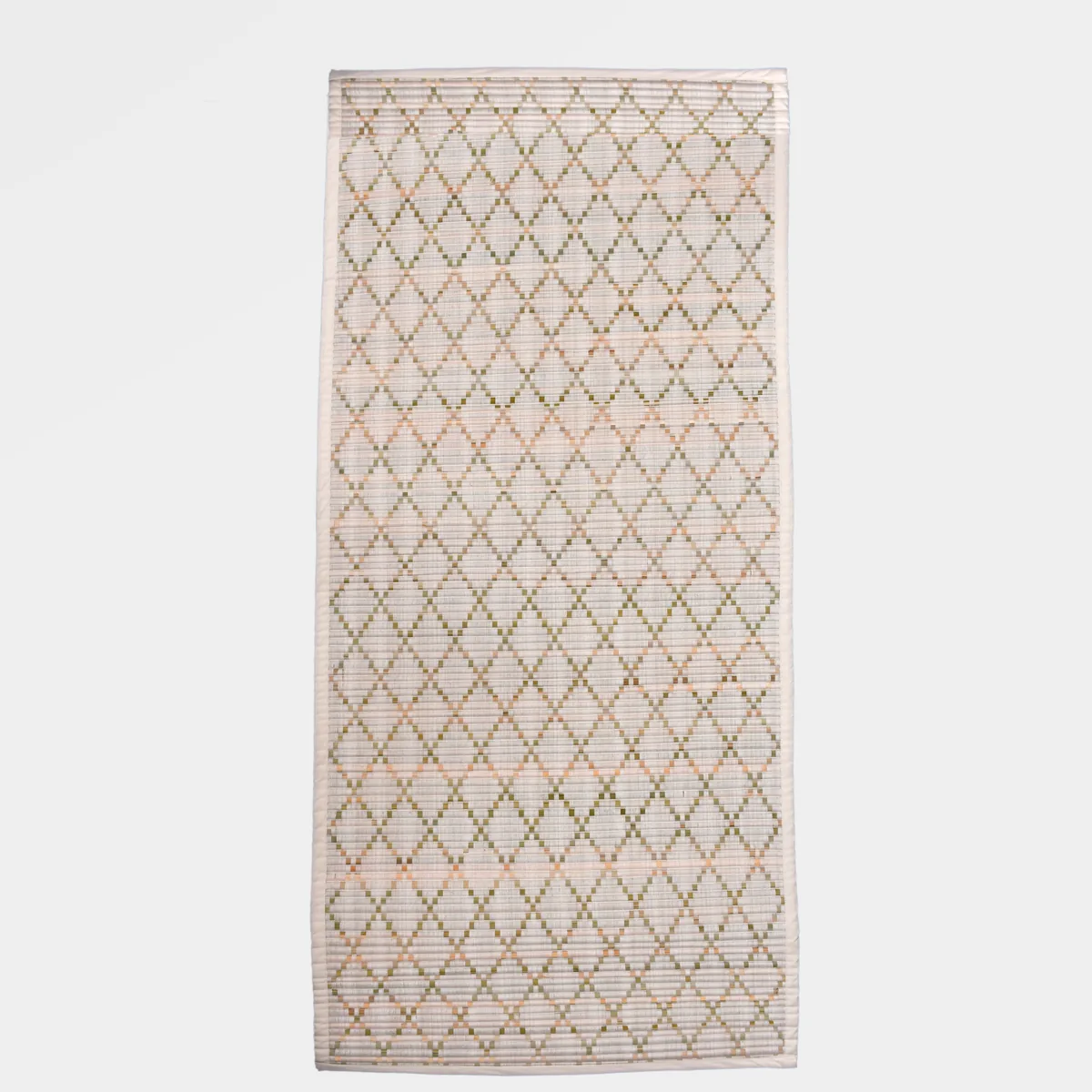
For our part: the cotton mats are GOTS-certified organic cotton (the certification covers the cotton, not the whole mat); the grass mats are sambhu grass woven with organic cotton; the banana mat is banana bark and fibre, cotton-bound; all have a natural tree-latex grip underneath. The Darbha is kusha grass backed in cotton cloth, with no latex. Dyes are plant-based, there is no PVC or synthetic foam in the range, and we pack without plastic.
9. What is a fair price?
Mat prices in India run from a few hundred rupees for a thin foam mat to several thousand for a handwoven or natural rubber one. At the time of writing our range sits between about ₹1,700 and ₹5,000: the Sambu Diamond grass mat at ₹1,999, the Indico at ₹4,499 and the Diamond Clay at ₹4,450. What you pay for in a handloom mat is weaving time, organic fibre, plant dyeing and a mat that can be washed and re-gripped rather than replaced. What you give up is the deep cushioning of thick foam and the low price of mass production.
10. Can you return it, and on what terms?
Handwoven goods vary slightly from piece to piece, and plant colour shifts between batches. Before buying any mat, read how the seller handles returns, what counts as a defect and whether the mat must be unused. Our Returns page sets out ours, and the Shipping page has delivery terms and the free-shipping threshold.
The checklist in one table
| Question | If your answer is… | Lean towards |
|---|---|---|
| Practice | Flowing, standing, sweaty | Grippy, absorbent cotton: Indico |
| Practice | Seated, pranayama, meditation | Firm, cool grass: Sambu Diamond |
| Knees | Sensitive on the floor | 7 mm cotton: Diamond Clay |
| Floor | Tile, marble, wood | Any mat with a latex grip layer |
| Floor | Carpet | Thin and firm (3 mm grass) |
| Washing | Want to machine wash | Diamond (delicate 30 °C, laundry bag) |
| Carrying | Daily to class | About 1 kg: grass mats |
| Height | Over 175 cm | 188 cm chakra rugs |
| Price | Up to ₹2,000 at the time of writing | Grass and banana fibre mats |
Frequently asked questions
What is the most important thing when choosing a yoga mat?
Grip that suits how you sweat. A mat that holds your hands and feet in your actual conditions, dry or damp, on your actual floor, matters more than thickness, colour or brand. Decide the grip question first, then thickness for your knees, then size and price.
How thick should a yoga mat be?
For most practitioners, 4–5 mm is the all-round thickness: enough for kneeling, firm enough for balance poses. Choose 6–7 mm if your knees are sensitive on the floor, and 3 mm for travel or seated practice. Dense woven cotton feels firmer than foam of the same thickness.
Is a cotton yoga mat a good choice for beginners?
Yes, provided you know its one habit: woven cotton can slip slightly when bone dry and grips better as it takes up a little moisture. Dampen your palms for the first week, let the mat warm up, and after that most people stop noticing. In return you get a mat you can wash properly and keep for years.
How much should I spend on a yoga mat?
Spend what buys a mat you will keep. A thin foam mat costs a few hundred rupees and wears out; a handwoven cotton or grass mat costs about ₹1,700–₹5,000 at the time of writing and can be washed, re-gripped and used for years. If you are unsure you will keep practising, a grass mat under ₹2,000 is a sensible first step.
Work through the ten questions, then browse all our mats with your answers in hand; if you are still torn between two, write to us through the Contact page and we will tell you honestly which we would weave for you.