The best cotton yoga mat in India is one that was woven densely enough not to bunch under your feet, has an honest answer about how it was dyed, and has a grip layer on the underside that you can renew rather than replace. Thickness matters less than people think; weave density and backing matter more. Below we explain how to compare cotton mats on those points, and where our own three cotton mats sit, with prices at the time of writing.

What a cotton mat does well, and where it does not
A woven cotton mat (often called a yoga rug) is a different kind of object from a foam mat, and it is fairer to say what it is for than to pretend it does everything.
It absorbs sweat, so the surface gets more secure as you warm up rather than slicker. It is washable, which a foam mat never truly is. It is warm on a cold floor, does not smell, does not flake, and rolls small. A well-woven one lasts for years.
It is not as cushioned as foam of the same thickness, because woven cotton compresses less. It can slip under the hands when both mat and palms are bone dry; a damp cloth wiped over the surface fixes that. And plant-dyed cotton softens in colour over time, which you should know before you buy. We compare the two materials fairly in cotton versus rubber yoga mats.
Handloom or power loom: how to tell and why it matters
Many cotton yoga mats sold in India are woven on power looms. Some, including ours, are woven on handlooms, which run on the weaver's arms and feet rather than electricity. The result is not automatically better, but it is different, and worth paying for if you value it.
Things to look for and ask about:
- Slight irregularity. A handwoven mat has small variations in the beat of the weft, and no two are identical. Perfect uniformity across a whole run usually means a machine.
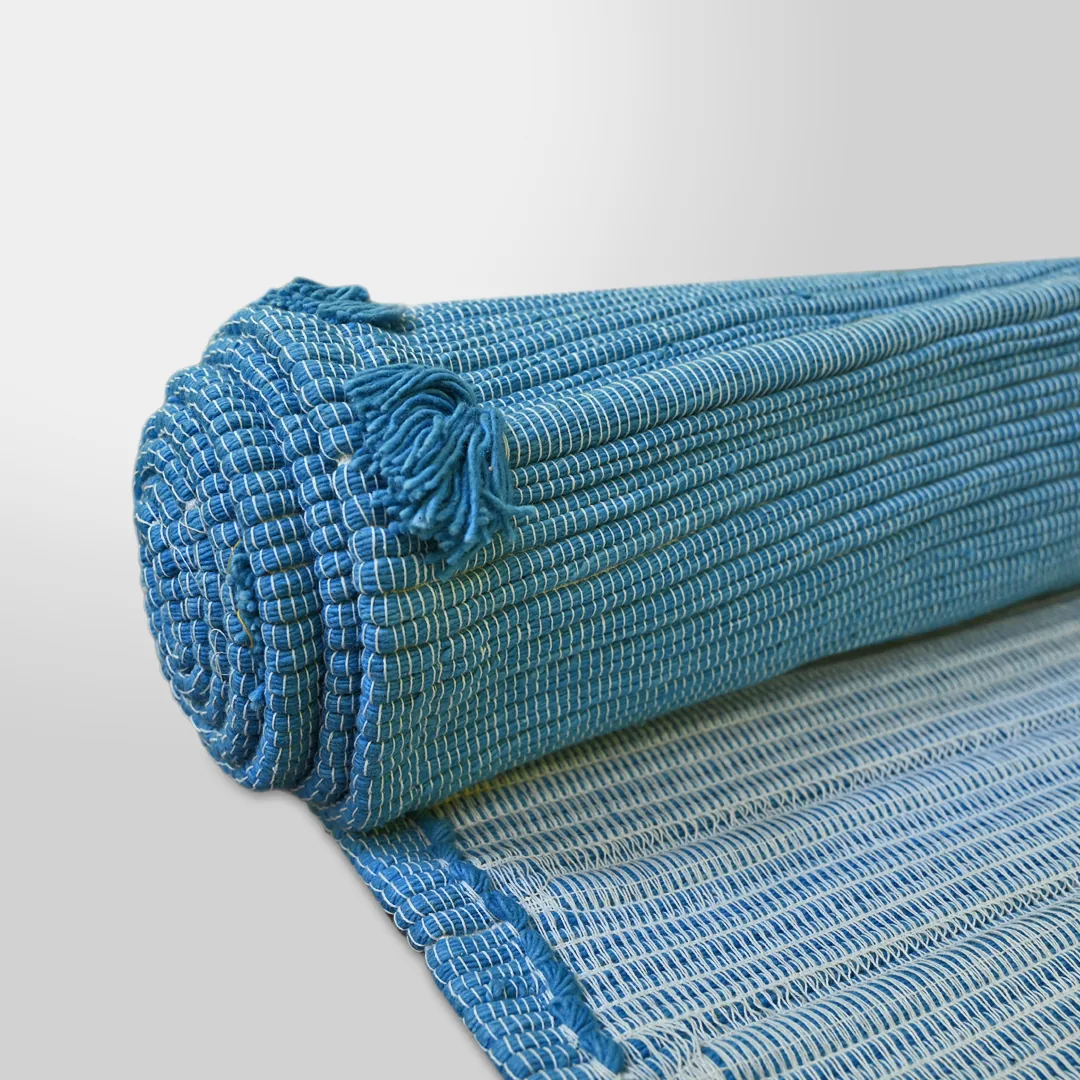
- Hand-knotted tassels. On ours the warp ends are knotted by hand; machine finishing tends to bind or stitch them.
- A straight answer. Ask whether the mat was woven on a handloom or a power loom, and where. We weave in Komarapalayam, Namakkal district, Tamil Nadu, with our own weavers and our own dyeing; that is the kind of specific you should be able to get from anyone.
Ply and density: why 5 mm of cotton is not 5 mm of foam
Thickness is the number on the label. Density is what you feel. A six-ply cotton rug 5 mm thick is a heavy, tight weave that does not compress much under a knee; a 5 mm foam mat is mostly air and gives far more.
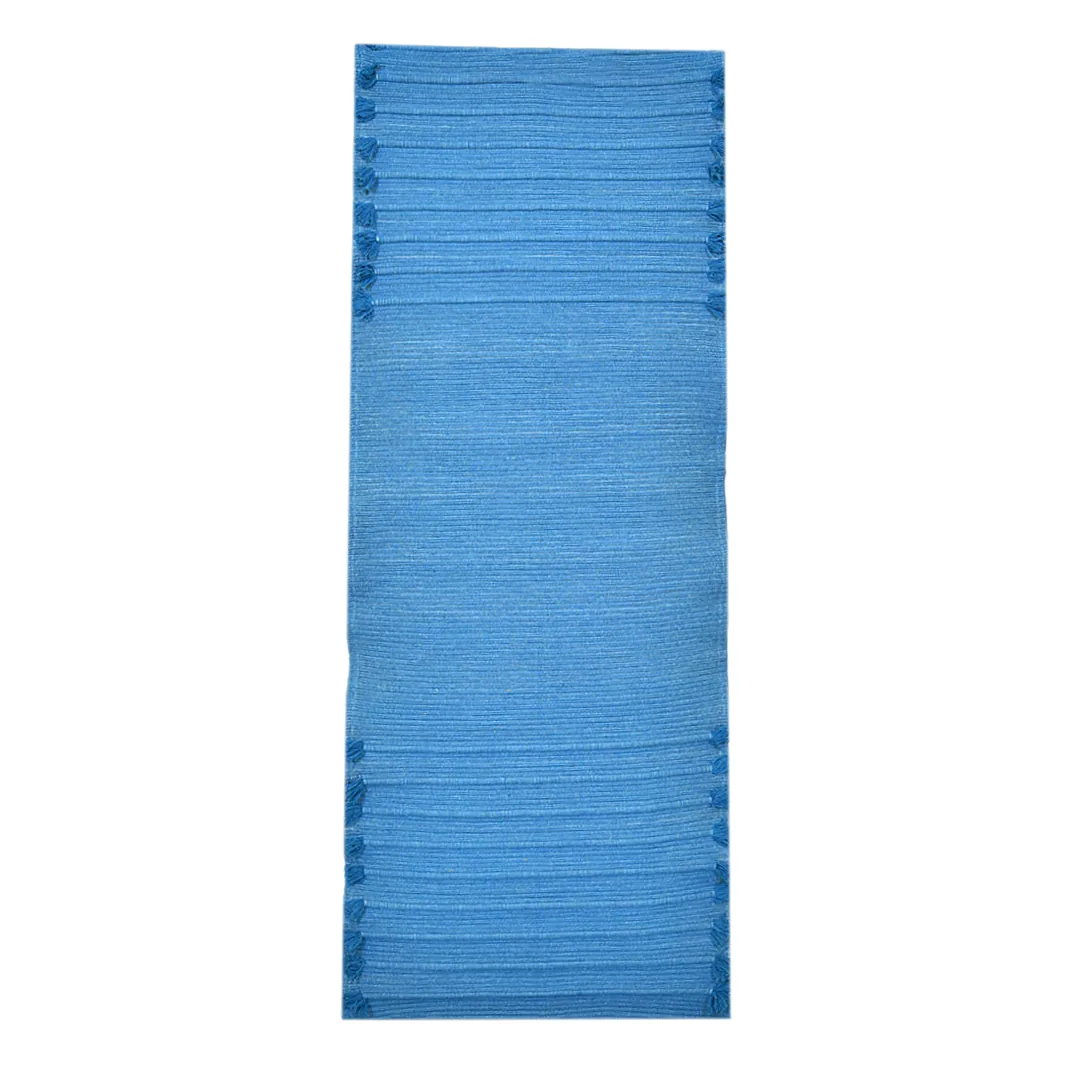
For cotton, ask how many plies the yarn is and how much the mat weighs for its size. Weight is the quickest honest proxy for density: our 5 mm Indico weighs about 1.4 kg at 183 × 68 cm, our 5 mm six-ply Prana Shakti about 1.5 kg at 188 × 69 cm, and our 7 mm Diamond Clay about 1.8 kg at 183 × 68 cm. A cotton mat of the same size that weighs much less is a looser weave and will bunch sooner. We go deeper into this in six-ply weave explained.
The backing: what stops a cotton mat sliding
A plain cotton rug on a polished tile floor will travel. Makers solve this with a full rubber or foam base glued underneath (which stops the mat being washable), a woven rubber-cotton blend, or a thin coat of natural latex brushed onto the underside.
We use the third. A thin layer of natural tree latex is brushed by hand onto the back of every cotton mat we weave. It holds on tile, marble and wood, it survives hand washing, and when it softens after many washes a thin fresh coat restores it. If you are allergic to natural latex, choose with care and write to us first.
Ask what the backing is and whether it can be renewed. A glued foam base cannot; once it crumbles, the mat is finished.
Dyes: what to ask about colour
Cotton takes dye well, which is why cotton mats come in every colour. Ask what the dye is. Synthetic dyes give bright, flat, batch-perfect colour that holds for years; plant dyes give softer colour that varies between batches and fades gently. Both are legitimate, so long as the seller tells you which.
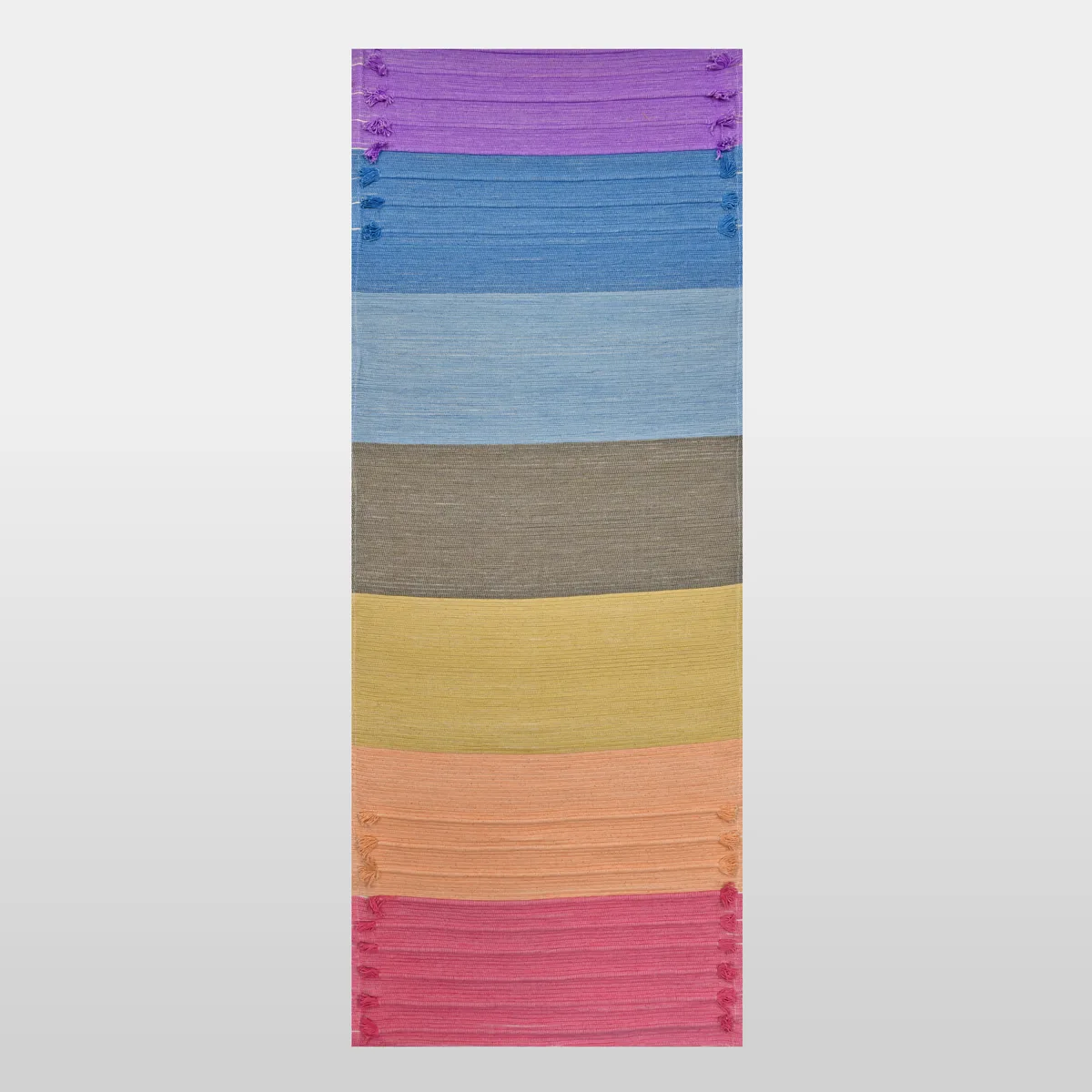
We dye with plants: indigo leaves for the Indico, alkanet root for the Diamond Clay, and a palette of more than twenty herbs, including turmeric, neem and tulsi, for the chakra rugs. A little colour in the first rinse is normal. Wash separately for the first few washes and dry flat in shade; sun fades plant colour faster than anything else. The full method is in how to wash a cotton yoga mat.
Price bands at the time of writing
Prices change and are set on each product page, so treat these as a guide. Power-loom cotton mats with a synthetic backing sit at the lower end of the cotton range. Handwoven mats in GOTS-certified organic cotton, with plant dyes and a hand-applied latex grip, cost more because each takes a weaver's time and the materials cost more to start with. Our cotton mats run from about ₹3,500 to ₹4,500 at the time of writing.
Our three cotton mats compared
| Indico | Prana Shakti | Diamond Clay | |
|---|---|---|---|
| Cotton | GOTS-certified organic | GOTS-certified organic, six-ply | GOTS-certified organic |
| Thickness | 5 mm | 5 mm | 7 mm |
| Size | 183 × 68 cm | 188 × 69 cm | 183 × 68 cm |
| Weight | ≈1.4 kg | ≈1.5 kg | ≈1.8 kg |
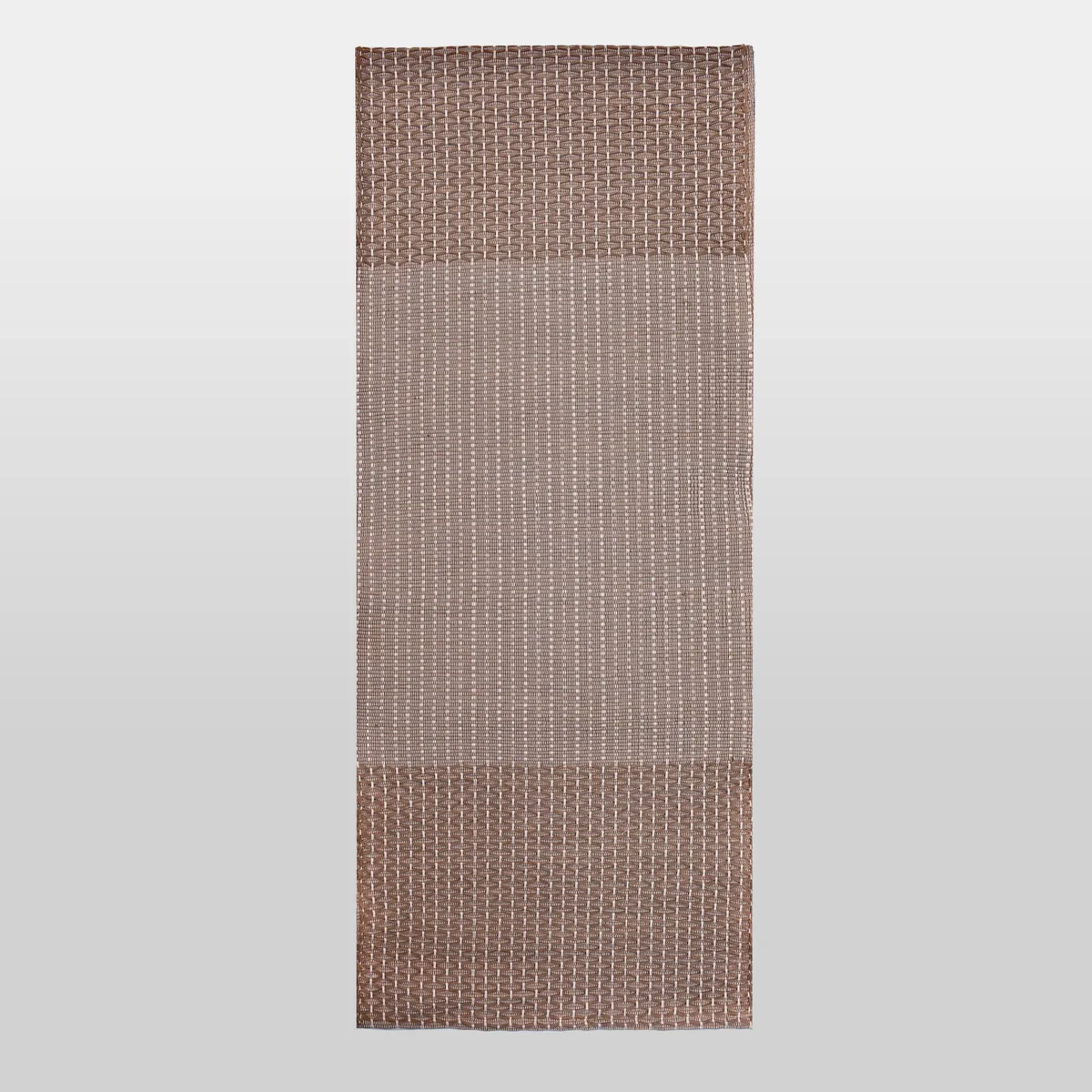
| Colour | True indigo, ribbed weave, hand-knotted tassels | Rose ground, seven chakra bands in plant dyes | Clay from alkanet root, raised diamond lattice |
| Washing | Hand wash cold, dry flat in shade | Hand wash cold, dry flat in shade | Machine wash delicate 30 °C in a laundry bag, or hand wash |
| Best for | Daily flowing practice, anyone who wants one colour and the weave on show | Standing and seated practice with a little more give; the longest of the three | Kneeling, floor work, anyone whose knees want the extra 2 mm |
| Price at the time of writing | ₹4,499 | ₹3,499 | ₹4,450 |
Frequently asked questions
Do cotton yoga mats slip?
A cotton mat can slip under bone-dry hands, and a plain cotton rug will slide on polished tile unless it has a grip layer. Ours have a thin coat of natural tree latex brushed onto the underside to hold the mat to the floor, and the surface grips better once your palms are slightly damp, so a damp cloth before practice or simply warming up fixes most slipping.
Can I machine wash a cotton yoga mat?
It depends on the mat. Our Diamond mats can go through a delicate 30 °C cycle in a laundry bag; our Indico and chakra rugs are better hand washed cold with a mild natural detergent, because machine washing can fade plant dyes. All of them should be dried flat in shade, never tumble dried or bleached.
How thick should a cotton yoga mat be?
For most practice, 5 mm of densely woven cotton is enough, because it compresses far less than foam of the same thickness. Choose 7 mm, such as our Diamond mats, if you spend a lot of time kneeling or on the floor and want more between you and the tiles.
Is a cotton yoga mat good for hot yoga?
Yes. Cotton absorbs sweat, so the surface becomes more secure as you heat up rather than slicker, which is the opposite of a rubber or foam surface. The mat will be heavier when wet and must be dried flat in shade after class.
What does GOTS-certified mean on a cotton mat?
GOTS is the Global Organic Textile Standard. It applies from fibre processing through to the finished textile, covering spinning, wet processing, manufacturing and trading, with requirements on chemical inputs and on human rights; the farming itself is covered by separate organic certification (global-standards.org). On our mats the certification is for the cotton, so we say "GOTS-certified organic cotton" rather than "GOTS-certified mat".
If you are weighing the three, the cotton mats are listed together with full care notes, and the Indico page is a good place to start if you want to see the weave itself up close.