A natural rubber yoga mat grips best when your hands are dry and gives generous cushioning; a woven cotton mat grips better as your palms dampen, can be washed like cloth and weighs less. Rubber wins on padding and dry-hand stickiness; cotton wins on sweaty practice, washing and the way it ages. Which is better depends on how much you sweat and how much you kneel.

What each mat is made of
Natural rubber is harvested as latex, mainly from the Pará rubber tree, Hevea brasiliensis (Wikipedia). A rubber yoga mat is that rubber, foamed or layered, sometimes with a polyurethane or fabric top. Some "rubber" mats on the market are synthetic rubber or blends; the spec sheet should say which.
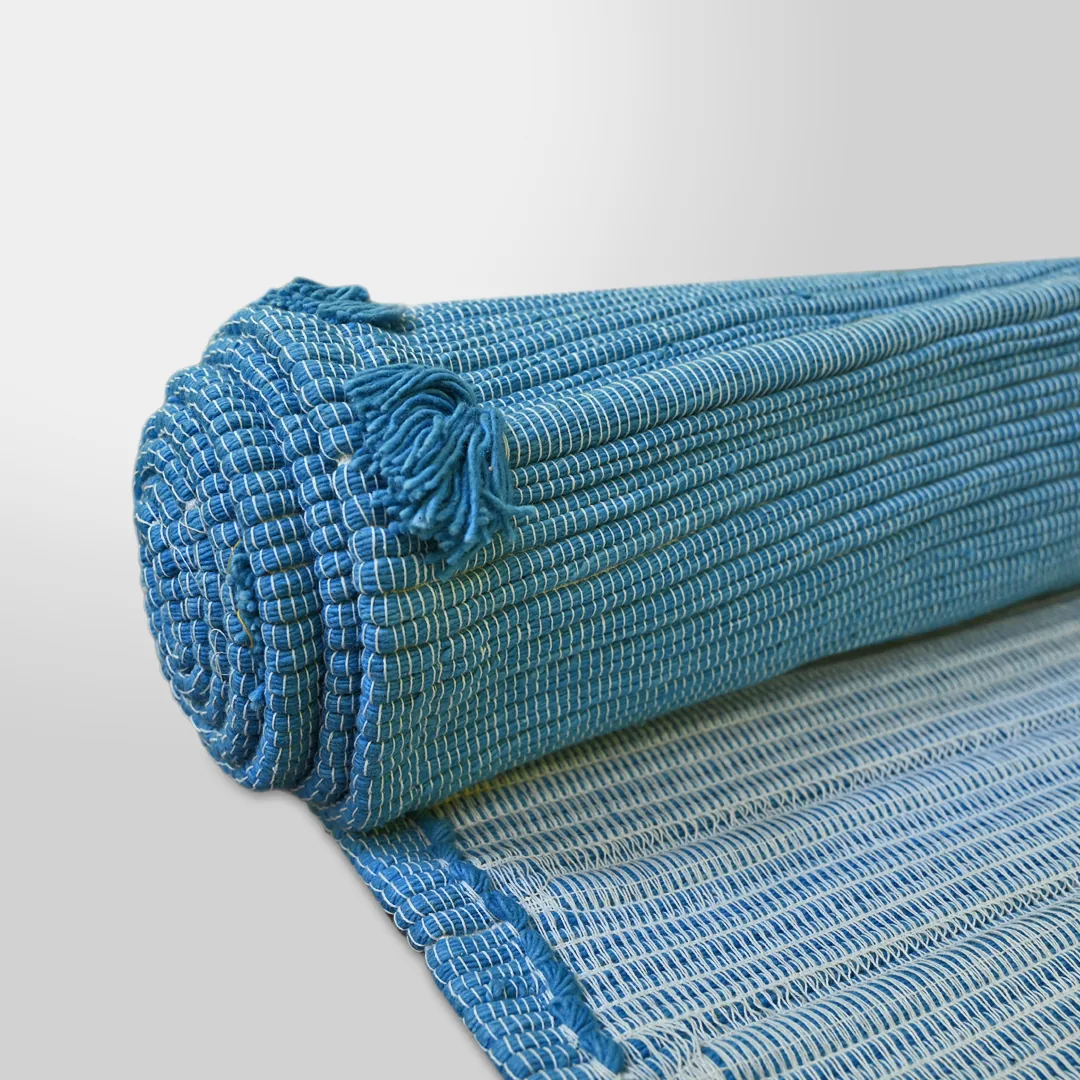
A cotton yoga mat is woven cotton yarn. Ours is handwoven from GOTS-certified organic cotton (the certification covers the cotton), dyed with plants, and finished with a thin layer of natural tree latex brushed by hand onto the underside so the mat holds on tile, marble and wood. That latex layer is far thinner than a rubber mat, but it is still natural latex: if you are allergic to natural latex, choose with care and write to us first. Latex allergy is a reaction to proteins in natural rubber latex (Wikipedia), and it applies to both kinds of mat.
Grip: dry hands versus damp hands
This is the deciding difference.
Rubber is tacky. With dry palms on a clean rubber mat you can hold a long downward dog without a thought. As you sweat, the film of water between skin and rubber reduces that grip, which is why hot-yoga studios are full of towels laid over rubber mats.
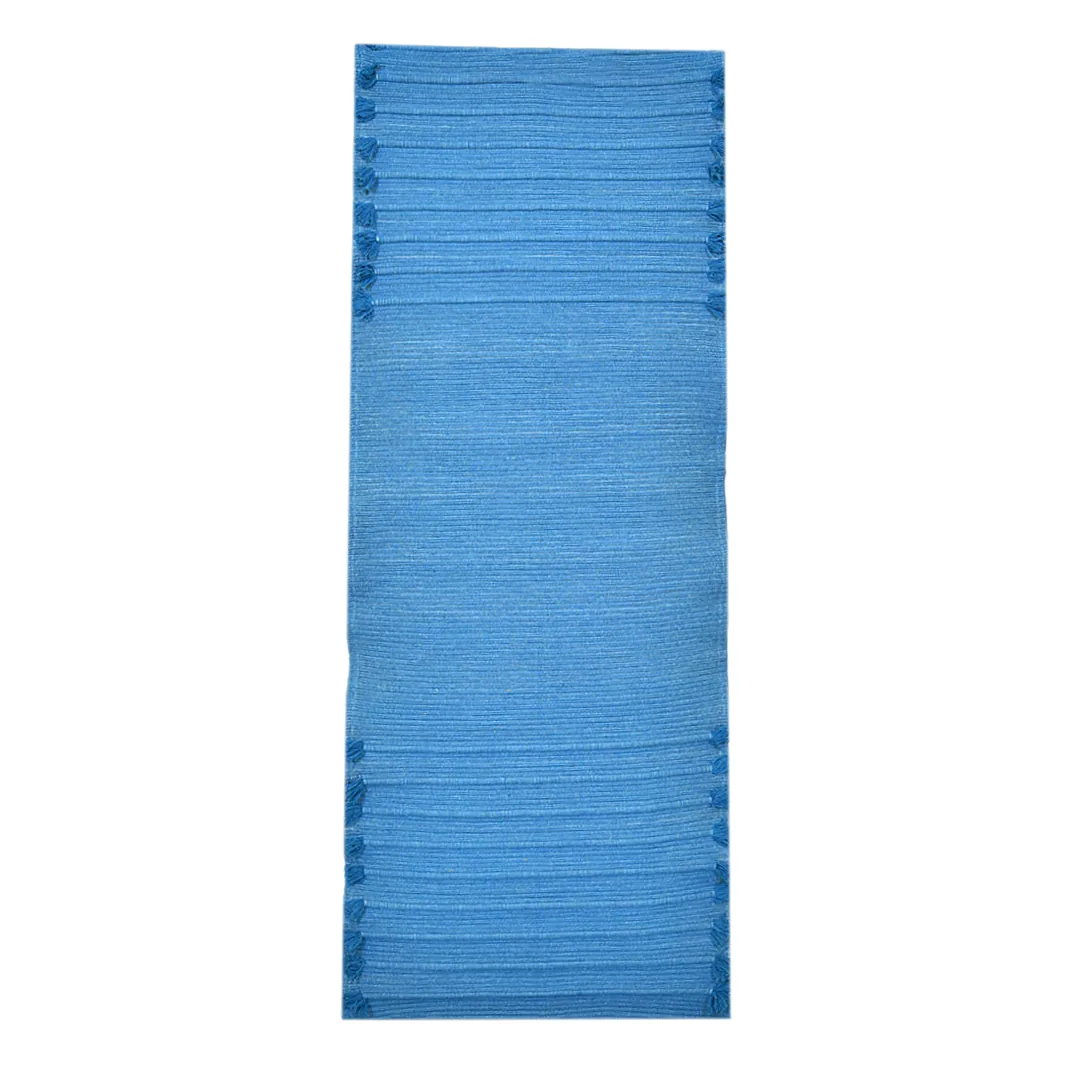
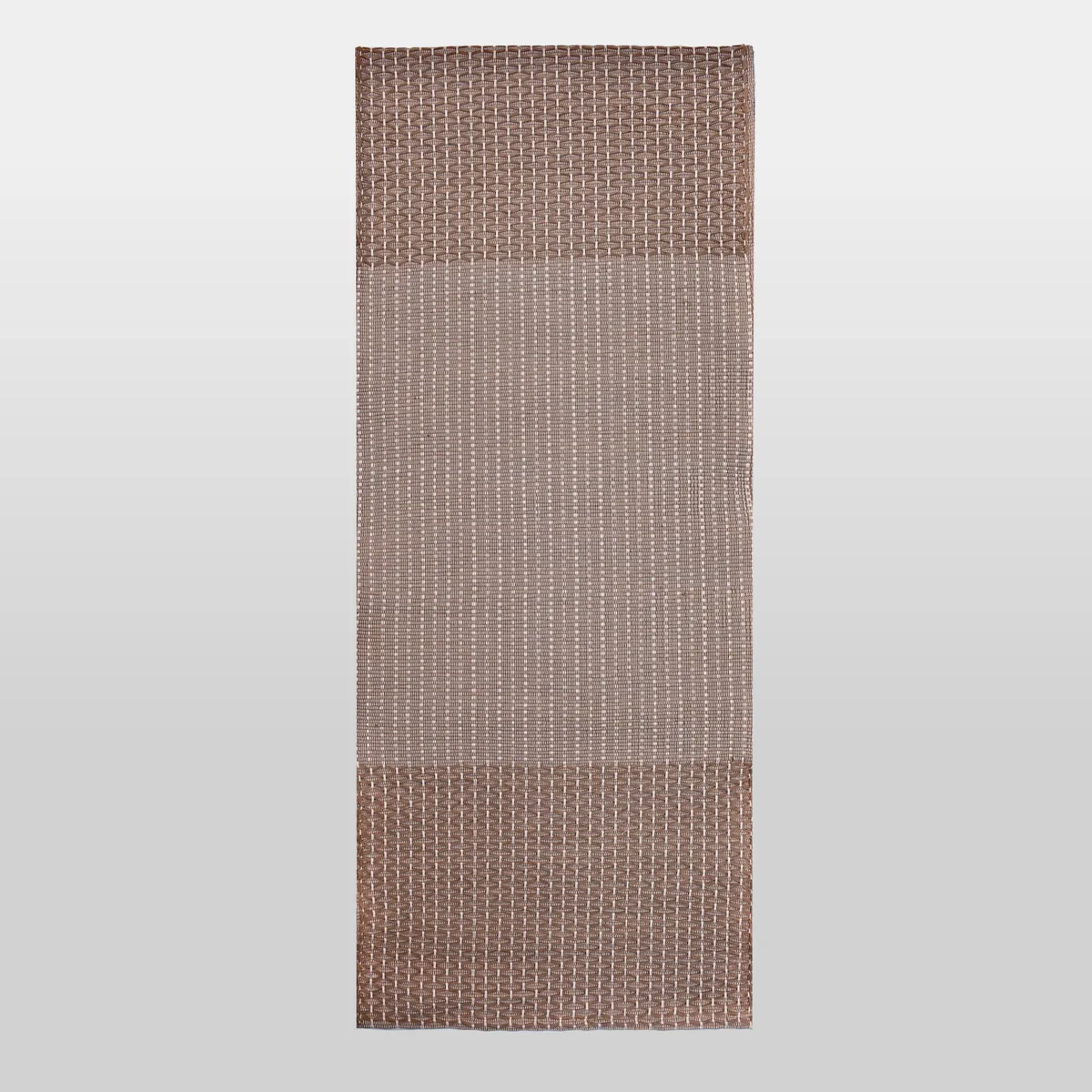
Woven cotton is the opposite. Bone dry and brand new, it can slip a little, particularly on a dusty tile floor. As your palms dampen, the fibre takes up the moisture and your hands settle in. By the middle of a sweaty practice a cotton mat like the Indico is at its best, and the ribbed weave gives your fingers something to hold. The raised lattice on the Diamond Clay adds a second kind of grip, texture, on top of the absorbency.
Our honest guidance: if you rarely sweat and practise slowly, rubber feels more secure on day one. If you sweat, practise in a warm room or do Surya Namaskar at speed, cotton gets better as you go, and there is nothing to add on top.
Cushioning: rubber wins
A 4–5 mm rubber mat compresses softly under knees and elbows. Woven cotton is dense, so 5 mm of cotton feels firmer than 5 mm of rubber and does not bounce. For balance poses and standing work that firmness is an advantage; for long kneeling or supine work it is a trade-off. Our 7 mm Diamond mats are the ones we weave for people who want more under the knee, and a folded blanket does the rest. If you want deep, soft padding, rubber is the better material, and a cotton rug over a rubber mat gives you both.
Weight and carrying
Natural rubber is heavy; full-thickness rubber mats from most makers weigh more than a cotton mat of the same size. Our cotton mats weigh about 1.4–1.8 kg, and our grass mats about 1 kg. If you carry a mat to class daily, weight matters more than it seems in the shop.
Smell
New natural rubber has a strong smell that fades over weeks with airing; some people never mind it and some never get used to it. Cotton dyed with plants smells faintly of the dye bath when new and of nothing at all after the first wash. If you are sensitive to smells, this alone can decide it.
Washing and hygiene
A rubber mat is wiped with a damp cloth or a mild spray. It should not be soaked, and the material is "damaged by aging, sunlight, oil and perspiration" (Wikipedia), so it is kept out of the sun and away from oils. Sweat soaks into the surface over time.
A cotton mat is washed. The Indico and the chakra rugs are hand washed cold with a mild natural detergent and dried flat in shade; the Diamond mats take a delicate 30 °C machine cycle in a laundry bag. Cold water only, no bleach, no softener, no tumble dryer, no direct sun. Plant dyes soften over years and a little colour in the first rinse is normal. Our Mat care page has the full instructions.
Lifespan and what wears out
A rubber mat wears from the top: the surface flakes or goes shiny, edges can crumble, and sun shortens its life. When it goes, it goes. A cotton mat wears like cloth: the colour softens, the surface fluffs slightly, and after many washes the latex grip underneath can soften. A thin fresh coat of natural latex restores it, so the mat is renewed rather than replaced. Neither material is immortal, and we do not promise a number of years for ours; how you wash, dry and store it decides more than the material does.
Price
At the time of writing our cotton mats cost about ₹3,500–₹4,500 (the Indico at ₹4,499, the Diamond Clay at ₹4,450), and a good natural rubber mat in India sits in a similar or higher band. Cheaper mats labelled "rubber" are often blends or synthetic foams; read our comparison of cotton with PVC and TPE mats for those. In both cases the price buys material and labour; for handloom cotton that means organic yarn, plant dyeing and hours at the loom.
Side by side
| Natural rubber mat | Handwoven cotton mat | |
|---|---|---|
| Grip, dry hands | Excellent | Fair; improves after a week |
| Grip, sweaty hands | Falls off; towel needed | Improves |
| Cushioning | Soft, generous | Firm, dense (5–7 mm) |
| Weight | Heavy | ≈1.4–1.8 kg |
| Smell when new | Strong, fades | Faint dye smell, gone after first wash |
| Cleaning | Wipe only; avoid sun and oils | Hand or machine wash by mat |
| Sun | Degrades rubber | Fades plant dyes; dry in shade |
| Wear | Surface flakes, edges crumble | Colour softens; grip re-coatable |
| Latex | Yes, throughout | Thin natural latex layer underneath |
| Price band (at the time of writing) | Mid to high | ₹3,500–₹4,500 |
We have tried to be fair here: rubber is the better material for cushioning and dry grip, and a well-made one is a pleasure to practise on. Our fuller look at its strengths and weaknesses is in natural rubber yoga mats: pros and cons.
Frequently asked questions
Which is better, a cotton or a rubber yoga mat?
Neither is better for everyone. A rubber mat grips best with dry hands and cushions more; a cotton mat grips better as you sweat, can be washed properly and weighs less. Choose rubber for slow practice with dry palms and sensitive knees, cotton for sweaty or fast practice and easy washing.
Do cotton yoga mats slip?
A new cotton mat can slip slightly when bone dry, especially on dusty tiles. Sweep the floor, dampen your palms and let the mat warm up for the first week; once your hands are even slightly damp, cotton grips better than dry. Underneath, a natural latex layer holds the mat to the floor.
Can I wash a rubber yoga mat like a cotton one?
No. Rubber mats are wiped with a damp cloth and kept out of the sun; soaking or machine washing damages them. Cotton mats can be hand washed cold, and some, such as our Diamond mats, can be machine washed on a delicate 30 °C cycle in a laundry bag.
Do cotton yoga mats contain latex?
Ours do: a thin layer of natural tree latex is brushed onto the underside for grip, much thinner than a rubber mat but still natural latex. The Darbha grass mat is the exception, being backed in cotton cloth. If you are allergic to natural latex, choose with care and write to us first.
If the sweaty-hands side of the table sounds like you, start with the Indico, or the 7 mm Diamond Clay if your knees want more; both sit in our cotton collection.