A natural rubber yoga mat is made from the latex of the rubber tree, foamed and vulcanised into a dense sheet, and it is among the best-gripping, best-cushioned mat materials you can stand on. The trade-offs are real: it is heavy, it has a smell that fades but seldom vanishes, it breaks down in sunlight, it cannot be washed, and it contains natural latex, which some people are allergic to. Our mats use natural latex too, but as a thin layer brushed onto the underside of a woven cloth, which behaves very differently from a full rubber mat.

Where natural rubber comes from
Natural rubber is tapped as latex from the Pará rubber tree, *Hevea brasiliensis*, by cutting the bark and collecting the milky fluid. Thailand, Malaysia, Indonesia and Cambodia are among the leading producers. The raw material is vulcanised, heated with sulphur or other agents to cross-link the polymer chains, which makes it elastic, dense and permanently set; unlike TPE, it cannot be remelted.
It is a plant product, and the tree is tapped rather than felled. That is the honest basis for calling it natural.
The pros
Grip. On a clean, dry floor a rubber mat does not move. Under the hands it is tacky without being sticky, and it keeps most of that traction as the palms dampen.
Cushioning. Rubber is dense, so a 4 or 5 mm rubber mat gives support that does not bottom out under the knee the way soft foam can.
Durability. Kept out of the sun, a good rubber mat lasts years of daily use and resists tearing better than TPE.
Plant-derived and PVC-free. A mat that is genuinely all natural rubber contains no PVC and no petroleum foam. Check the label; some "rubber" mats are blends.
The cons
Weight. Dense is heavy. A full-size rubber mat is noticeably heavier than a woven one. It is a mat for a home corner or a studio locker, not a bus ride.
The smell. New natural rubber smells of rubber, strongly for weeks and faintly for a long time after. Airing it unrolled in a shaded, ventilated room helps most. Sun does not.
Sunlight and sweat. Natural rubber lacks resistance to oxidising agents and is damaged by ageing, sunlight, oil and perspiration, and is sensitive to ozone cracking. A rubber mat left on a sunny terrace goes hard, cracks and crumbles. Keep it indoors, roll it loosely, wipe it after a wet practice.
Cannot be washed. Wipe with a damp cloth and a little mild soap. Never soak or machine wash; strong cleaners break the surface down.
Latex allergy. Natural rubber latex contains proteins that can cause allergic reactions. Reactions range from hives and irritation where the skin touches latex to rhinitis, bronchospasm and, in severe cases, anaphylaxis (Wikipedia: Latex allergy). A full rubber mat is a large area of that material against the skin for an hour at a time. If you are allergic to natural latex, choose with care and write to us first.
A thin latex layer is not a rubber mat
Our woven mats also use natural tree latex, so it is fair to ask how they differ. The difference is amount and position.
| Full natural rubber mat | Our woven mats with a latex underside | |
|---|---|---|
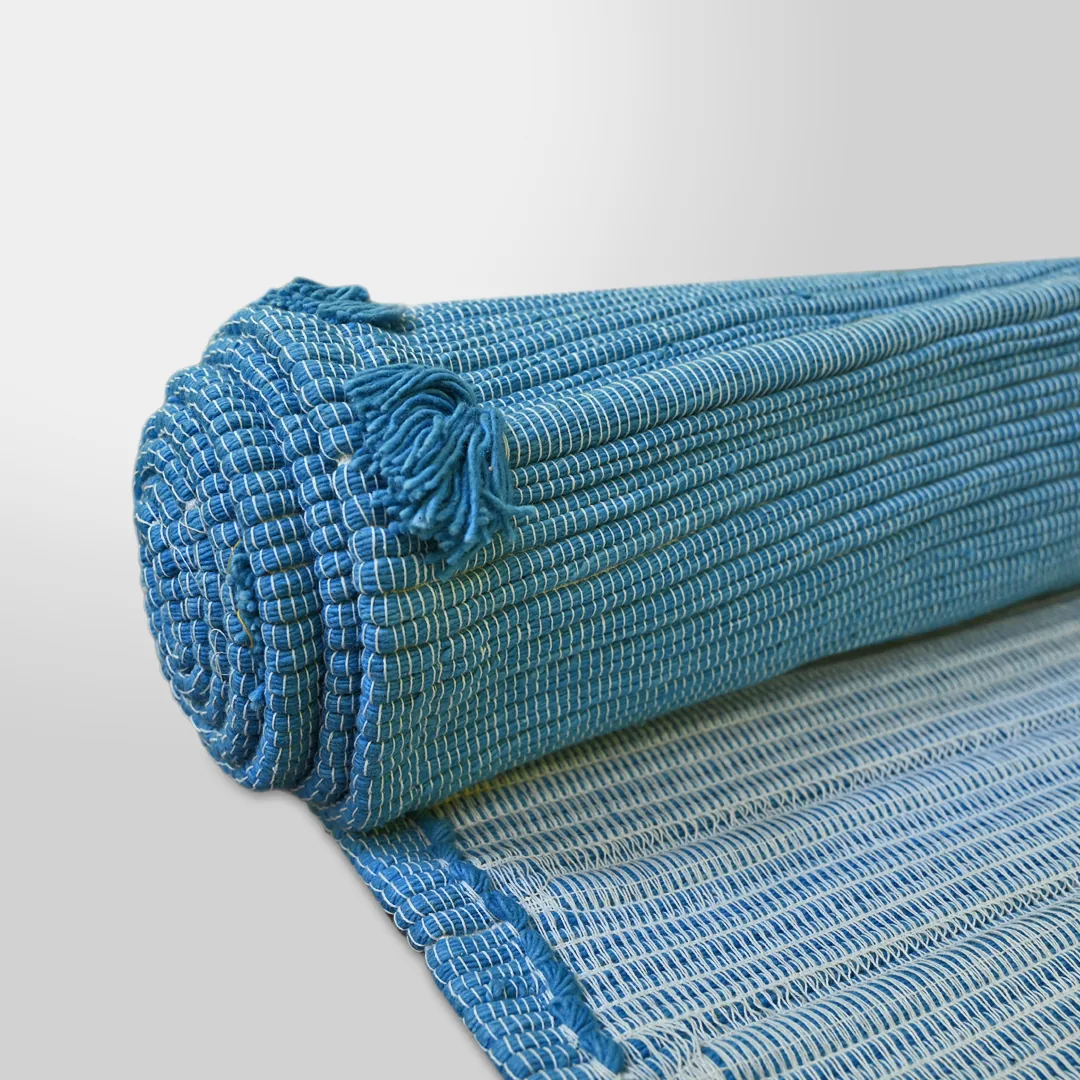
| Where the rubber is | The whole mat | A thin coat brushed by hand onto the underside only |
| What you touch | Rubber | Handwoven GOTS-certified organic cotton, or grass |
| Job of the rubber | Grip, cushioning, structure | Floor grip only; the weave does the rest |
| Smell | Noticeable, fades slowly | Faint when new, gone quickly |
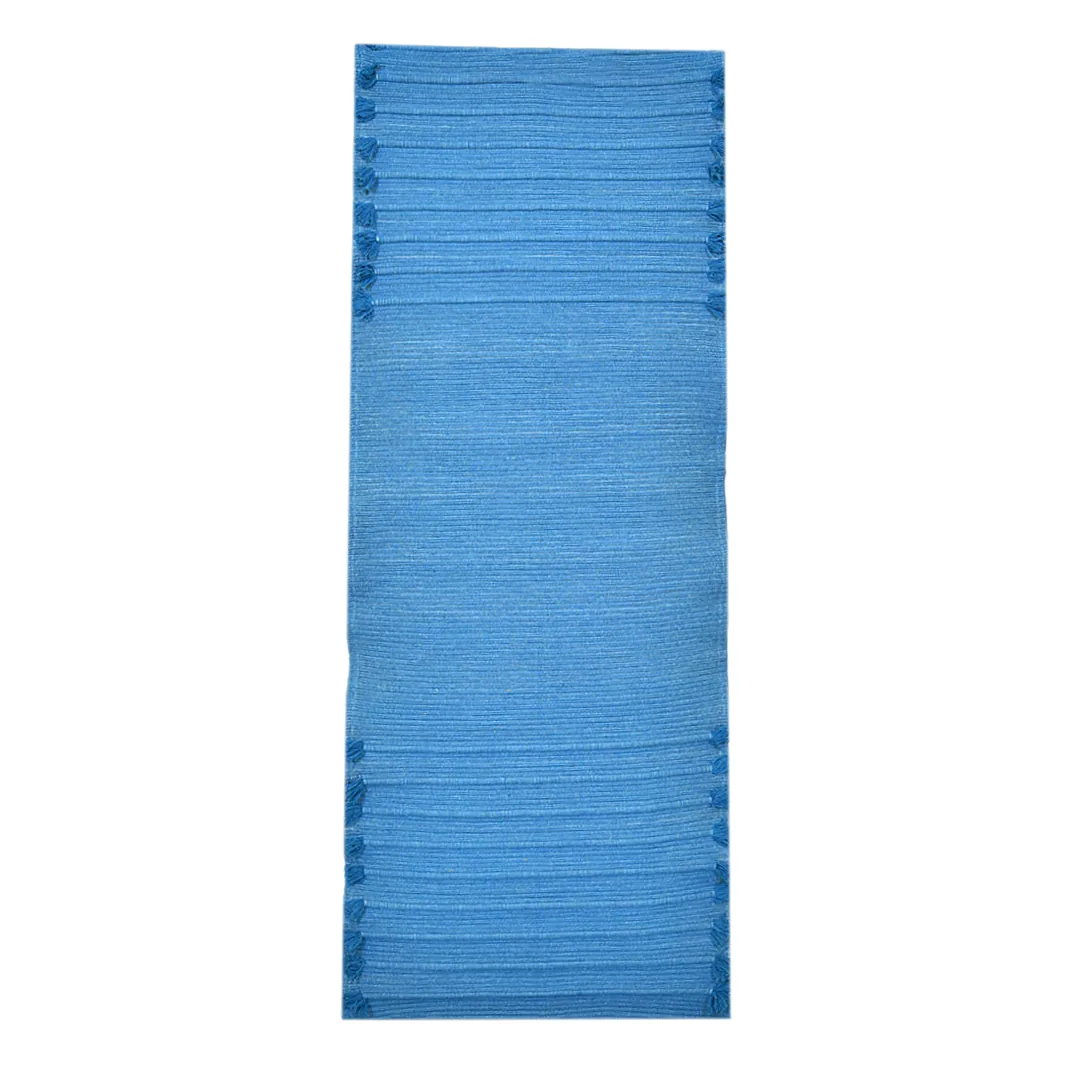
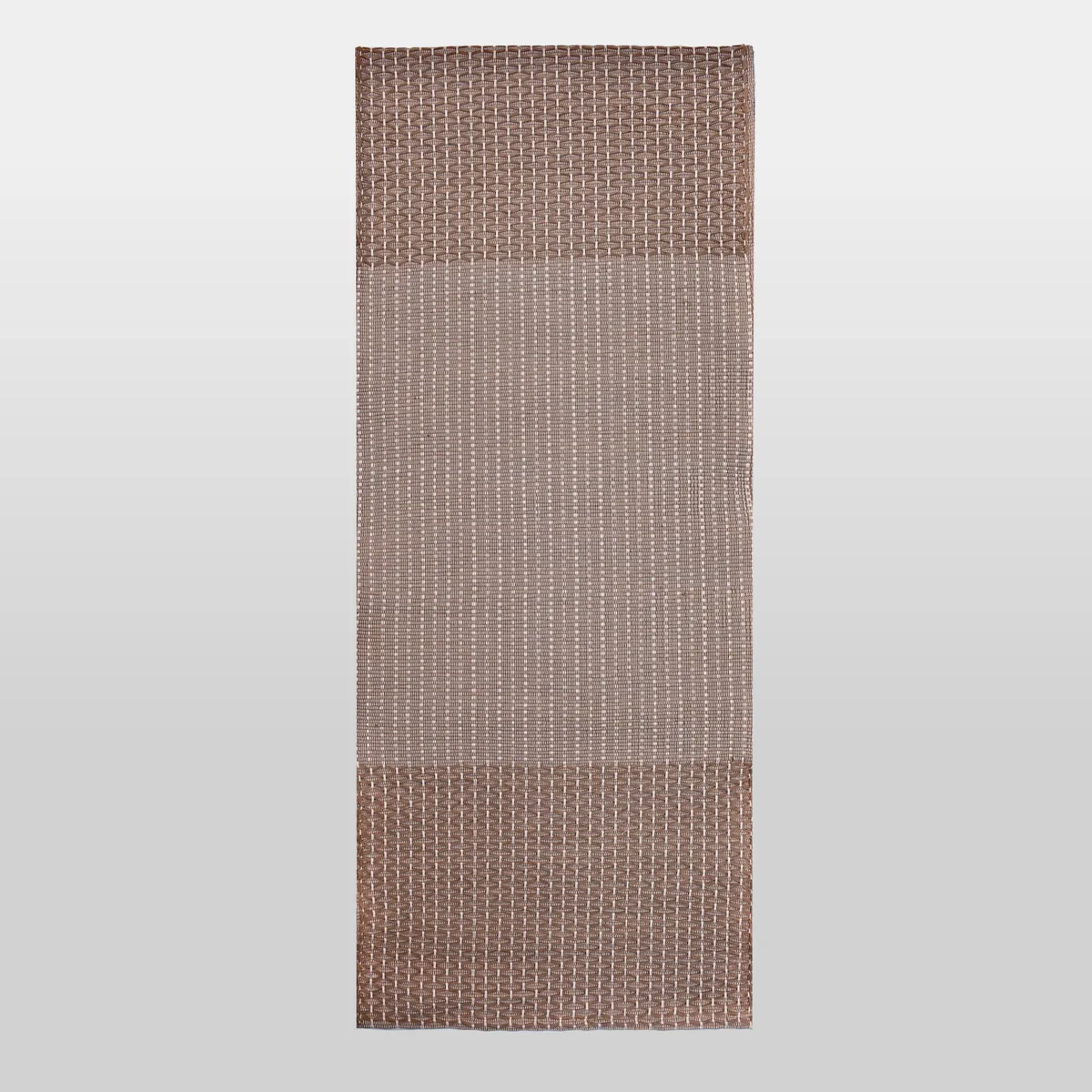
| Cushioning | From the rubber | From the cotton: 5 mm ribbed on Indico, 7 mm lattice on Diamond Clay |
| Washing | Wipe only | Indico hand wash cold; Diamond on a delicate 30 °C cycle in a laundry bag |
| When grip softens | Replace the mat | A thin fresh coat of natural latex restores it |
| Weight | Heavy | About 1.4–1.8 kg |
The latex on our mats holds on tile, marble and wood. After many washes it can soften, and a thin fresh coat brings it back, as described in the natural latex grip layer explained. Our honest limit is that cotton can slip when bone dry, where rubber never does; damp palms or a few minutes of practice usually settle it. The allergy caution applies to our mats too, even though the layer is thin and underneath.
For the two surfaces compared in full, see cotton yoga mat vs rubber yoga mat.
Frequently asked questions
Do natural rubber yoga mats smell?
Yes. New natural rubber has a strong, distinctive smell that fades over weeks of airing but often remains faintly for the life of the mat. Unroll it in a shaded, ventilated room rather than in the sun, because sunlight damages rubber.
Can you leave a rubber yoga mat in the sun?
No. Natural rubber is damaged by sunlight and sensitive to ozone cracking, so a mat left on a sunny terrace or in a hot car hardens, cracks and begins to crumble. Keep it indoors, dry it in shade after wiping, and roll it loosely.
Is a natural rubber yoga mat safe with a latex allergy?
Not without care. Natural rubber latex contains proteins that can cause reactions from hives to, in severe cases, anaphylaxis, and a rubber mat puts a large area of it against the skin. If you have a latex allergy, avoid full rubber mats and check any mat with a latex layer, including ours, by writing to the maker first.
What is the difference between a rubber mat and a cotton mat with a latex backing?
A rubber mat is rubber all the way through and heavy. A cotton mat with a latex backing has a thin coat of natural latex brushed onto the underside only; you practise on woven cotton, the mat weighs around 1.4 to 1.8 kg, it can be washed, and the latex can be refreshed with a thin new coat when it softens.
If you want rubber-like floor grip without practising on rubber, the Indico is our plainest cotton mat and the Diamond Clay our most cushioned; both are in the cotton collection.