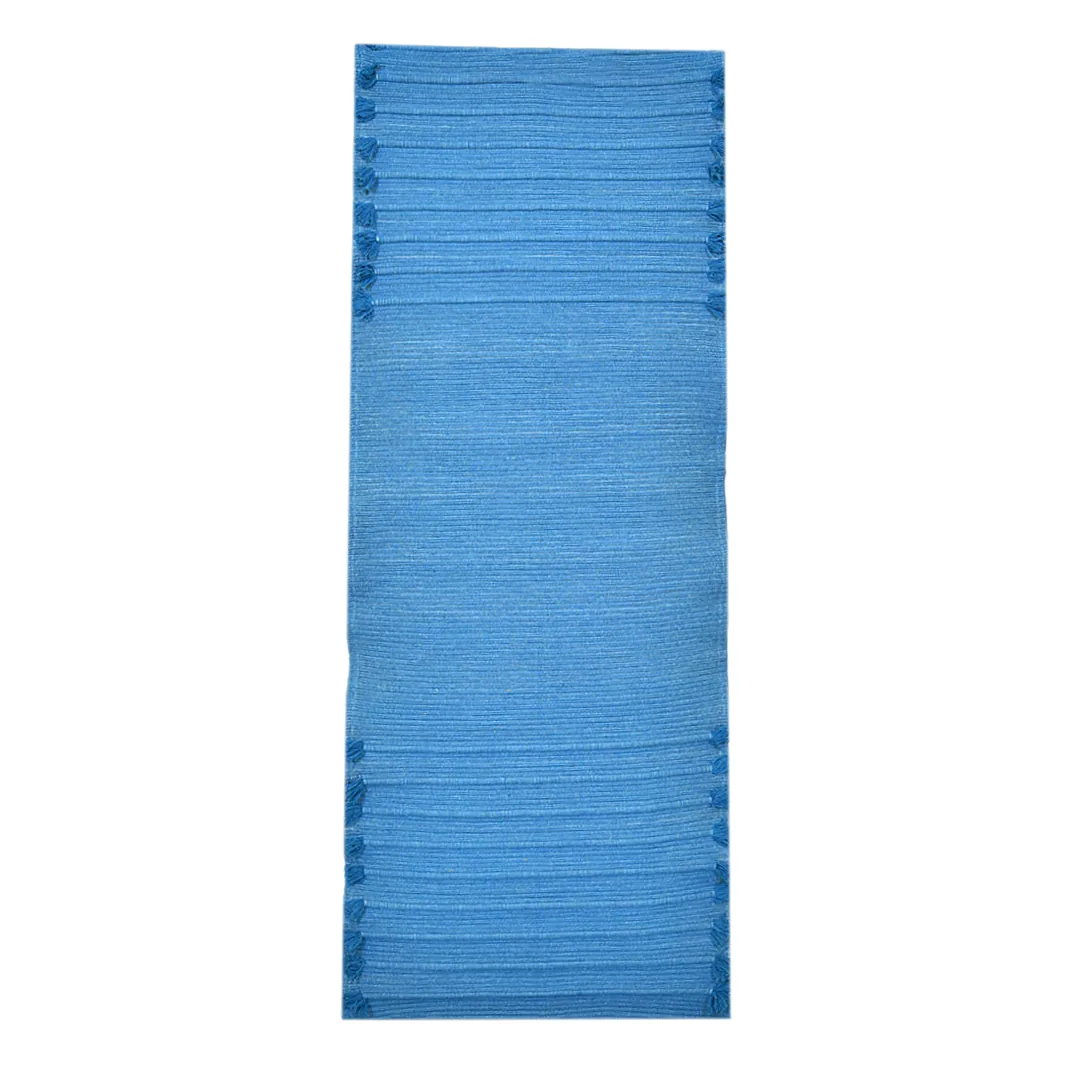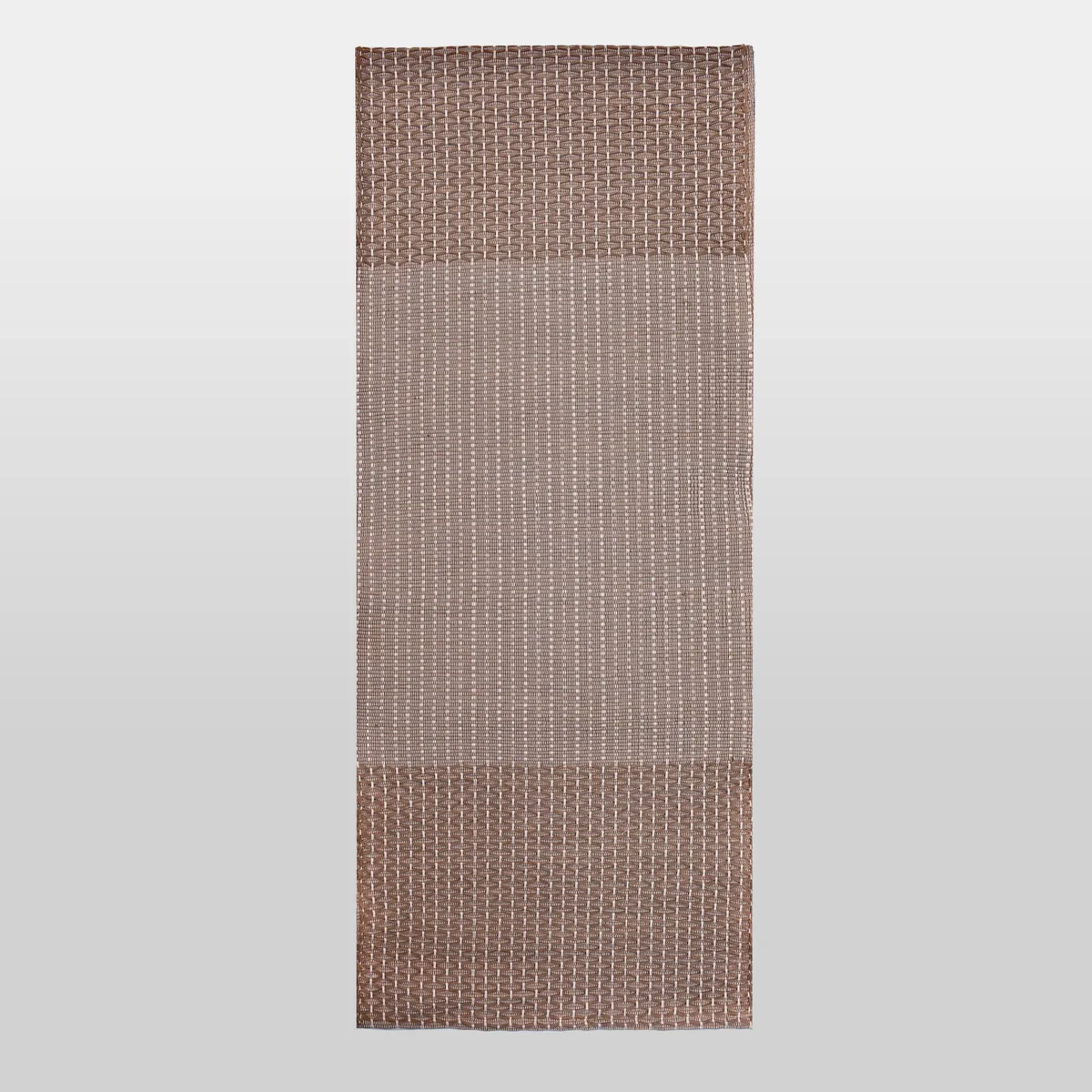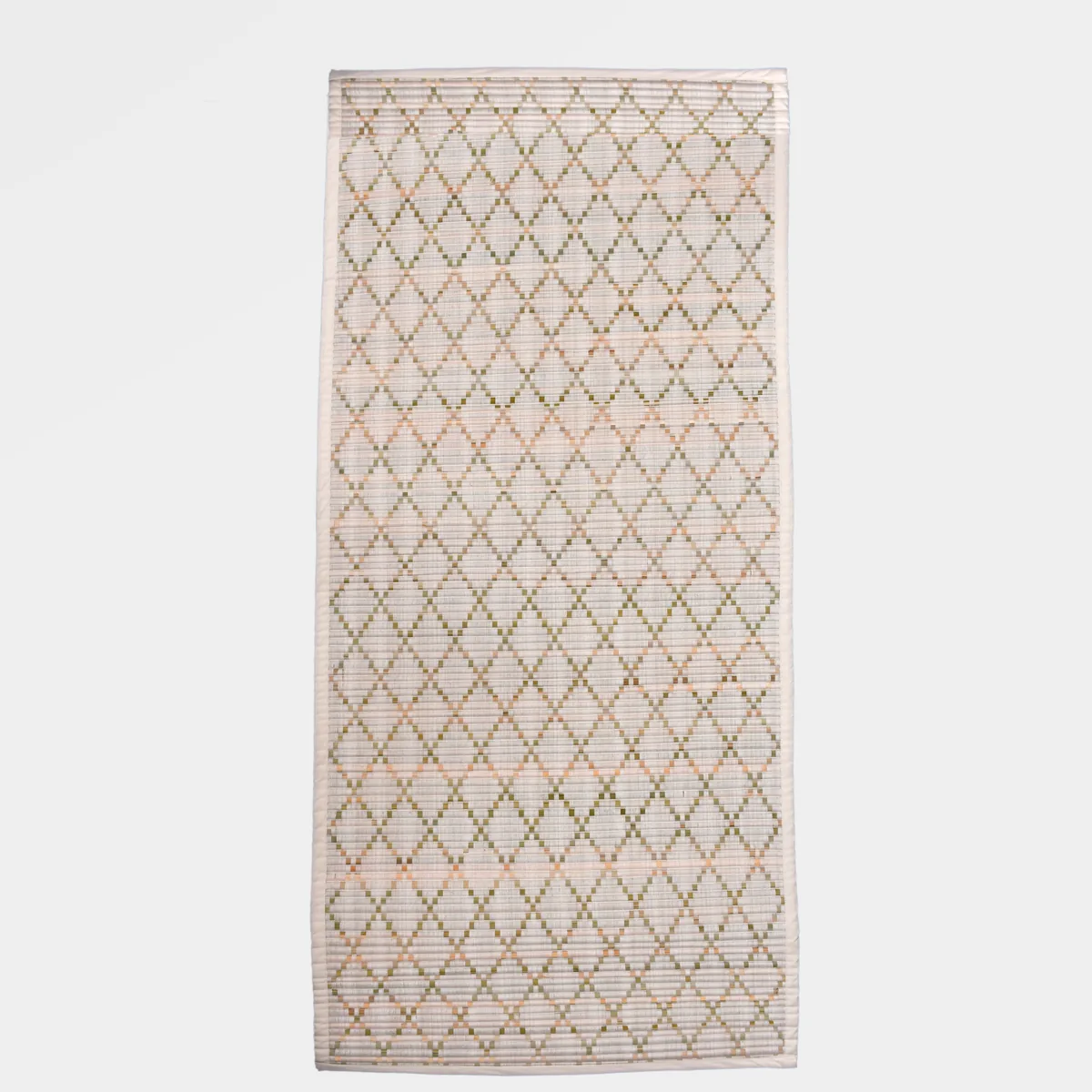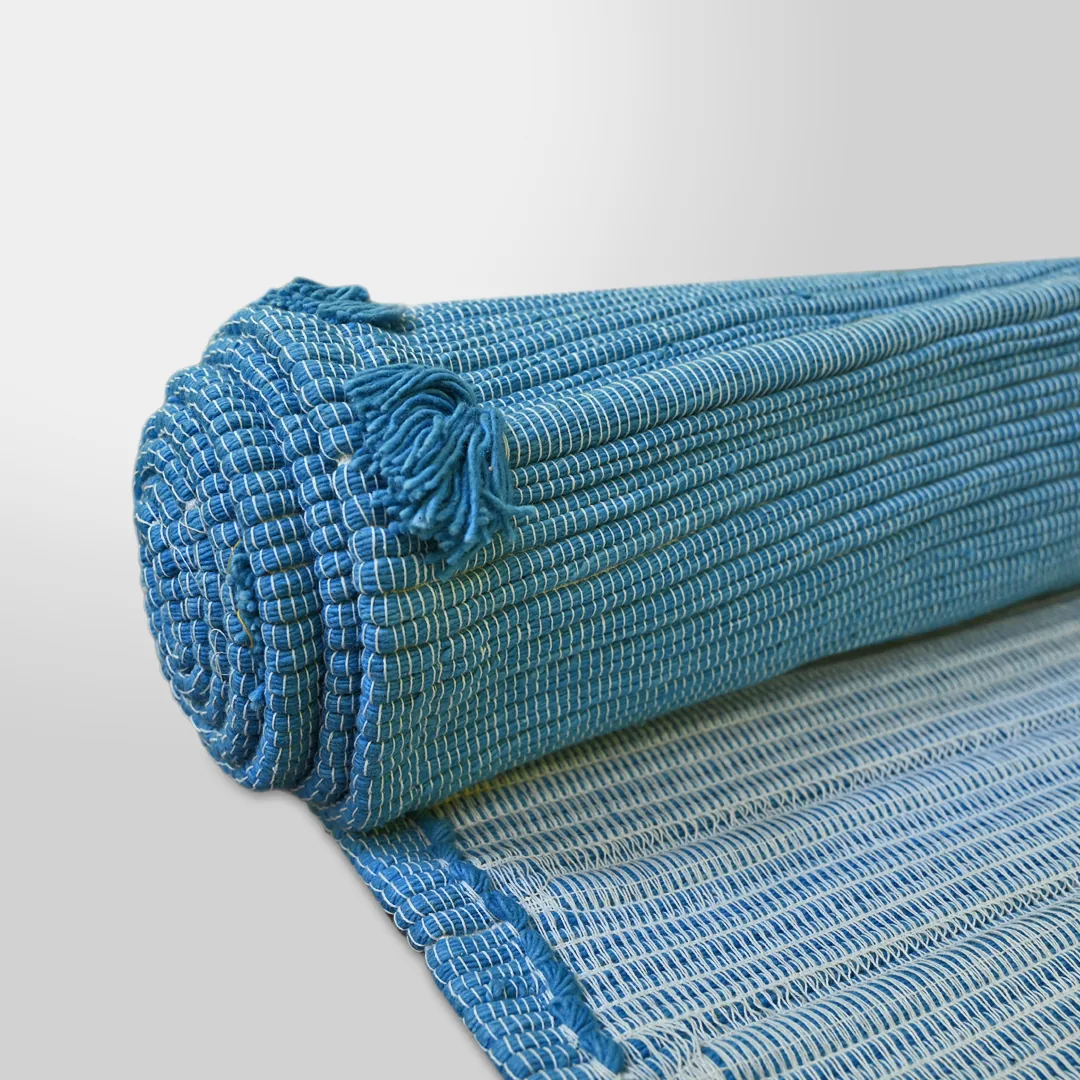
The natural latex grip layer on our mats is a thin coat of tree latex brushed by hand onto the underside of the woven fabric, so that a cotton or grass mat stays put on tile, marble and wood. It is on every mat we weave except the Darbha, which is backed in cotton cloth instead. The layer softens after many washes and can be renewed with a fresh thin coat, and anyone with a latex allergy should choose with care.

What the grip layer actually is
Natural latex is the milky fluid tapped from the rubber tree, Hevea brasiliensis. Harvesters cut shallow incisions in the bark and collect what flows out; the tree is the main commercial source of natural rubber worldwide (Wikipedia: Hevea brasiliensis). We buy it as a liquid and brush it onto the back of each finished mat in a thin, even coat. It dries to a matte, slightly tacky skin you can feel with a fingertip but barely see.
Two points matter. First, it is a layer, not a slab. A rubber yoga mat is several millimetres of rubber all the way through; ours is woven cotton or grass with a film of latex underneath. The cushioning comes from the weave, the grip from the latex. Second, it is applied by hand, so the coat varies slightly from mat to mat, exactly as the weaving does.
Why a woven mat needs it
Handwoven cotton is a lovely surface for hands and feet, but on its own it slides on a polished floor, and many Indian homes have tile, marble or stone underfoot. The latex layer gives the underside something to hold with. The top of the mat still behaves like cotton: a little slippery when bone dry, steadier once your palms are warm or slightly damp. If the problem is your hands sliding rather than the mat moving, see how to stop a cotton mat slipping.
Which of our mats have it
| Mat | Fibre | Underside |
|---|---|---|
| Indico | GOTS-certified organic cotton | Natural latex, brushed on |
| Prana Shakti, Prithvi | GOTS-certified organic cotton, six-ply | Natural latex, brushed on |
| Diamond Clay, Diamond Orange | GOTS-certified organic cotton, 7 mm | Natural latex, brushed on |
| Sambu Diamond, Sambu Jute, Sambu Frame | Sambhu grass woven with cotton | Natural latex, brushed on |
| Banana Fibre | Banana bark and fibre, cotton-bound | Natural latex, brushed on |
| Darbha | Darbha (kusha) grass, three panels | Cotton cloth backing, no latex; folds flat |
So: cotton, sambhu grass and banana fibre mats have the latex layer; the Darbha does not. We back the Darbha in cloth because it folds along its three panels, and a latex skin would crack at the folds.
How the layer ages
On a new mat the underside has a soft tack that holds the floor firmly. With use and, more than anything, with washing, that tack gradually softens. Hot water, harsh detergent, tumble drying and direct sun all speed this up, which is why our care instructions say cold water, mild soap and flat drying in shade.
How long it lasts depends on how often the mat is washed and how it is dried. A mat wiped down after practice and washed a handful of times a year keeps its grip far longer than one machine-washed weekly. When the mat starts to creep on a clean floor, the layer has thinned, not failed; the weave underneath is unchanged.
Renewing it
Because the layer is brushed on, it can be brushed on again. A thin fresh coat of natural liquid latex on a clean, dry underside, left to cure in a well-ventilated space out of the sun, restores the hold. Thin is the whole secret: a thick coat stays gummy and peels. We cover the materials, brushing and drying time in how to restore the latex grip. If you would rather not do it yourself, write to us through the Contact page.
A clear word on latex allergy
Latex allergy is an immune reaction to proteins in natural rubber latex. Mild reactions include hives, itching, flushing and swelling; more severe ones can involve coughing, wheezing and shortness of breath, and in sensitive people a combination of these can signal anaphylaxis, which needs immediate medical attention. There is no cure; people with severe reactions avoid latex altogether (American Academy of Allergy, Asthma and Immunology).
Our grip layer is on the underside, so your hands and feet rest on cotton or grass. But it is still natural rubber latex and still part of the mat, and we will not tell anyone with an allergy that it is nothing to worry about. If you are allergic to natural latex, choose with care and write to us first. The Darbha, with its cotton cloth backing, is the one mat we make without any latex, and your allergist is the right person to ask before buying any latex-backed product, ours included.
What the layer is not
It is not a synthetic foam or a PVC coating, and it does not flake into crumbs the way worn foam does. It is not waterproof: moisture that soaks through the cotton reaches it, so never leave a mat rolled up damp. And it does not guarantee grip in every situation. Dust on a tile floor lets any mat slide, so sweep before practice.
Frequently asked questions
Does the natural latex layer come off on the floor?
No. Once cured, the latex is a dry, matte film bonded to the back of the weave. It should not mark tile, marble or wood or leave residue when you roll the mat up. If you ever see a sticky or powdery transfer on the floor, the layer has been damaged by heat or harsh cleaning and is ready for a fresh thin coat.
Is the latex grip layer on the Darbha mat?
No. The Darbha mat is backed in cotton cloth and has no latex at all, because it folds along its three grass panels rather than rolling and a latex film would crack at the folds. It is the mat we point to for people who need to avoid natural latex entirely.
Can I wash a mat with a natural latex backing?
Yes, within each mat's care rules. Cotton mats are hand washed cold with a mild natural detergent, or for the Diamond mats machine washed on a delicate 30 °C cycle in a laundry bag, then dried flat in shade. Grass and banana fibre mats are wiped, never soaked. Cold water, no bleach, no softener and no tumble dryer protect the latex as much as the dyes; see the Mat care page.
How do I know when the latex grip needs renewing?
When the mat begins to creep on a clean, dry floor in poses where it used to hold still. Turn it over: a fresh layer has a faint tack under a fingertip, a tired one feels smooth and dry. A thin new coat of natural liquid latex on a clean underside brings the hold back.
Is a natural latex layer safe if I have a latex allergy?
We cannot promise that. The layer is natural rubber latex, which is exactly what latex allergy reacts to. If you are allergic to natural latex, choose with care and write to us first, and ask your allergist before using any latex-backed mat. The Darbha is the only mat we make without latex.
If you practise on tile or marble and want a cotton mat that stays where you put it, the Indico shows the weave and the grip layer most plainly; the full range is on the collection page.