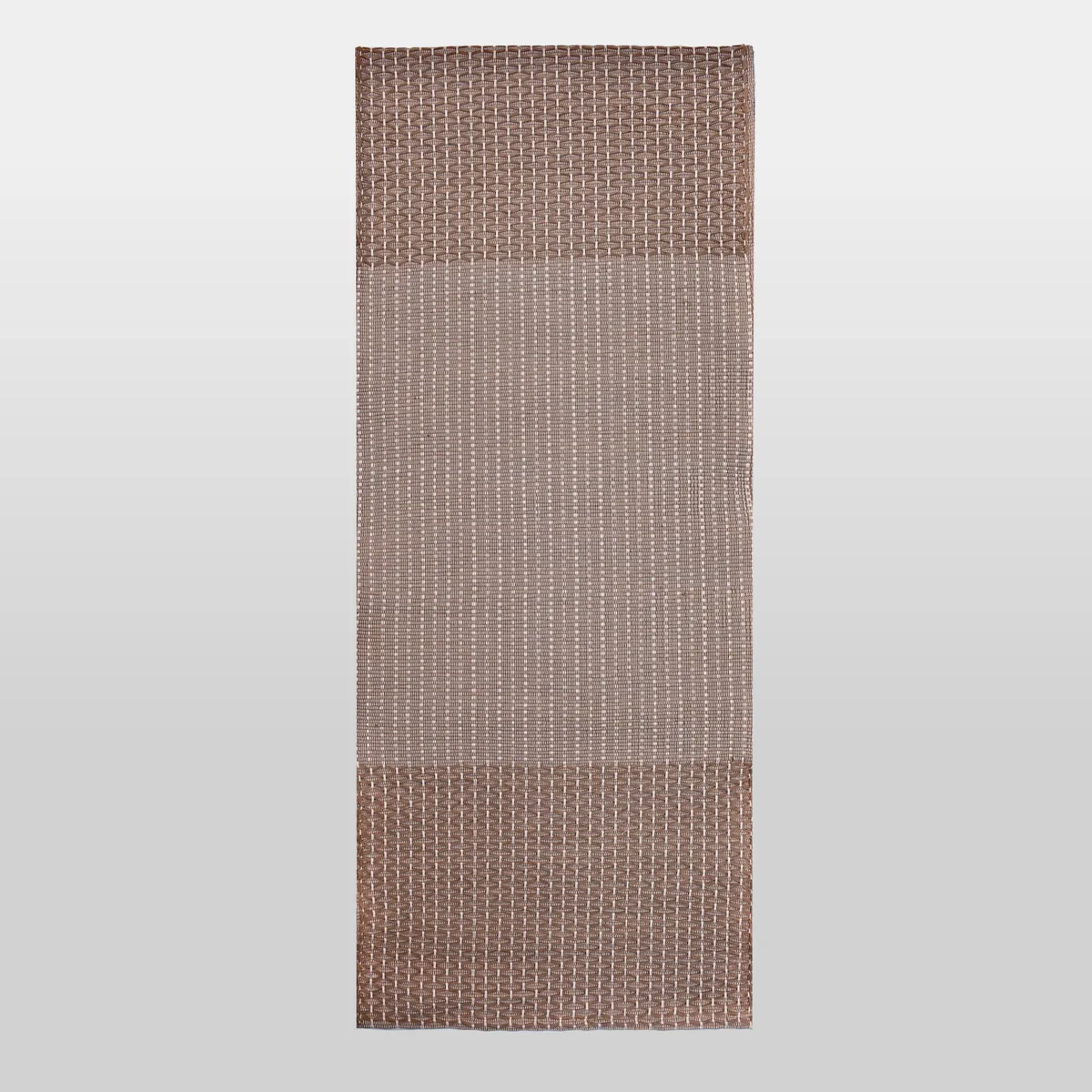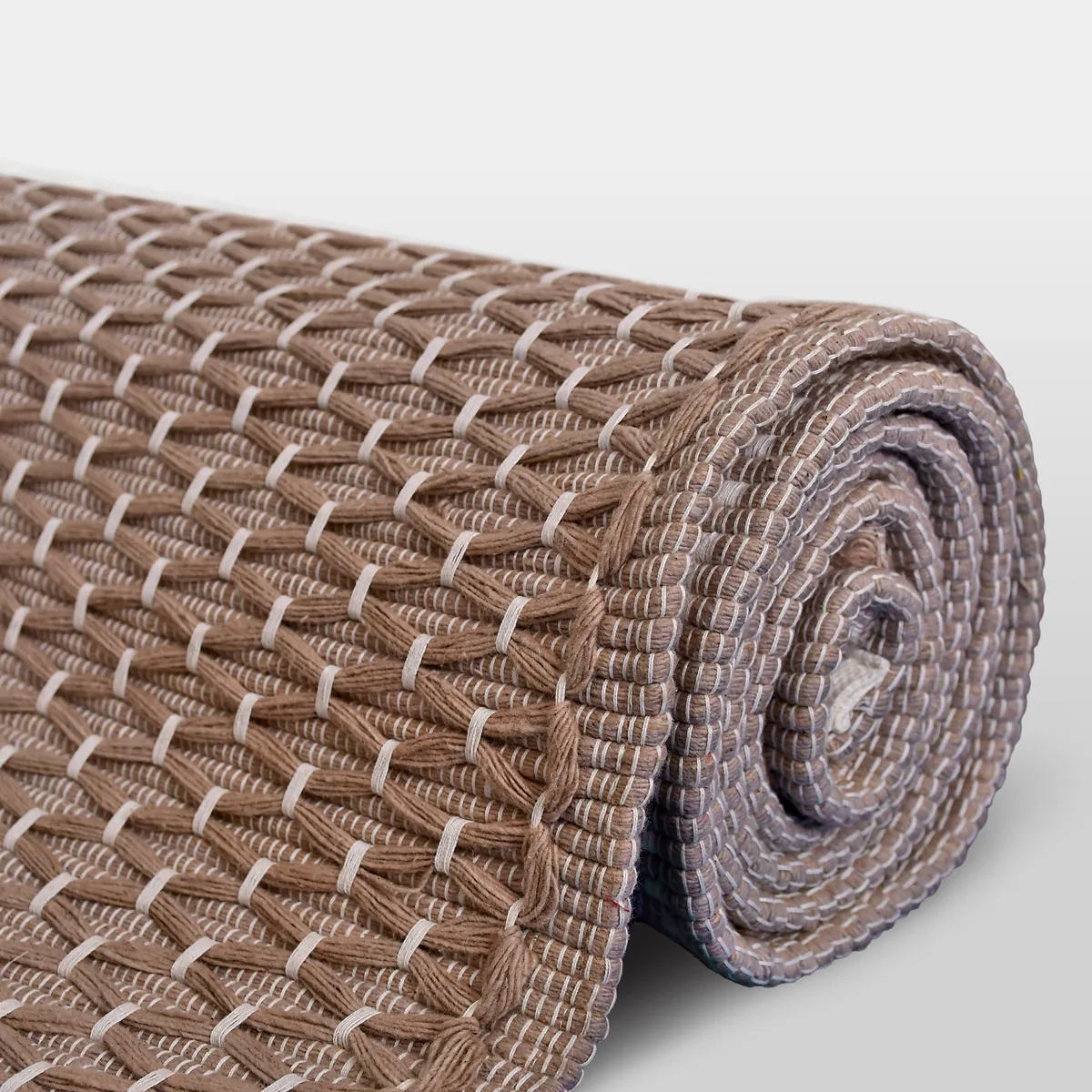
Alkanet root is the root of Alkanna tinctoria, a plant in the borage family native to the Mediterranean, whose root has been used as a red colouring since antiquity. On our Diamond Clay mat it gives the muted, earthy clay tone the mat is named for. Like every plant colour it varies a little between batches and softens gently with washing and sun.

The plant
Alkanna tinctoria is also called dyer's alkanet or dyer's bugloss. It belongs to the borage family (Boraginaceae) and grows wild around the Mediterranean. The colouring matter is in the root, which produces a fine red colouring material used as a dye in that region since antiquity. Its red compound, alkannin, has been isolated from the root; over the centuries alkanet has coloured cheeses and low-quality wines, stained wood a deep red-brown when mixed with oil, and served as a colourant in cosmetics such as lipstick (Wikipedia: Alkanna tinctoria).
In other words, this is an old dye plant with a long paper trail, not a novelty. It is also one of the few dye plants we name on our mats, because it is one we can confirm in every batch.
Why "clay" and not "red"
Alkanet's reputation is for reds, purples and burgundies. On our handloom cotton the colour is quieter: a soft, dusty clay with a hint of rose underneath, closer to a terracotta pot that has stood in the rain than to anything you would call red. Three things shape it.
- The fibre. Cotton takes plant colour more softly than wool or silk.
- The mordant. Most plant dyes are fixed to cotton with a mordant, a metal salt that binds the dye to the fibre and shifts its shade (Wikipedia: Mordant). Ours pulls alkanet towards earth rather than wine.
- The weave. The Diamond mats are woven with a raised lattice, so the colour catches light on the ridges and sits deeper in the hollows. The same yarn reads as two tones.
We chose the colour for the mat rather than the other way round. A 7 mm cotton mat is a quiet, grounded thing to practise on, and a quiet colour suits it.
The mat it colours
Diamond Clay is the thickest mat we weave: 7 mm of GOTS-certified organic cotton, 183 × 68 cm (72 × 27 in), about 1.8 kg, with a raised diamond lattice our weavers call the butterfly-eye. The lattice doubles as grip for the hands and an alignment grid for the feet; see what is the diamond butterfly-eye weave. Natural tree latex is brushed onto the underside to hold it on tile, marble and wood. If you are allergic to natural latex, choose with care and write to us first. At the time of writing it is ₹4,450.
Its sibling, Diamond Orange, has the same construction with a plant-dyed orange lattice on a grey ground.
| Diamond Clay | Diamond Orange | |
|---|---|---|
| Colour | Muted clay from alkanet root | Plant-dyed orange lattice on grey |
| Construction | 7 mm, raised diamond lattice | 7 mm, raised diamond lattice |
| Fibre | GOTS-certified organic cotton | GOTS-certified organic cotton |
| Mood | Quiet, earthy | Warm, vivid |
How alkanet colour ages
Alkanet behaves like other plant dyes on cotton. A little colour in the first rinse is normal. Direct sun fades it; friction softens it where hands and knees land most. Over years the clay settles into a lighter, more even tone, and the ridges of the lattice, which take the most wear, pale a shade ahead of the hollows, so the pattern becomes more visible rather than less. The fuller story is in why plant-dyed mats change colour, and the wider palette we use is in herbal and plant dyes explained.
Care for the Diamond Clay
- Machine wash on a delicate 30 °C cycle in a laundry bag, or hand wash cold with a mild natural detergent.
- Wash separately for the first few washes.
- Dry flat away from the sun; never tumble dry.
- No bleach, no fabric softener.
- Wipe down after sweaty practice rather than washing every time.
The Mat care page has the routine for every mat family.
What we do not claim
Alkanet colours cotton. We make no claim that it does anything for the skin or the body through a mat, and we do not call it antibacterial or therapeutic. We name the plant because you should know where a colour comes from, and because the long record of alkanet as a dye is a good story in its own right.
Frequently asked questions
What is alkanet root dye?
Alkanet root dye is a plant colouring from the root of Alkanna tinctoria, a Mediterranean plant in the borage family also called dyer's alkanet. The root has been used as a dye since antiquity, and its red compound, alkannin, has also coloured wine, cheese, wood finishes and cosmetics. On our cotton, with the mordant we use, it gives an earthy clay tone.
What colour does alkanet give on cotton?
Alkanet is known for reds, purples and burgundies; on our cotton, with the mordant we use, it gives a quieter, dusty clay with a hint of rose. The exact shade varies between dye lots and softens with washing and sunlight, which is the nature of plant colour rather than a fault.
Is the Diamond Clay mat dyed with alkanet root?
Yes. The clay colour of the Diamond Clay mat comes from alkanet root (Alkanna tinctoria) on GOTS-certified organic cotton. The mat is 7 mm thick with a raised diamond lattice and a natural tree latex grip brushed onto the underside.
Does alkanet dye fade?
Gradually, like all plant dyes. Direct sun and friction soften it over years, and a little colour in the first rinse is normal. A cold or 30 °C delicate wash in a laundry bag, flat drying in shade and keeping the mat out of direct sun slow the change.
If a thick, quiet cotton mat in an earth colour sounds like your practice, the Diamond Clay is the one; the other cotton mats are on the cotton collection page.