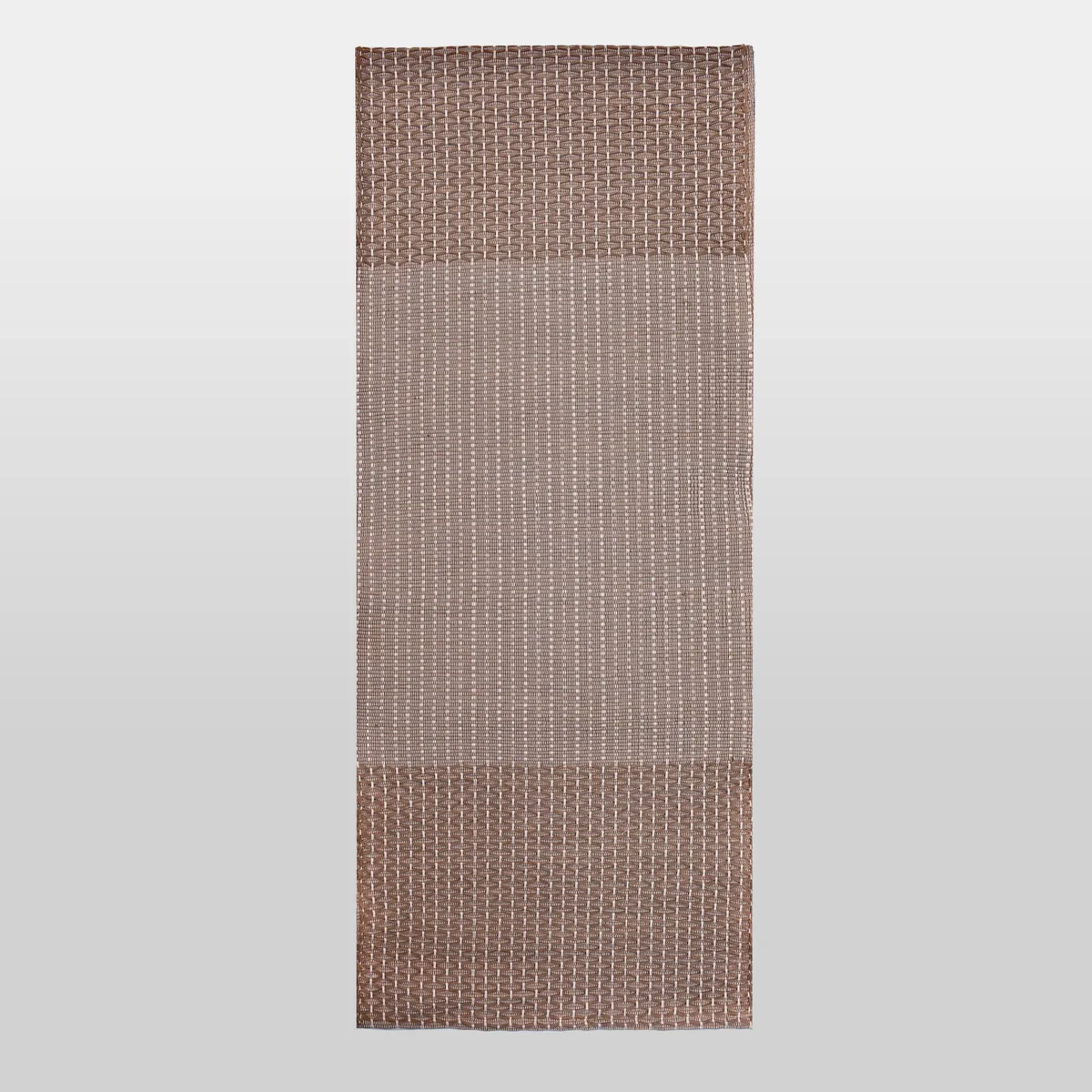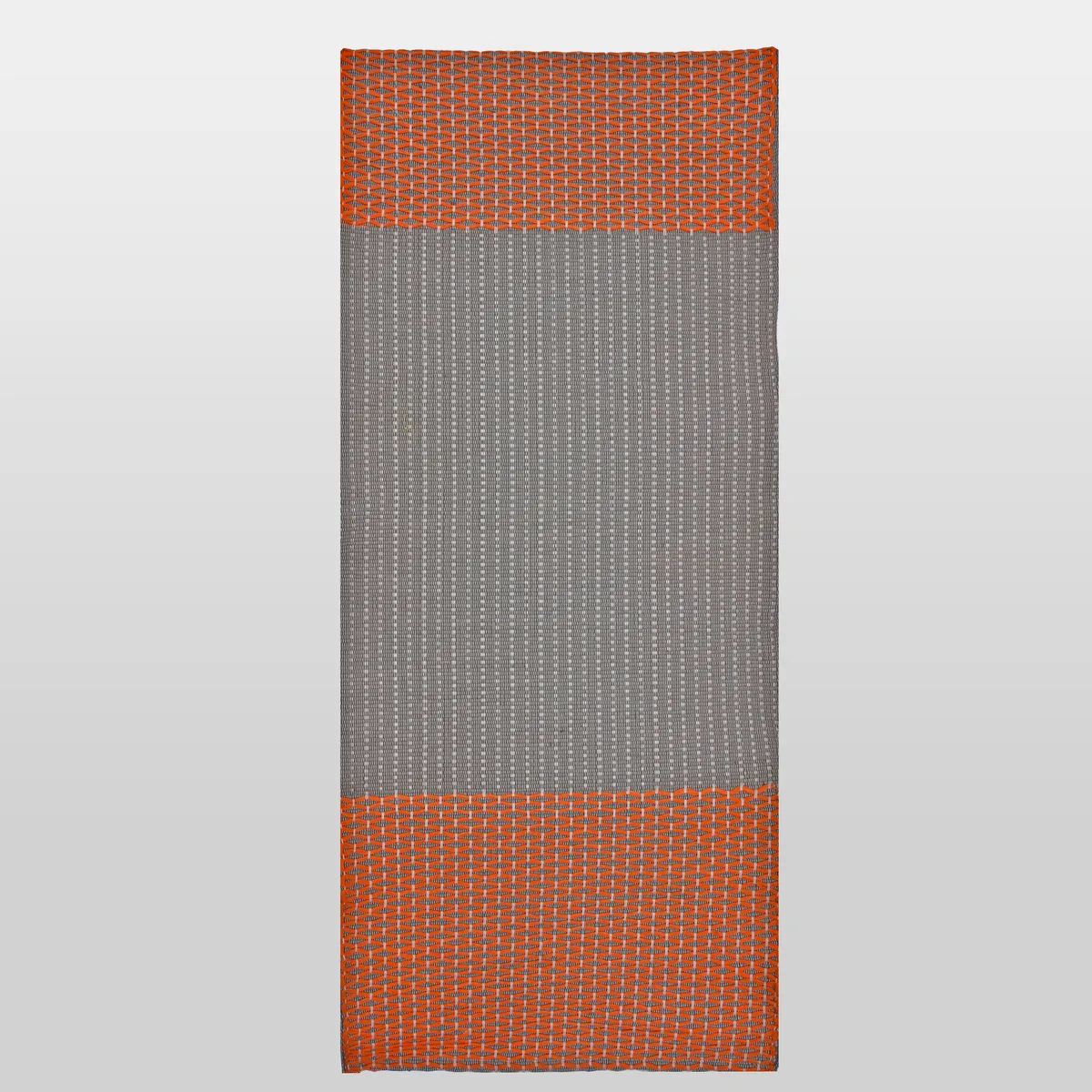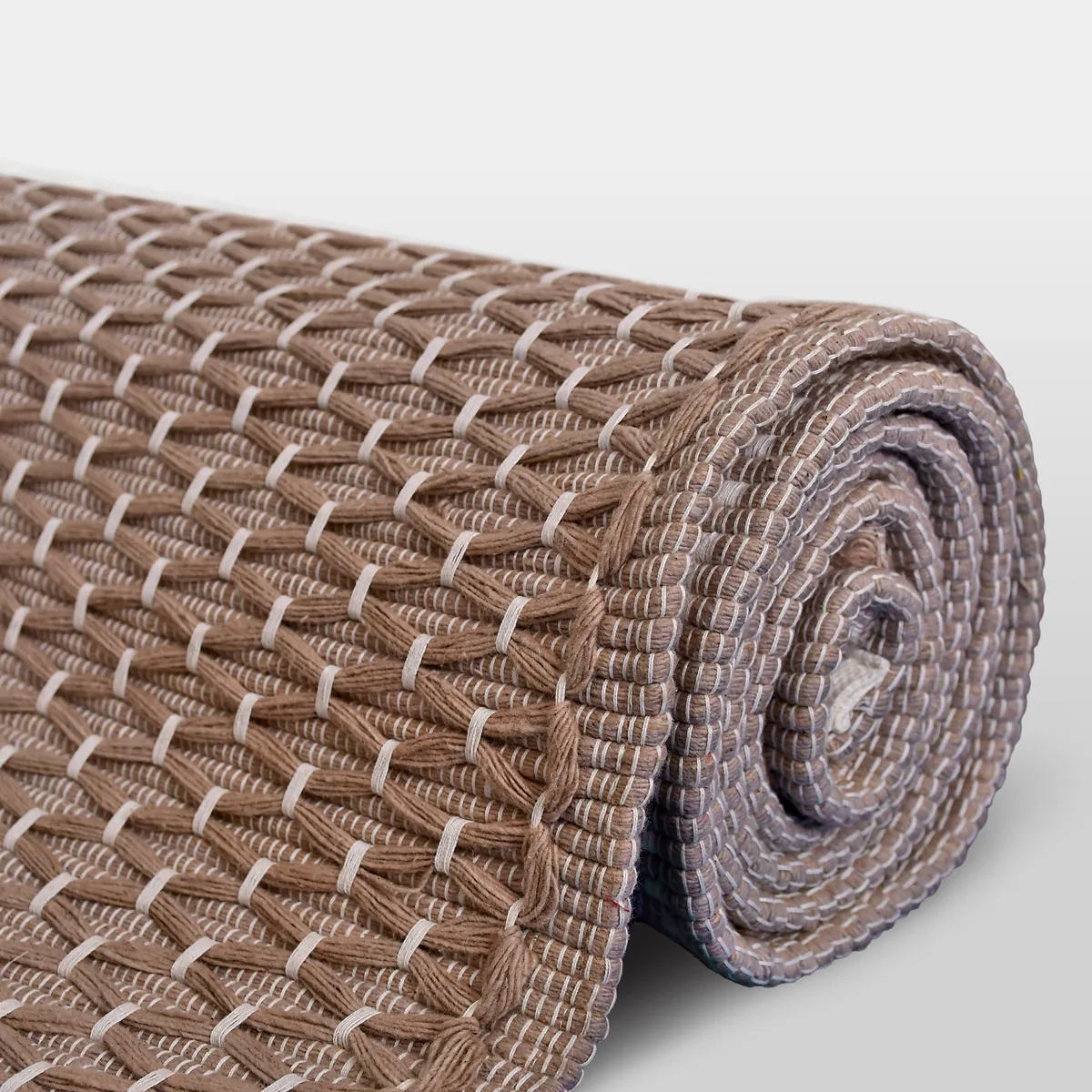
The diamond "butterfly-eye" weave is a way of weaving cotton so that a lattice of diamonds stands slightly proud of the mat's surface, with a small eye at the centre of each diamond. On our Diamond mats the raised lattice does two jobs: it gives hands and feet something to press against for grip, and it works as a built-in grid for lining up your stance. It is the thickest mat we weave, at 7 mm.

Where the name comes from
Look closely at one diamond and you will see why our weavers call it the butterfly eye. The lattice lines form the wings; the small dense point at the centre, where the pattern threads cross, is the eye. The name is one we use in the workshop and on the product pages, not a formal textile term, and the pattern is woven in on the handloom rather than printed or stitched on afterwards.
How a raised weave is made
On a plain weave the warp and weft cross evenly, so the surface is flat. To raise the lattice, our weavers lift and float groups of threads so that the diamond lines sit on top of the ground cloth, then beat the weft in firmly to lock them in. The result is a mat with two levels: the ground, and the lattice standing a little above it.
Because the whole thing is cotton on cotton, there is no separate layer to peel or crack. The lattice wears in the same way the rest of the mat does, softening slightly with use and washing.
What the lattice does for grip
Grip on a mat is friction plus texture. A smooth surface relies on friction alone, which is why smooth mats can feel slippery when your palms sweat. A textured surface adds a mechanical hold: the edges of the raised diamonds press into the skin of the palm and the ball of the foot, and the shallow channels between them give sweat somewhere to go instead of pooling.
Cotton also grips better as it dampens, so on the Diamond the two effects stack: the lattice gives purchase from the first minute, and the cotton improves as you warm up. We are honest that bone-dry cotton on a dusty tile floor can slip in the first few sessions; a damp cloth over the palms or a few minutes of practice usually settles it.
What the lattice does for alignment
The diamonds repeat in regular rows down the length and across the width of the mat, so they act as a quiet grid. In a lunge you can see whether the back foot has drifted off line; in downward-facing dog you can check that both hands sit on the same row. It is not a measuring tool, and we have not printed numbers on it, but it is a useful reference that is there every time you unroll the mat.
The 7 mm construction
Both Diamond mats are 7 mm thick and weigh about 1.8 kg at 183 × 68 cm (72 × 27 in). That extra thickness over our 5 mm six-ply rugs is why we suggest them for sore knees; we cover how to use thickness, folding and props together in Best yoga mat for bad knees.
Because it is cotton rather than foam, 7 mm here means dense cotton that compresses a little, not a soft layer that sinks. It is firm, warm underfoot and stable in balances.
Two colourways
| Diamond Clay | Diamond Orange | |
|---|---|---|
| Colour | Muted clay from alkanet root (Alkanna tinctoria) | Plant-dyed orange lattice on a grey ground |
| Fibre | GOTS-certified organic cotton | GOTS-certified organic cotton |
| Thickness and size | 7 mm, 183 × 68 cm, about 1.8 kg | 7 mm, 183 × 68 cm, about 1.8 kg |
| Washing | Delicate 30 °C machine cycle in a laundry bag, or hand wash | Delicate 30 °C machine cycle in a laundry bag, or hand wash |
| Price at the time of writing | ₹4,450 | ₹4,450 |
The Diamond Clay takes its colour from alkanet root, a plant long used as a dye. The Diamond Orange uses a plant-dyed orange for the lattice over a soft grey ground, so the grid reads more strongly. Plant colour varies a little between batches and softens gently over years; we see that as the nature of the dye.
The grip layer underneath
Like our other cotton mats, the Diamond has a thin layer of natural tree latex brushed onto the underside by hand. It holds the mat on tile, marble and wood, which is most Indian floors; we go into floor types in Best yoga mat for tile, marble and wooden floors. After many washes the layer can soften, and a thin fresh coat of natural latex restores it. If you are allergic to natural latex, choose with care and write to us first.
Washing a Diamond mat
The Diamond is the one cotton mat we are happy to see in a washing machine. Use a delicate cycle at 30 °C, put the mat in a laundry bag so the lattice does not catch, and use a mild detergent. Hand washing in cold water works just as well. Dry flat away from direct sun, never in a tumble dryer, and expect a little colour in the first rinse. The Mat care page has the short version for every mat.
Frequently asked questions
What is a butterfly-eye weave?
It is our name for a raised diamond lattice woven into cotton, where the lattice lines form the wings and the dense point at the centre of each diamond is the eye. The pattern is woven on the handloom, not printed, so it is cotton on cotton with no separate layer to peel.
Does a diamond weave yoga mat grip better?
The raised lattice adds texture, so the palm and foot have edges to press against and sweat drains into the channels between the diamonds rather than pooling on top. Combined with cotton's habit of gripping better when damp, it gives more hold than a smooth cotton surface. Bone-dry cotton on a dusty floor can still slip in the first sessions.
How thick is the Diamond mat?
Seven millimetres of dense handwoven cotton, weighing about 1.8 kg at 183 × 68 cm. It is the thickest mat we make. Because it is cotton rather than foam, it feels firm and stable rather than soft.
Can I machine wash the Diamond mat?
Yes. Use a delicate cycle at 30 °C in a laundry bag with a mild detergent, or hand wash in cold water. Dry flat away from direct sun and do not tumble dry. A little colour in the first rinse is normal for plant-dyed cotton.
If you want the grid and the extra cushioning, the Diamond Clay and the Diamond Orange are the same mat in two colourways. You can compare them with our thinner cotton rugs in the cotton collection.