If your knees complain in kneeling, tabletop and lunging poses, a dense mat of around 5–7 mm usually feels better than a very thick, soft one, and how you set up matters more than the millimetre figure: fold the end of the mat under the knee, kneel on a folded blanket, or put a cushion between heel and seat. Among our mats, the 7 mm Diamond Clay and Diamond Orange give the most under the knee, and the 5 mm six-ply Prithvi is the firmer, warmer middle option. None of them is a treatment. If a knee hurts, ask your teacher or a doctor before you change your practice.

The honest bit about padding first
Most people with sore knees go looking for the thickest mat they can find. We understand why, and we would still ask you to pause. Very thick, soft foam lets the knee sink, which feels kind for a moment and then makes every standing and balancing pose wobble, so you grip harder with the rest of your body to stay still. Density is what you are actually after.
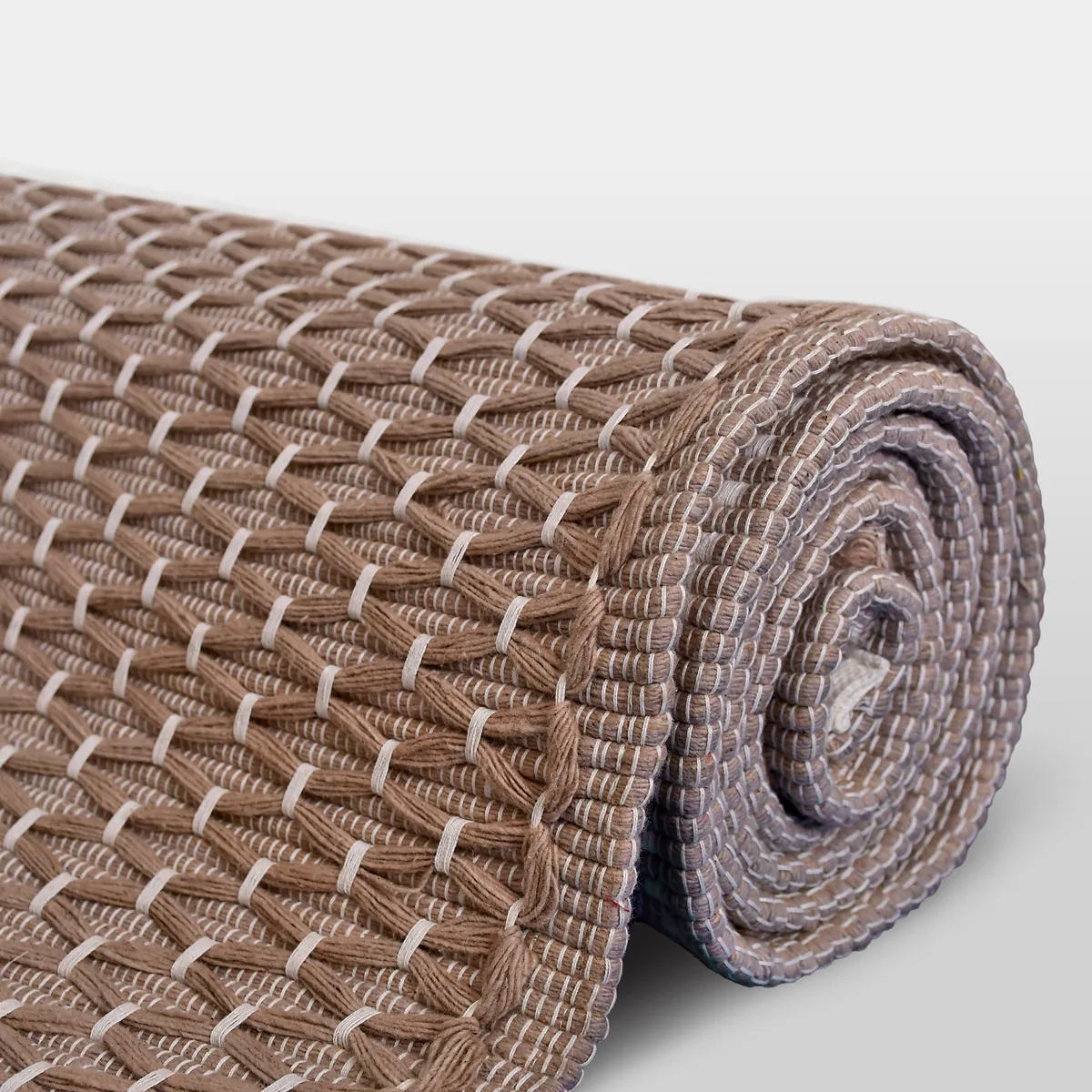
A 7 mm mat of tightly woven cotton compresses far less under a knee than 7 mm of light foam, so more of that thickness is still there when your weight is on it. That is the difference between our Diamond mats and the foam you may have tried. Our thickness guide goes into the trade-offs between 3, 5 and 7 mm in detail.
What helps more than padding
Before you spend anything, try these on the mat you already have.
Fold the mat under the knee
In a low lunge or a kneeling pose, fold the front end of the mat back on itself so the knee rests on two layers. On a 7 mm Diamond mat that is 14 mm of dense cotton under the joint, and you unfold it again for the next standing pose. Cotton folds flat and stays folded; foam tends to spring open.
Use a folded blanket
A cotton blanket folded into a thick pad is the tool teachers reach for first. It can be as thick as you like for cat-cow and tabletop, and it goes away when you stand. We have more on this in protecting your knees in yoga.
Change the shape, not just the surface
A cushion or folded blanket between heel and seat in hero pose, a block under the hands in a lunge so less weight goes through the front knee, or simply swapping a kneeling pose for a standing version of the same stretch. These are decisions for you and your teacher, and they often do more than any mat.
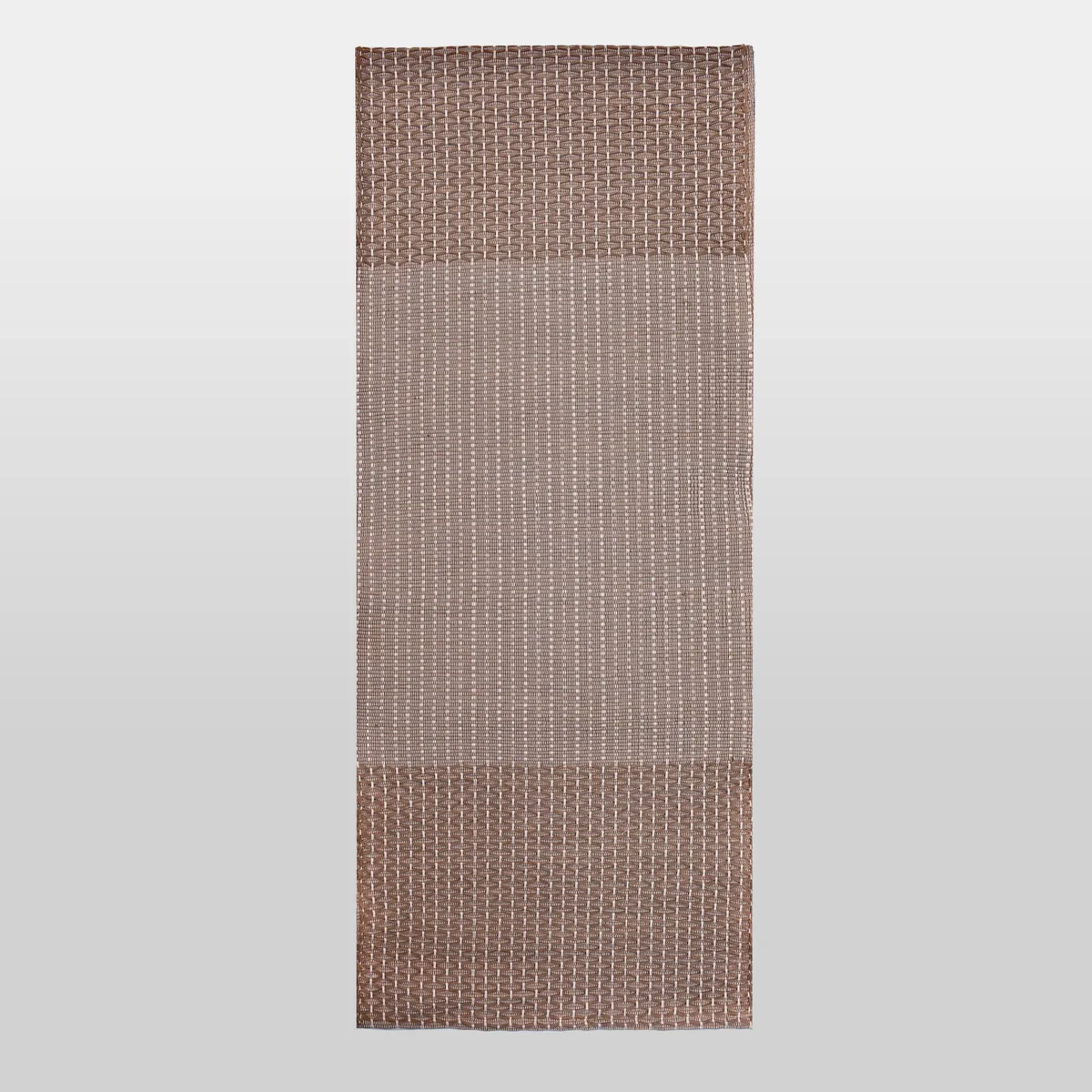
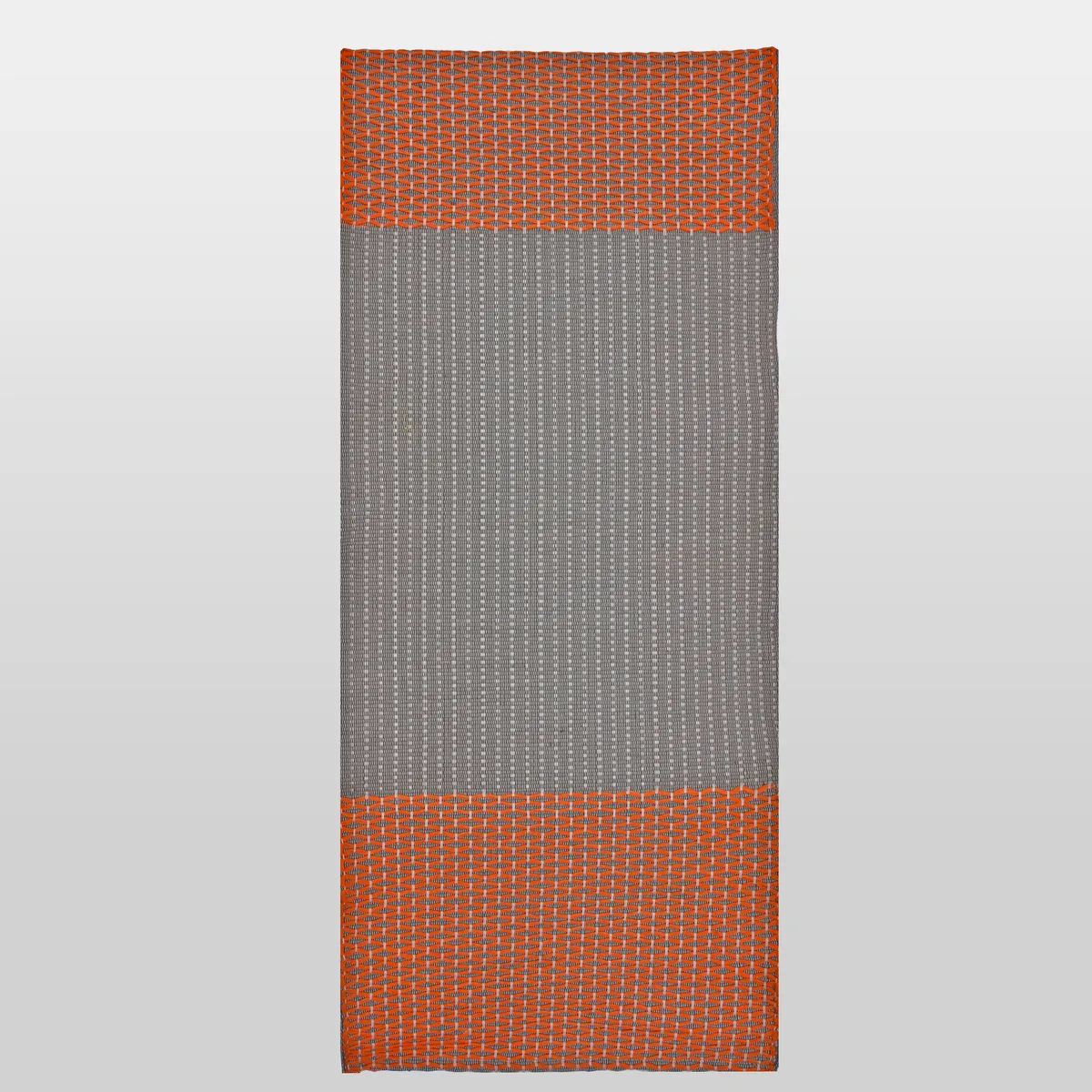
The 7 mm Diamond mats
The Diamond is the thickest mat we weave. Its raised diamond lattice, which our weavers call the butterfly-eye pattern, does two things: it gives the hands and feet something to grip, and it works as an alignment grid so you can see whether your hands are level and your feet are square. The 7 mm of handwoven GOTS-certified organic cotton underneath is dense enough to kneel on and firm enough to balance on.
Both colourways are 183 × 68 cm and weigh about 1.8 kg, which makes them the heaviest mats we make. The Diamond Clay takes its muted colour from alkanet root (Alkanna tinctoria); the Diamond Orange has a plant-dyed orange lattice over a soft grey ground. Each is ₹4,450 at the time of writing.
Care is simpler than for our other cotton mats: machine wash on a delicate 30 °C cycle in a laundry bag, or hand wash, and dry flat away from sun; cold water only, no bleach, no softener, no tumble dryer.
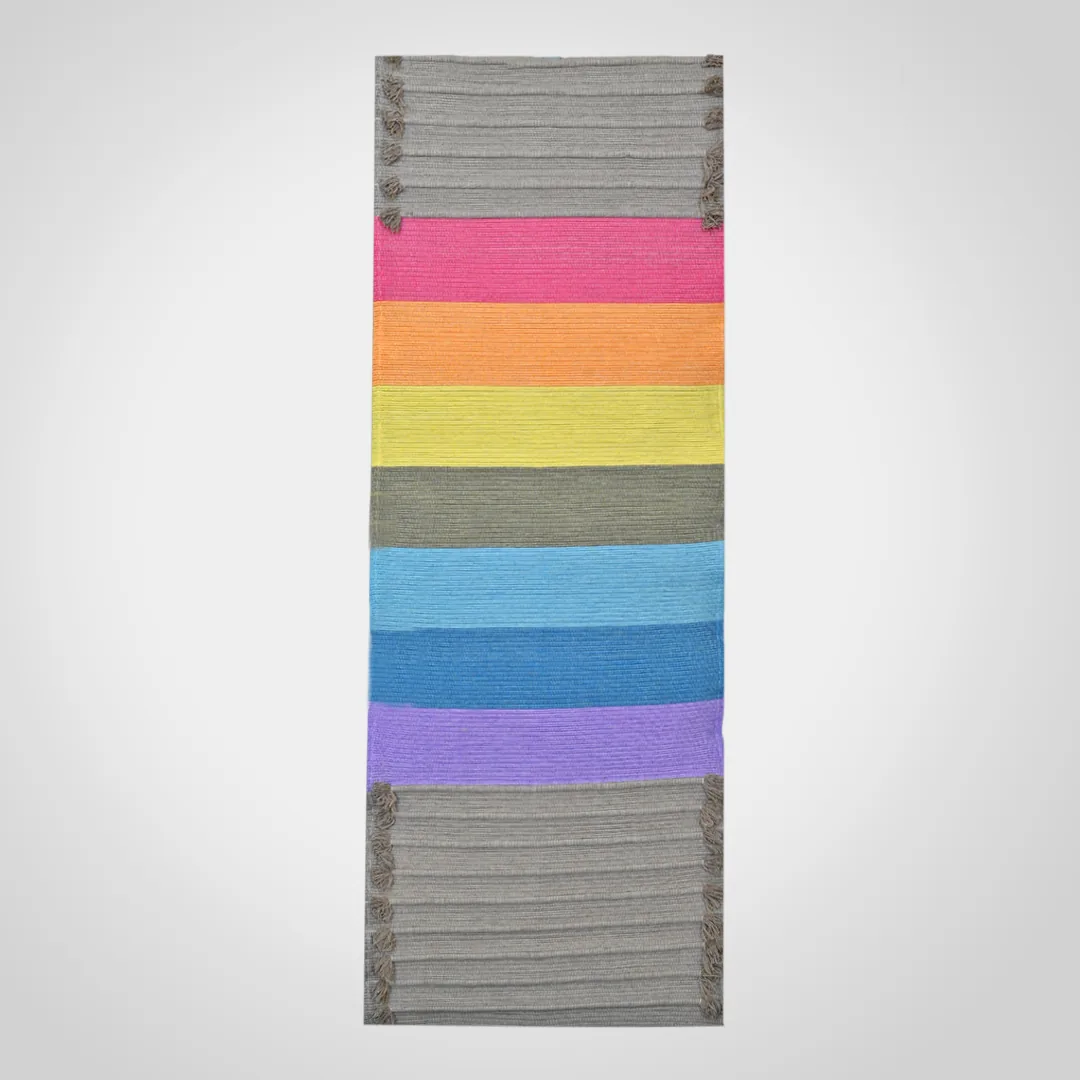
The 5 mm six-ply Prithvi
If 7 mm feels like too much mat, or you want something lighter to carry, the Prithvi is the middle road. It is woven six-ply, so its 5 mm is dense rather than fluffy, and the cotton is warm against a cold tile floor in winter, which stiff knees notice in the first kneeling pose of the morning.
The Prithvi is an earth-toned GOTS-certified organic cotton rug carrying the seven chakra colours across its centre, with hand-knotted tassels at either end. It is 188 × 69 cm, 5 cm longer than the Diamond, and weighs about 1.5 kg. Hand wash cold with a mild natural detergent, separately for the first washes, and dry flat in shade. ₹4,400 at the time of writing.
Layering over a rubber mat
Some people already own a thick rubber mat and like its cushioning but not its surface. A cotton rug laid over it gives you the padding of the rubber with a surface that can be washed and grips better as it dampens. A 5 mm Prithvi on top of a rubber mat is a generous stack for floor work, and you can peel the rug off for standing poses if the pair feels too soft. We go through when this helps and when it is unnecessary in layering a cotton rug over a rubber mat.
Which to choose
| Diamond Clay or Orange | Prithvi | A folded blanket on any mat | |
|---|---|---|---|
| Thickness | 7 mm dense cotton | 5 mm six-ply cotton | As thick as you fold it |
| Feel under the knee | Most cushioning we make; firm, not spongy | Firm and warm | Soft; remove for standing poses |
| Balance poses | Stable | Stable | Not for standing on |
| Size and weight | 183 × 68 cm, about 1.8 kg | 188 × 69 cm, about 1.5 kg | — |
| Washing | Machine wash, delicate 30 °C, laundry bag | Hand wash cold | Machine wash |
| Price at time of writing | ₹4,450 | ₹4,400 | Something you may already own |
All three mats have a thin layer of natural tree latex brushed onto the underside by hand, which holds them on tile, marble and wood so the mat does not shift when you push up from kneeling. If you are allergic to natural latex, choose with care and write to us first.
Frequently asked questions
Is a thicker yoga mat better for bad knees?
Only up to a point. A dense mat of 5–7 mm gives real cushioning for kneeling and still feels stable in standing poses, while very thick soft foam lets the knee sink and makes balances wobble. Density matters more than thickness, and folding the mat or a blanket under the knee for kneeling poses helps more than any extra millimetres.
What thickness of yoga mat is best for knee pain?
For most people a dense 5–7 mm mat is the practical range: our 7 mm Diamond mats give the most under the knee, and the 5 mm six-ply Prithvi is the firmer, lighter option. A mat is not a treatment, so if your knee hurts, speak to your teacher or a doctor about which poses to adjust.
Can I fold my yoga mat under my knee?
Yes, and it is one of the most useful habits for sore knees. Fold the front end of the mat back on itself so the knee rests on two layers, then unfold it for the next standing pose. Dense cotton mats fold flat and stay put; on a 7 mm Diamond mat that gives about 14 mm under the joint.
Which is the thickest TwinsPoles mat?
The Diamond Clay and Diamond Orange, at 7 mm of handwoven GOTS-certified organic cotton, are the thickest mats we weave. They are 183 × 68 cm, weigh about 1.8 kg, have a raised diamond lattice for grip and alignment, and can be machine washed on a delicate 30 °C cycle in a laundry bag.
If kneeling is where your practice hurts, start with the Diamond Clay and a folded blanket, and talk to your teacher about the poses that bother you. Every mat we weave is in the yoga collection.