The quickest way to protect your knees in yoga is to put more between the kneecap and the floor exactly where it presses: fold the end of your mat under the knee, add a folded blanket, or kneel on a cushion. A denser, thicker mat such as a 7 mm cotton mat helps across the whole practice, but padding is only half of it; the other half is changing the pose. If a knee hurts rather than feels pressed, stop and ask your teacher or doctor.
Pressure or pain: tell the difference, and ask
We are weavers, not doctors, so this article is about comfort and set-up only. Pressure on the kneecap from a hard floor is a comfort problem that props solve. Pain inside the joint, swelling, pain that arrives in a twist or stays after class is a different matter, and the right people to ask are your teacher and your doctor. Nothing we weave treats a knee; a good mat simply makes a healthy knee more comfortable on a tile floor.
Mat choice: density matters more than thickness
A soft foam mat that measures 8 mm in the shop can compress to almost nothing under a kneecap, because all the body's weight arrives on a patch the size of a coin. Dense woven cotton compresses less, so it spreads that load rather than bottoming out. This is why 5 mm of cotton feels different from 5 mm of foam, and it is the case for firm padding over bouncy padding.
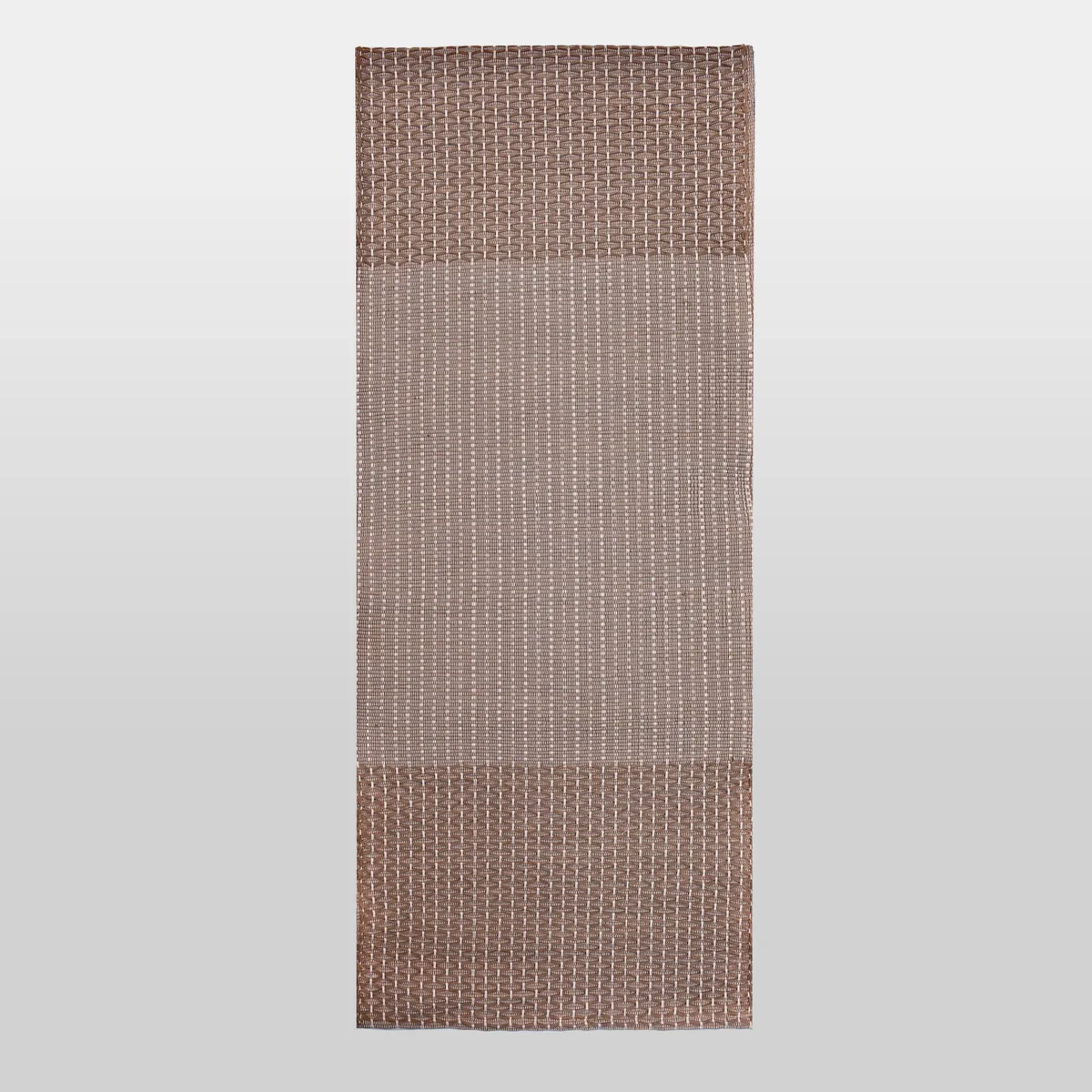
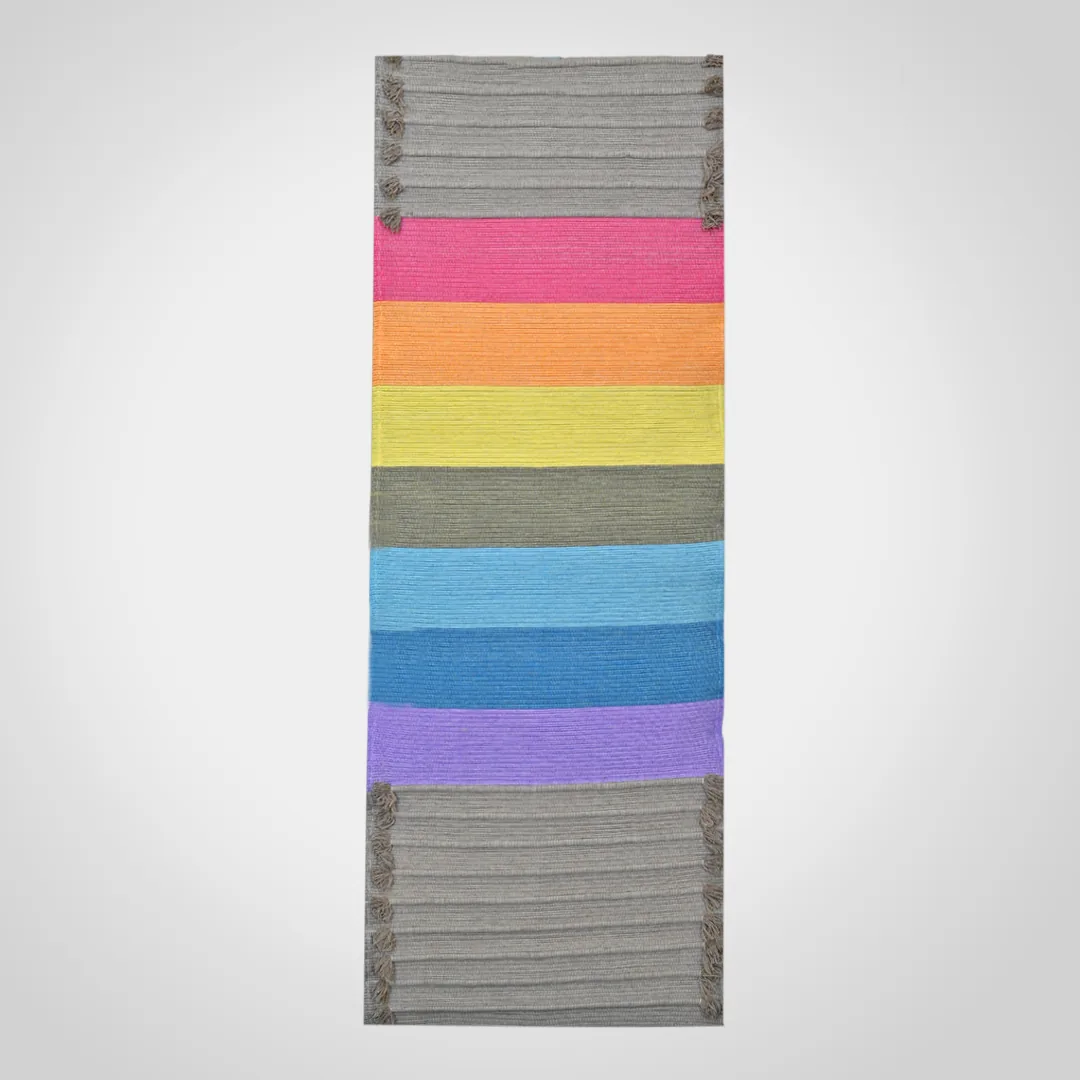
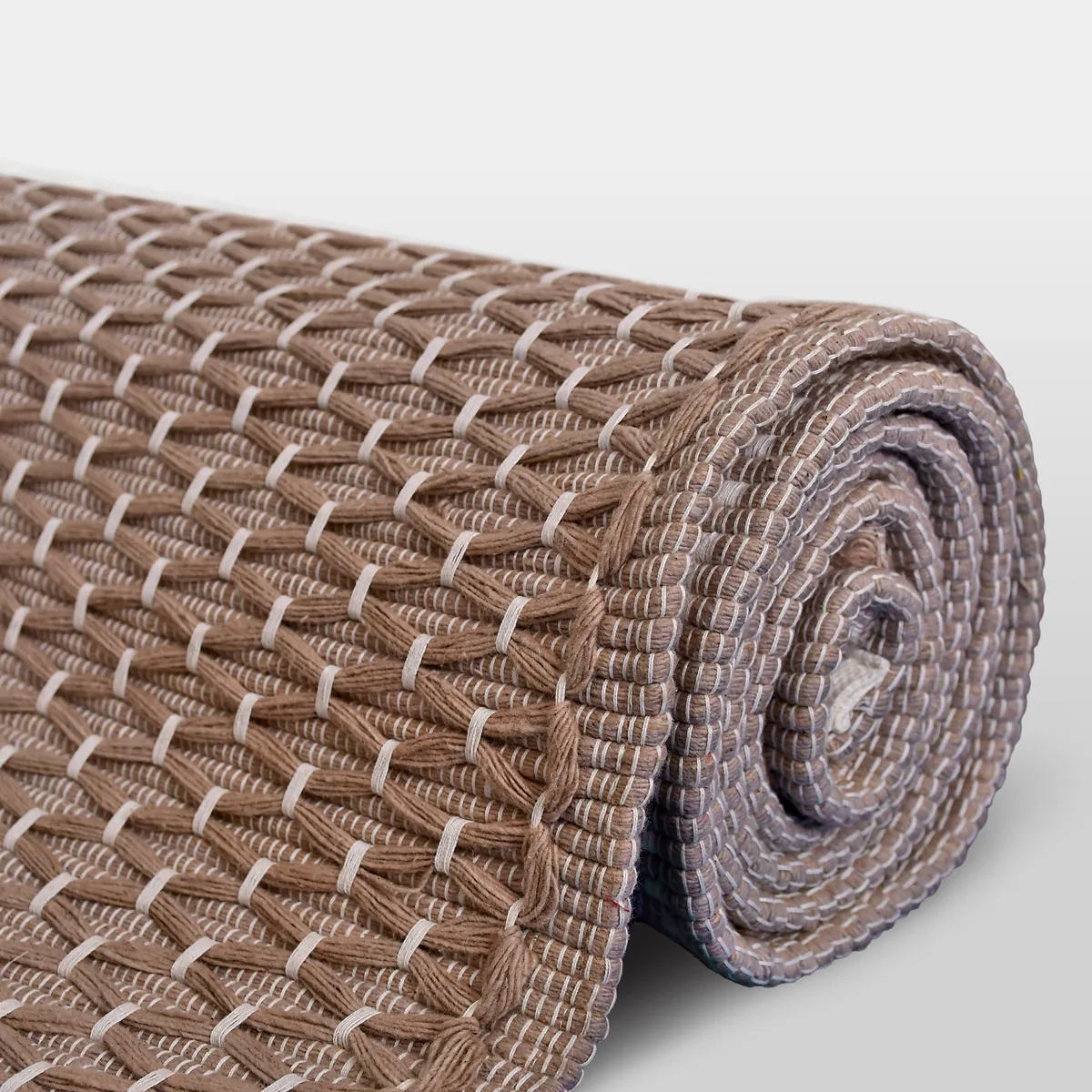
The Diamond Clay is the thickest mat we weave, 7 mm of GOTS-certified organic cotton with a raised diamond lattice. The lattice grips the hands and feet, and it also works as an alignment grid: you can put your knee on the same square every time, so your low lunge is the same width tomorrow as today. The Prithvi is six-ply cotton at 5 mm, firm rather than soft, and at 188 cm long it leaves room to fold the end under you and still have a full mat to work on.
There is a trade-off. More padding makes balance poses a little less steady, which is why we would not weave a 15 mm mat. Firm cotton is a middle path, and the folding trick below gives you depth only where you need it. Our thickness guide goes into the numbers.
Both mats have a thin layer of natural tree latex brushed onto the underside for grip on tile and marble. If you are allergic to natural latex, choose with care and write to us first.

Folding the mat under the knee
Woven cotton folds and stays folded; most rubber and foam mats spring back, which is one reason cotton suits this trick. Fold the near end of the mat back on itself to make a double layer: a 7 mm Diamond becomes 14 mm under the knee, a 5 mm Prithvi becomes 10 mm. Kneel on the fold for low lunge, table-top, cat and cow or camel, then flick it open again for standing poses.
For poses where both knees are down for a while, fold a cotton blanket into a long strip and lay it across the mat under both knees. It is quicker than refolding the mat and you can adjust the thickness by adding a layer.
Props that help, pose by pose
| Pose or situation | What to add | How |
|---|---|---|
| Low lunge | Folded blanket or folded mat | Under the back knee; keep the kneecap on cloth, not the edge |
| Table-top, cat and cow | Folded mat or blanket strip | Under both knees; widen the knees a little if it helps |
| Camel | Folded blanket | Under both knees; ask your teacher whether to tuck the toes |
| Hero pose, sitting on the heels | Block or firm cushion | Under the sitting bones to lift the hips and reduce the bend |
| Child's pose | Rolled blanket and bolster | Blanket between thighs and calves, bolster under the torso |
| Pigeon, cross-legged sitting | Cushion | Under the hip or sitting bones so the knees sit lower |
Kneeling alternatives
Sometimes the kinder answer is not to kneel. Table-top work can be done standing with hands on a wall or the back of a chair; a low lunge becomes a high lunge with hands on blocks; camel becomes a standing backbend with hands on the lower back; hero pose becomes sitting upright on a chair. A good teacher will offer these before you ask, and will tell you which fit your knee.
Small habits that make kneeling easier
Sweep the floor first, because grit under a thin mat is what you feel through it. Move into kneeling slowly rather than dropping down, and come out when pressure builds rather than waiting. Keep the kneecap on cloth, never on a seam, a tassel or the bare edge of the mat. If you find a spot that works, use the Diamond lattice to find the same spot every day. For a longer comparison of mats for sensitive knees, including when a cotton rug over a rubber mat makes sense, read our guide to mats for bad knees; our guide for seniors covers chair-based practice too.
Frequently asked questions
Does a thicker yoga mat help with knee pain?
A thicker mat makes kneeling more comfortable on a hard floor, and a dense one helps more than a soft one because it does not compress to nothing under the kneecap. It does not treat the knee itself. Fold the mat or a blanket under the knee for extra depth only where you need it, and if you have pain rather than pressure, ask your teacher or doctor before you change your mat.
How do I fold a yoga mat under my knee?
Fold the near end of the mat back on itself to make a double layer, kneel on the fold for low lunge, table-top or camel, and flick it open again for standing poses. Woven cotton mats stay folded; most foam and rubber mats spring back. A 7 mm cotton mat folded this way gives 14 mm under the knee.
What can I do instead of kneeling in yoga?
Table-top can be done standing with hands on a wall or chair; a low lunge becomes a high lunge with hands on blocks; camel becomes a standing backbend; hero pose becomes sitting on a chair. Ask your teacher which alternatives suit you, and use a folded blanket when you do kneel.
Which TwinsPoles mat is best for sensitive knees?
The Diamond Clay, at 7 mm the thickest mat we weave, with a raised lattice that helps you place the knee in the same spot each time. The Prithvi is a firm 5 mm six-ply cotton rug that is long enough to fold under you. Both are dense cotton rather than soft foam, and both fold easily to double the depth under a knee.
If your knees are the reason you skip kneeling poses, try the Diamond Clay with a folded blanket for a week, and keep asking your teacher what to change in the pose; the mat is only the start.