Pilates on a cotton mat works, with two adjustments. Choose the thicker end of our range, the 7 mm Diamond Clay or the 5 mm six-ply Prana Shakti, because rolling exercises put the spine against the floor, and expect the surface to grip better once your hands and the room have warmed up. Afterwards the mat washes, which most foam mats cannot.
What a Pilates hour asks of a mat
Pilates is "a type of mind-body exercise developed in the early 20th century by Joseph Pilates" (Wikipedia). A mat class spends most of its time lying, sitting and kneeling, with shorter spells in plank and side plank. That asks three things of the mat: cushion under the spine and the sitting bones, grip for hands and feet when you are up on them, and a surface that is not unpleasant after an hour's effort.
Rolling and the spine
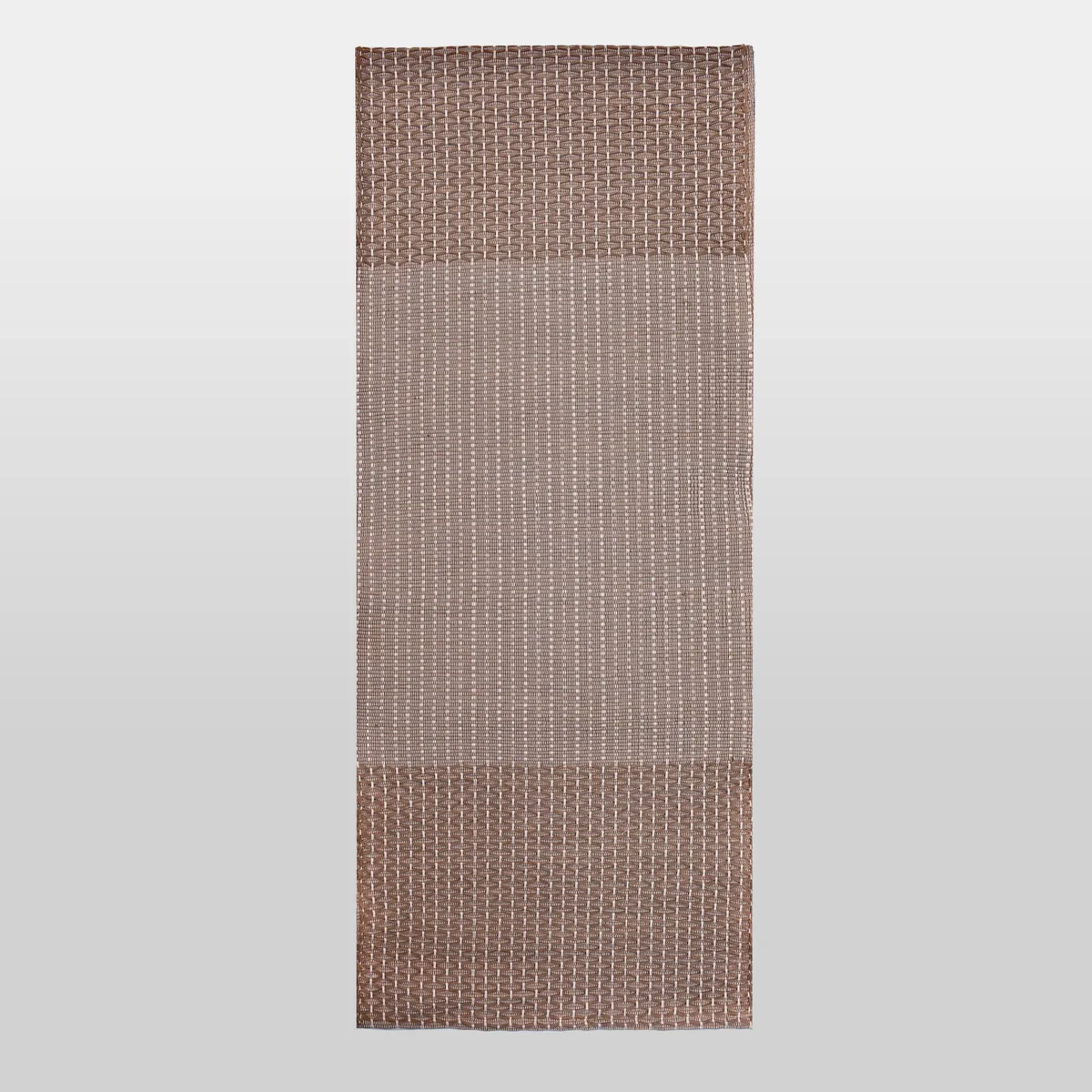
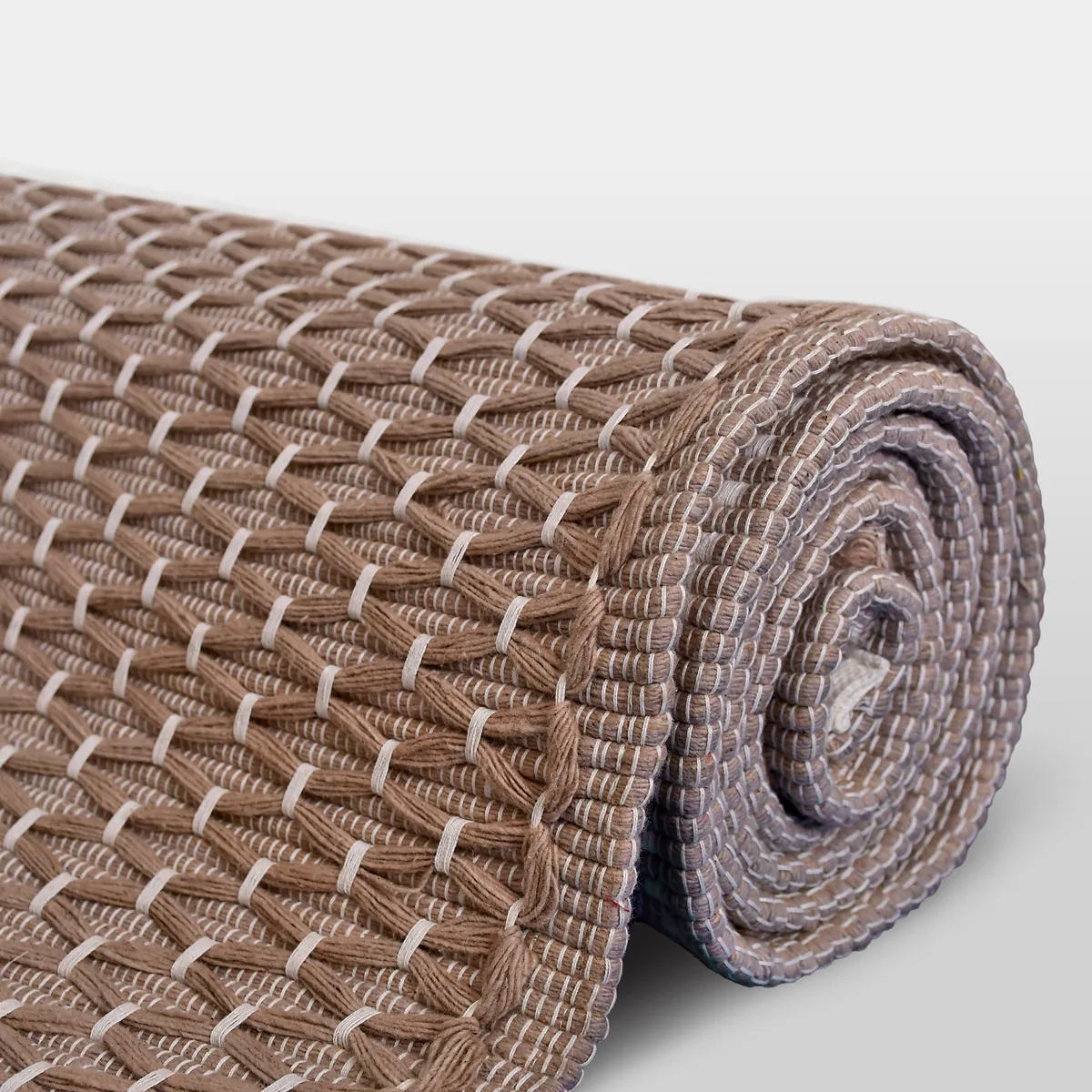
Rolling like a ball, spine stretches and anything that takes the back along the floor are where a thin yoga mat feels mean. Dense cotton behaves differently from foam here: it compresses less, so 7 mm of woven cotton feels firmer than 7 mm of foam. The Diamond Clay is the thickest mat we make, GOTS-certified organic cotton at about 1.8 kg, with a raised diamond lattice that you feel as texture rather than ridges. The Prana Shakti is thinner at 5 mm but woven six-ply, which gives it density under the hips.
If your tailbone still complains in rolling exercises, fold a cotton blanket under the lower back, or fold the mat once under the pelvis for that part of the class. A thick, soft foam Pilates mat is kinder on a bony spine, and we would rather say so than pretend otherwise; what it usually cannot do is go in the wash.
Grip for planks and side planks
Cotton can slip when bone dry. Pilates classes often begin lying down, so the hands arrive at plank cool and dry on a cool, dry mat. Dampen your palms before class, or do a few rounds of knees-to-plank early, and the surface changes within minutes. The Diamond lattice gives the fingers something to press into; the Prana Shakti's ribbed six-ply weave does the same with less relief. Feet in plank do better bare than in socks.
Both mats have a thin layer of natural tree latex brushed onto the underside by hand, which holds on tile, marble and wood, so the mat itself stays where you put it. If you are allergic to natural latex, choose with care and write to us first. For more on hand slip and mat slip, read how to stop a cotton mat slipping.
Lying flat and the width
At 68 to 69 cm wide, both mats are standard width, so in arm circles and the side-lying series your hands and feet will pass beyond the edge. That is true of almost every mat and is no problem on a clean floor. The Diamond is 183 cm long and the Prana Shakti 188 cm, long enough for a full roll-down with the arms overhead for most people.
Washing after a sweaty session
This is where a cotton mat earns its place. Pilates on a warm afternoon leaves the mat damp along the line of the spine.
- Diamond Clay: machine wash on a delicate 30 °C cycle in a laundry bag, or hand wash; dry flat away from sun.
- Prana Shakti: hand wash cold with a mild natural detergent, separately for the first few washes; dry flat in shade. Machine washing can fade the plant dyes, and a little colour in the first rinse is normal.
Between washes, unroll the mat after class and let it air. Cold water only, no bleach, no softener, no tumble dryer.
| Diamond Clay | Prana Shakti | |
|---|---|---|
| Thickness | 7 mm | 5 mm, six-ply |
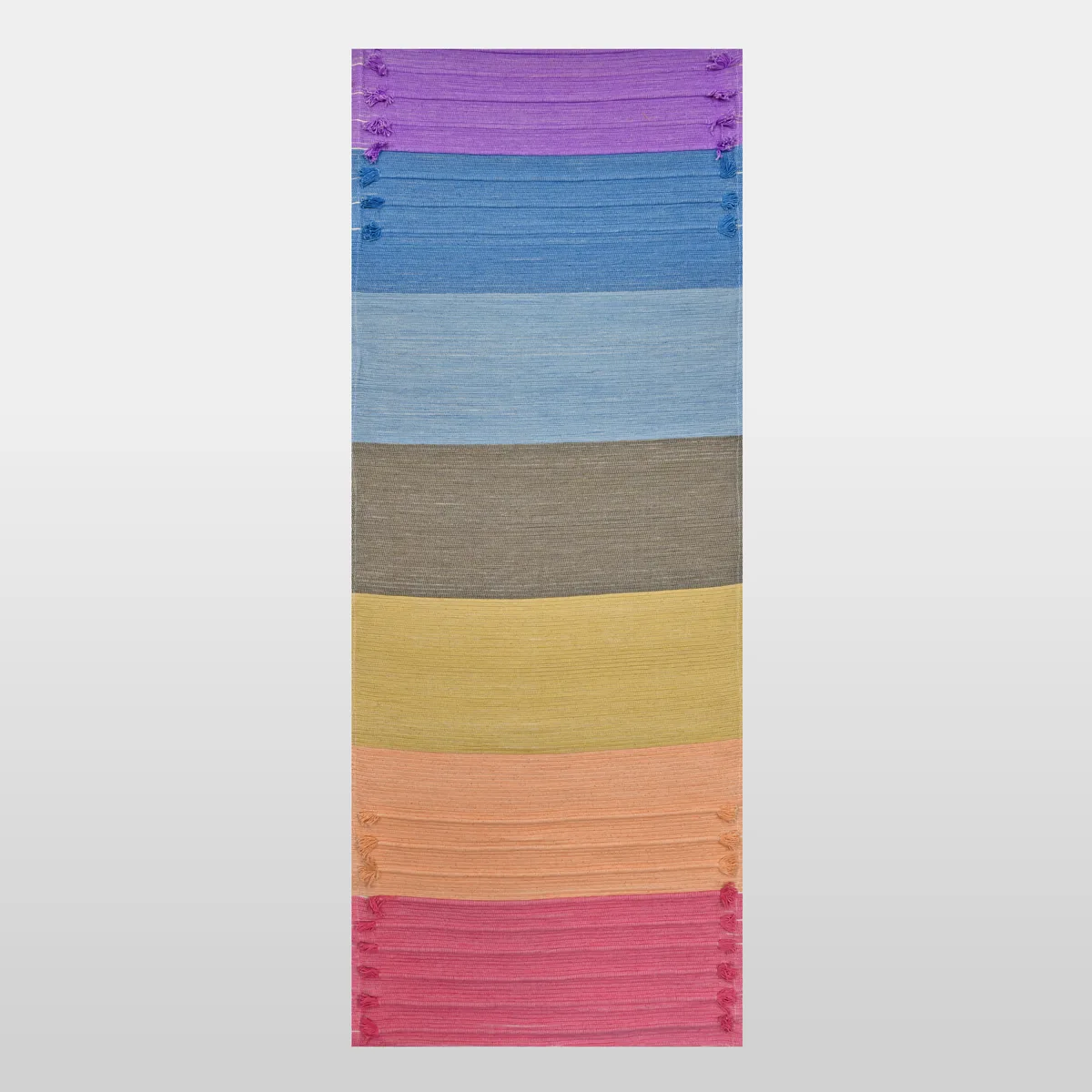
| Surface | Raised diamond lattice | Ribbed weave, seven colour bands |
| Size | 183 × 68 cm | 188 × 69 cm |
| Weight | ≈1.8 kg | ≈1.5 kg |
| Washing | Machine, delicate 30 °C, laundry bag | Hand wash cold |
| Price (at the time of writing) | ₹4,450 | ₹3,499 |
For the wider comparison, including how our mats sit against purpose-made Pilates mats, read the best mat for Pilates at home and the thickness guide.
Frequently asked questions
Can you do Pilates on a yoga mat?
Yes, if it is thick and dense enough for the rolling exercises. A 3 mm travel mat will feel hard along the spine; 5 to 7 mm of dense cotton or a thicker foam mat is comfortable for most people. Fold a blanket under the pelvis for the rolling section if you need more.
Is a cotton mat thick enough for Pilates?
Our 7 mm Diamond Clay is, and the 5 mm six-ply Prana Shakti is for most people. Woven cotton compresses less than foam, so it feels firmer than the same thickness of foam. If you have a bony tailbone, add a folded blanket for rolling.
Will my hands slip in plank on a cotton mat?
At the very start, possibly, because cotton grips least when it and your hands are both dry. Dampen your palms before class or warm up for a few minutes and the grip improves. The raised lattice on the Diamond mats gives the fingers purchase.
How do I wash a cotton mat after Pilates?
The Diamond mats go in the machine on a delicate 30 °C cycle in a laundry bag. The chakra rugs are hand washed cold with a mild natural detergent. Both dry flat in shade. Air the mat after every session so it never stays damp.
If most of your hour is on your back, start with the Diamond Clay; if you want a rug that doubles for yoga, the Prana Shakti.