For Pilates at home the best mat is 5 to 7 mm thick and dense rather than spongy, wide enough for the arms to sweep, and washable: rolling exercises put the length of the spine on the floor, and planks and side-lying work need a surface that grips damp hands. Our 7 mm Diamond Clay and Diamond Orange are the mats we weave for this kind of floor work; the 5 mm six-ply Prana Shakti suits lighter mat work and is, with the Prithvi, our widest and longest cotton rug.

What Pilates asks of a mat
Pilates is a mind-body exercise system developed in the early twentieth century by Joseph Pilates, practised either on apparatus or, in the form most of us do at home, on a mat (Wikipedia: Pilates). Mat work centres on the muscles of the abdomen, lower back and hips, and much of it happens lying down: roll-ups, rolling like a ball, the hundred, shoulder bridge, side kicks, swimming.
That makes a Pilates mat different from a yoga mat in three ways. The spine spends a lot of time pressed into the floor, often rolling along it, so cushioning along the whole length matters more than in standing yoga. The arms sweep and the legs swing wide, so width matters. And the work is repetitive and warming, so hands sweat and a mat you can wash is a mat you will keep using. Grip on the floor matters less than in yoga, but a mat that creeps under a roll-up is still a nuisance.
Thickness: why 5 to 7 mm of cotton
Pilates mats are often thicker than yoga mats, and the reason is the spine: on a 3 mm mat over tile, rolling like a ball is a bony experience. Dense woven cotton does not feel like foam of the same number. Foam compresses and springs; six-ply or seven-millimetre cotton compresses a little and then holds, which is what you want under a rolling spine. We compare the feel of each thickness in Yoga mat thickness guide: 3 mm vs 5 mm vs 7 mm. For Pilates we would steer most people to 7 mm, and to 5 mm if you are light, practise on a softer floor, or do mostly seated and standing work.
Three mats for Pilates at home
Diamond Clay and Diamond Orange: 7 mm with an alignment grid
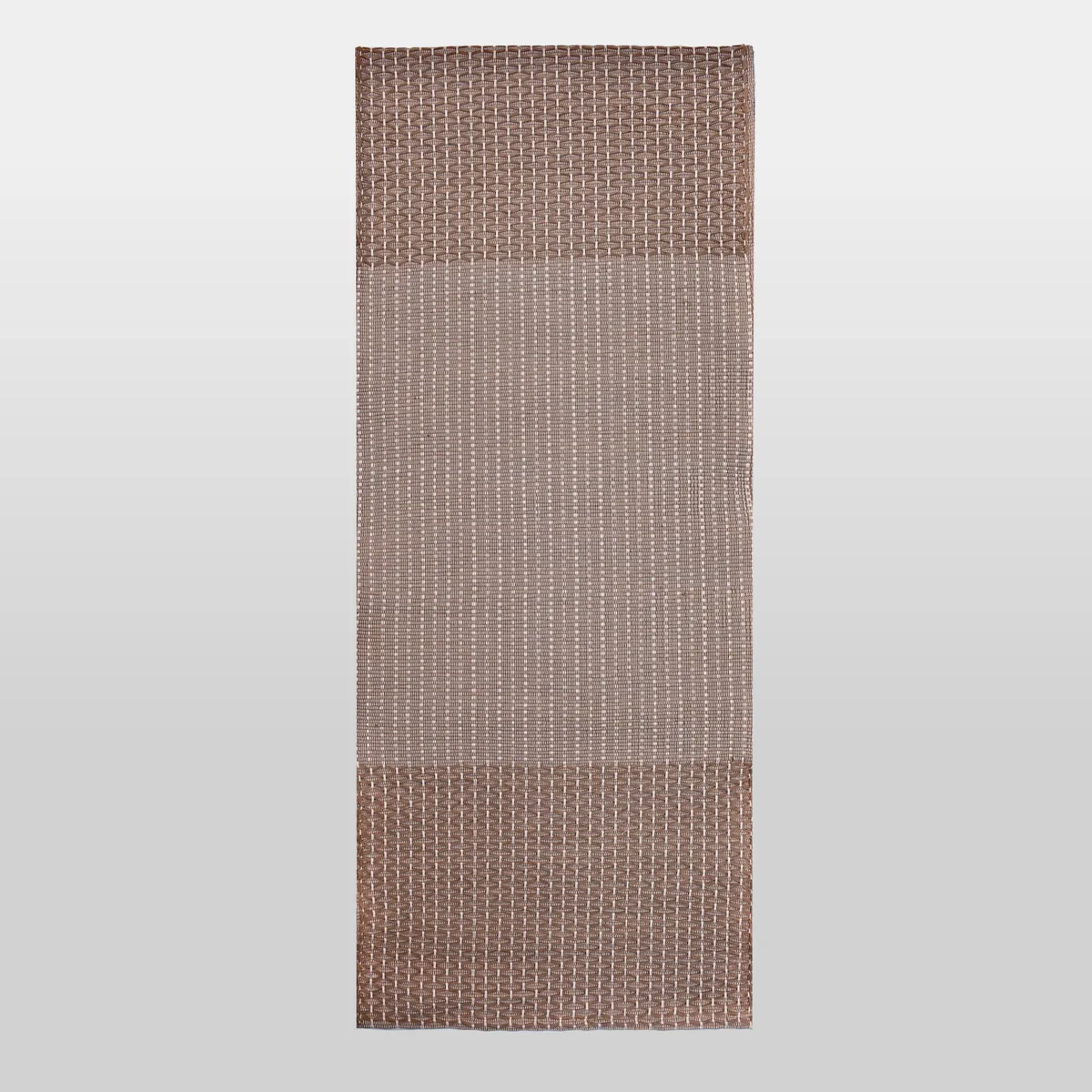
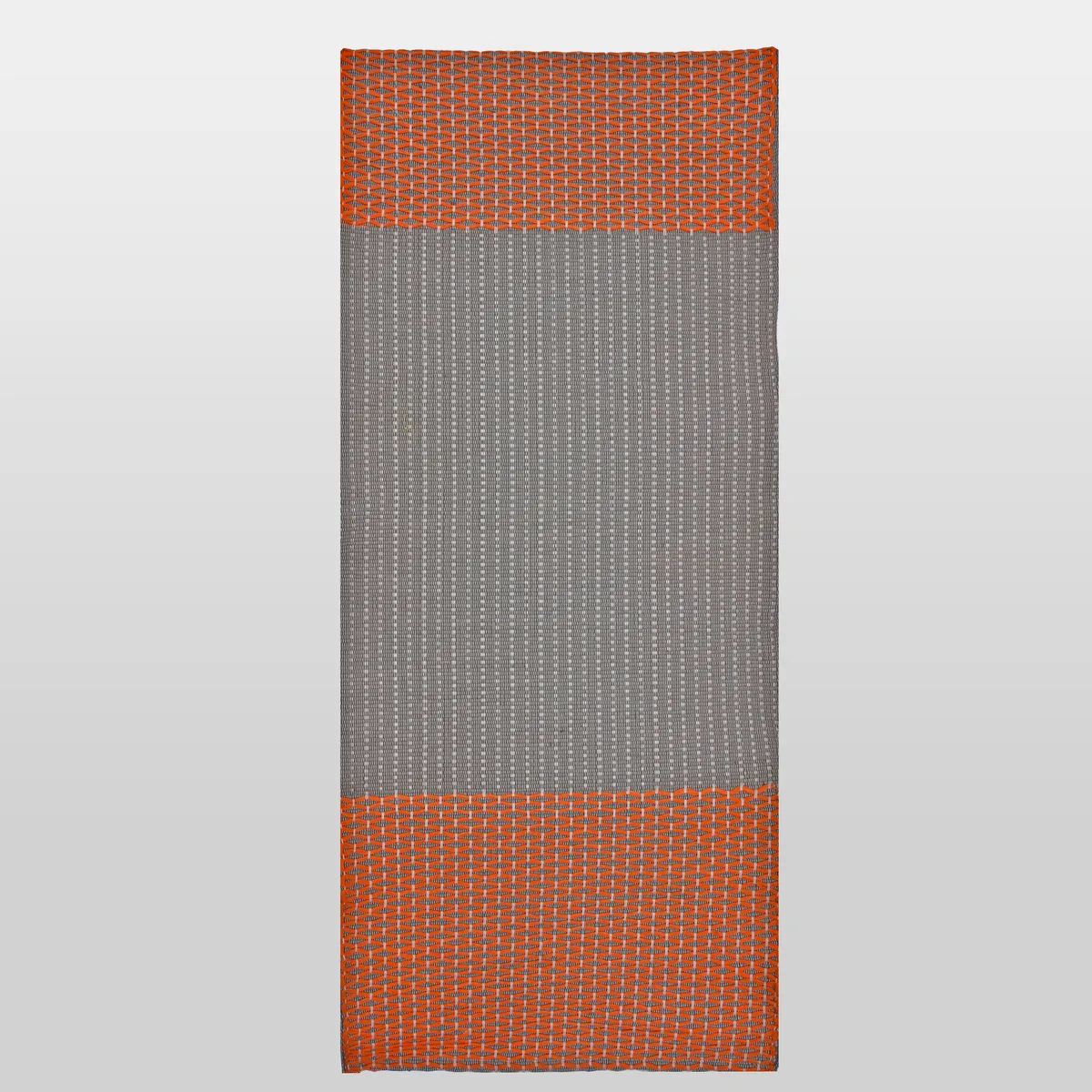
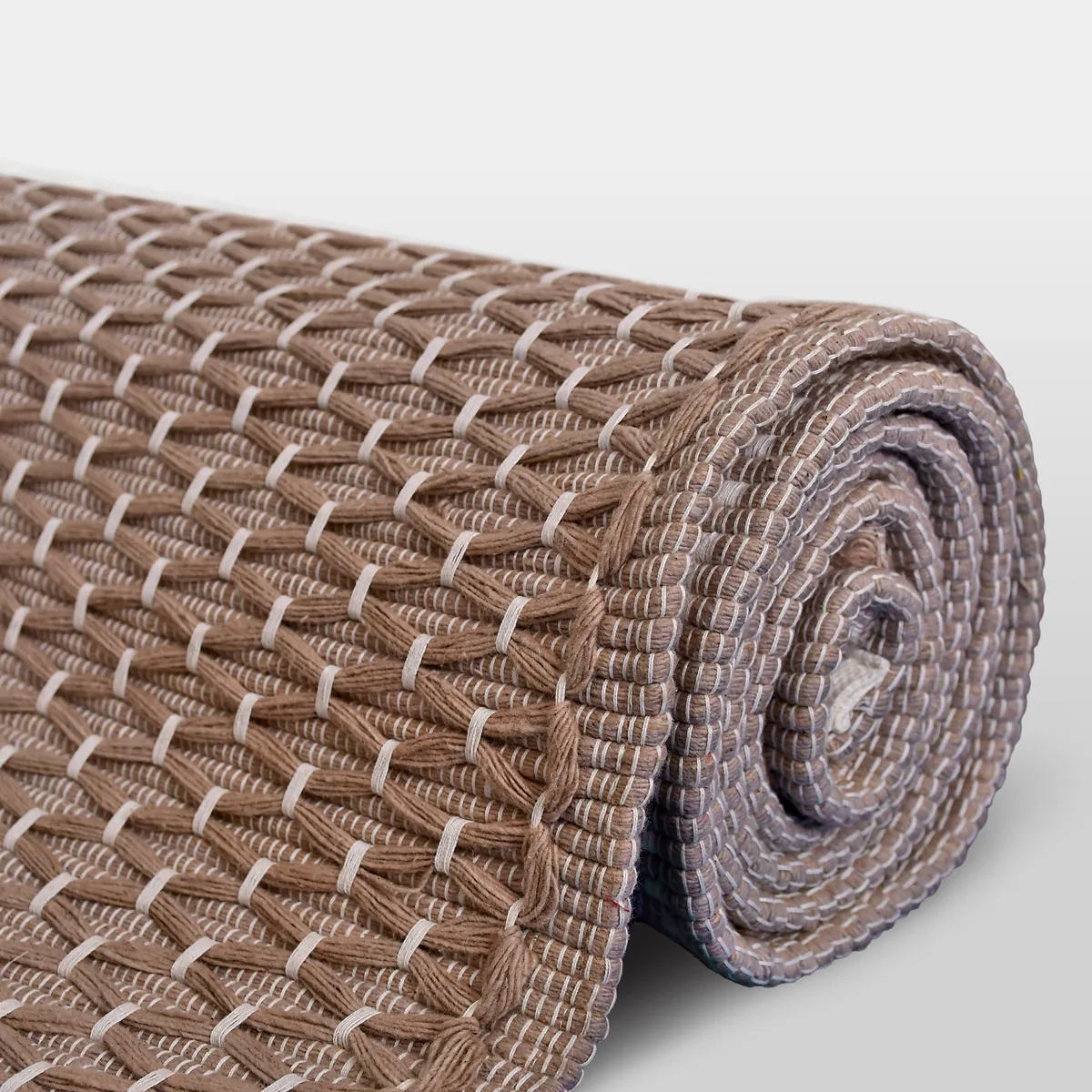
The Diamond Clay and Diamond Orange share one construction: 7 mm of handwoven GOTS-certified organic cotton with a raised diamond lattice, the pattern our weavers call butterfly-eye. Only the colour differs. The Clay is dyed with alkanet root to a muted clay tone; the Orange has a plant-dyed orange lattice on a soft grey ground.
For Pilates the lattice does two jobs: the raised diamonds give damp palms and the balls of the feet something to catch in plank and side plank, and the regular grid shows at a glance whether your spine is centred and your hands level. Both mats are 183 × 68 cm (72 × 27 in) and about 1.8 kg, heavy enough to lie flat under a roll-up, with a thin layer of natural tree latex brushed onto the underside. They are the mats we make that can go in a washing machine, on a delicate 30 °C cycle in a laundry bag, dried flat away from the sun. At the time of writing each is ₹4,450.
Prana Shakti: the widest cotton rug, at 5 mm
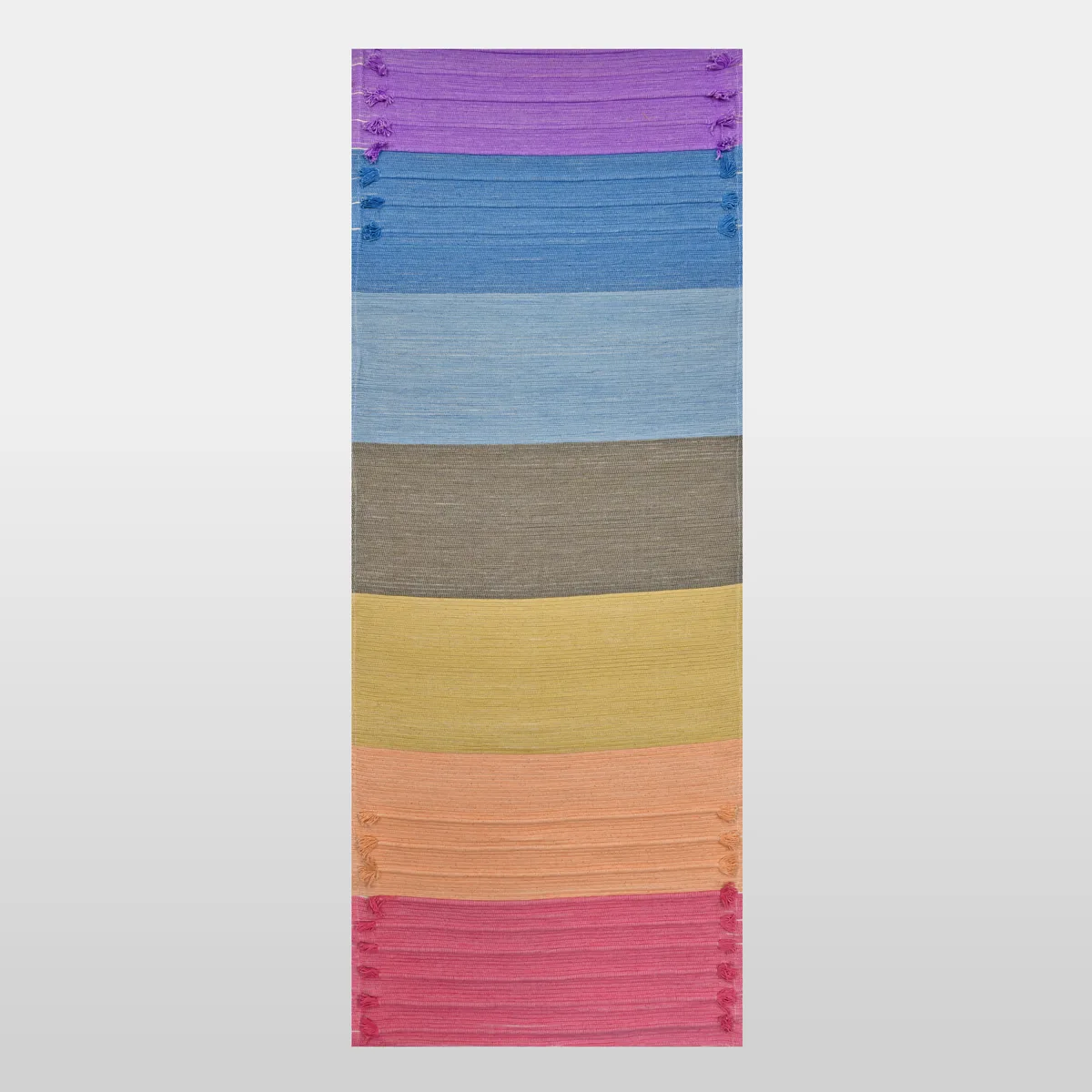
The Prana Shakti is a six-ply rug of GOTS-certified organic cotton, 5 mm thick, with a rose ground and seven chakra colour bands drawn from Ayurvedic plant dyes, turmeric, neem and tulsi among more than twenty herbs. At 188 × 69 cm (74 × 27 in) it is, with the Prithvi, the longest and widest of our cotton mats, worth having when the legs swing in side kicks and both head and heels want to stay on the rug. It weighs about 1.5 kg and has the same natural latex underside.
Six-ply cotton at 5 mm is dense and warm rather than deeply cushioned, so it suits lighter mat work, seated and standing Pilates, or a practitioner who finds 7 mm too much. Hand wash cold with a mild natural detergent, separately for the first washes, and dry flat in shade. At the time of writing it is ₹3,499.
Which one for you
| Diamond Clay | Diamond Orange | Prana Shakti | |
|---|---|---|---|
| Thickness | 7 mm | 7 mm | 5 mm, six-ply |
| Size | 183 × 68 cm | 183 × 68 cm | 188 × 69 cm |
| Weight | ≈1.8 kg | ≈1.8 kg | ≈1.5 kg |
| Surface | raised diamond lattice (alignment grid) | raised diamond lattice (alignment grid) | six-ply weave, chakra bands |
| Colour | clay, from alkanet root | plant-dyed orange on grey | rose ground, seven colour bands |
| Washing | machine, delicate 30 °C, laundry bag | machine, delicate 30 °C, laundry bag | hand wash cold |
| Best for | full mat repertoire, rolling, tile floors | the same, in a brighter colour | lighter mat work, tall or broad practitioners |
| Price at the time of writing | ₹4,450 | ₹4,450 | ₹3,499 |
If you do the full mat repertoire with rolling and you practise on tile, choose a Diamond, in whichever colour you will be glad to unroll. If you are tall, want the extra width, or do mostly seated and standing work, the Prana Shakti.
All three have a natural latex layer on the underside. If you are allergic to natural latex, choose with care and write to us first.
Washing after sweat
Pilates is sweaty in a quiet way, and sweat left in cotton is what causes smell. Hang the mat over a chair after practice rather than rolling it damp. Machine wash the Diamond mats on a delicate 30 °C cycle in a laundry bag as often as you need; hand wash the Prana Shakti cold with a mild natural detergent. Cold water only, no bleach, softener or tumble dryer, and dry flat out of direct sun. A little colour in the first rinse is normal. For what to adjust day to day, see Pilates on a cotton mat.
Honest limits
Seven millimetres of woven cotton is firmer than a thick foam Pilates mat. If your tailbone is sensitive in rolling exercises, a folded blanket under the hips on top of the mat solves it. Cotton can feel slippery under completely dry hands for the first minutes; damp palms fix it. Plant colours soften gently over years, and handwoven mats vary a little from one to the next.
Frequently asked questions
How thick should a Pilates mat be?
For mat Pilates at home, 5 to 7 mm of a dense material is a good range. Rolling exercises put the spine along the floor, so you want more cushioning than a thin yoga mat gives, but a very soft mat lets the tailbone sink and makes planks unstable. Dense woven cotton at 7 mm feels firmer and more supportive than foam of the same thickness.
Can I use a yoga mat for Pilates?
Yes, if it is thick and dense enough along the spine. A 3 mm travel mat will feel hard in rolling exercises on a tile floor; a 5 to 7 mm cotton mat works well for both practices. Our Diamond mats are used for yoga and Pilates alike, and the raised lattice doubles as an alignment grid for either.
Is a cotton mat grippy enough for planks and side planks?
Yes, once your hands are slightly damp, which in Pilates happens within a few minutes. Cotton absorbs sweat into the weave rather than letting it sit on the surface, and the raised lattice on our Diamond mats gives the fingers and the balls of the feet an edge to catch. If your hands are bone dry at the start, dampen the palms first.
Which TwinsPoles mat is best for Pilates?
The Diamond Clay or Diamond Orange: 7 mm of GOTS-certified organic cotton with a raised diamond lattice that grips damp hands and shows whether your spine is centred, heavy enough to stay put under a roll-up, and machine washable on a delicate 30 °C cycle in a laundry bag. The 5 mm six-ply Prana Shakti is the alternative for lighter work or for anyone who wants a longer, wider rug.
If your floor is tile and your repertoire includes rolling, start with the Diamond Clay or Diamond Orange, or see every cotton mat we weave in the cotton collection.