For Ashtanga and Mysore-style practice, a handwoven cotton yoga rug is the mat we would choose, either on its own or laid over a rubber mat. Cotton grips better as it gets damp, so it improves through a sweaty practice instead of getting slippery; it lets the feet slide in jump-throughs; and it can be washed properly after class. We weave three rugs for this: the six-ply Prana Shakti and Prithvi, and the ribbed indigo Indico.

Why Ashtanga practitioners reach for a rug
Ashtanga is a set sequence done at a steady pace with a breathing pattern that builds heat. Within fifteen minutes most people are sweating, and the practice includes repeated vinyasas, jumping back and jumping through, that ask the hands to stay fixed while the feet travel. Those two things, sweat and sliding feet, are what a sticky rubber mat handles worst and a cotton rug handles best. It is why cotton rugs are a common sight in Mysore-style rooms, where students practise at their own pace in a shared, warm space. Our article on why Mysore rooms use cotton looks at that habit in more detail.
Grip that improves with sweat
Rubber and foam rely on dry friction. Once a film of sweat forms, the hand skates. Cotton works the other way: dry cotton on a bone-dry floor can feel a little slippery for the first few sun salutations, then as the surface takes on a little moisture the fibres bind to the palm. By the standing sequence the rug is at its best. If you want a head start, dampen your palms before you begin. This is the same behaviour that makes cotton a good choice for hot rooms; see hot yoga with a cotton mat.
Jumping through
A jump-through needs the feet to glide between the hands and then stop. On a sticky mat the toes catch; on a rug the feet slide and land. Six-ply cotton has a slightly softer, more open surface, which many people find kinder to the tops of the feet when they drag; the flat ribbed weave of the Indico is a little faster.
Washing after practice
An Ashtanga rug gets wet most days. Cotton can be hand washed cold and dried flat in shade, and it dries fully, so it does not hold the smell that builds in a rubber mat that is only ever wiped. Wash separately for the first few washes, because our dyes are plant-based and a little colour in the first rinse is normal. The Mat care page has the full routine.
Rug alone or rug over a mat?
Both work, and the choice depends on your floor and your knees.
Rug alone. On a clean tile, marble or wooden floor our rugs stay put, because a thin layer of natural tree latex is brushed onto the underside by hand. The practice feels closer to the ground, which many Ashtanga teachers prefer, and there is only one thing to carry and wash. If you are allergic to natural latex, choose with care and write to us first.
Rug over a rubber mat. In a shared room, or on a floor that is dusty, uneven or carpeted, laying the rug over a rubber mat gives a stable base and a washable surface on top. It also adds cushioning for the knees in the seated sequence. The rug may creep slightly on the rubber during jump-backs; tucking the far end under the mat's edge cures that. This is also the hygienic answer in studios that provide mats.
Three rugs for Ashtanga
Indico: the plain, fast rug
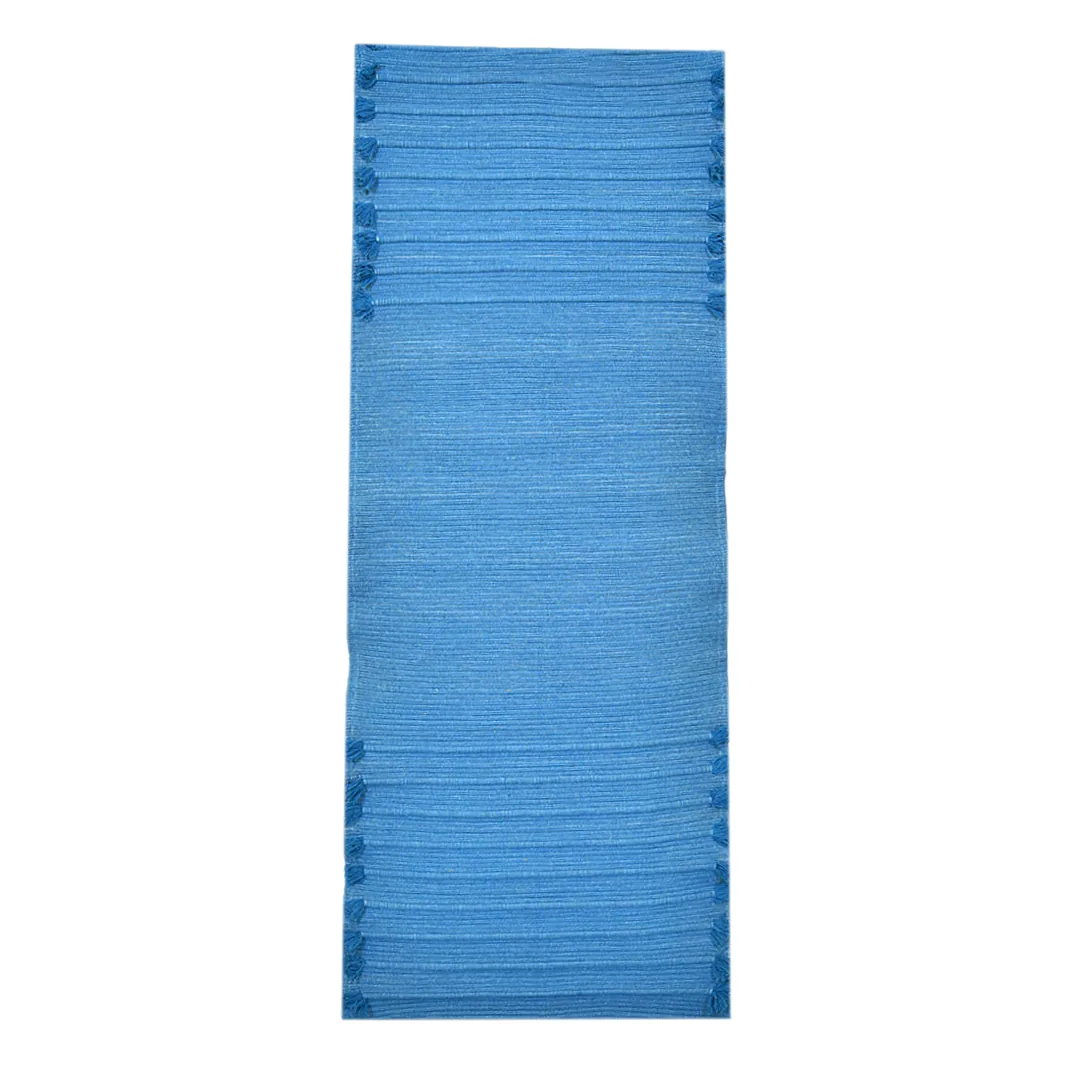
The Indico is GOTS-certified organic cotton dyed with true indigo, 5 mm thick, 183 × 68 cm and about 1.4 kg. The ribbed weave gives a clean, slightly quicker surface for jump-throughs, and the single colour hides nothing: it is the rug that shows the weave best. Indigo rubs and softens a little in the first weeks, which is the nature of the dye. At the time of writing it costs ₹4,499.
Prana Shakti: six-ply, softer under the feet
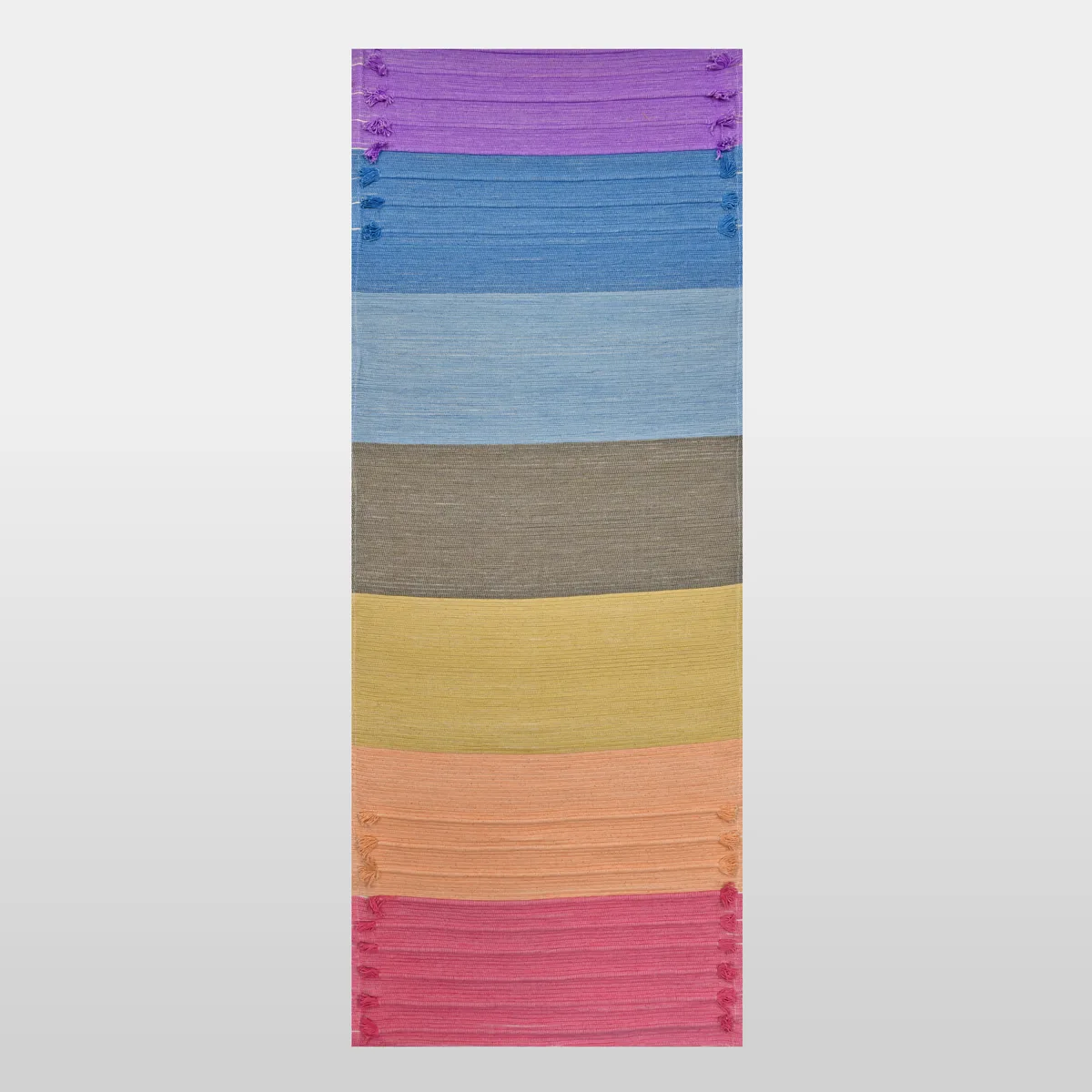
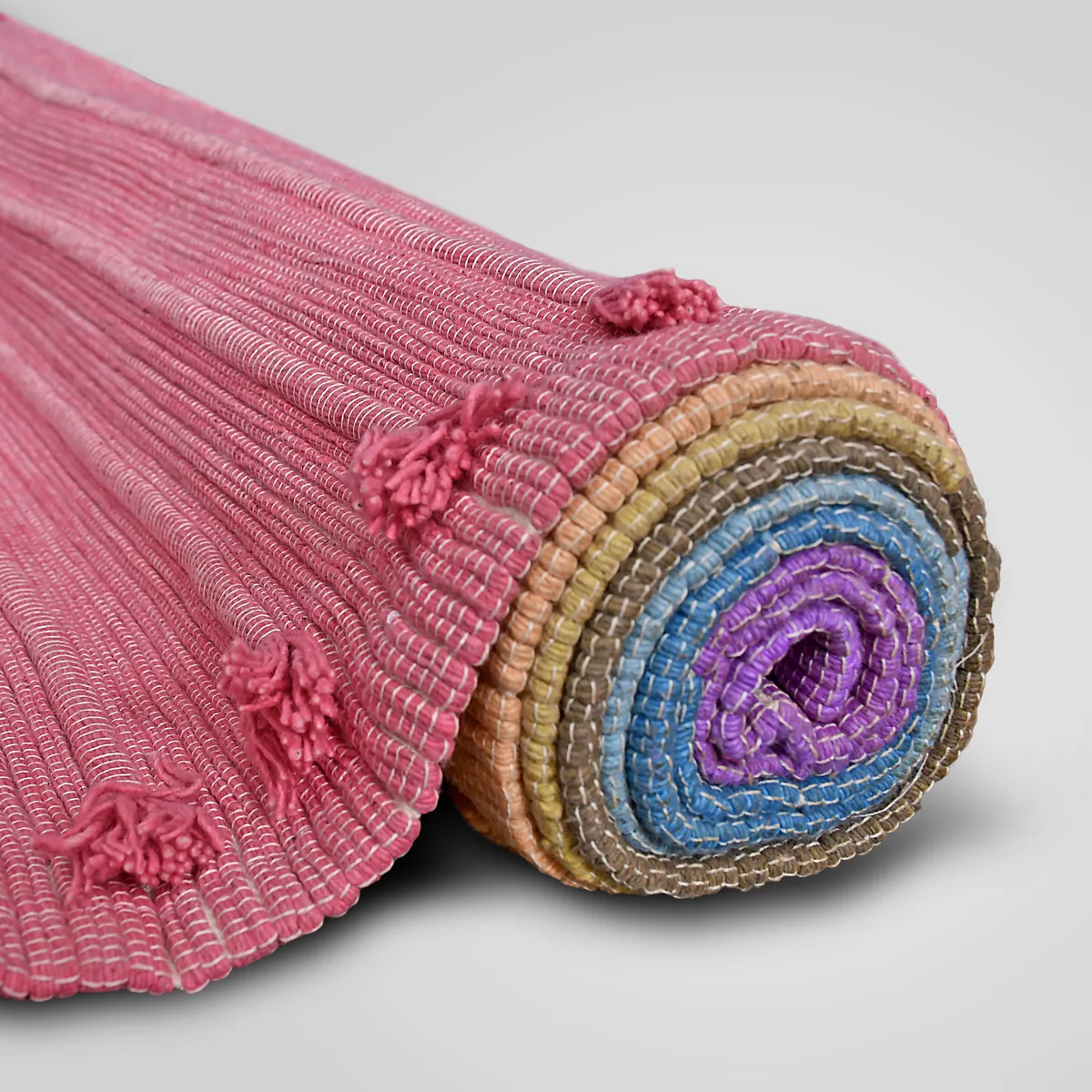
The Prana Shakti is a six-ply rug of GOTS-certified organic cotton, 5 mm thick, 188 × 69 cm and about 1.5 kg. The extra ply makes it feel softer and more absorbent than a flat weave, and the 188 cm length suits taller practitioners who find their heels off the end of a standard mat in the finishing sequence. A rose ground carries the seven chakra colour bands, dyed with turmeric, neem, tulsi and other plants. At the time of writing it costs ₹3,499.
Prithvi: the same weave, earth tones
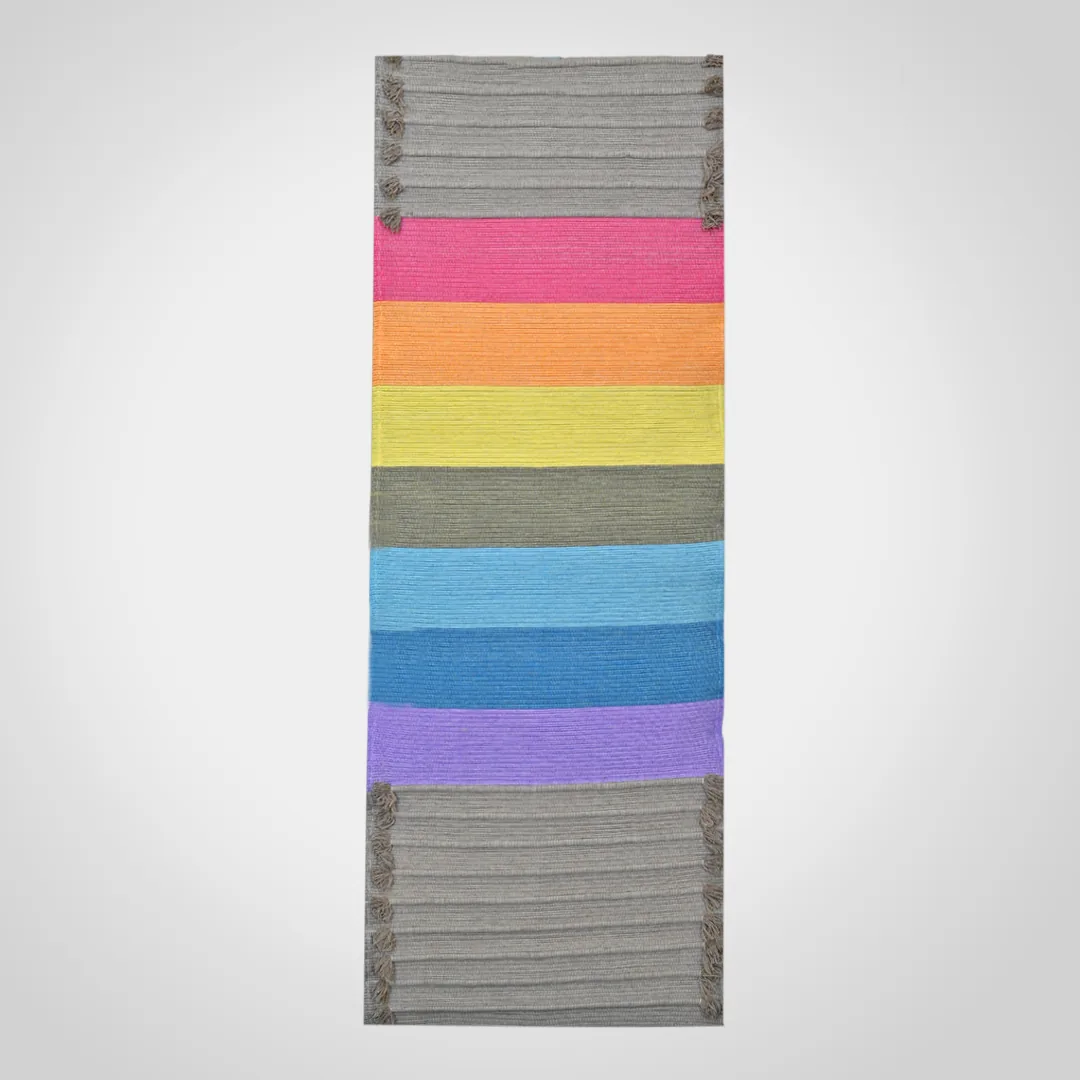
The Prithvi is woven the same way as the Prana Shakti, six-ply, 5 mm, 188 × 69 cm, about 1.5 kg, with the seven chakra bands on an earth-toned ground and hand-knotted tassels at either end. Choose between the two on colour alone. At the time of writing it costs ₹4,400.
A quick comparison
| Indico | Prana Shakti | Prithvi | |
|---|---|---|---|
| Weave | Ribbed, flat | Six-ply | Six-ply |
| Thickness | 5 mm | 5 mm | 5 mm |
| Size | 183 × 68 cm | 188 × 69 cm | 188 × 69 cm |
| Weight | ≈1.4 kg | ≈1.5 kg | ≈1.5 kg |
| Feel in jump-throughs | Quicker glide | Softer, more cushion | Softer, more cushion |
| Dye | Indigo | More than twenty plants | More than twenty plants |
| Care | Hand wash cold, separately at first | Hand wash cold | Hand wash cold |
| Price at the time of writing | ₹4,499 | ₹3,499 | ₹4,400 |
What to expect in the first week
A new cotton rug is at its least grippy on day one, when both the rug and your hands are dry. Give it three or four practices. Sweep the floor before you unroll, dampen your palms for the opening sun salutations, and let the rug warm up with you. Downward dog may feel like a small lesson in pressing through the fingers rather than hanging in the heels of the hands, which is no bad thing. After a few washes the cotton softens and the surface settles.
The limits, honestly: a rug offers less cushioning than a thick rubber mat, so if your knees need padding in the seated sequence, fold the rug double under them or use it over a mat. And a wet rug is heavier to carry home; hang it flat to dry rather than leaving it rolled in a bag.
Frequently asked questions
Can you do Ashtanga on a cotton rug without a mat underneath?
Yes, on a clean hard floor. Our cotton rugs have a thin layer of natural tree latex brushed onto the underside, which holds on tile, marble and wood. On carpet, a dusty floor or in a shared studio, lay the rug over a rubber mat instead. If you are allergic to natural latex, choose with care and write to us first.
Does a cotton yoga rug get slippery when you sweat?
The opposite. Cotton grips better as it takes on moisture, so a rug that feels a little slippery when bone dry becomes steadier through a sweaty practice. If you want grip from the first breath, dampen your palms before you start.
How often should I wash an Ashtanga rug?
Hang it flat to dry after every practice and hand wash it cold with a mild natural detergent whenever it smells of use, which for a six-day practice is usually every week or two. Wash separately for the first few washes, as plant dyes can release a little colour. Dry flat in shade, never in direct sun.
Which is better for jump-throughs, six-ply or ribbed cotton?
The ribbed Indico has a flatter, quicker surface, so the feet glide more easily. The six-ply Prana Shakti and Prithvi are softer and a touch slower, which some people prefer because the tops of the feet drag less harshly. Both work; it is a matter of feel.
If you practise most mornings, the Indico is the simplest place to start, or compare the three with the rest of our cotton rugs. For the longer story of where the rug came from, read what is a yoga rug.