A cotton mat in hot yoga behaves the opposite way to rubber: it grips better as you sweat, because the fibre takes up the moisture that would otherwise sit on the surface. The trade-off is that you carry home a mat that is damp and heavier than it was, and it must be dried flat in shade within a few hours. Do that, and a cotton mat is one of the simplest things to practise on in a hot room, with no towel to chase.
What hot yoga does to a mat
Hot yoga is "a form of yoga as exercise performed under hot and humid conditions, resulting in considerable sweating" (Wikipedia). Room temperatures vary by style and studio; the same article says hot yoga is typically performed in a room heated to about 40.5 °C with 40 per cent humidity. Whatever the number, the result on the mat is the same. By the middle of class there is a lot of water between you and the floor.
On a rubber or foam mat, water sits on the surface and the hands and feet start to slide, so the usual answer is a towel laid on top. A cotton mat absorbs the water. It is the same reason a cotton towel works on rubber; the difference is that here the towel is the mat, woven dense enough to lie flat and stay put.
If you are new to hot yoga, listen to your teacher about pacing, water and when to rest. The notes here are only about the mat.
What to expect in class
The first ten minutes
A cotton mat is at its plainest when it and your hands are both dry, which is the start of class. Dampen your palms at the tap before you go in, wipe the spot you set up on, and take the first standing postures steadily. In a hot room this stage is short.
The middle of class
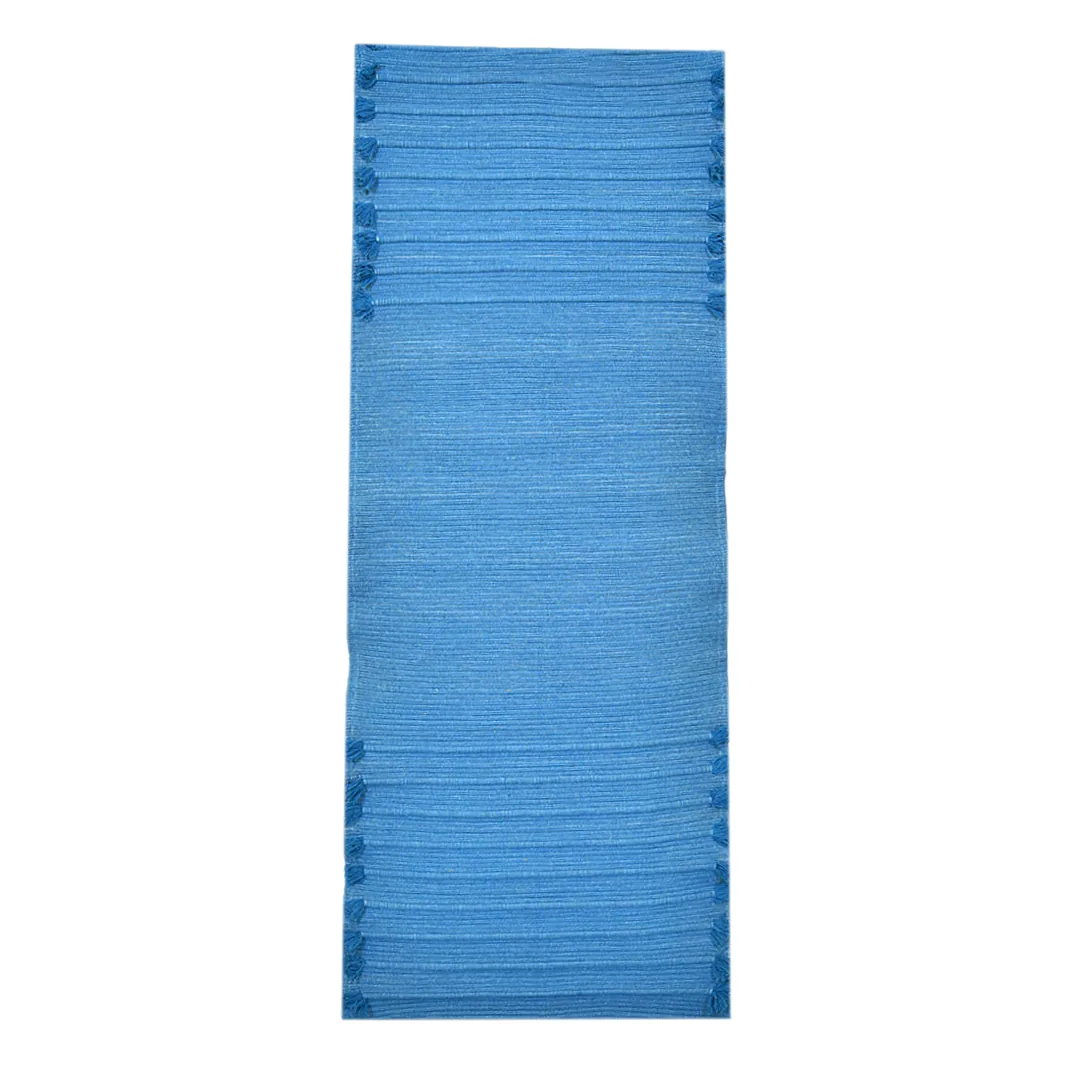
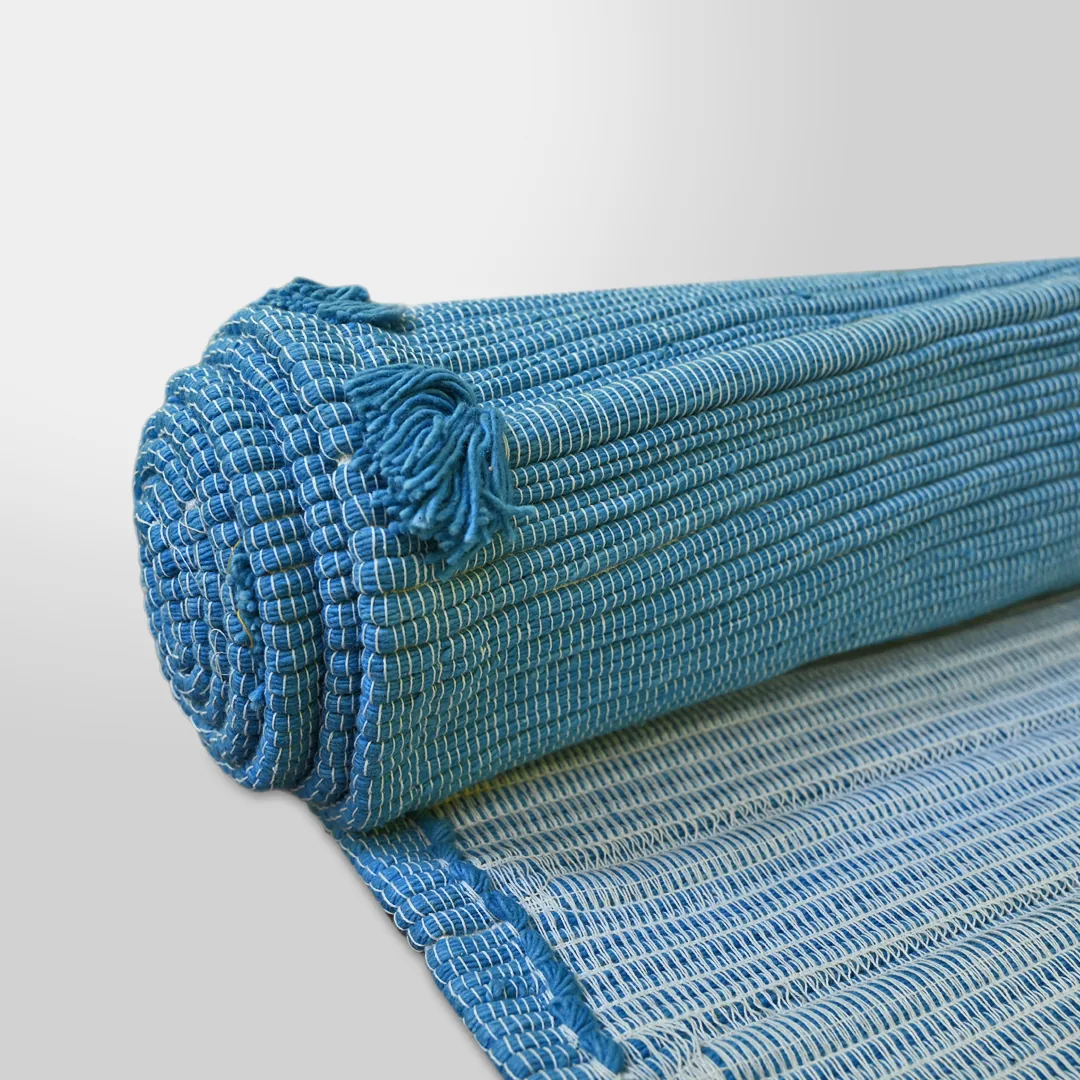
Once you are sweating the Indico comes into its own. The ribbed indigo weave gives the fingers purchase and the cotton holds the hands. The mat darkens a little where it is wet, which is normal, and it does not pool.
The end of class
By the end a cotton mat is noticeably damp and heavier than it went in. We do not quote a wet weight because it depends on you and the room; a 5 mm cotton mat of about 1.4 kg dry will feel clearly heavier rolled up wet. Roll it loosely, not tight, for the journey home, or carry it folded over your arm.
A grass mat in a hot room
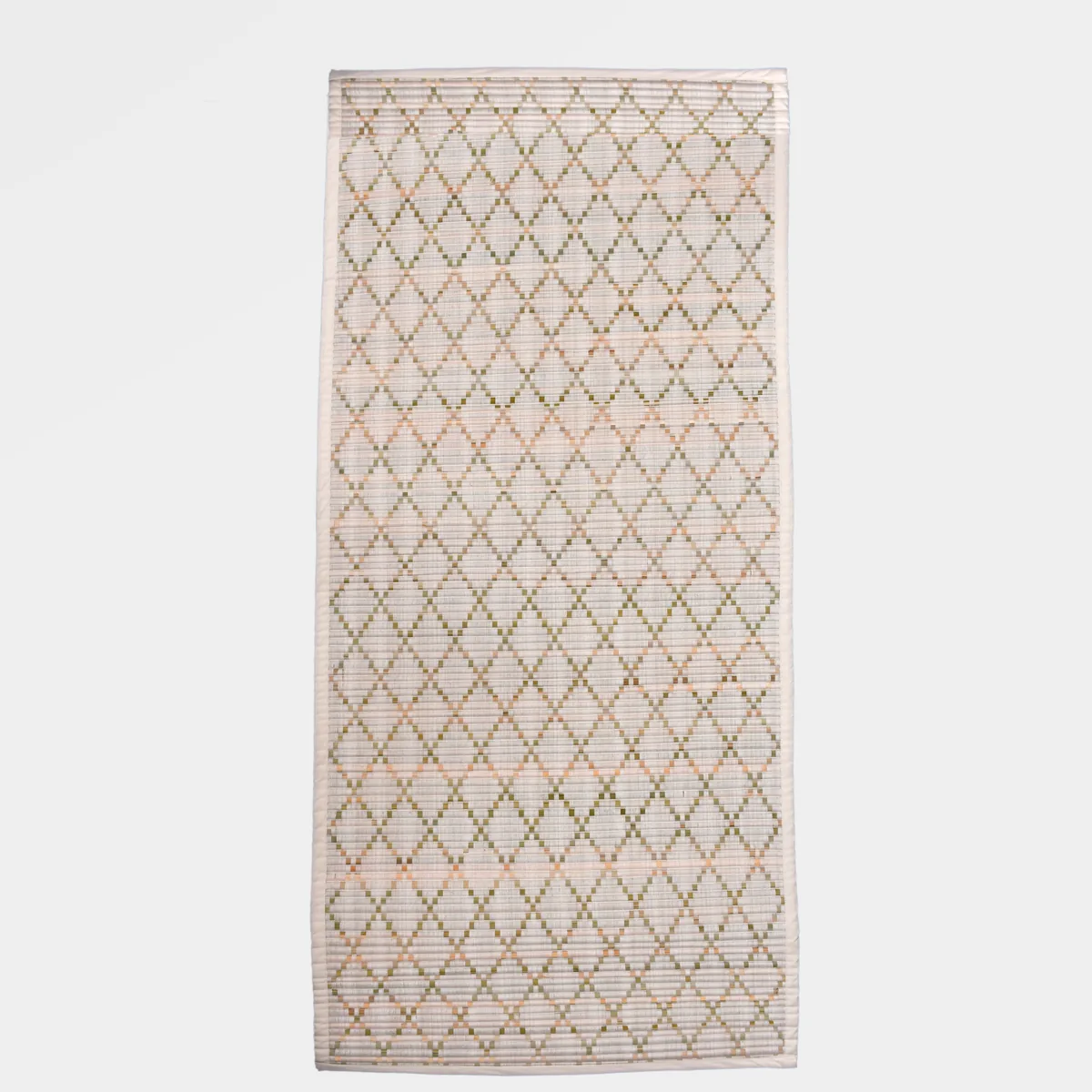
The Sambu Diamond is a different experience. Sambhu grass woven with organic cotton stays cool against the skin and the mat weighs about a kilo, so it is the one many people reach for in summer. It does not absorb sweat the way a cotton weave does, so in a very wet class you may still want a small towel for the hands, and it must never be soaked or machine washed. Wipe it with a damp cloth after class and air it in shade.
Both mats have a thin layer of natural tree latex brushed onto the underside, which holds on tile, marble and wood. If you are allergic to natural latex, choose with care and write to us first.
What to do after class
This is the part that decides whether a cotton mat stays pleasant.
- Unroll it as soon as you get home. A damp mat rolled tight for a day is where smell begins.
- Lay it flat, or hang it over a rail or two chair backs, somewhere with moving air: under a fan, by an open window, on a shaded balcony.
- Keep it out of direct sun. Sun dries quickly but fades plant dyes, and indigo is best kept in shade.
- Turn it once if it is lying flat, so the underside dries too.
- Wash it when it needs it, not after every class: cold water, a mild natural detergent, by hand, separately for the first few washes, dried flat in shade. The Sambu Diamond is never washed, only wiped and aired.
In a humid season this takes longer, and our guide to drying a yoga mat in the monsoon has the tricks. The Mat care page has the full instructions per mat.
Keeping the smell away
Smell comes from sweat left damp. Air the mat after every class, wash the cotton mat when it starts to smell faintly rather than waiting, and store it fully dry. If you practise hot yoga several times a week, two cotton mats in rotation means one is always dry; at ₹4,499 for the Indico at the time of writing, that is a decision for after a few weeks, not before.
Cotton or grass for the hot room
| Indico (cotton) | Sambu Diamond (grass and cotton) | |
|---|---|---|
| Grip when sweaty | Improves | Fair; hand towel in a very wet class |
| Feel | Dense, firm cotton | Firm, cool, textured grass |
| Thickness | 5 mm | 3 mm |
| Weight dry | ≈1.4 kg | ≈1 kg |
| After class | Air flat in shade; hand wash when needed | Wipe with a damp cloth; air in shade; never soak |
| Price (at the time of writing) | ₹4,499 | ₹1,999 |
For a wider look at the options, including how towels on rubber compare, read best yoga mat for hot yoga.
Frequently asked questions
Is a cotton mat good for hot yoga?
Yes, if you are willing to dry it properly afterwards. Woven cotton absorbs sweat and grips better as it dampens, so there is no towel to manage; the costs are a heavier mat to carry home and a drying routine of a few hours in shade with moving air.
Do I need a towel on a cotton mat in hot yoga?
Usually not. The cotton does what a towel on a rubber mat does, which is take up the sweat. If you sweat very heavily you may still like a small hand towel for the face and palms. On a grass mat such as the Sambu Diamond a hand towel is more useful, because grass does not absorb like cotton.
How do I dry a cotton mat after hot yoga?
Unroll it as soon as you are home, lay it flat or hang it where air moves, keep it out of direct sun, turn it once, and store it only when fully dry. Wash it in cold water by hand with a mild natural detergent when it needs it, and dry it flat in shade.
Will a cotton mat smell after hot yoga?
Not if it is aired after every class and never stored damp. Smell comes from sweat left in a rolled mat. If a smell has started, a cold hand wash with a mild natural detergent and a thorough shaded drying clears it.
If you sweat a lot, start with the Indico; if you run hot and want something cool and light, the Sambu Diamond.