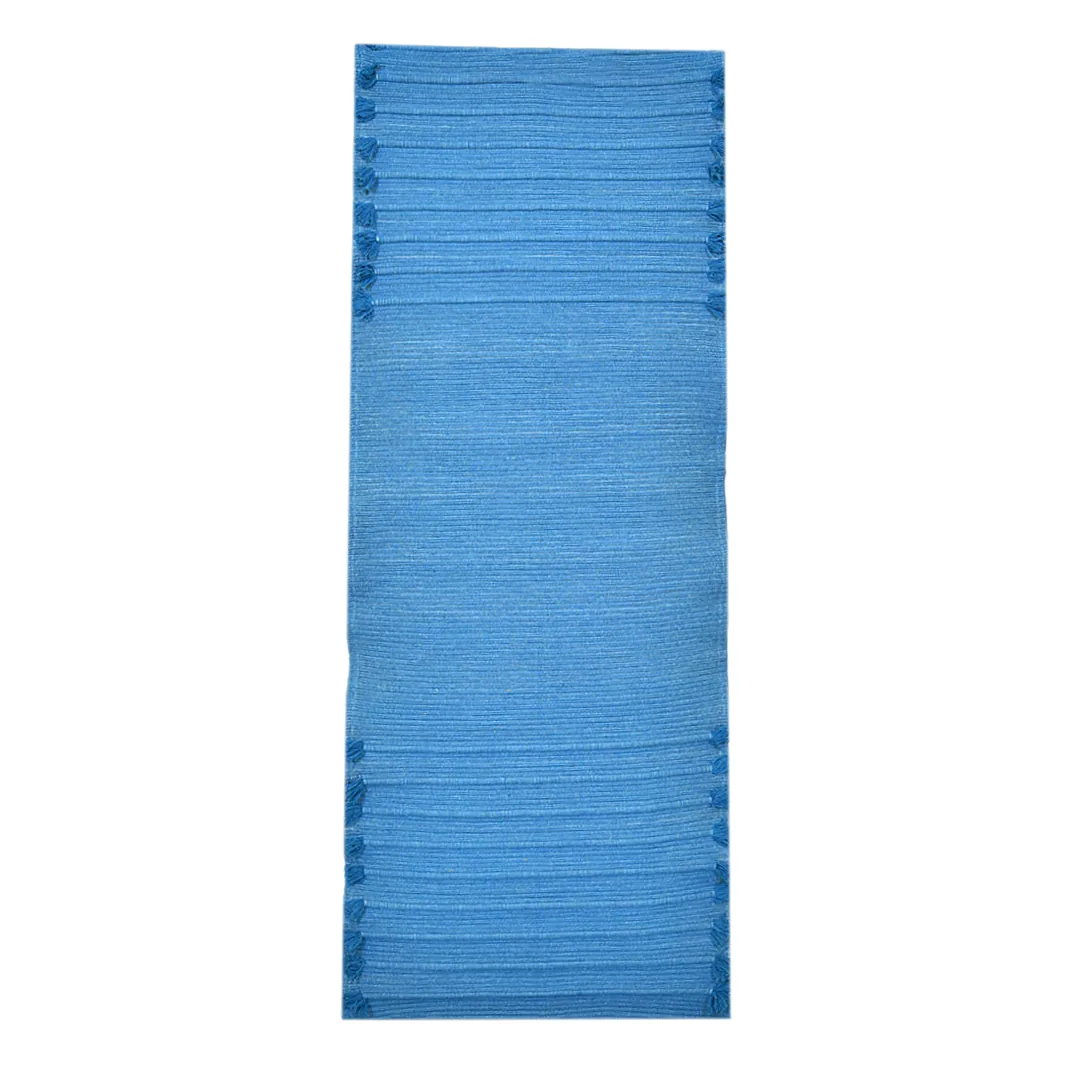
For hot yoga, the best mat is one whose grip improves rather than collapses when it is wet. A handwoven cotton mat such as our Indico does exactly that: in our experience the weave takes up sweat instead of letting it pool, so your hands settle in as the class goes on. A sambhu grass mat such as the Sambu Diamond or Sambu Jute stays cool to the touch and dries fast. A rubber or foam mat with a towel on top also works, but it is heavier and you are really practising on the towel.

Sweat is the whole problem
In a heated room the question is not how a mat feels in the shop but how it feels forty minutes in, when your palms are wet and you are holding a downward dog. Smooth, non-absorbent surfaces hold a film of sweat between skin and mat, and that film is what you slide on. Anything that moves sweat away from that interface keeps you still, which is why the two materials we weave for hot rooms work: cotton takes the sweat into the weave, and grass stays cool and lets air move through it.
Cotton: the surface that grips better damp
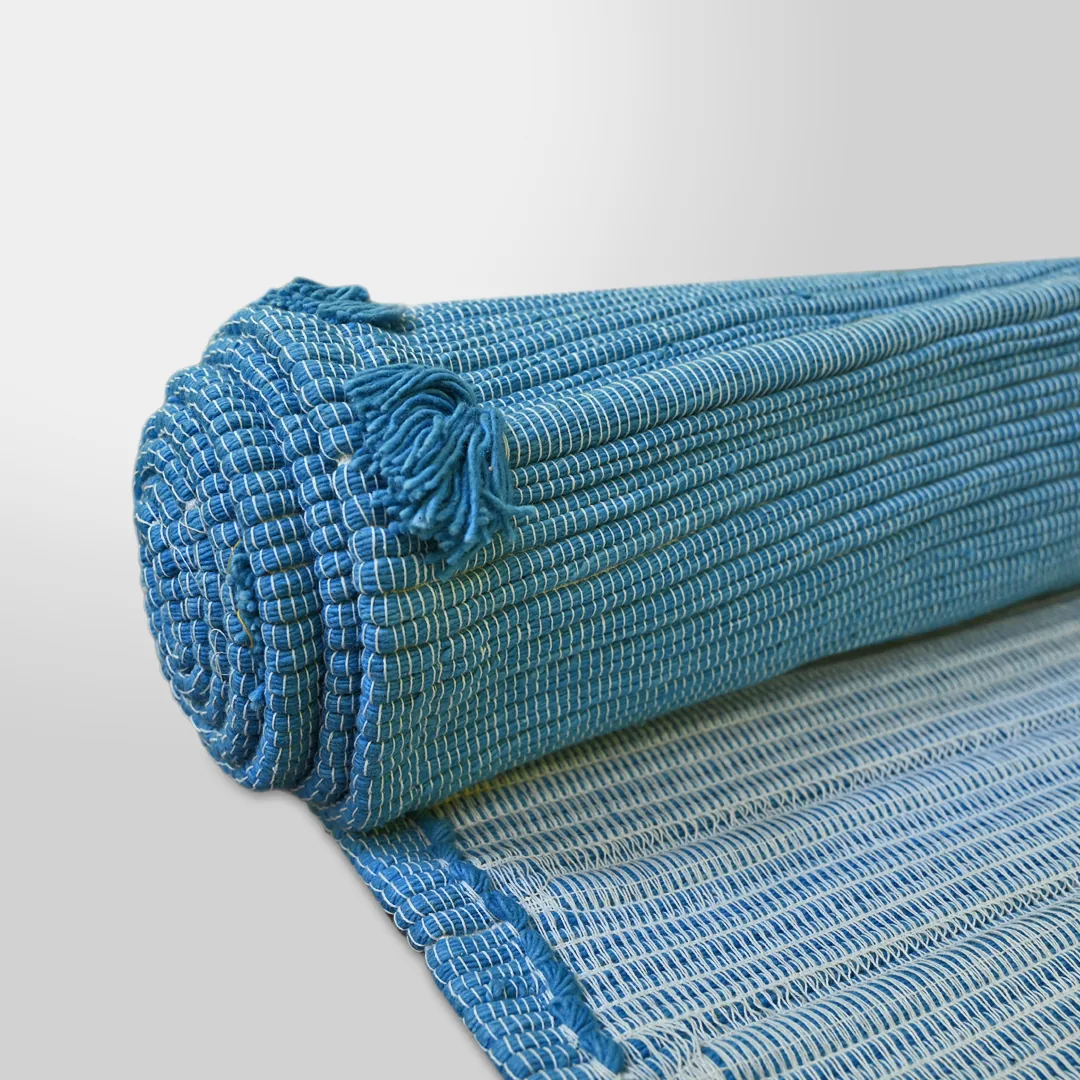
We will be honest about the start. A cotton mat is slightly slick when bone dry, and someone coming from foam notices this in the first standing pose. Then the room warms, your hands dampen, and the ribbed cotton surface of the Indico holds a damp palm far better than a dry one. By the second or third class you stop thinking about it.
Two habits help in the first week. Wipe your palms and soles with a damp cloth before you begin, and do not rush the first few poses. If you want the detail, we have written up what to expect from hot yoga on a cotton mat.
The Indico is GOTS-certified organic cotton dyed with true indigo, 5 mm thick, 183 × 68 cm and about 1.4 kg dry. It is heavier when it comes out of a hot room, because it has done its job and taken up the sweat. Indigo rubs and softens gently over time, so wash it separately for the first few washes.
Grass: cool against the skin, quick to dry
Sambhu is a river grass that our weavers in Komarapalayam weave together with organic cotton. The surface stays cool against the skin, which in a hot room is a relief in itself, and because the mat is only 3 mm and open in structure it dries quickly hung over a rail in shade.
The trade is cushioning: a grass mat is firm, kneeling poses feel the floor through it, and a folded towel to hand helps. It is never washed or soaked; shake it out, wipe it with a damp cloth and air it.
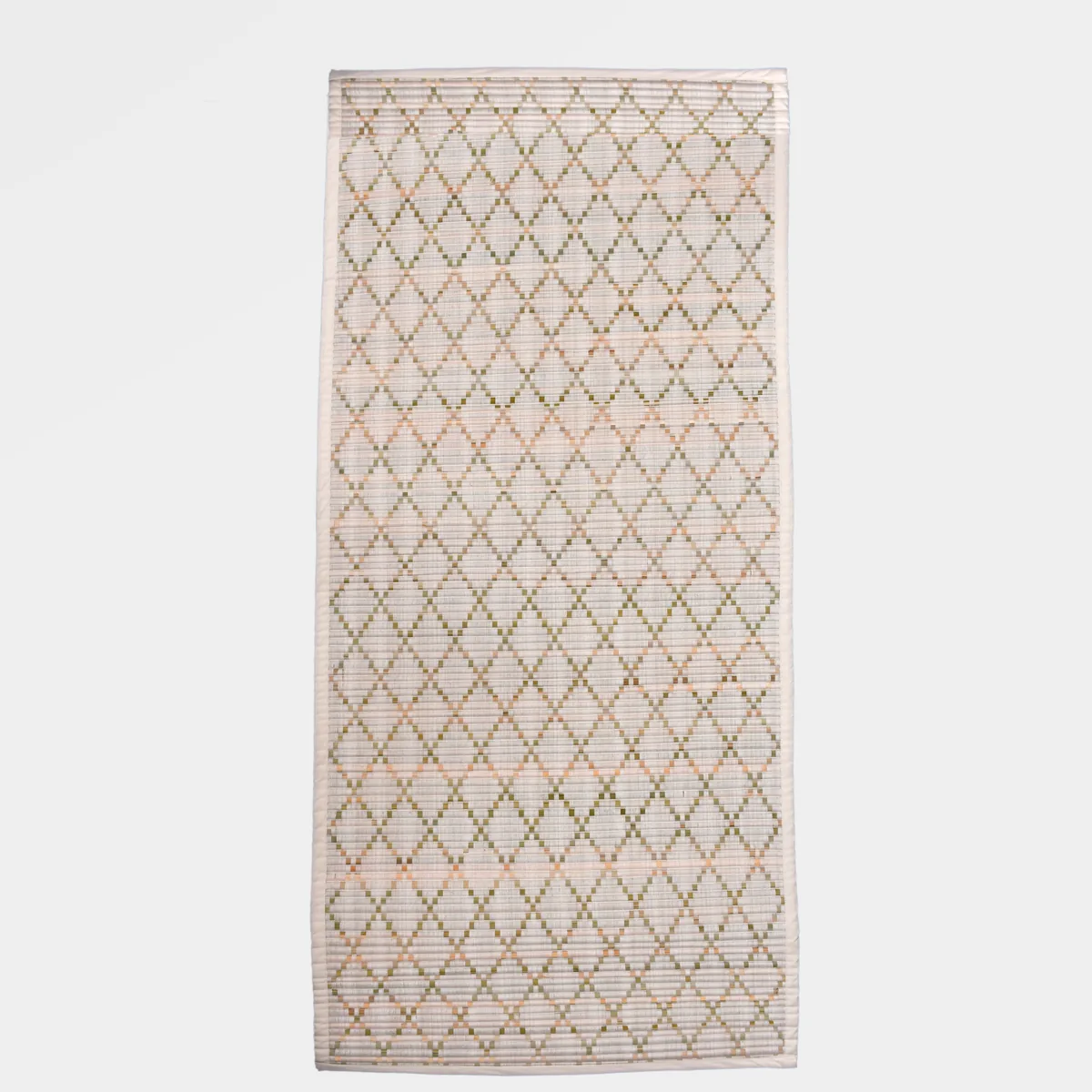
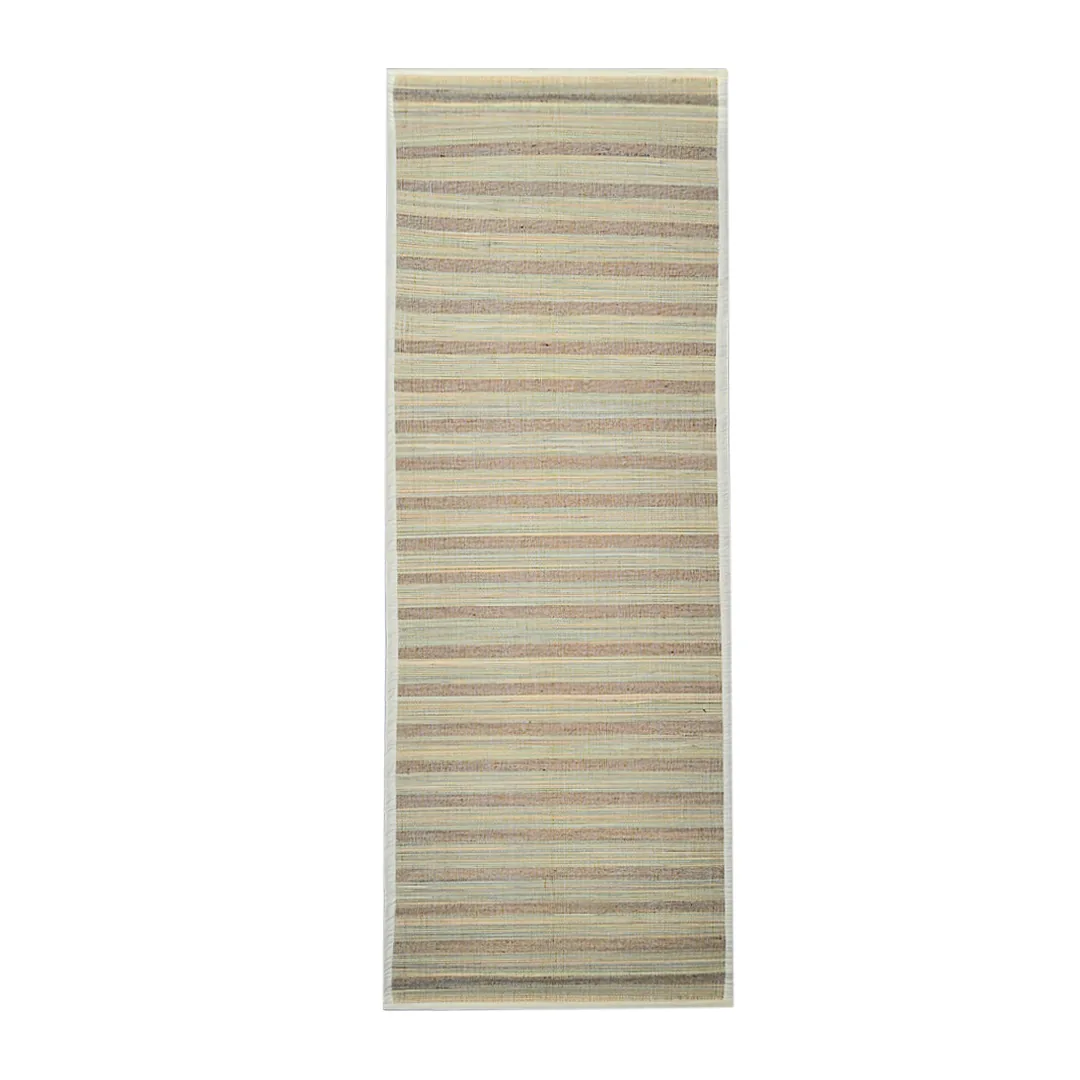
We weave two for hot practice. The Sambu Diamond has a plant-dyed green and peach diamond lattice; the Sambu Jute has fine plant-dyed stripes and cream cotton binding. The second carries an old name and contains no jute; it is sambhu grass and cotton like the first. Both are 183 × 68.5 cm and weigh about 1 kg. At the time of writing they cost ₹1,999 and ₹1,699.
How a towel on rubber compares
A natural rubber mat has excellent grip when dry and real cushioning, and we would not pretend otherwise. In a hot room, though, most people end up laying a towel over it, because rubber holds a sweat film like any smooth surface. At that point the towel is your practice surface: it bunches under the hands, it is a second item to wash and dry, and the pair is heavy to carry to class. A cotton mat is, in effect, towel and mat in one piece, woven thick enough to lie flat and heavy enough not to bunch.
| Cotton mat (Indico) | Grass mat (Sambu Diamond, Sambu Jute) | Rubber or foam mat with towel | |
|---|---|---|---|
| Grip when dry | Fair; dampen palms at first | Good | Very good |
| Grip when wet | Improves as it dampens | Good; stays cool | Depends on the towel staying put |
| Cushioning | Moderate, dense 5 mm | Firm, 3 mm | Good |
| Weight | About 1.4 kg (heavier wet) | About 1 kg | Mat plus towel |
| After class | Hang in shade; hand wash when needed | Wipe, air in shade | Wipe mat, wash towel |
| Price at time of writing | ₹4,499 | ₹1,699–₹1,999 | Varies widely |
The underside, and a note on latex
Our cotton and grass mats have a thin layer of natural tree latex brushed onto the underside by hand. It holds on tile, marble and wood, which matters in a studio with a wet floor. After many washes it can soften; a thin fresh coat of natural latex restores it. If you are allergic to natural latex, choose with care and write to us first.
Drying after class
This is where hot yoga mats are won or lost. A damp mat rolled up in a bag turns sour within a day, whatever it is made of. Unroll a cotton mat as soon as you are home and hang it over a rail in shade, with a fan on it if the air is still; direct sun fades plant dyes faster. Wash it when it needs it, by hand in cold water with a mild natural detergent, and dry it flat in shade. Shake a grass mat out, wipe it with a damp cloth and lean it against a wall to air. Never roll either mat while damp. In the wet months this takes more care; see our guide to drying a mat in the monsoon.
Which to choose
Choose the Indico if you want one mat for hot classes and everything else and are happy to hand wash. Choose a sambhu grass mat if you run hot, want the lightest thing to carry and prefer a firm, cool surface you can wipe. If the problem is your hands rather than the room, see our guide to mats for sweaty hands.
Frequently asked questions
Do cotton yoga mats get slippery when wet?
No; in our experience it works the other way round. A cotton mat is a little slick when it is completely dry and grips better as sweat dampens the weave, because the moisture goes into the cotton instead of sitting as a film under your palms. Wipe your hands with a damp cloth before the first few sessions and the mat settles quickly.
Can I use a grass mat for hot yoga?
Yes. Sambhu grass stays cool against the skin, the 3 mm mat is light at about 1 kg and it dries quickly after class. It is firm rather than cushioned, so keep a folded towel nearby for kneeling poses, and clean it by shaking it out and wiping with a damp cloth rather than washing or soaking it.
How do I stop my yoga mat smelling after hot yoga?
Unroll it the moment you get home and let it dry fully in shade with air moving over it before you roll it again. A damp mat rolled in a bag is the usual cause of smell. Cotton mats can be hand washed in cold water with a mild natural detergent when they need it; grass mats should be wiped and aired, never soaked.
Do I need a towel on a cotton yoga mat?
Usually not. The cotton surface does the job a towel does on a rubber mat, taking up sweat so your hands do not slide, and because it is woven as one thick piece it does not bunch. You do not need to cover the mat.
If you are heading into a hot room this week, the Indico is the mat we would roll under your arm, and the yoga collection has all three mats described here.