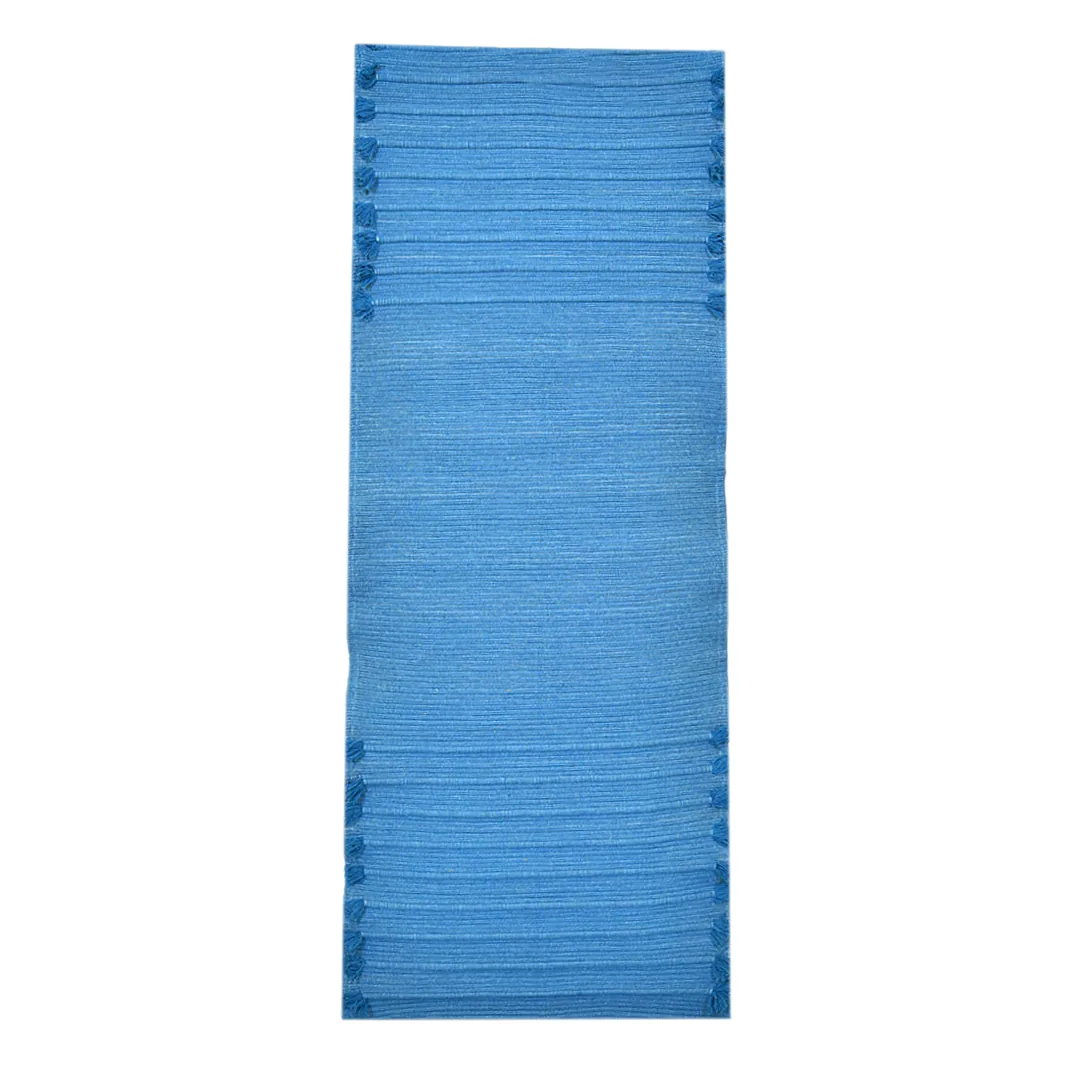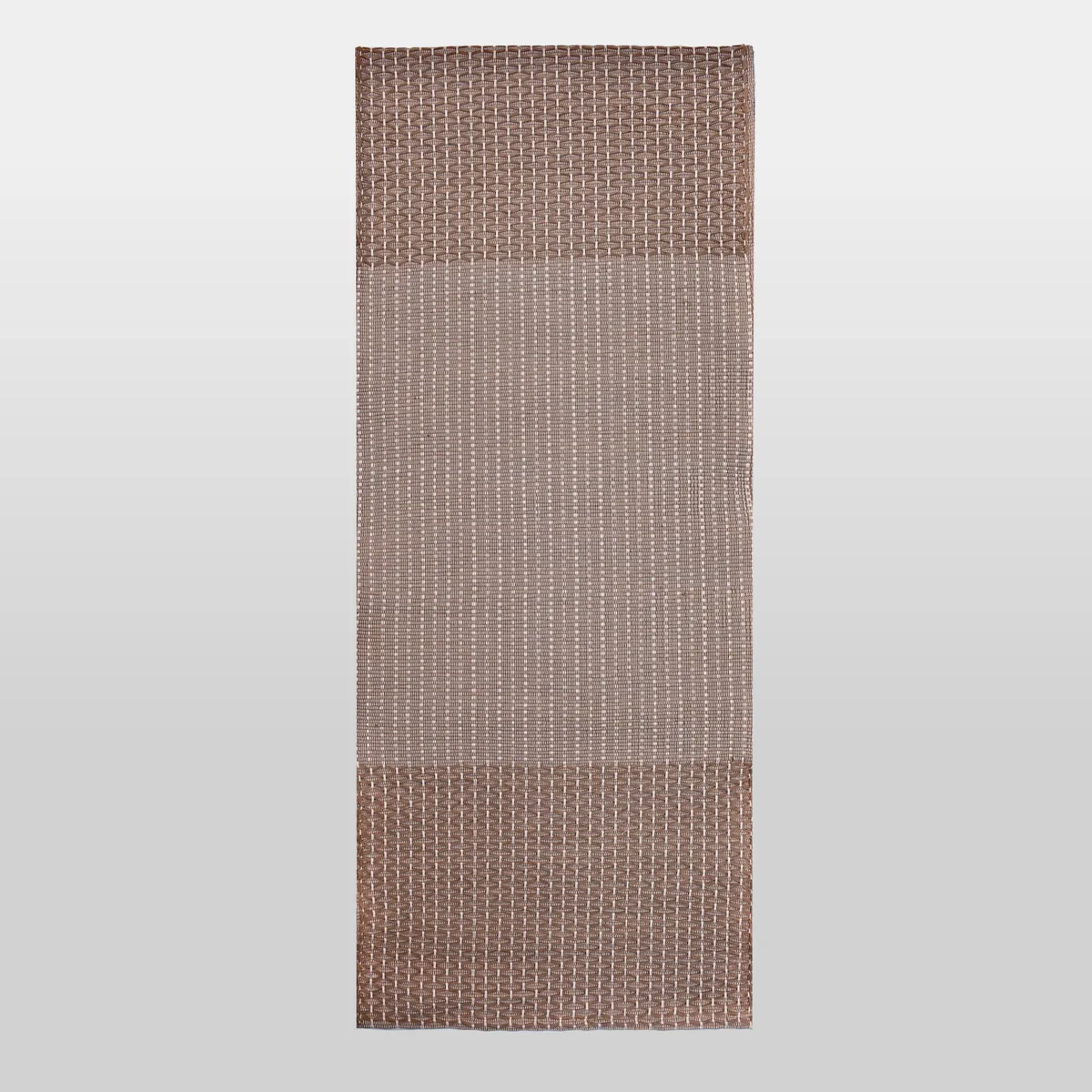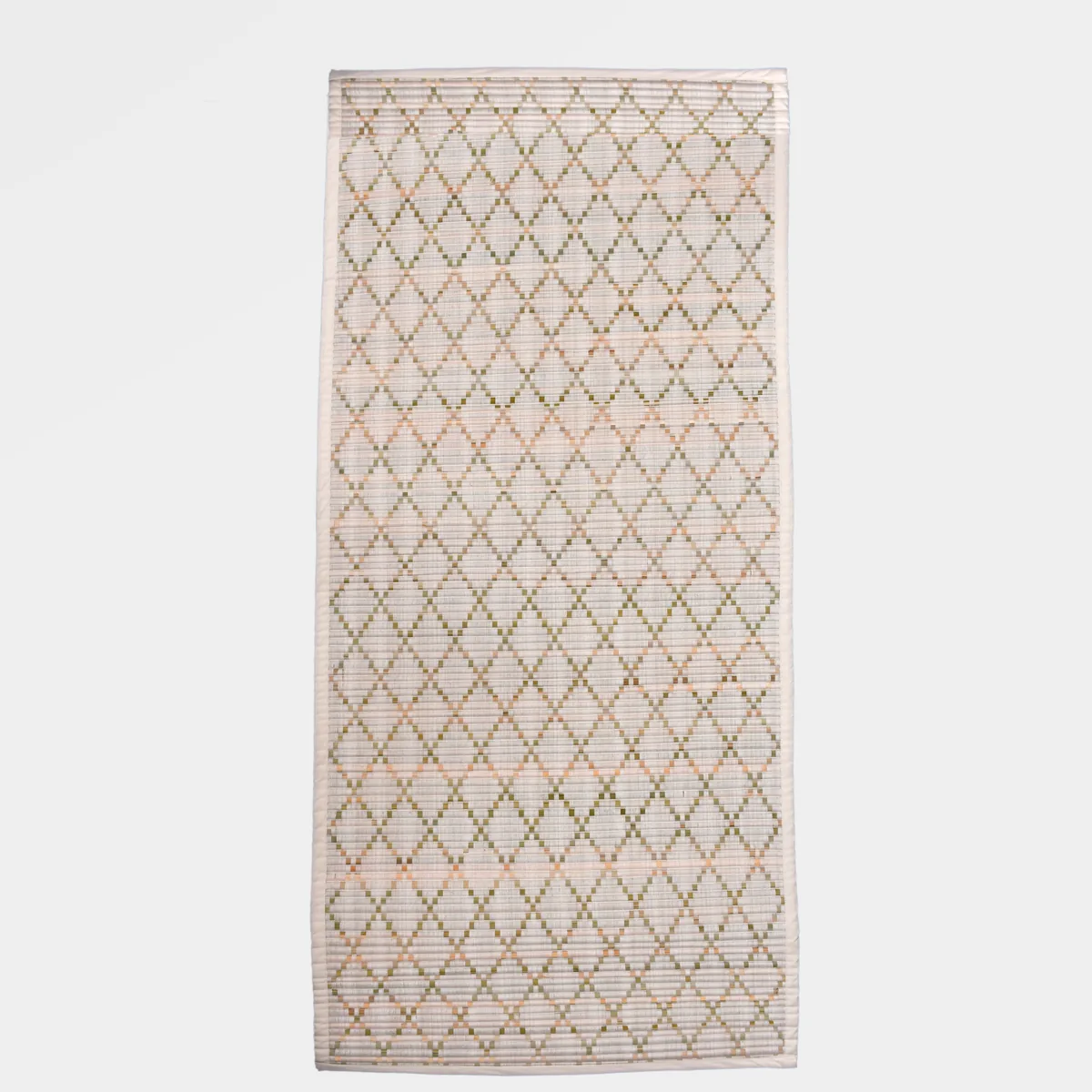
If your hands and feet sweat, the best yoga mat is one whose grip improves when damp rather than fails: a woven cotton mat, or a grass mat woven with cotton. Cotton fibre is about 90 per cent cellulose, which attracts water, so a cotton surface takes sweat into the weave and the fibres hold a damp palm. A smooth rubber or foam surface does the opposite: the sweat sits on top as a film and the hand slides on it. Our Indico (5 mm ribbed cotton), Diamond Clay (7 mm raised lattice) and Sambu Diamond (3 mm grass and cotton) all work this way.

Why sweat makes rubber slip and cotton grip
A sticky mat grips a dry hand well: the surface is smooth and slightly tacky. Add sweat and the moisture has nowhere to go, so it spreads into a thin layer between skin and mat and the tackiness is under water. This is why so many people who sweat end up draping a towel over a perfectly good rubber mat.
Woven cotton starts from the other end. Cotton fibre is almost pure cellulose, and cellulose is hydrophilic: it attracts and bonds with water (Wikipedia: Cellulose). Sweat is pulled into the yarn rather than left on the surface, and the texture of the weave gives a damp hand something to hold. The more you sweat, the better a cotton mat tends to grip, up to the point where it is properly wet and heavy, which takes a long, hot class.
The other side of this: a bone-dry cotton mat under bone-dry hands in an air-conditioned room can feel slippery for the first few minutes. Dampen your palms before you start, or mist the hand and foot positions with water. More in How to stop a cotton yoga mat slipping.
Three mats for sweaty practice
Indico: ribbed cotton, one colour
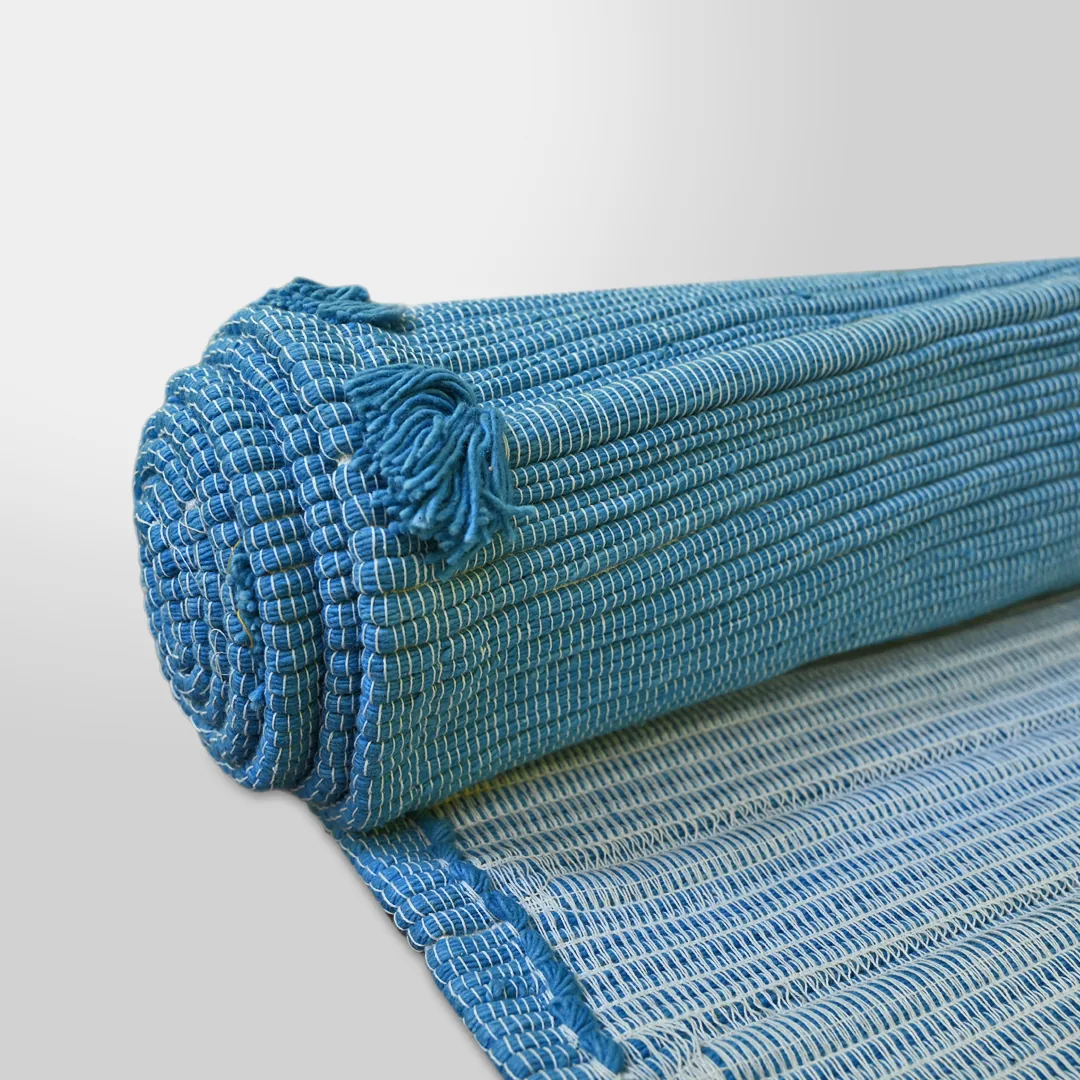
The Indico is GOTS-certified organic cotton dyed in natural indigo and handwoven in a ribbed weave with hand-knotted tassels. The ribs run across the mat and give the hands and feet a texture to press into, which is what you feel when a damp palm lands and stays. It is 5 mm thick, 183 × 68 cm (72 × 27 in) and about 1.4 kg, with a thin coat of natural tree latex brushed onto the underside to hold it to the floor.
Expect a little colour in the first rinses and a gentle softening of the blue over the years. Hand wash cold with a mild natural detergent, separately for the first washes, and dry flat in shade. At the time of writing it is ₹4,499.
Diamond Clay: a raised lattice for the hands
The Diamond Clay is the thickest mat we weave, at 7 mm, and the one with the most pronounced surface. A raised diamond lattice, the pattern our weavers call butterfly-eye, stands up from the ground weave. The cotton absorbs, and the ridges give the fingers and the heel of the hand an edge to catch; the lattice also serves as an alignment grid.
It is GOTS-certified organic cotton, 183 × 68 cm (72 × 27 in) and about 1.8 kg, with the clay colour from alkanet root and a natural latex underside. Unlike our thinner cotton rugs, it can be machine washed on a delicate 30 °C cycle in a laundry bag, which matters if you sweat a lot and want to wash often. Dry flat away from the sun. At the time of writing it is ₹4,450.
Sambu Diamond: cool grass for hot rooms
The Sambu Diamond is sambhu grass woven with organic cotton, pale with a green and peach plant-dyed lattice. Grass absorbs less than cotton but does not turn slick, and it feels cool against skin in a hot room; the cotton lattice does the absorbing. It is 3 mm, 183 × 68.5 cm (72 × 27 in) and about 1 kg, with a natural latex underside.
It is firm and uncushioned, so it suits standing and flowing practice more than long kneeling. Never soak it: shake, wipe with a damp cloth, air in shade. At the time of writing it is ₹1,999.
Which one for you
| Indico | Diamond Clay | Sambu Diamond | |
|---|---|---|---|
| Surface | ribbed cotton | raised cotton lattice | sambhu grass with cotton lattice |
| Thickness | 5 mm | 7 mm | 3 mm |
| Weight | ≈1.4 kg | ≈1.8 kg | ≈1 kg |
| Absorbs sweat | yes | yes, most of the three | partly (the cotton lattice) |
| Washing | hand wash cold | machine, delicate 30 °C, laundry bag | wipe only, never soak |
| Best for | daily practice, studios | kneeling, floor work, frequent washing | hot rooms, travel, summer |
| Price at the time of writing | ₹4,499 | ₹4,450 | ₹1,999 |
If you sweat heavily and want to wash the mat every week, the Diamond Clay is the practical choice. If you want the classic cotton rug feel and the weave showing, the Indico. If heat is the main problem and you want something cool and light, the Sambu Diamond. For heated classes specifically, see Best yoga mat for hot yoga.
All three have a natural latex layer on the underside. If you are allergic to natural latex, choose with care and write to us first.
Towel habits worth changing
A towel over a rubber mat solves the slip but adds a layer that bunches. With a cotton mat, the mat is the towel. Dampen your palms before the first downward dog in an air-conditioned room. Keep a small cloth for your face, not the mat. After practice, hang the mat over a chair or rail for an hour out of direct sun before rolling it. If you practise daily, two mats in rotation will each last longer than one used wet every morning.
Washing after sweaty sessions
Sweat left in cotton is what causes smell, so wash a hard-used mat more often. The Diamond goes in the machine on a delicate 30 °C cycle in a laundry bag; the Indico is hand washed cold and dried flat in shade; grass is shaken, wiped and aired, never soaked. Cold water only, no bleach or softener, no tumble dryer, no direct sun. The full routine is on our Mat care page.
Frequently asked questions
Why does my yoga mat get slippery when I sweat?
Most rubber, PVC and TPE mats have a smooth, non-absorbent surface that grips a dry hand by tackiness. When you sweat, the moisture has nowhere to go and forms a thin film between your palm and the mat, so the hand slides. A woven cotton mat draws the sweat into the fibres instead, and the texture of the weave gives a damp hand something to hold.
Is a cotton yoga mat slippery when dry?
It can be, for the first few minutes, if both the mat and your hands are completely dry. Dampening your palms or misting the hand positions with water fixes it immediately, and once you have warmed up the problem usually goes away on its own. The ribbed and raised weaves on our mats are there to give dry hands texture to press into.
Which TwinsPoles mat is best for very sweaty hands?
The Diamond Clay, because the 7 mm cotton absorbs the most and the raised lattice gives the fingers an edge to catch, and because it can be machine washed on a delicate cycle in a laundry bag, so frequent washing is easy. The Indico is close behind for a lighter, ribbed cotton surface, and the Sambu Diamond suits people who sweat mainly because the room is hot.
Do I still need a towel on a cotton mat?
Not on the mat. The cotton does what the towel would do, without the bunching. Keep a small cloth for your face and hang the mat to dry after practice rather than rolling it damp. If you are at a heated studio and want to protect the mat from a very wet floor, a thin rubber mat underneath is the better layer.
If sweat has been the thing between you and a natural mat, start with the Diamond Clay, or see all our cotton mats in the cotton collection.