In a humid city the mat question is less about grip and more about drying. Choose a fibre that lets air through and dries in a few hours in shade, sambhu grass in the hot months and dense cotton if you sweat heavily, and build the habit of unrolling, airing and storing dry. A mat that stays damp through a Kochi monsoon or a Chennai October will smell within days, whatever it is made of.
What humid air does to a mat
Two things wet a mat: your sweat, and the air itself. In Chennai, Mumbai and Kochi the second never really stops, so a used mat does not dry on its own in a rolled-up corner the way it might in a dry winter elsewhere. No material avoids this. The choice is between a surface that does not absorb at all and is wiped dry, which is how most rubber and foam mats work, and a woven fibre that takes up moisture and gives it back to moving air.
Woven fibres have two things going for them in heat. They breathe, so the mat does not become clammy against the skin, and cotton grips better as it dampens rather than worse. What they ask in return is airing, every time.
Grass in the hot months
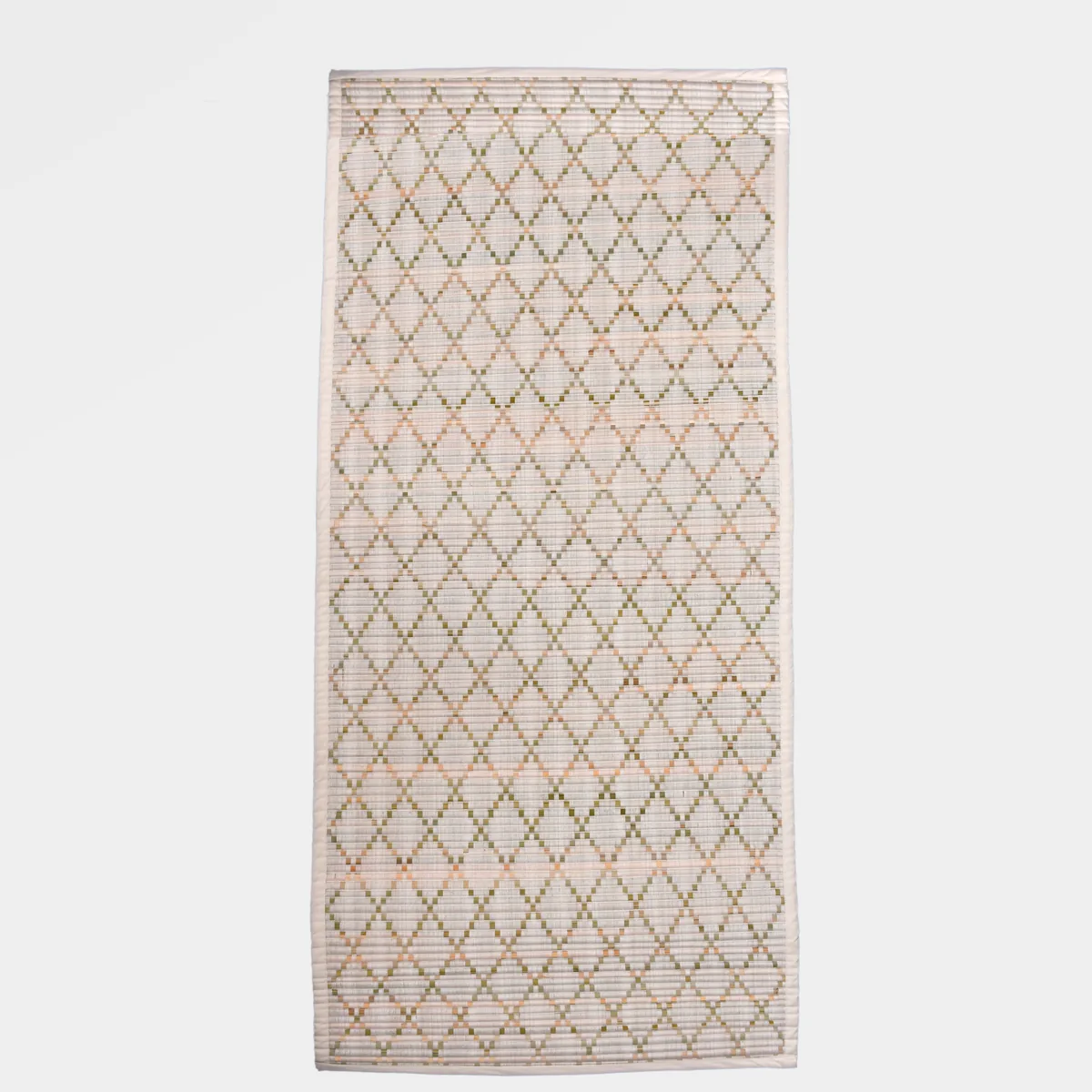
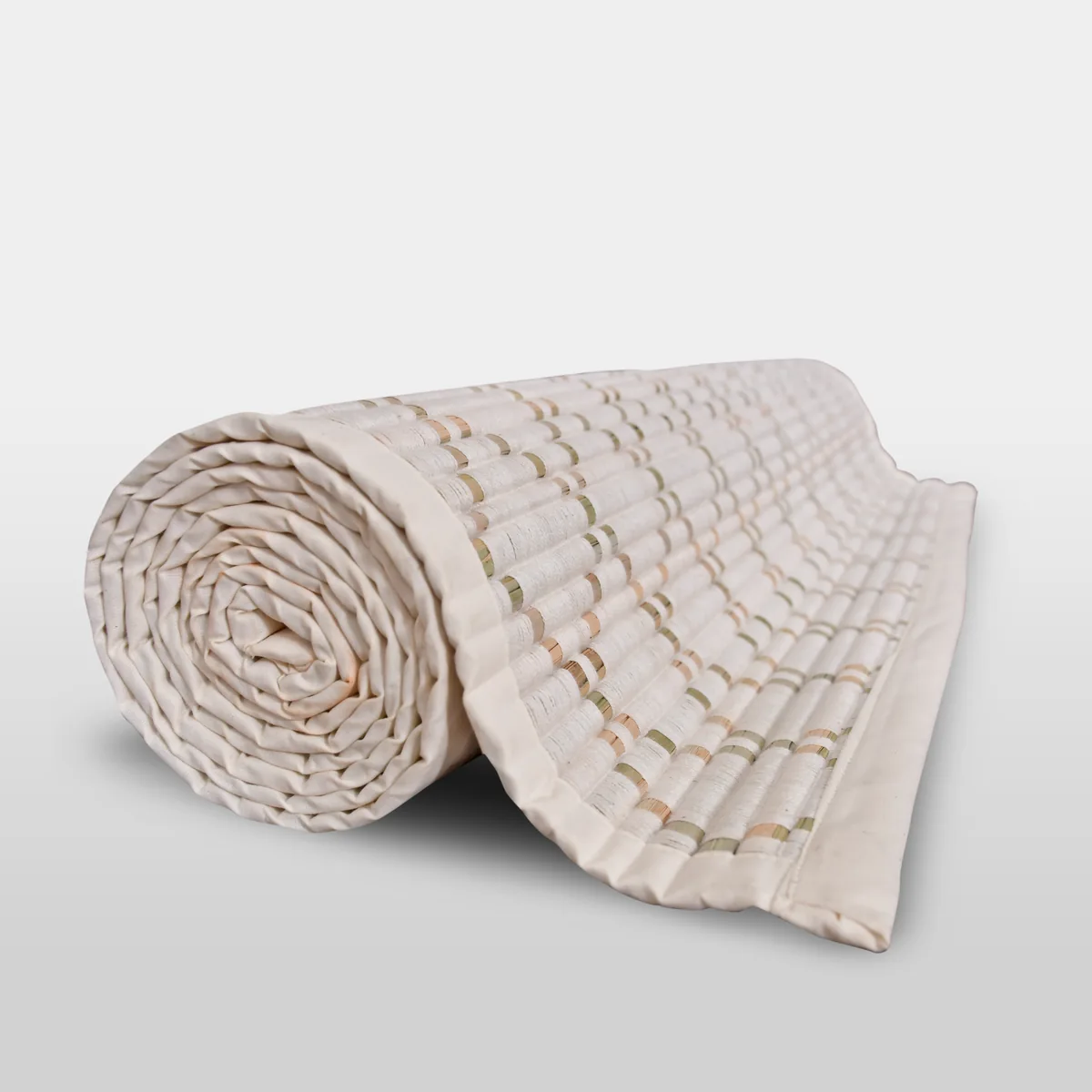
The Sambu Diamond is sambhu grass woven with organic cotton, 3 mm thick and about a kilo. The grass is cool to the touch and does not hold sweat the way cotton does, so after a class it needs only a wipe with a damp cloth and an hour or two in shade with the fan on. It is firm underfoot, not cushioned, and it must never be soaked or machine washed. From the first hot weeks through the monsoon, this is the mat we would choose for a Chennai flat.
Cotton when you sweat heavily
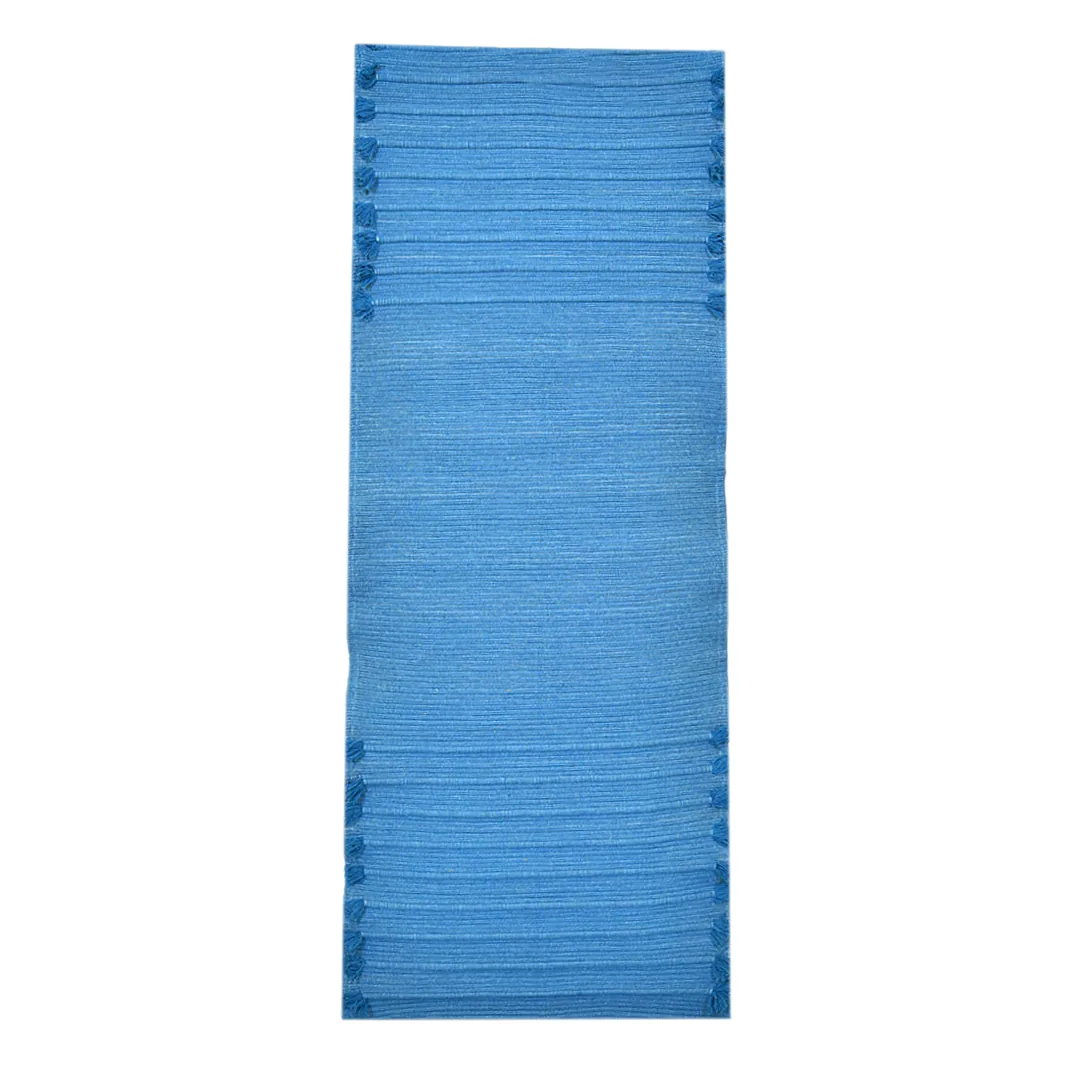
If you run hot, the Indico is the one. Five millimetres of dense ribbed cotton absorbs sweat and the grip improves as it does; the trade is that it comes off the floor damp and heavier and needs proper drying. In a humid month that means a fan or an open window, not a corner. Wash it only when it needs it: cold water, a mild natural detergent, by hand, separately for the first few washes, dried flat in shade. Machine washing can fade the indigo.
Both mats have a thin layer of natural tree latex brushed onto the underside by hand, which holds on tile, marble and wood. If you are allergic to natural latex, choose with care and write to us first.
The drying habit
- Unroll the mat as soon as practice ends. Never leave it rolled damp, even for an afternoon.
- Hang it over a rail, a shaded balcony ledge or two chair backs, where air moves. A ceiling fan on low beats a hot still room.
- Keep it out of direct sun. Sun dries fast but fades plant dyes, and indigo in particular is best in shade.
- Turn it once if it is lying flat so the latex side dries too.
- Roll it loosely and put it away only when both sides feel dry to the hand.
Our guide to drying a yoga mat in the monsoon has the tricks for the weeks when nothing dries.
Mildew: signs and what to do
Mildew shows as a musty smell first, then as grey or dark specks. Prevention is airflow and dry storage. If a smell has begun on a cotton mat, a cold hand wash with a mild natural detergent followed by a thorough shaded drying usually clears it; on a grass mat, wipe with a damp cloth and air it for several days. If specks persist, write to us through the Contact page rather than reaching for bleach, which we do not recommend on any of our mats. More on causes and cures in removing smell from a yoga mat.
Storing a mat in a humid flat
Store the mat rolled loosely and standing upright somewhere air reaches: not flat under a bed, not in a plastic bag, not in a closed cupboard against an outside wall. A cotton bag or an open shelf is right. In the worst weeks, unroll it for an hour every few days even if you have not practised. Two mats in rotation, one drying while the other is used, pays for itself if you practise daily.
| Sambu Diamond (grass and cotton) | Indico (cotton) | Typical rubber or foam mat | |
|---|---|---|---|
| Absorbs sweat | A little | Yes | No; sits on the surface |
| Breathes | Yes | Yes | No |
| Drying after class | Wipe; an hour or two in shade | Several hours flat in moving air | Wipe dry |
| Grip when damp | Fair | Improves | Worsens without a towel |
| Cleaning | Never soak | Hand wash cold | Wipe |
| Best for | Hot season and monsoon | Heavy sweaters, year round | Air-conditioned rooms |
Frequently asked questions
Which yoga mat is best for a humid climate?
One that breathes and dries in a few hours in shade. A grass mat such as the Sambu Diamond dries fastest and stays cool; a dense cotton mat such as the Indico absorbs heavy sweat and grips as it dampens but needs a fan to dry. Rubber and foam do not absorb and are wiped dry, but they feel clammy in heat and slip when wet.
How do I stop my yoga mat smelling in the monsoon?
Never leave it rolled damp. Unroll it at once after practice, hang it where air moves, keep it out of sun, and store it only when dry to the hand. Wash cotton when a faint smell starts rather than waiting; wipe and air grass mats.
Can I dry a yoga mat in the sun?
We would rather you did not. Direct sun fades plant dyes and indigo, and the latex underside is best kept in shade. Shade with moving air dries nearly as fast and keeps the colour.
Will a cotton yoga mat go mouldy in Kochi or Mumbai?
Not if it is aired after every use and stored dry and upright. Mildew needs a mat left damp and still. If a musty smell begins, a cold hand wash and a thorough shaded drying usually clears it.
If your flat is hot for most of the year, start with the Sambu Diamond; if you sweat heavily whatever the season, the Indico.