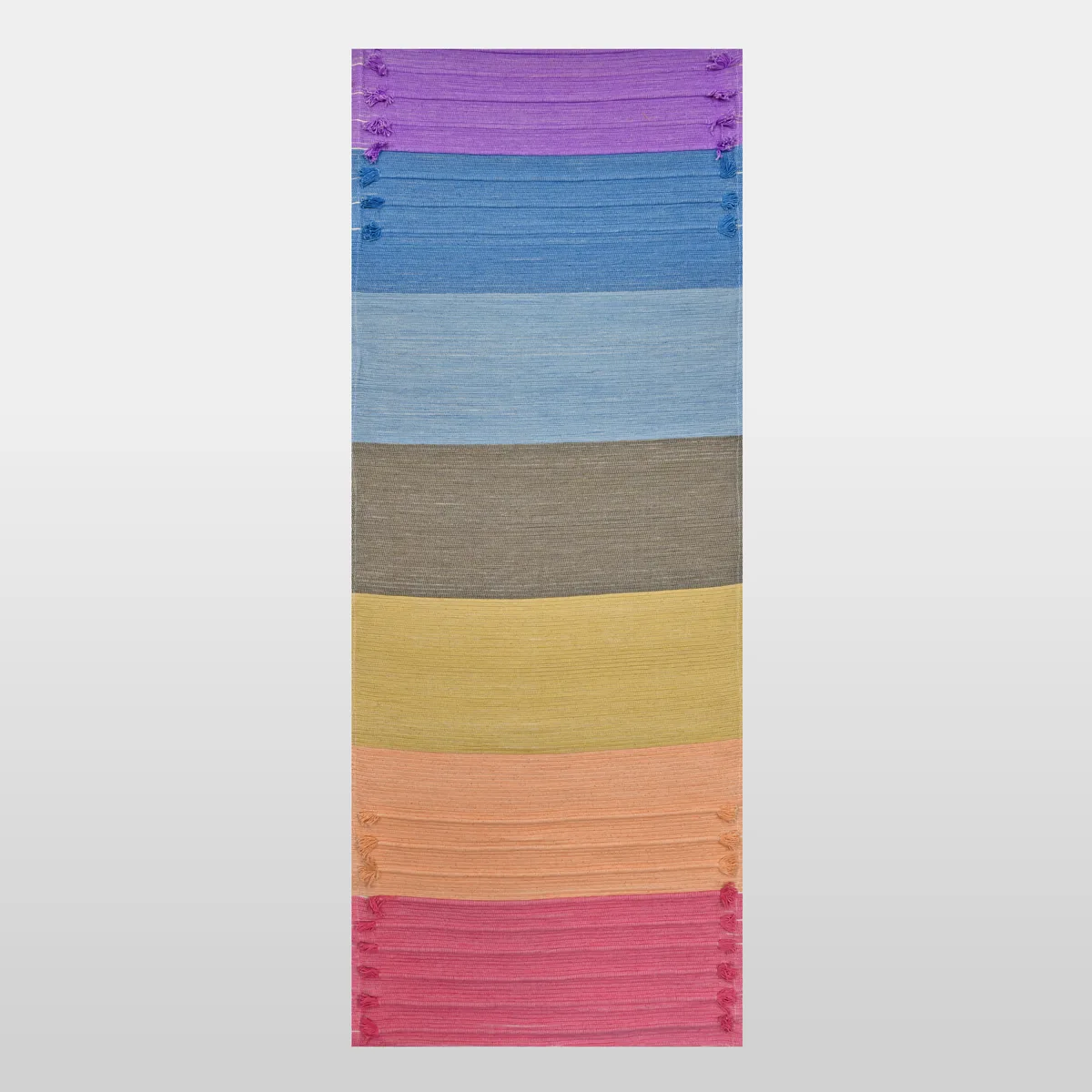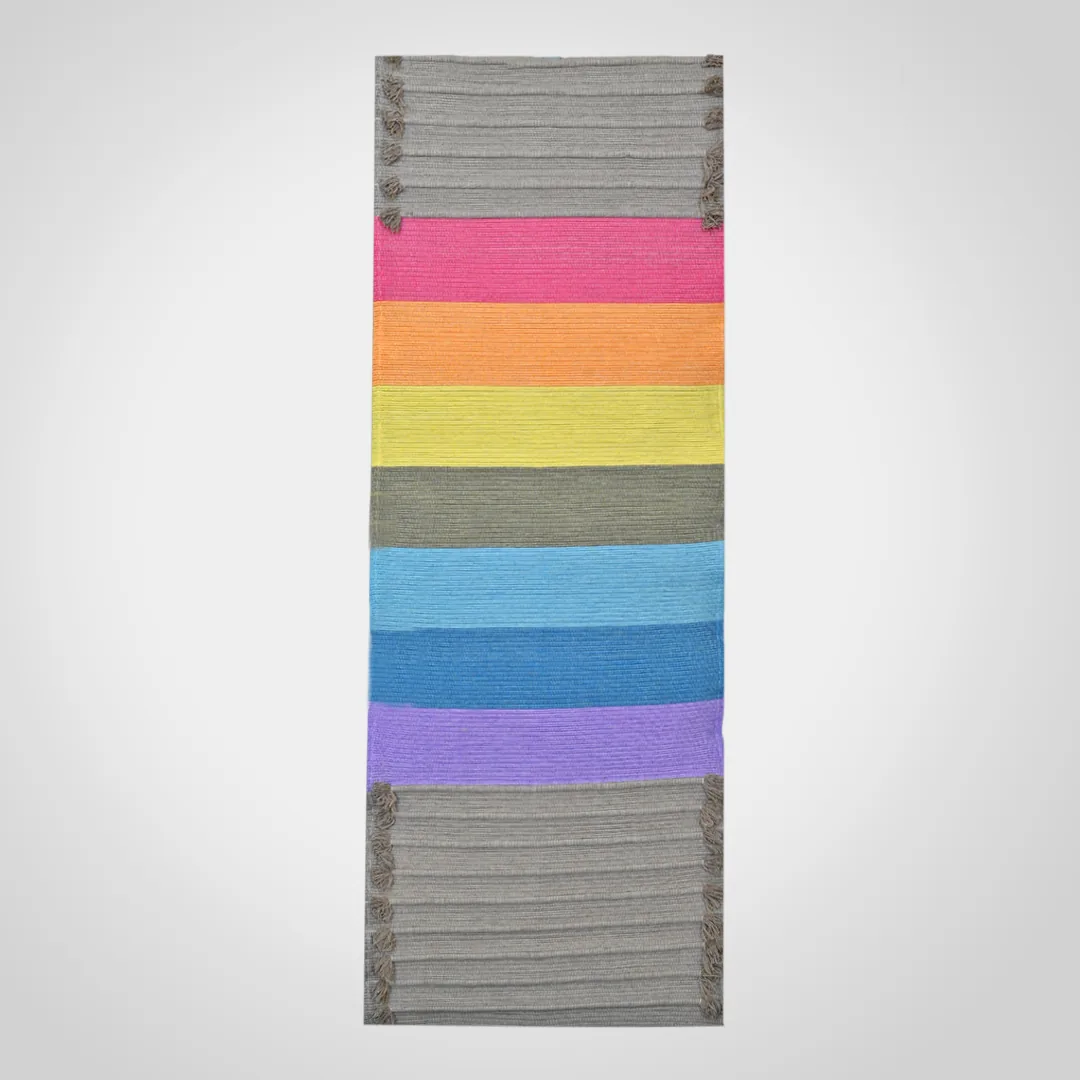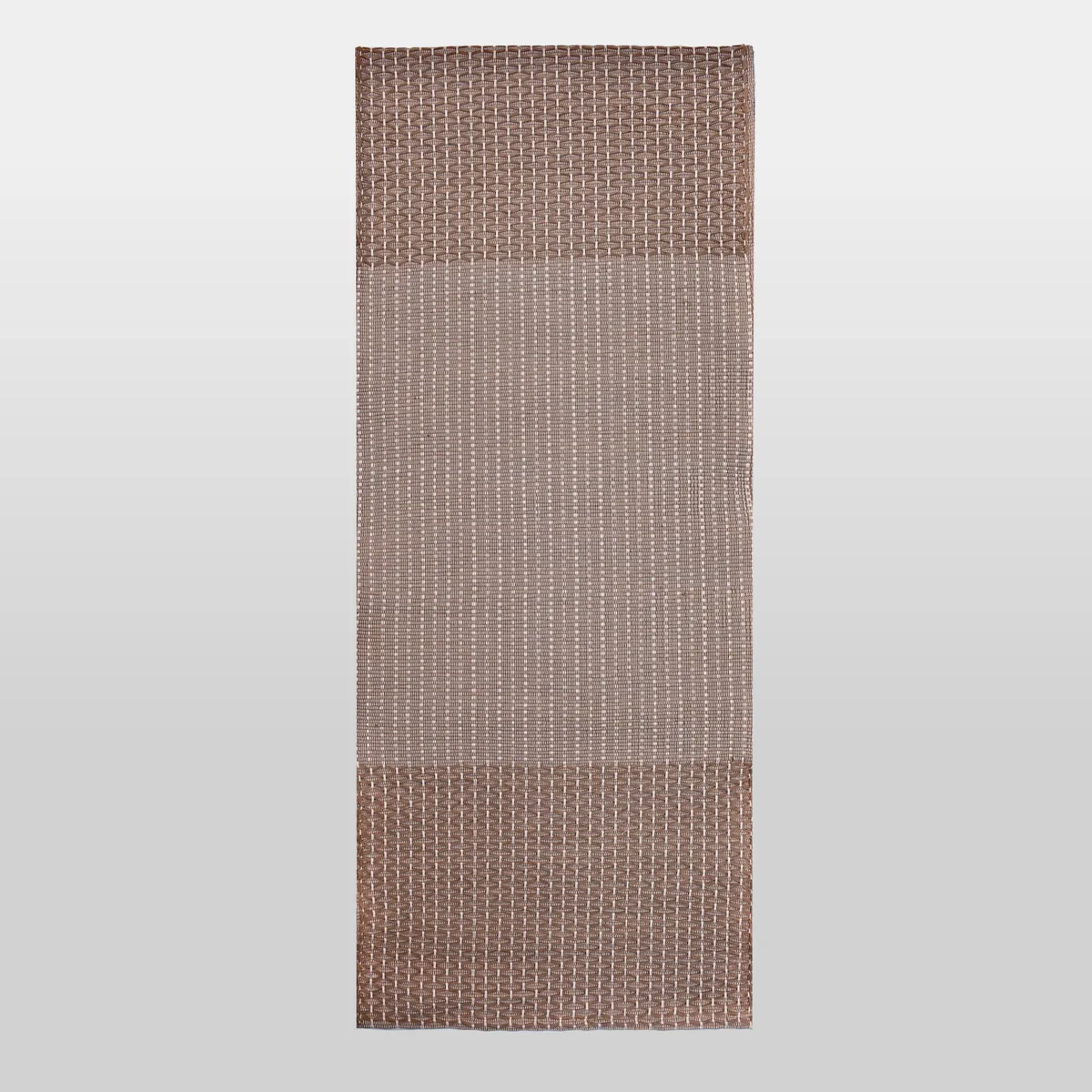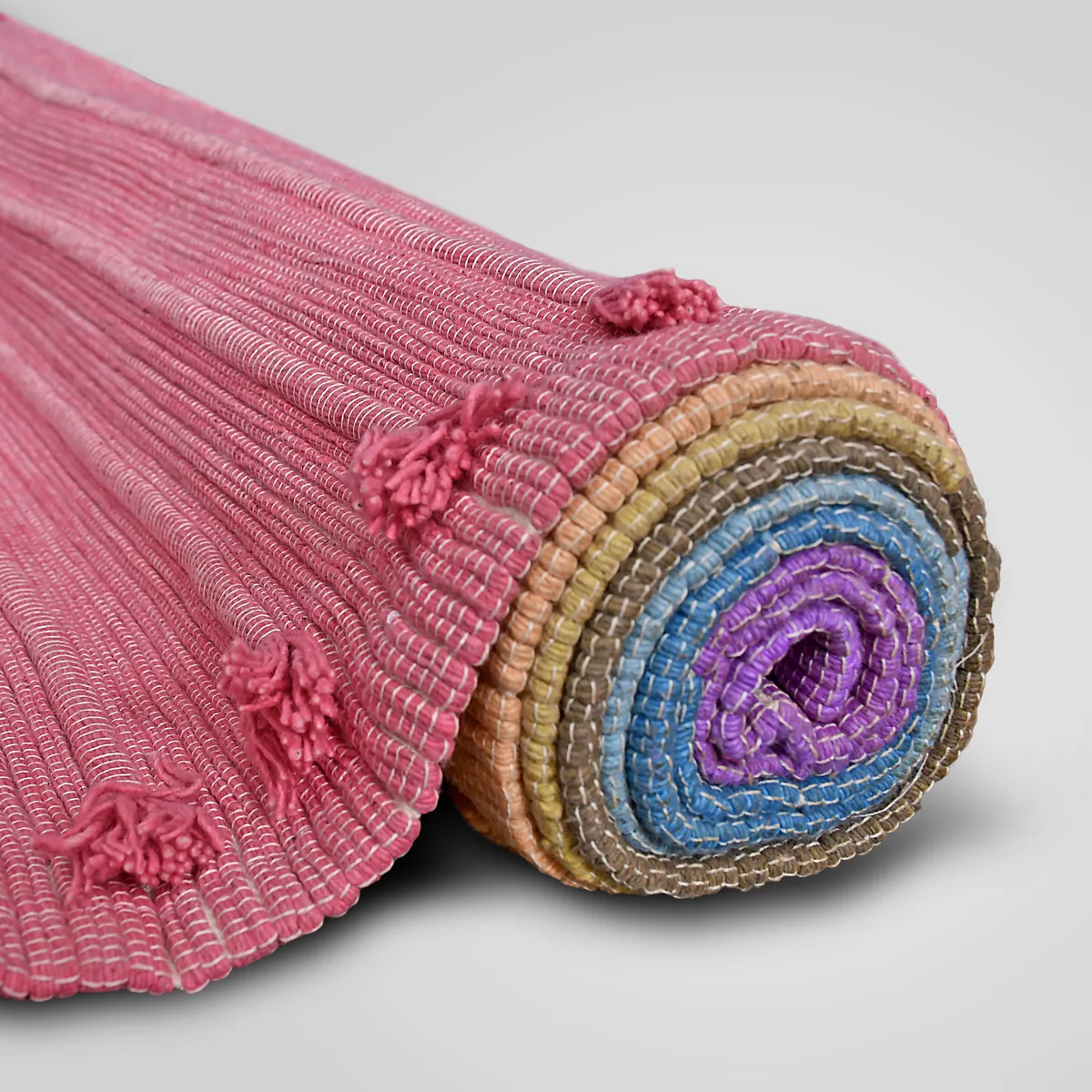
A herbal-dyed yoga mat is a cotton mat whose colour comes from plants rather than synthetic dyestuffs. On our mats the named plants are indigo leaves for blues, turmeric rhizome for yellows, alkanet root for the clay tone, and tulsi and neem among a palette of more than twenty herbs on the chakra rugs. Plant colour is softer than synthetic colour, varies a little between batches and mellows over years of washing; that is its nature, not a fault.

What "herbal dye" means on a mat
In the dye shed, "herbal" and "plant" mean the same thing: colour is extracted from part of a plant by simmering or fermenting it in water, and cotton yarn is steeped in that liquid. Indigo colour comes from the leaves, turmeric from the underground rhizome, alkanet from the root. This is how cotton was coloured in Tamil Nadu long before synthetic dyes existed, and it is what our dyers still do.
What you should not read into "herbal" is any claim about your health. Plant dyes colour cotton; they do not treat the skin or carry medicinal benefit through a mat. We use them because we like the colours, because they suit handloom cotton, and because they are the tradition we come from.
The plants we name
We publish the plants we are sure of and leave the rest of the palette as "more than twenty herbs" rather than list names we cannot stand behind for every batch.
| Plant | Part used | Colour on our cotton | Where you will see it |
|---|---|---|---|
| Indigo (Indigofera leaves) | Leaves, fermented in a vat | Deep blue | Indico |
| Turmeric | Dried, ground rhizome | Warm yellow | Yellow band on the chakra rugs, such as Prana Shakti |
| Alkanet root (Alkanna tinctoria) | Root | Muted clay | Diamond Clay |
| Tulsi (holy basil), neem | Leaves | Part of the blended herbal palette | Chakra rugs |
Turmeric deserves an honest footnote. It has coloured cloth in India for a very long time, including the robes of monks and priests, but it is not light fast (Wikipedia: Turmeric). On a chakra rug the yellow band mellows first. We think that is a fair trade for a yellow that is genuinely from the kitchen plant, but you should know it before you buy. Alkanet has its own article in the plant behind the Diamond Clay colour, and indigo in natural indigo on cotton.
How plant colour is fixed to cotton
Most plant dyes do not simply stick to cotton. They need a mordant, a substance that sets the dye by forming a complex with it that then attaches to the fibre. Mordants are usually metal salts such as alum or iron, and the choice of mordant changes the final shade: the mordant has a marked effect on the final colour, so the same dye bath can give a noticeably different shade depending on what the yarn was treated with (Wikipedia: Mordant). This is why one plant can appear in several related tones on the same rug, and why two dyers with the same turmeric arrive at different yellows.
Our process, in general terms, follows the traditional sequence: the yarn is scoured to remove waxes, mordanted, dyed, rinsed and dried in shade. Indigo is the exception. It is a vat dye: insoluble in water, it is reduced in the vat to a soluble pale form, and when the yarn comes out into the air it oxidises back to blue on the fibre (Wikipedia: Indigo dye). Colour is built up by repeated dips rather than by soaking longer (Mingei International Museum).
Why no two batches match exactly
Plants are not factories. The strength of a dye bath depends on the season the plant was harvested, how it was dried and stored, the hardness of the water and the temperature on the day. So a Prithvi woven this month is a close relative of one woven in spring, not a twin. If matching colour matters, for example for two rugs side by side, write to us before you order; a second rug bought a year later will be a sibling rather than a copy.
If you need perfectly repeatable colour, a synthetic dye is the honest answer, and we would rather tell you so than disappoint you.
How the colour behaves over time
Three things move plant colour: water, light and friction.
- Water. A little colour in the first rinse is normal. Wash the rugs separately for the first few washes, cold, with a mild natural detergent; see colour in the first wash.
- Light. Direct sun fades every plant dye, some faster than others. Dry flat in shade and store rolled away from a sunny window.
- Friction. Where hands and feet land most, the colour softens first. New indigo in particular can rub off a little.
None of this is damage. Over years the rugs take on the softened, even tone of old handloom cloth, and we have come to prefer it. The whole arc is in why plant-dyed mats change colour.
Care that keeps the colour longest
Chakra rugs: hand wash cold, mild natural detergent, separate washes to begin with, dry flat in shade; machine washing can fade plant dyes. Diamond mats: a delicate 30 °C machine cycle in a laundry bag, or hand wash, then flat drying away from the sun. Everything: cold water only, no bleach, no fabric softener, no tumble dryer. The Mat care page has the full list.
What herbal dyes are not
They are not a certificate. Our GOTS certification covers the organic cotton on the cotton mats; the dyes are plant-based and traditionally used in Tamil Nadu, and that is the full extent of what we claim for them. They are not "antibacterial", "healing" or "detoxifying". And they are not perfectly even: look closely at a band on a handloom rug and you will see slight shifts along the yarn. That is the plant, the hand and the loom, all visible at once.
Frequently asked questions
What plants are used to dye a herbal yoga mat?
On our mats the named dye plants are indigo leaves for blue, turmeric rhizome for yellow, alkanet root (Alkanna tinctoria) for the clay tone, and tulsi and neem within a wider palette of more than twenty herbs used on the chakra rugs. We publish only the plants we can confirm for every batch and describe the rest of the palette collectively.
Do herbal dyes on a yoga mat have health benefits?
No, and we do not claim any. Plant dyes colour cotton; they are not antibacterial, therapeutic or detoxifying. We use them because the colours suit handloom cotton and because plant dyeing is the tradition of our region, not for any effect on the body.
Why does my plant-dyed mat look different from the photo?
Because plant colour varies from batch to batch with the harvest, the water and the weather, and softens with washing and light. A mat will be a close relative of the one photographed rather than an exact copy. Large differences, or colour that keeps running after several washes, are not normal, and we would like to hear about them through the Contact page.
Will the colour come off a herbal-dyed mat?
A little colour in the first rinse is normal, and new indigo can rub off slightly on hands and clothing until it has been washed a few times. Wash separately to begin with, in cold water. After that the colour is stable in ordinary use and simply mellows over years.
Is a herbal-dyed mat the same as an organic mat?
Not necessarily. "Herbal-dyed" describes the colour; "organic" describes how the cotton was grown. On our cotton mats both are true: the cotton is GOTS-certified organic and the dyes are plant-based. A grass or banana fibre mat may be plant-dyed but is not covered by the cotton certification.
To see a full plant palette on handloom cotton, the Prana Shakti rug carries all seven chakra colours on a rose ground; the cotton collection has the rest.