Natural indigo rubs off a little when it is new and softens gradually with washing because it is a vat dye: the blue pigment is deposited on and just inside the surface of the cotton in layers rather than soaked through the fibre. That rubbing-off is called crocking, it is normal, and it settles after the first few cold washes. The gentle fading that follows over years is the same process in slow motion, and it is what gives old indigo cloth its depth.

Where the blue comes from
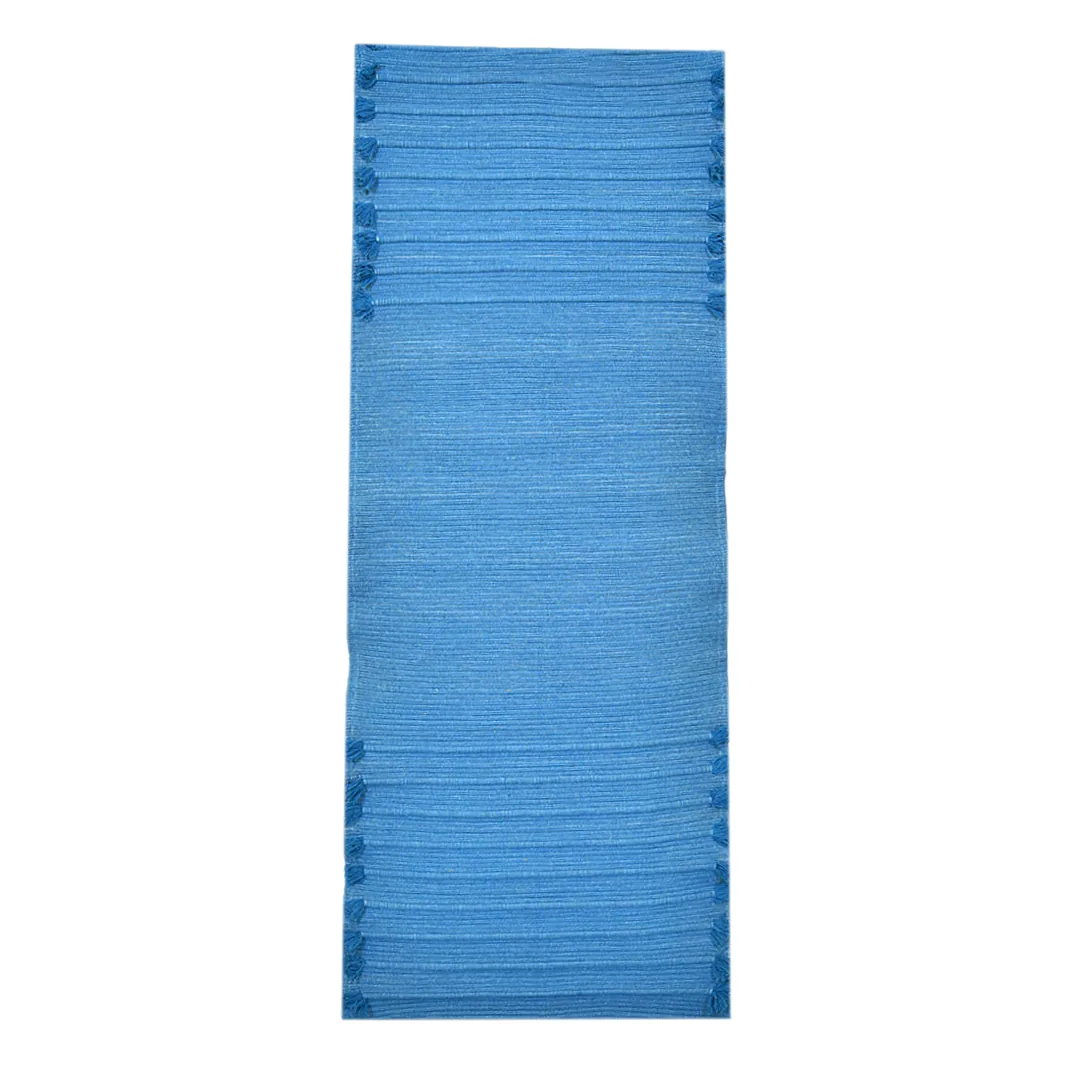
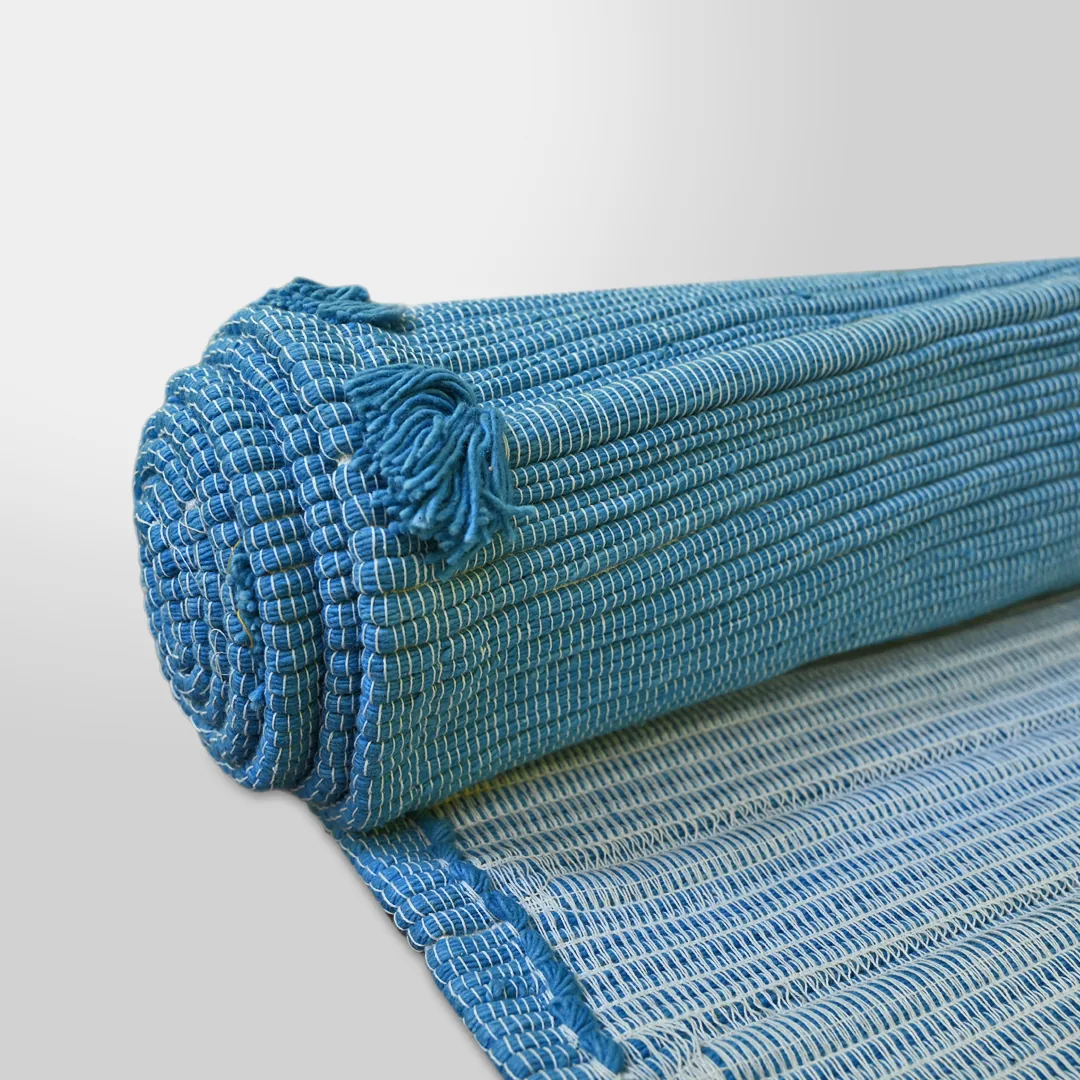
Indigo is extracted from the leaves of Indigofera plants, chiefly Indigofera tinctoria, native to the tropics and particularly to India, which supplied indigo to Europe as early as the Greco-Roman era (Wikipedia: Indigo dye). Our Indico mat is dyed with true indigo on GOTS-certified organic cotton, handwoven in a ribbed weave and finished with hand-knotted tassels. It is the plainest mat we make, which is exactly why the dye shows so clearly.
Why indigo behaves differently from other dyes
Most plant dyes dissolve in water and are fixed to cotton with a mordant. Indigo does neither. It is insoluble in water, so the dyer first reduces it in a vat to a soluble pale form, sometimes called white indigo or leuco-indigo. Yarn goes into the vat and comes out looking yellow-green; within minutes, oxygen in the air converts it back into insoluble blue indigo, now lodged in the fibre (Wikipedia: Indigo dye).
Depth of colour is not reached by leaving the yarn in longer. It is built up: each dip followed by airing adds another layer of pigment to the fibre (Mingei International Museum, *Blue Gold*). A deep Indico blue is many dips, not one strong bath.
That layered construction is the whole story of how indigo ages. Because the colour sits in layers at the surface, vat dyes as a class tend to have poor rubbing fastness (Wikipedia: Vat dye). Friction takes the outer layers first.
Crocking: the blue on your hands
Crocking is the dyer's word for colour transferring by rubbing. With new indigo cotton you may notice a faint blue on damp palms after practice, inside a cotton bag, or on a pale floor if the mat is dragged. This is loose surface pigment that did not fully bind during the last dips, and it is normal for naturally dyed indigo.
- First week. Some transfer on hands and light clothing is likely. Rinse the mat in cold water before first use, on its own, and dry it flat in shade.
- First few washes. Hand wash cold with a mild natural detergent, separately from other laundry. The rinse water will run blue as the loose pigment leaves; see colour in the first wash for what is normal and what is not.
- After that. Transfer drops to almost nothing. Avoid storing the mat damp against light-coloured fabric.
Crocking is not the dye failing. If the colour were leaving evenly all over and the cotton turning pale within a few washes, that would be a fault and we would want to know. Loose pigment on the surface in the early weeks is simply indigo.
Fading: the slow version
Over months and years the same thing happens more gently. Where your hands and feet land most, the outer layers wear thin and the paler thread beneath shows through. Sunlight softens the blue overall; washing lifts a trace each time. The result is a mat a little lighter at the centre, a little deeper at the edges, with the ribbed weave standing out more as the colour settles into the hollows.
We think this is the best thing about indigo; it is why worn indigo cloth has been prized for so long. But it is a matter of taste. If you want a blue that looks on year five exactly as it did on day one, a synthetic blue is the honest choice.
How to slow it down
- Cold water only, mild natural detergent, hand wash; machine washing can fade plant dyes.
- Dry flat in shade, never in direct sun or a tumble dryer.
- Wipe sweat off after practice rather than washing every session.
- Store rolled, dry, away from a sunny window.
- No bleach, no fabric softener, no stain sprays.
The full routine is in how to care for indigo-dyed cotton and on the Mat care page.
What indigo does not do
It does not change what the mat is made of. The cotton is still GOTS-certified organic cotton; the grip underneath is still natural tree latex brushed on by hand, so if you are allergic to natural latex, choose with care and write to us first. The dye adds colour and character, nothing more: no health effect, no "antibacterial" quality, no claim beyond blue.
Frequently asked questions
Why does my natural indigo mat rub off blue on my hands?
Because natural indigo is a vat dye deposited in layers on the surface of the cotton, and vat dyes have poor rubbing fastness until the loose outer pigment is washed away. The transfer, called crocking, is normal on a new indigo mat and fades to almost nothing after a cold rinse and the first few separate hand washes.
Does natural indigo fade?
Yes, gradually. Friction, washing and sunlight lift the outer layers of pigment over years, so an indigo mat lightens slowly where it is used most while the edges stay deeper. Cold hand washing, shade drying and keeping the mat out of direct sun slow the change; nothing stops it entirely, and we have come to like the result.
How many washes until indigo stops bleeding?
Most of the loose pigment leaves in the first rinse and the first few cold hand washes, during which the mat should be washed on its own. After that the rinse water runs close to clear and the colour is stable in normal use, continuing only to soften gently over time.
Will indigo stain my floor or clothes?
A new mat can leave a faint blue on damp pale fabric or a light floor if rubbed while wet, so rinse it once before first use and avoid storing it damp against light-coloured cloth. Once it has been washed a few times, transfer in ordinary practice is negligible.
If you would like one plant, one colour and a weave you can read with your fingers, the Indico is that mat. If you prefer the blue as one band among seven, look at the Prana Shakti chakra rug instead.