Yes, a plant-dyed mat changing colour is normal. Natural dyes sit on cotton less permanently than synthetic ones, so sunlight, washing and sweat soften them over months and years. The change is gradual and even on a well-cared-for mat, and it is the reason a plant-dyed rug looks different, and to our eyes better, after a year of practice.

What plant dye actually is
When we dye cotton for the Prana Shakti or the Indico, the colour comes from plants: indigo leaves, turmeric rhizome, alkanet root, tulsi, neem and, for the chakra rugs, a palette of more than twenty herbs. The yarn is scoured, prepared and dyed in baths, then dried in shade before it goes on the loom.
Each batch of plants is a little different. Rainfall, soil and the age of the leaves all shift the shade, so two rugs woven a season apart will not match exactly. We present that as the nature of plant colour rather than as a defect, because it is.
Why the colour changes
Three things act on a plant-dyed mat.
Light
Light is the main cause of fading in natural dyes. Museum conservation research notes that nearly all natural dyes have a light-fastness below the top grades, and that they fade in daylight far faster than under artificial light. The same source notes that low humidity reduces fading and that blocking ultraviolet helps most, but not all, dyes. A mat left in a sunny window will lose colour far sooner than the same mat practised on indoors and dried in shade.
Washing
Every wash lifts a little dye from the fibre surface. In the first few washes this is most visible, which is why the rinse water from a new chakra rug may carry some colour. We cover what is normal in Colour in the first wash. After that, cold water and a mild detergent keep the loss slow. Hot water, bleach and machine agitation speed it up.
Sweat and skin
Sweat is slightly acidic and salty, and some dyes shift tone where hands and feet rest most. On a well-used Indico, the places where palms land can turn a touch paler than the rest. We think of it as the mat recording your practice.
What changes, and what does not
| Changes over time | Stays the same | |
|---|---|---|
| Colour | Softens gently; indigo turns a paler, greyer blue; turmeric yellows mellow | The weave, the pattern and the bands stay distinct |
| Feel | Cotton gets softer and more pliable | Thickness and size are unchanged |
| Grip | The natural latex underside can soften after many washes; a thin fresh coat restores it | The cotton surface still grips better damp than dry |
If you are allergic to natural latex, choose with care and write to us first.
How to slow the change
- Dry in shade, always. This is the single biggest factor. Flat, out of direct sun, with air moving.
- Wash cold and rarely. Shake out and air a cotton rug after practice; wash it only when it needs it. The full method is in How to wash a cotton yoga mat.
- Wash separately for the first few washes so loose dye does not reach other laundry.
- No bleach, no fabric softener, no tumble dryer. Each one strips colour or damages the latex layer.
- Store rolled, dry and away from windows. A cupboard or a shaded corner is ideal.
Machine washing is the quickest way to fade a plant-dyed chakra rug, which is why we recommend hand washing for the Prana Shakti, the Prithvi and the Indico. (The 7 mm Diamond mats are the exception and can take a delicate cycle in a laundry bag.) The care page has the summary per mat: Mat care.
Why we think the change is the point
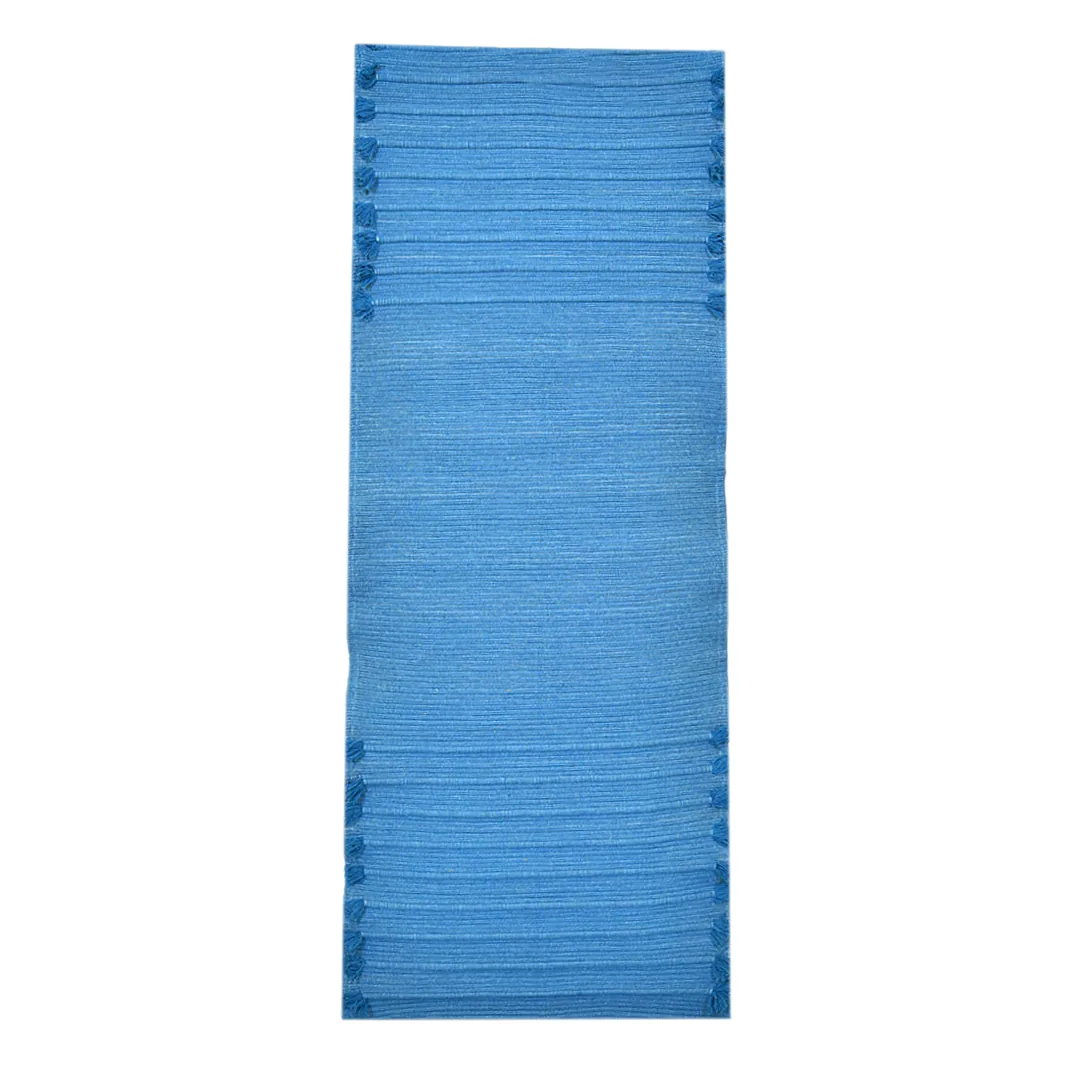
A synthetic dye can be formulated to look identical in year five as on day one. That consistency is useful for uniforms. On a yoga mat we would rather have colour that comes from plants grown in soil, that varies a little from batch to batch, and that softens in step with the cotton underneath. The Indico we weave is one colour from one plant, and the way true indigo turns from deep night-blue to a worn, cloudy blue is something people have valued in textiles for a very long time.
We are honest about the limits. If you want a colour that never moves, a plant-dyed mat is not the right choice. If you want a mat that ages like a good pair of indigo jeans, it is.
Frequently asked questions
Is it normal for a natural dye yoga mat to fade?
Yes. Plant dyes are less light-fast and wash-fast than synthetic dyes, so a plant-dyed cotton mat softens in colour with sunlight, washing and sweat. The change is gradual and even when the mat is dried in shade and washed cold; sudden, patchy loss usually means direct sun or a hot wash.
Why did the water turn coloured when I first washed my mat?
Loose surface dye lifts off in the first few washes of any plant-dyed cotton. It does not mean the dye is failing; it means the excess that did not bond to the fibre is rinsing away. Wash the mat on its own for the first few washes, in cold water, and the rinse will run clear within a handful of washes.
Will the colours on a chakra mat run into each other?
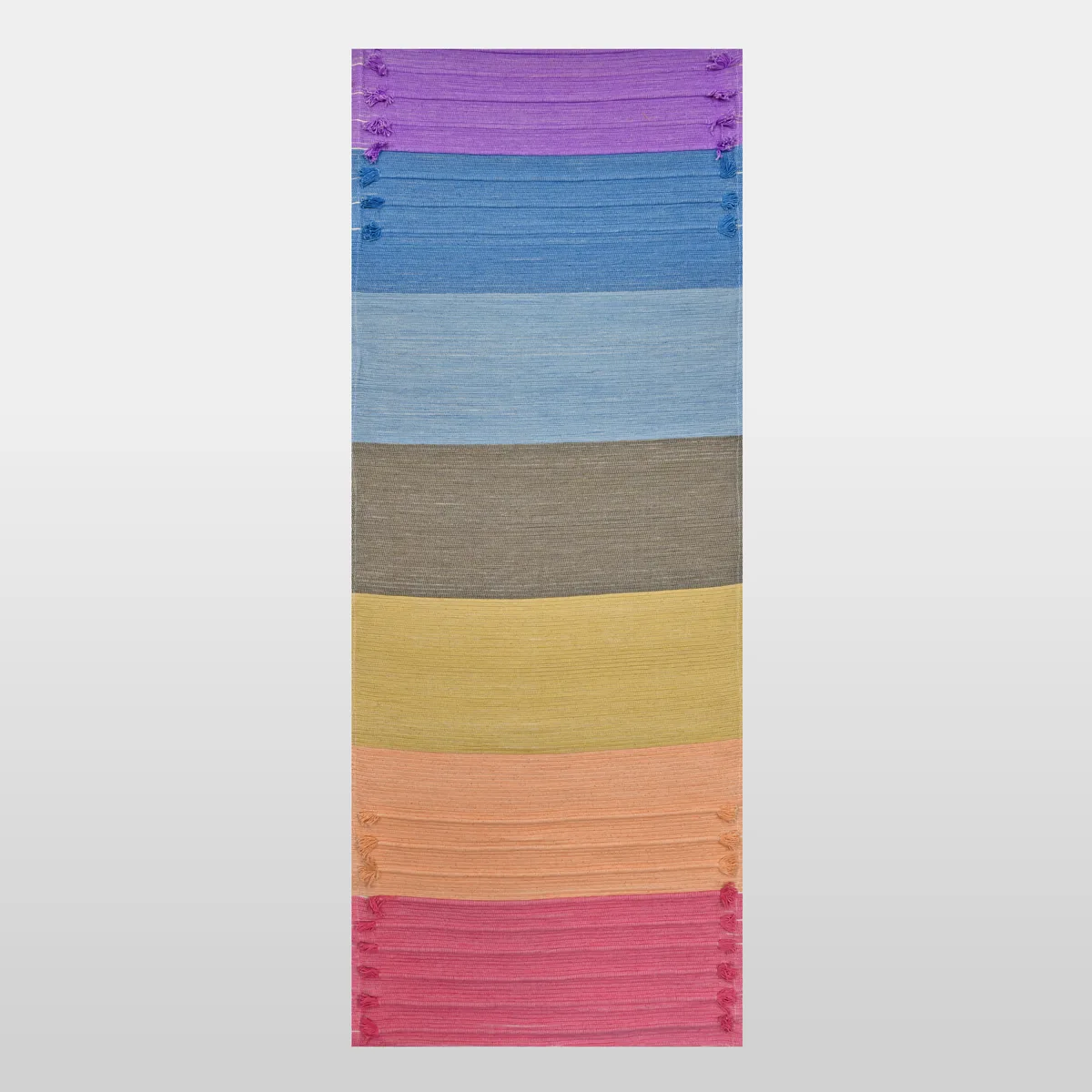
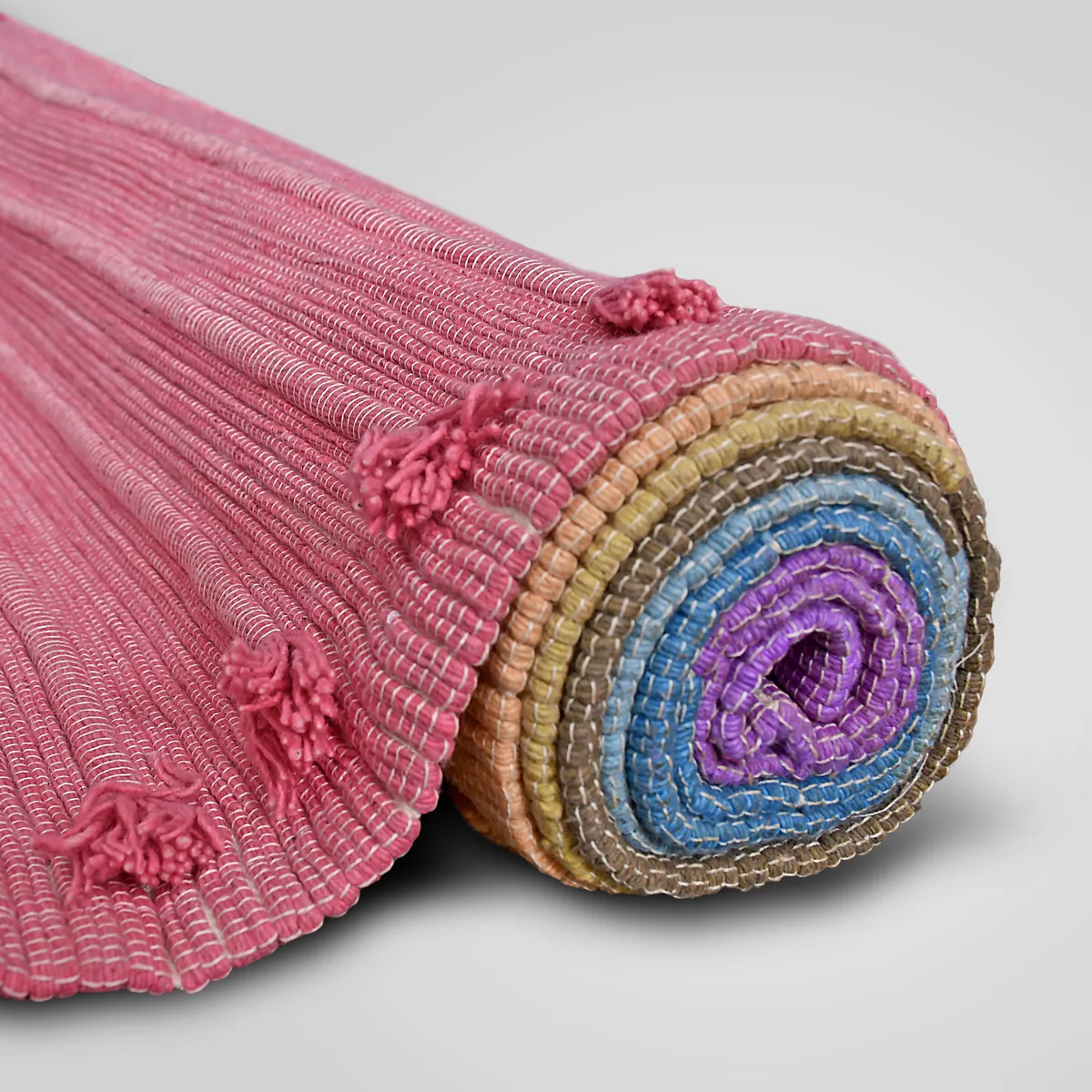
On our chakra rugs the seven bands are woven from yarn dyed before weaving, not printed on afterwards, so colours do not migrate across the mat in normal cold washing. Hot water or soaking for long periods can cause some bleeding at the band edges, which is one more reason to keep washes cold and short.
Can I stop a plant-dyed mat fading completely?
No, and we would not promise it. You can slow it a great deal by drying in shade, washing cold and only when needed, and storing the mat away from windows. Those habits are the difference between a mat that softens over years and one that fades in a season.
Does fading affect the grip or the thickness?
No. Colour loss is a surface change in the dye and does not alter the weave, the thickness or the size. Grip on the underside comes from a hand-brushed layer of natural tree latex, which can soften after many washes and is restored with a thin fresh coat. If you are allergic to natural latex, choose with care and write to us first.
If you like the idea of a mat that records your practice, the Indico is the one that shows indigo's slow change most clearly, and the Prana Shakti shows how seven plant colours soften together. All of our cotton rugs are in the cotton collection.