A cork yoga mat is a thin sheet of cork bonded to a base of natural rubber or, less often, TPE foam. Its real advantages are grip that improves as your hands dampen, a surface that wipes clean, and a raw material harvested from the bark of a living tree. Its real drawbacks are that the cork layer can crumble at the edges, the rubber base makes it heavy and gives it a smell, and the mat cannot be washed.

What cork is
Cork is the outer bark of the cork oak, Quercus suber, grown mainly around the Mediterranean. The bark is stripped from the trunk roughly every nine years, and the tree is not cut down; it keeps living and regrowing bark. Trees are first harvested at around 25 to 30 years old. Cork is impermeable to liquids, elastic and light, which is why it has stoppered wine bottles for centuries.
On its own a few millimetres of cork would tear, so a mat bonds cork granules or a thin sheet to a backing that carries the structure. That base is almost always natural rubber, sometimes TPE.
The pros
Grip when damp. The strongest reason to buy cork. Dry, a new cork surface can feel slightly slick; once your palms warm and dampen, grip firms up noticeably. For moderate sweaters that is the opposite of smooth foam. Heavy sweaters still find a film forms, because cork absorbs little.
Easy to wipe. Cork is close-grained and nearly impermeable, so a damp cloth lifts sweat and dust quickly. You do not wash it, and you should not soak it.
A renewable bark. Cork comes from a tree that is harvested, not felled, and keeps producing. That is a sound reason to prefer it over a plastic surface, though the base underneath is a separate question.
The cons
Crumbling. Cork is natural and slightly brittle. With daily use it wears thin at the hand and foot positions and the edges chip and shed crumbs. Dragging the mat across rough floors or rolling it tightly cork-outward speeds this up.
The rubber base. Most cork mats sit on natural rubber. That brings excellent floor grip and cushioning, but also weight and a rubber smell that fades but rarely disappears. Natural rubber also lacks resistance to sunlight, oil and perspiration, so the base must be kept out of the sun. If you are allergic to natural latex, choose with care and write to us first; a full rubber base contains far more latex than the thin layer brushed onto our mats. More in natural rubber yoga mats: pros, cons and the smell question.
Cannot be washed. Sweat that soaks through to the rubber stays there, and a bonded mat left damp can delaminate.
Claims to treat with care. Cork is often sold as "naturally antimicrobial" or "self-cleaning". We have not seen a standard that certifies this on a yoga mat, so we do not repeat it.
Cork mat vs woven cotton mat
| Cork on rubber | Woven cotton (our Indico) | |
|---|---|---|
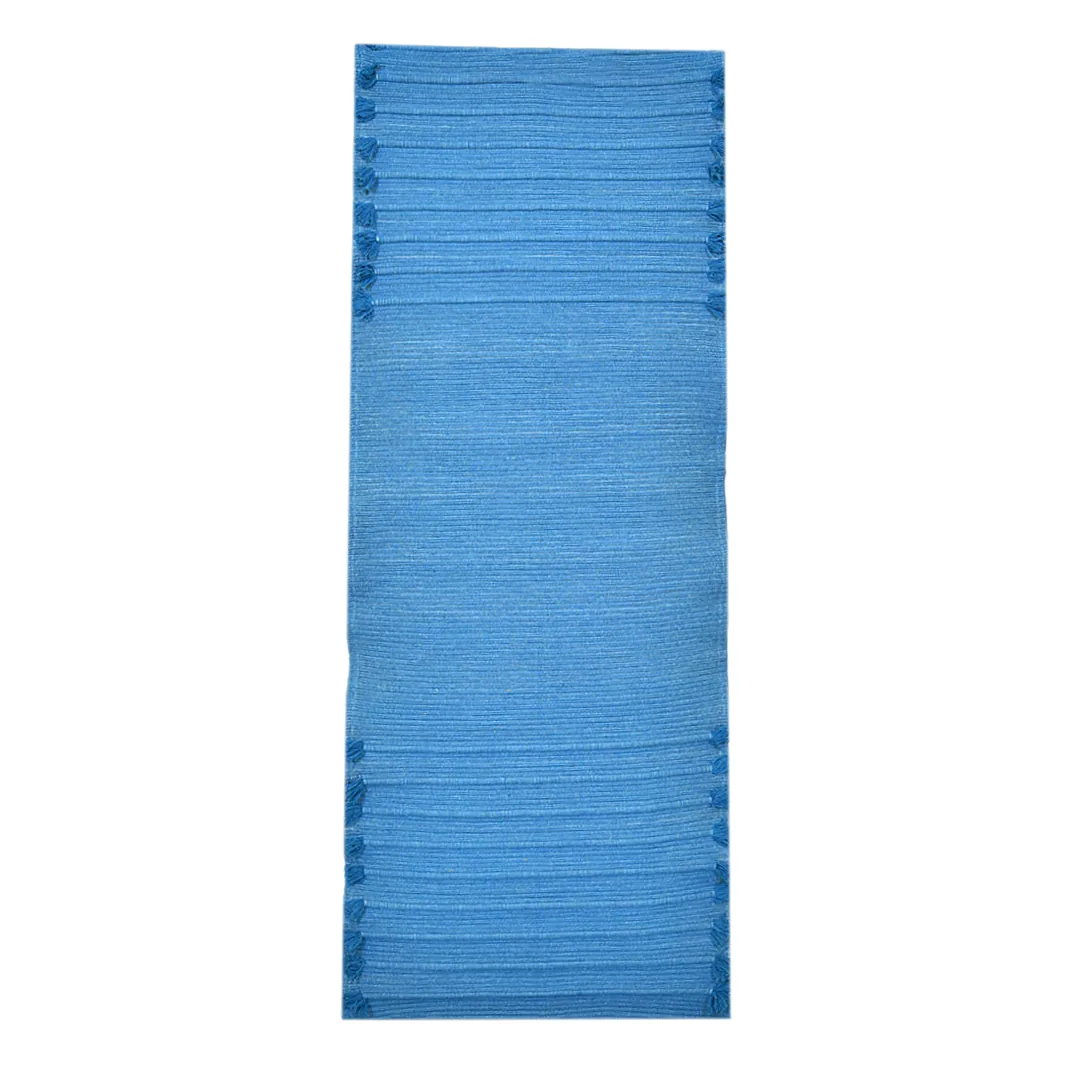
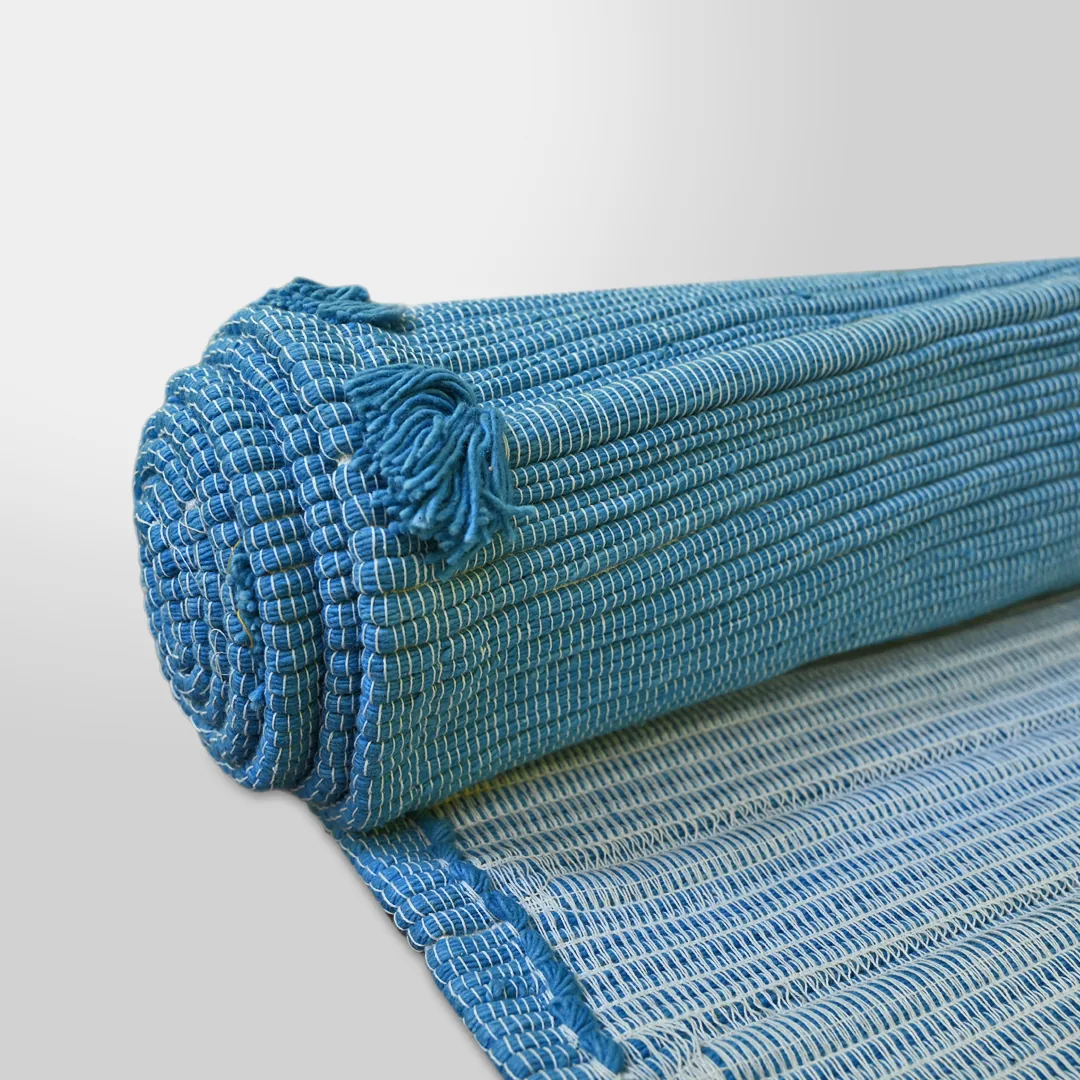
| Surface | Bonded cork sheet or granules | Handwoven GOTS-certified organic cotton, ribbed |
| Base | Natural rubber or TPE, full thickness | Thin natural tree latex, brushed on by hand |
| Grip, dry | Slightly slick until warm | Can slip when bone dry; damp palms help |
| Grip, sweaty | Good until a film forms | Improves as the fibre dampens |
| Cushioning | Firm, from the rubber | Dense 5 mm cotton, moderate |
| Weight | Heavy | About 1.4 kg |
| Cleaning | Wipe only | Hand wash cold, dry flat in shade |
| Ageing | Cork flakes, rubber hardens in sun | Indigo softens gently, latex can be recoated |
| Price | Mid to high | About ₹4,500 at the time of writing |
Neither column wins outright. Cork gives a firmer, wipe-clean surface and a base that will not budge on tiles. Cotton gives something washable, lighter and plastic-free that gets better the sweatier you are. If you want cushioning closer to a rubber base, our 7 mm Diamond Clay is the nearest we weave. The full head-to-head is in cotton vs cork yoga mats.
Who a cork mat suits
Someone who practises indoors on a hard floor, sweats moderately, likes a firm surface, does not mind weight, and is happy to wipe rather than wash. It is a poor match for hot yoga, travel, terrace practice in the sun, and anyone with a latex allergy.
Frequently asked questions
Are cork yoga mats good for sweaty hands?
For moderate sweat, yes: cork grips better as it dampens, so a warm practice improves traction rather than reducing it. For heavy sweat it is less convincing, because cork absorbs very little and a film can form on the surface.
Do cork yoga mats crumble?
They can. Cork is a natural, slightly brittle bark, and the thin layer on a mat wears at the hand and foot positions and chips at the edges over time. Thicker cork, a good bond to the base, rolling cork-inward and keeping the mat off rough ground all slow this down.
Are cork yoga mats natural?
The cork layer is a natural bark harvested from living cork oaks without felling them. The base underneath is usually natural rubber, which is plant-derived, or TPE, which is a petroleum plastic. Read the backing material before deciding how natural the mat is.
Can you wash a cork yoga mat?
No. Wipe it with a damp cloth and dry it flat out of the sun. Soaking or machine washing can separate the cork from its base and damages the rubber. If you want a mat you can actually wash, a woven cotton mat is the alternative.
Is a cork yoga mat safe with a latex allergy?
Be careful. Most cork mats are bonded to a full natural rubber base, and natural rubber latex contains proteins that can cause allergic reactions, from hives and skin irritation to, in severe cases, anaphylaxis (Wikipedia: Latex allergy). Check the backing with the seller, and if you are allergic, write to any maker first, including us.
If a firm, wipe-clean surface appeals but you would rather have something washable and light, look at the Indico, or compare all our cotton mats.