A cork yoga mat is usually a thin sheet of cork bonded to a rubber or similar base: firm, flat, wiped clean, and at its grippiest once a little sweat is on it. A woven cotton mat is cloth: it grips better damp too, but it can be washed completely, rolls softly and weighs less. Choose cork if you want a hard, wipe-down surface and do not mind a stiff roll; choose cotton if you want to wash the whole mat and prefer a textured, fabric feel.

What cork is, and what a cork mat is
Cork is the bark of the cork oak, Quercus suber, a tree native to south-west Europe and north-west Africa. The tree is not felled: the bark is stripped and regrows, traditionally harvested about every nine years once the tree is mature, and cork is made largely of suberin, a water-repelling substance (Wikipedia).
A cork yoga mat is rarely cork all the way through. Cork sheet on its own is thin and brittle, so most cork mats are a cork layer bonded to a base of natural rubber, TPE or another foam. The base provides cushioning and floor grip; the cork is the surface you touch. "Cork vs cotton" really means cork-on-rubber versus woven cotton.
What our cotton mats are
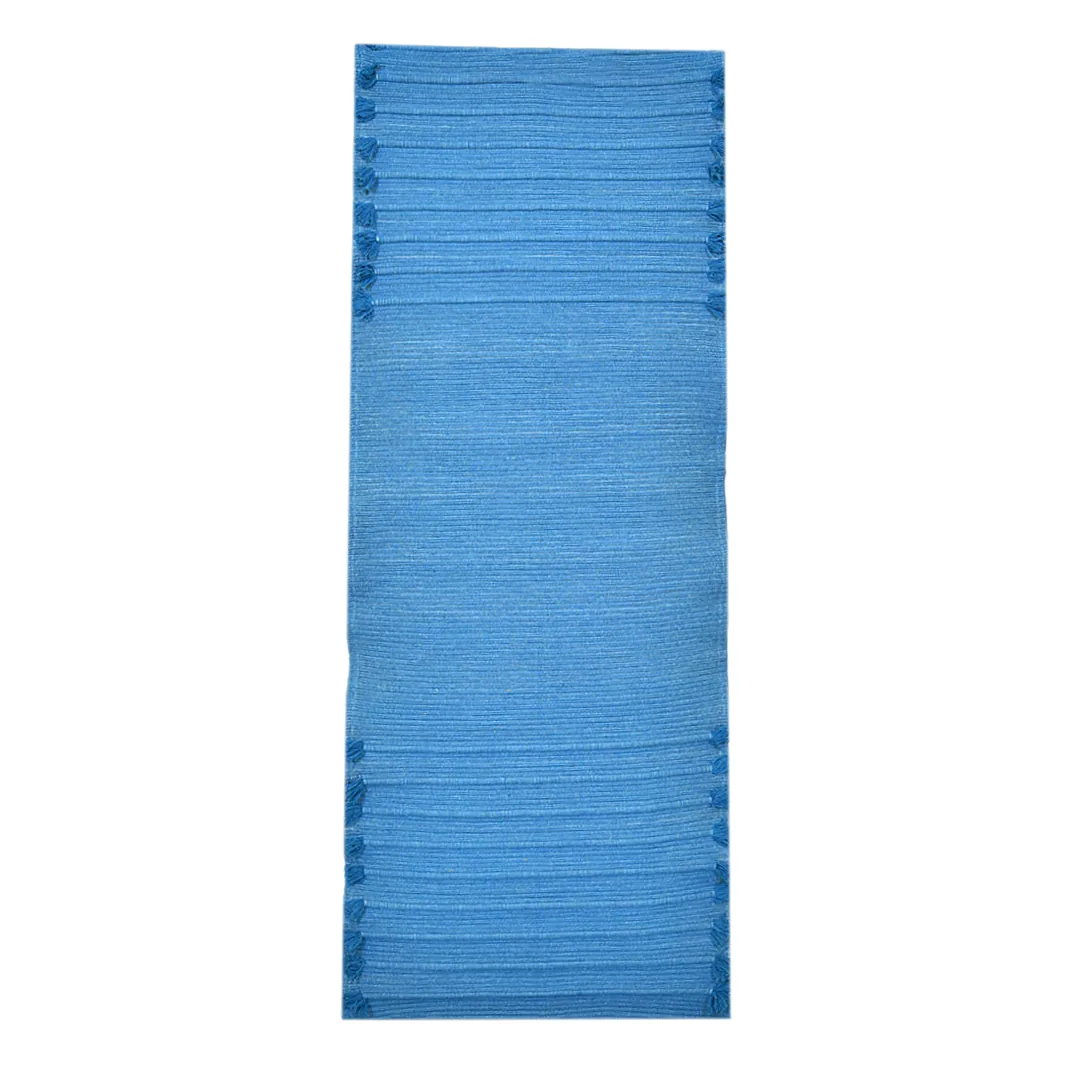
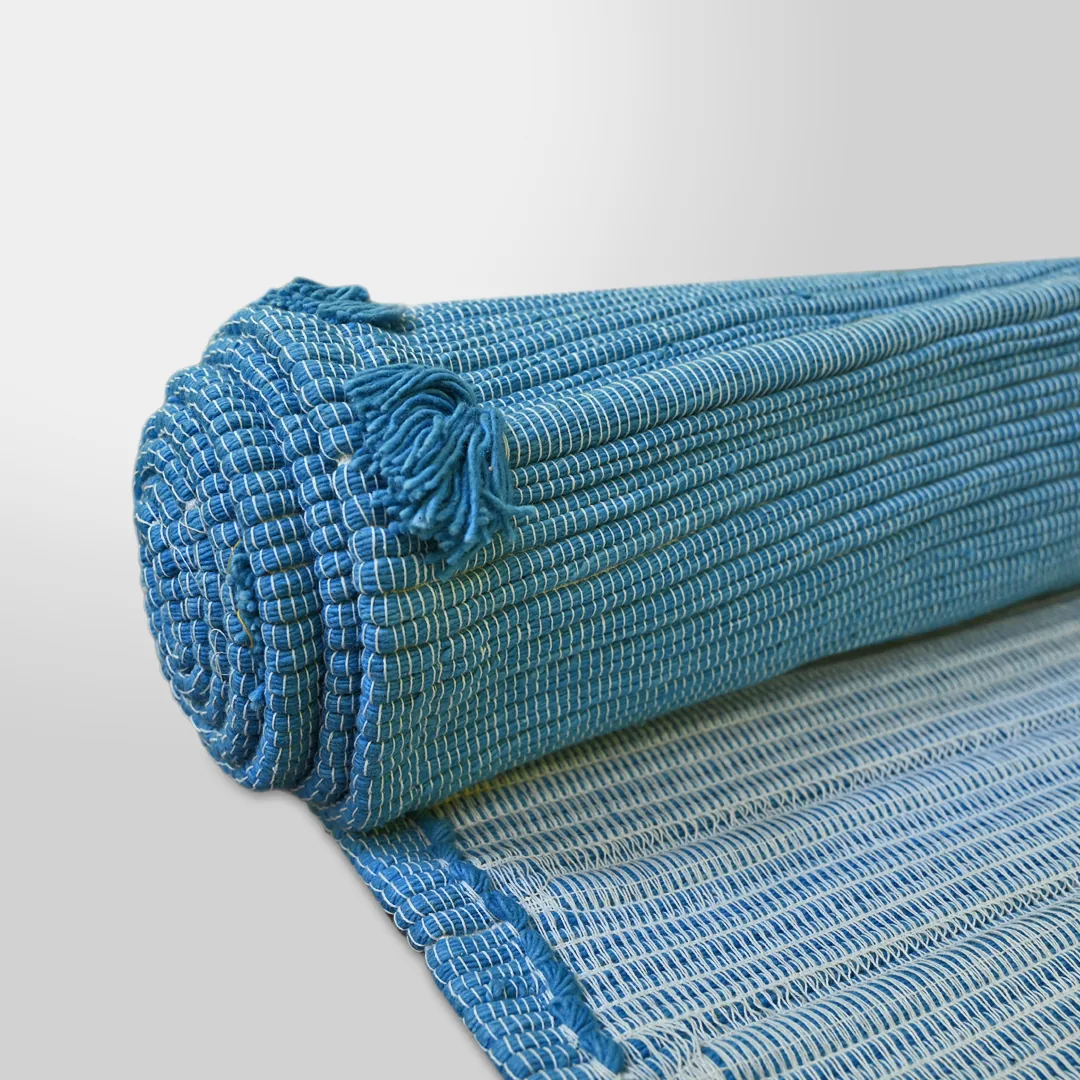
Our cotton mats are handwoven from GOTS-certified organic cotton (the certification covers the cotton), dyed with plants, and finished with a thin layer of natural tree latex brushed onto the underside so the mat holds on tile, marble and wood. Cotton fibre is "almost pure cellulose" (Wikipedia), which is why it takes up moisture. If you are allergic to natural latex, choose with care and write to us first; the same applies to a cork mat with a rubber base.
Grip
Cork and cotton share one habit that sets them apart from PVC and TPE: both get grippier as they get a little damp. Dry cork can feel smooth under a dry palm, and dry cotton can slip slightly on a dusty floor. Add sweat and both settle.
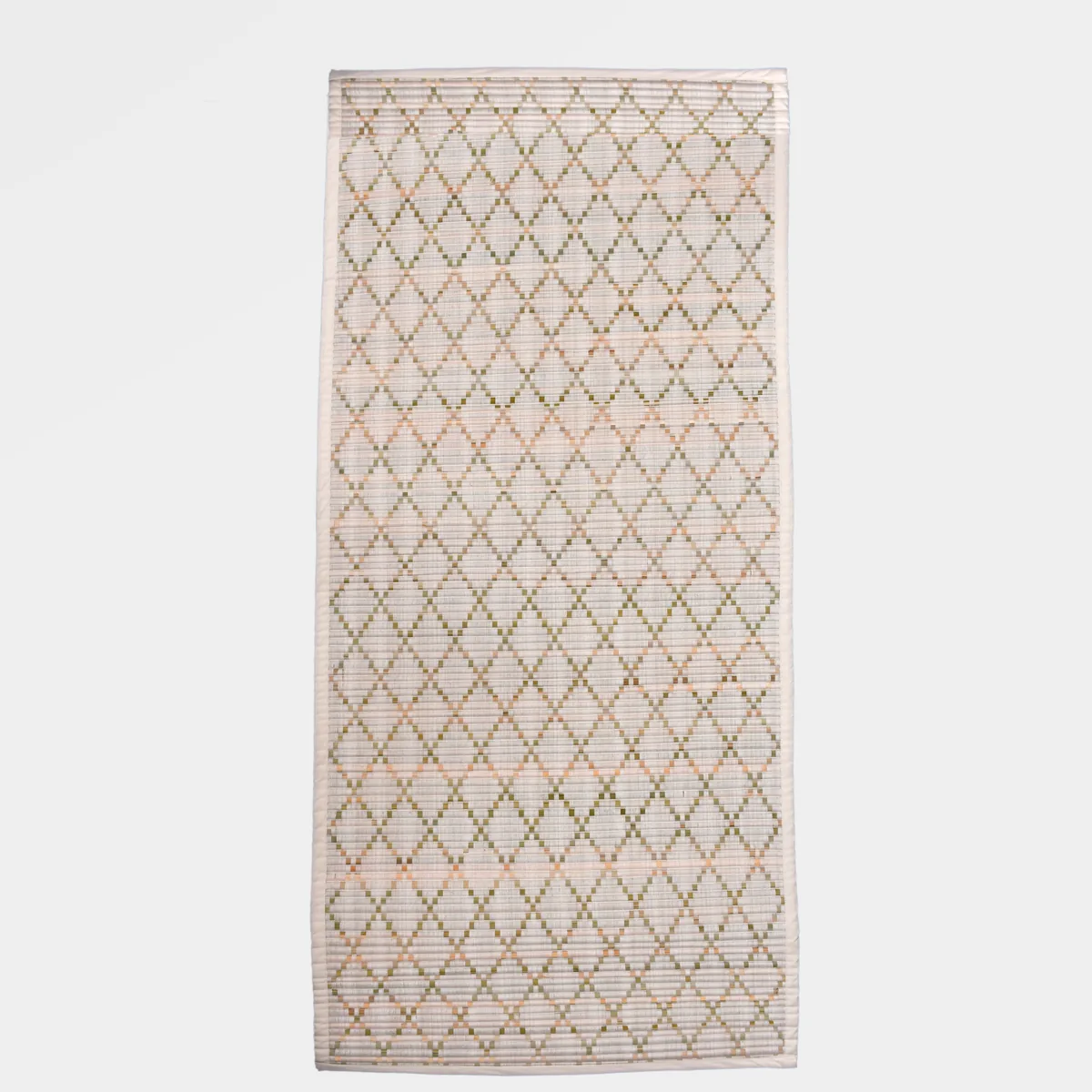
The difference is texture. Cork is a flat, hard surface; grip comes from the material. Cotton grip comes from the weave as well as the fibre: the ribs on the Indico give fingers and toes something to push against. On a grass mat such as the Sambu Diamond, the woven grass and cotton lattice does the same job with a cooler, firmer feel. For dry-palm practice on day one, cork is slightly more secure; after a few sessions, and once you sweat, we would call it even.
Cleaning
This is where the two part ways. Cork is wiped: a damp cloth, a mild spray, and it dries quickly because the surface sheds water. You cannot soak or machine wash a cork mat without risking the bond to its base.
Cotton is washed. The Indico is hand washed cold with a mild natural detergent and dried flat in shade; our Diamond mats take a delicate 30 °C machine cycle in a laundry bag. The whole mat is clean, not just the top. Full instructions are on our Mat care page.
If you never intend to wash a mat, cork is honestly the easier material; if you want the whole mat clean after a sweaty month, only cotton allows it.
Durability and how each ages
Cork is firm but not tough. Edges and corners of cork mats can chip and crumble with use, and the cork layer can lift from the base where it is rolled repeatedly. The rubber beneath dislikes sun and oils.
Cotton frays rather than cracks. Edges are woven and bound, the colour softens over years, and when the latex grip underneath softens after many washes a thin fresh coat restores it. Plant colours fade gently in direct sun, so cotton mats are dried in shade; a cork mat's colour hardly changes. Neither lasts forever, and we do not quote a lifespan for ours.
Weight, roll and cushioning
A cork-on-rubber mat is stiff: it rolls into a firm cylinder and prefers not to fold, and a full-thickness rubber base is usually heavier than a cotton mat. Our cotton mats weigh about 1.4–1.8 kg and roll softly; the Sambu Diamond grass mat weighs about 1 kg.
Cushioning is the rubber base's job, and 4–5 mm of rubber is softer than 5 mm of dense woven cotton. If you kneel a lot and want softness, a cork mat on a thick base or our 7 mm Diamond mats serve better than a 5 mm cotton mat. Grass mats at 3 mm are firm by design and suit seated practice.
Side by side
| Cork mat (cork on rubber base) | Handwoven cotton mat | |
|---|---|---|
| Surface | Hard, flat, smooth | Woven, textured, soft |
| Grip, dry | Good | Fair; improves after a week |
| Grip, damp | Good | Good; improves with sweat |
| Cleaning | Wipe only | Hand or machine wash by mat |
| Cushioning | From the rubber base; soft | Firm, dense (5–7 mm) |
| Weight | Depends on base; often heavier | ≈1.4–1.8 kg (grass ≈1 kg) |
| Roll | Stiff | Soft |
| Wear | Edges chip, cork can lift | Colour softens, grip re-coatable |
| Sun | Base rubber degrades | Plant dyes fade; dry in shade |
| Latex | Often, if the base is natural rubber | Thin natural latex layer underneath |
For a fuller look at cork on its own terms, read cork yoga mats: pros, cons and who they suit. Our cotton vs rubber comparison covers the base most cork mats sit on.
Frequently asked questions
Is a cork yoga mat better than a cotton one?
Neither is better for everyone. Cork gives a hard, wipe-clean surface that grips well once damp; cotton gives a textured, washable surface that also grips better damp and rolls softly. Choose cork for a firm, low-maintenance surface, cotton if you want to wash the whole mat and prefer fabric underfoot.
Are cork yoga mats made entirely of cork?
Usually not. Cork sheet is thin and brittle on its own, so most cork yoga mats are a cork layer bonded to a base of natural rubber, TPE or another foam. The base supplies the cushioning and floor grip; the cork is the surface. Check the spec sheet for what the base is made of.
Can you wash a cork yoga mat?
Cork mats are wiped with a damp cloth or a mild spray, not soaked or machine washed, because water and agitation can lift the cork from its base. Woven cotton mats can be hand washed, and some, like our Diamond mats, machine washed on a delicate 30 °C cycle in a laundry bag.
If the washable side of the table appeals, start with the Indico; if you want a cool, firm surface closer to cork's feel at about a kilo, look at the Sambu Diamond and the rest of the grass collection.