PVC and TPE yoga mats are foamed plastics: soft, waterproof, cushioned and inexpensive, with grip that is at its best when the surface is dry. A woven cotton mat is a dense textile with a thin natural latex coat underneath: firmer, absorbent, grippier as it dampens, washable, and made from plant fibre rather than plastic. Choose foam if you want the most cushioning for the least money and are happy to wipe it down; choose cotton if you sweat, want to wash your mat, and would rather it wore down to thread than crumbled into foam.

What a PVC mat is made of
PVC, polyvinyl chloride, is "the world's third-most widely produced synthetic polymer of plastic". On its own it is rigid; "adding plasticizers makes PVC softer and more flexible", and "almost 90% of all plasticizer production is used in making flexible PVC" (Wikipedia: Polyvinyl chloride). The soft, spongy mat sold in most sports shops is flexible PVC that has been foamed and given a textured skin.
The plasticisers most often used are phthalates: "the most common class of plasticizers used in PVC is phthalates" (Wikipedia: Polyvinyl chloride). We are not going to tell you a PVC mat is dangerous; we have no evidence for that and neither does anyone selling you a mat. We will say that if you buy one, it is reasonable to ask which plasticiser it uses, because the label rarely tells you. For the longer story, read What PVC yoga mats are made of.
To be fair to PVC: it is cheap, consistent from one mat to the next, waterproof, well cushioned and, as foams go, long-wearing.
What a TPE mat is made of
TPE stands for thermoplastic elastomer, "a class of copolymers or a physical mix of polymers (usually a plastic and a rubber)" that stretch and recover like rubber but can be melted and moulded like plastic (Wikipedia: Thermoplastic elastomer). TPE is usually marketed as the "eco" foam because it is made without PVC and because TPEs "have the potential to be recyclable since they can be molded, extruded and reused like plastics".
Potential is the word to hold on to. Whether a worn TPE mat is actually recycled depends on whether a facility near you takes it, and that is a question for your local recycler, not for the label. A TPE mat is still a petrochemical foam. It is lighter than PVC and often softer; in return it tends to compress and tear sooner. More in TPE yoga mats explained.
What our cotton mats are made of
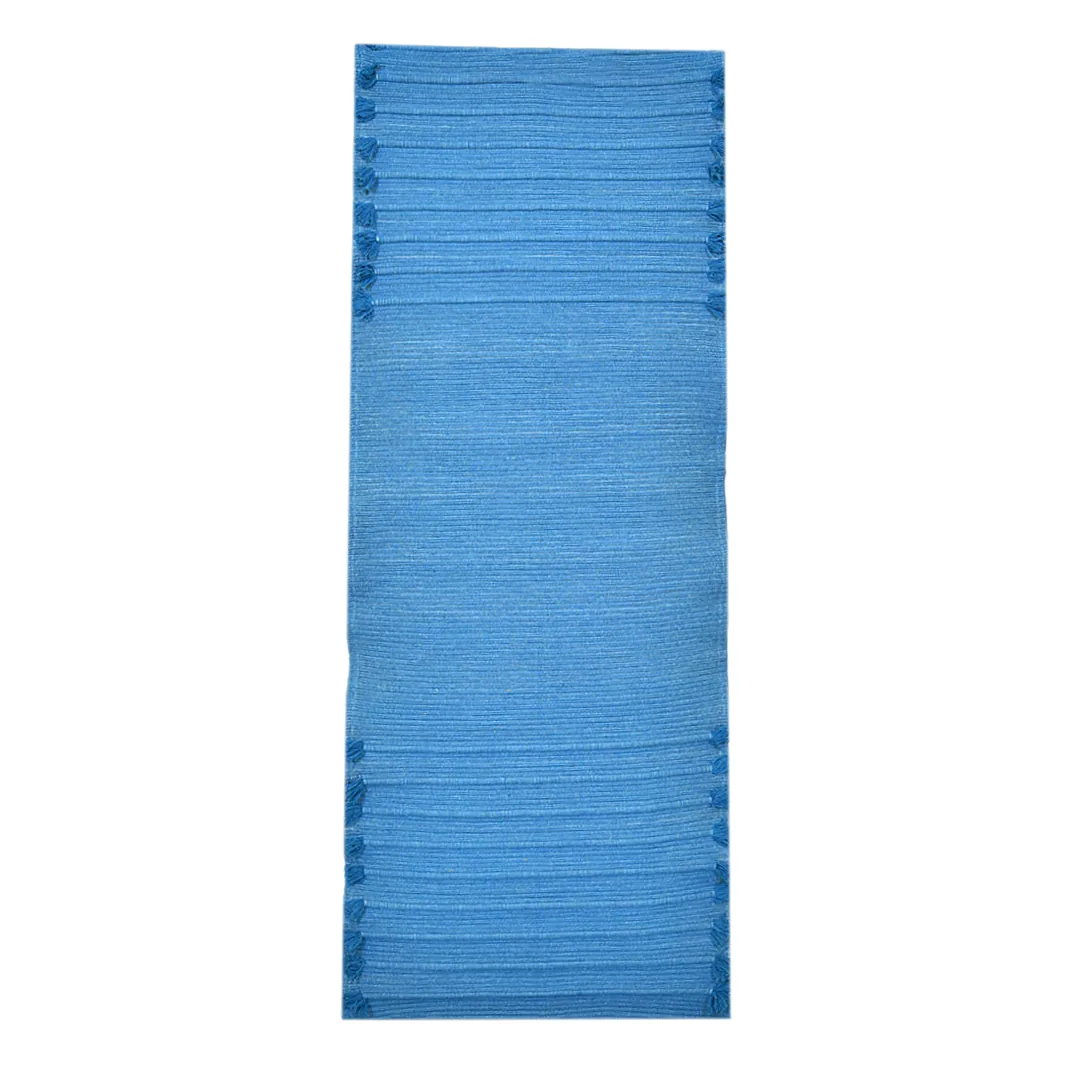
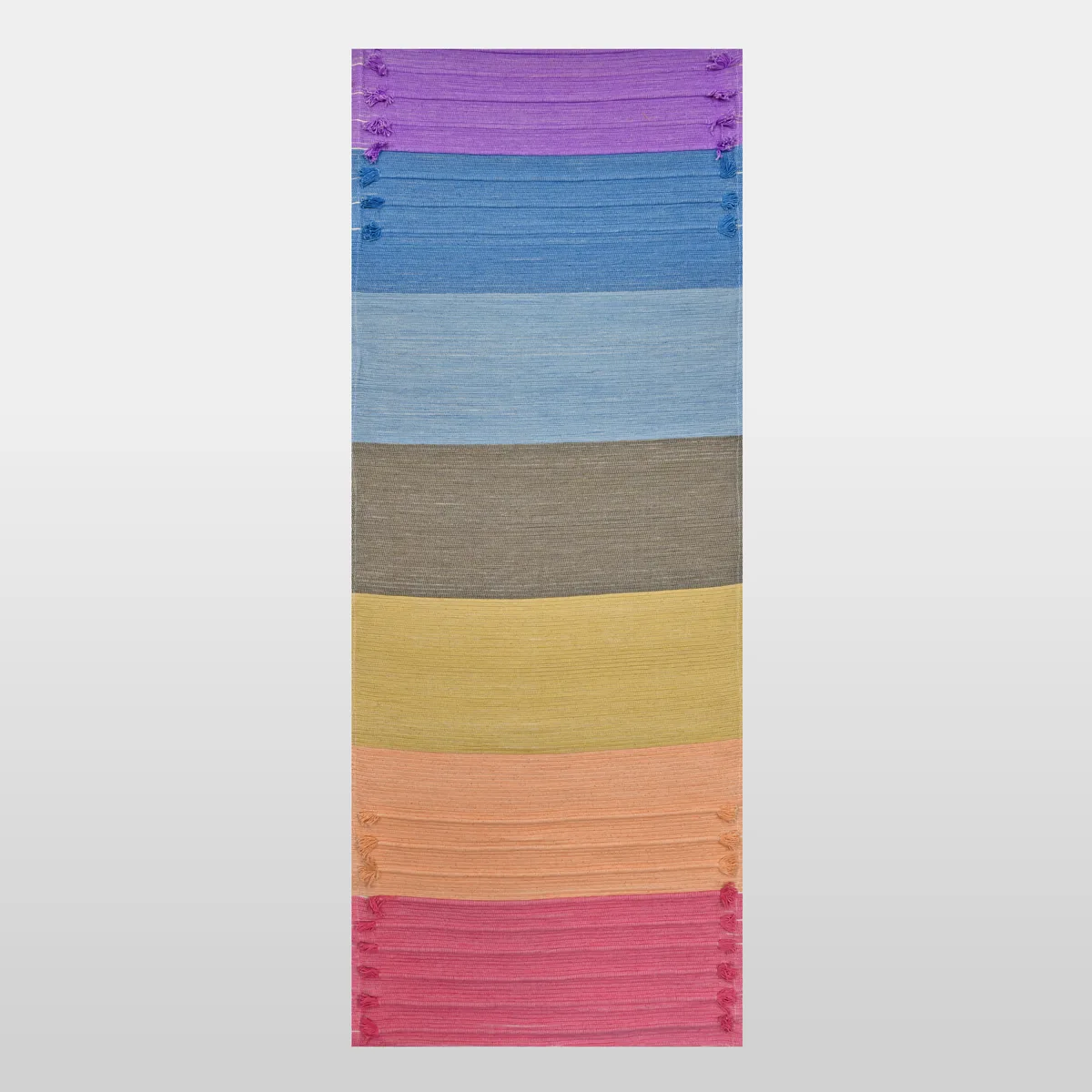
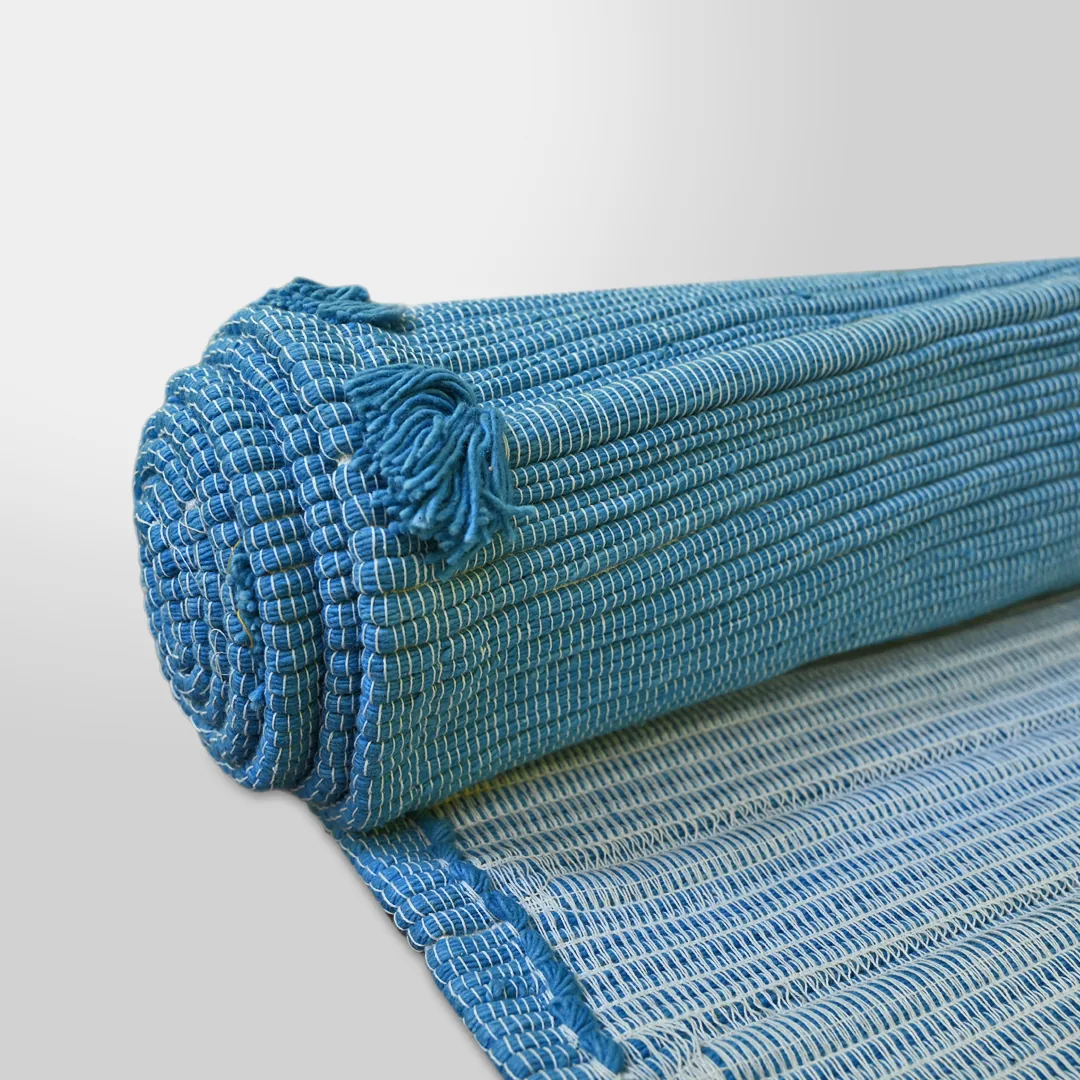
Our mats are handwoven on handlooms in Komarapalayam from GOTS-certified organic cotton; GOTS covers the organic fibre and the processing chain behind it (Global Standard: GOTS). Indico is 5 mm of ribbed cotton dyed in true indigo, 183 × 68 cm, about 1.4 kg. Prana Shakti is a 5 mm six-ply rug, 188 × 69 cm, about 1.5 kg, banded in the seven chakra colours from plant dyes (turmeric, neem and tulsi among more than twenty herbs).
Both have a thin layer of natural tree latex brushed by hand onto the underside, which is what holds the mat to tile, marble and wood. If you are allergic to natural latex, choose with care and write to us first.
Side by side
| Woven cotton (Indico, Prana Shakti) | PVC foam | TPE foam | |
|---|---|---|---|
| Material | Organic cotton, plant dyes, natural latex coat | Plasticised PVC, foamed | Plastic–rubber blend, foamed |
| Cushioning | 5 mm, dense; firm under knees | Soft and springy | Soft, often softest |
| Grip when dry | Can slip under bone-dry palms | Good | Good |
| Grip when sweaty | Improves as it dampens | Slick unless textured or towelled | Slick unless textured or towelled |
| Sweat | Absorbed into the fibre | Pools on the surface | Pools on the surface |
| Cleaning | Hand wash cold, dry flat in shade | Wipe with a damp cloth | Wipe with a damp cloth |
| Weight | About 1.4–1.5 kg | Varies; usually 1–2 kg | Usually lighter than PVC |
| How it wears | Thins and softens; latex can be re-coated | Compresses; surface can flake | Compresses and tears at edges |
| Price (ours, at the time of writing) | ₹3,499–₹4,499 | Low | Low to middling |
Grip: dry versus sweaty
This is the honest crux. A foam mat grips well in the first five minutes and gets worse as you sweat; a cotton mat can slip in the first five minutes and gets better as you sweat. On foam, a towel over the mat is the usual fix. On cotton, the fix is simply to keep going, or to dampen your palms before you start. The latex coat underneath is a separate matter: it stops the mat moving on the floor, which neither sweat nor dryness changes much.
Cushioning: where foam wins
We will not pretend otherwise. A 6 mm foam mat is softer under the knees than 5 mm of six-ply cotton, because foam is mostly air and cotton is mostly cotton. Our weave is dense and firm, which many people prefer for balance and for the feel of the floor, but if softness is your first priority, foam gives you more of it per rupee.
What happens when they wear out
A foam mat wears by compressing, tearing at the edges and, as the surface skin breaks down, shedding small pieces. We have written separately about microplastics and yoga mats, including what nobody yet knows for certain.
A cotton mat wears by thinning, fading and softening. The plant colours shift over the years; the latex coat softens after many washes and takes a thin fresh coat of natural latex to restore the grip. At the end of its life it is cotton, plant dye and natural latex, with no PVC and no synthetic foam. We do not call that biodegradable, because we have not certified it, but we can tell you plainly what it is made of.
Washing
Foam mats are wiped; most makers advise against soaking them. Our chakra rugs and Indico are hand washed cold with a mild natural detergent, separately for the first few washes, and dried flat in shade. The first rinse may carry a little colour, which is normal for plant dyes. Machine washing can fade them, so we do not recommend it for these two.
Frequently asked questions
Is TPE better than PVC for a yoga mat?
TPE is usually lighter and is made without PVC and its plasticisers, which is why it is sold as the greener foam. It is also often less durable, compressing and tearing sooner than PVC. TPE can in principle be melted down and reused, but whether a worn mat is actually recycled depends on local facilities. Both are petrochemical foams; neither is washable in the way woven cotton is.
Is a cotton yoga mat as grippy as a foam mat?
Not when it is bone dry; cotton can slip under dry palms for the first few minutes. Once your hands warm and dampen slightly, the weave holds and keeps holding as you sweat, which is where foam gets slick. The natural latex layer on the underside stops the mat itself sliding on tile, marble or wood.
Which is softer, cotton or foam?
Foam. A 6 mm foam mat cushions more than 5 mm of dense six-ply cotton because foam is mostly air. Cotton gives a firmer, more connected feel that many people prefer for balance poses and seated practice. If you want both, a cotton rug laid over a foam mat is a common answer.
How do you wash a cotton yoga mat?
Hand wash in cold water with a mild natural detergent, wash separately for the first few washes, and dry flat in shade away from direct sun. No bleach, no fabric softener, no tumble dryer. A little colour in the first rinse is normal with plant dyes. Full instructions are on our Mat care page.
Next step
If you want a washable cotton mat for a sweaty practice, start with Indico or the seven-band Prana Shakti. All our cotton mats are at the cotton collection.