A PVC yoga mat is made of polyvinyl chloride, a plastic that is hard and brittle on its own, mixed with plasticisers, most commonly phthalates, to make it soft, and then foamed to give it cushioning. PVC is cheap, waterproof, durable and easy to wipe down, which is why the first commercially made "sticky mats" were made from it. Whether it is "toxic" depends on which plasticisers were used and how much of them you are exposed to, and that is something a seller should be able to tell you.

What PVC is
Polyvinyl chloride is a synthetic polymer made from vinyl chloride. It is one of the most widely produced plastics in the world: the third most produced synthetic polymer after polyethylene and polypropylene, with around 40 million tonnes made each year. It comes in two broad forms. Rigid PVC is the material of pipes, window frames and doors. Flexible PVC is what you find in inflatables, flooring, cable coverings and, in foamed form, yoga mats.
The difference between the two is not the polymer. It is what is added to it.
What plasticisers do
A plasticiser is a substance added to a material to make it softer and more flexible. PVC without plasticiser is stiff; with it, the same polymer becomes pliable enough to roll. Almost 90 per cent of all polymer plasticisers are used in PVC, and the most common class has traditionally been phthalate esters.
The point that matters for a mat is this: plasticisers are not chemically bound to the polymer. They sit between the polymer chains, which is how they work, and over time they can escape through migration and abrasion. As plasticiser leaves, the plastic loses flexibility and becomes brittle. That is why an old PVC mat goes hard at the edges, cracks and starts to shed.
Foaming
A yoga mat needs cushioning as well as flexibility, so the plasticised PVC is foamed, creating air cells inside the material. That gives the familiar spongy feel and keeps the weight down. It also means the surface is a thin skin over a cellular structure, which is where wear begins once the plasticiser starts to leave.
Is PVC toxic? What the sources actually say
We would rather give you the regulators' wording than our own.
- Phthalates are the plasticisers that have drawn most attention. The US Environmental Protection Agency says that above certain exposure levels, phthalates have the potential to cause human health effects of concern, including endocrine disruption, and in the same statement says those effects do not occur at all exposure levels. For the consumer uses it evaluated, it did not find unreasonable risk to the general population.
- US federal law restricts certain phthalates above 0.1 per cent in children's toys and child care articles. Yoga mats are not covered by that rule.
So the honest answer is that "PVC" on its own does not tell you whether a mat contains the phthalates regulators restrict in children's products. Some PVC mats are made with other plasticisers; some are not. The material name does not settle it, and we are not going to tell you a PVC mat will harm you, because the sources do not say that. What they do say is that plasticisers are not locked in, and that is a fair thing to know about a surface you press your face and hands into.
Where PVC mats are genuinely good
We weave cotton, so you might expect us to wave this section away. We would rather be fair.
| PVC foam mat | Handwoven cotton mat | |
|---|---|---|
| Cushioning | Soft and springy | Firm; dense cotton compresses little |
| Grip when dry | Very good on the smooth "sticky" surface | Can slip when bone dry; improves as it warms |
| Grip when sweaty | Can become slippery | Improves as the cotton dampens |
| Water | Waterproof; wipe clean | Absorbent; wash and dry flat |
| Weight | Usually light | 1.4 to 1.8 kg for our cotton mats |
| Price | Among the lowest of any mat type | Higher; hand-weaving time is the main cost |
| Ageing | Goes brittle, cracks and sheds as plasticiser leaves | Cotton softens; plant colour mellows; latex underside can be re-coated |
| What it is | Polymer, plasticiser, foam | Cotton, plant dye, natural tree latex |
The first commercially made sticky mats were PVC, and the material's advantages are real: a smooth surface and a lower price, excellent dry grip, waterproofing, light weight and soft cushioning. If you need padding for the knees above all else and want to spend as little as possible, a PVC mat does that job. We would be misleading you to pretend otherwise.
What to ask before buying a PVC mat
- Which plasticiser is used? A seller who knows their product can tell you whether it is phthalate-based or not. "Phthalate-free" is a specific, checkable claim; "non-toxic" on its own is not.
- Is there a test report? Ask whether the mat has been tested to any standard for restricted substances, and which one.
- How does it wear? Ask what happens at the end of its life. Foam that flakes is a sign that plasticiser has left and the structure is breaking down.
- What does it smell of when new? A strong smell is worth asking about; a seller should be able to tell you what causes it.
- Can it be repaired? A PVC mat generally cannot. A woven mat can have a tassel re-knotted or its grip layer re-coated.
We go through the alternatives, and how "non-toxic" labels can mislead, in Non-toxic yoga mats in India, and the full material comparison in Cotton vs PVC and TPE yoga mats. What happens to foam as it abrades is a question on its own, which we take up in Microplastics and yoga mats.
Where our mats sit
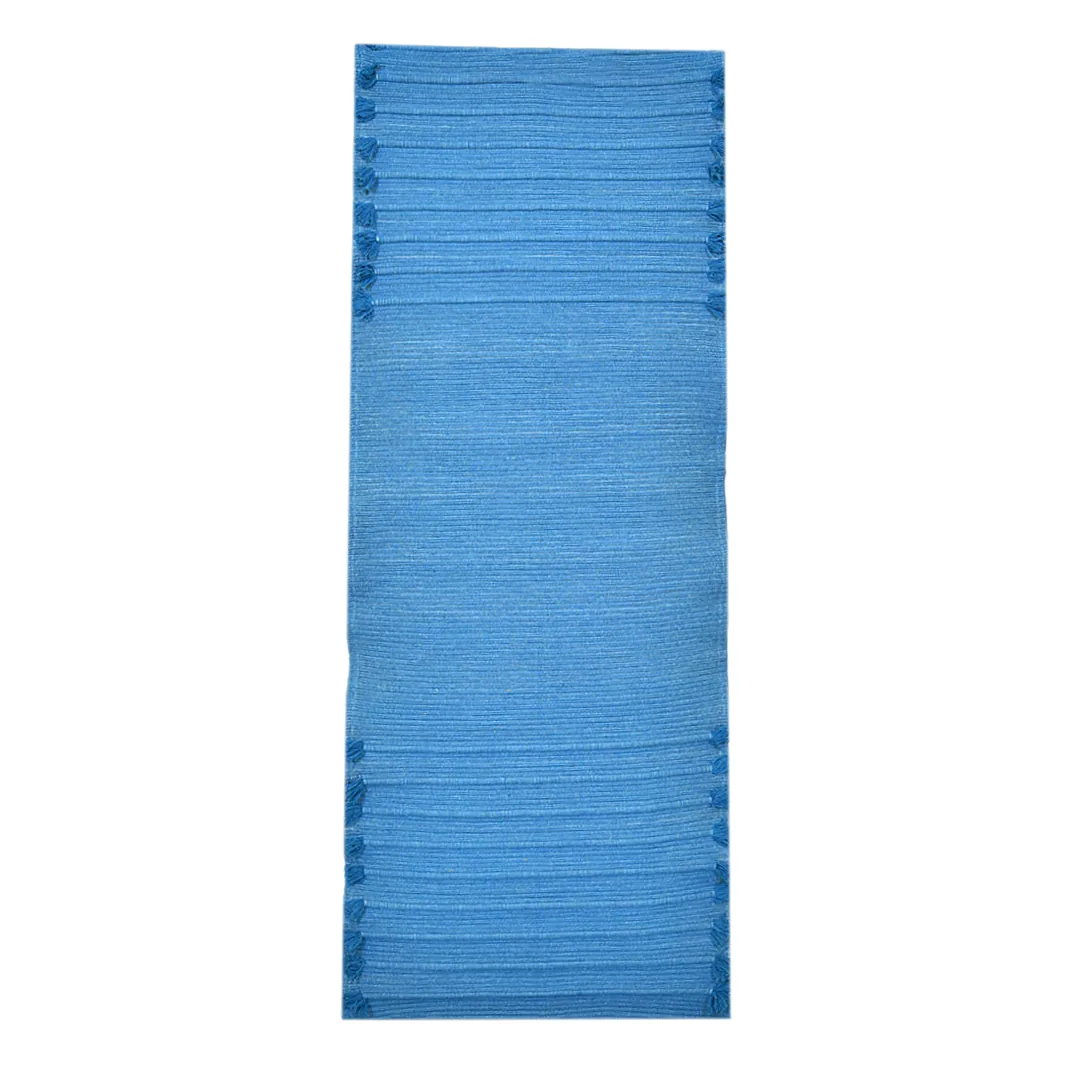
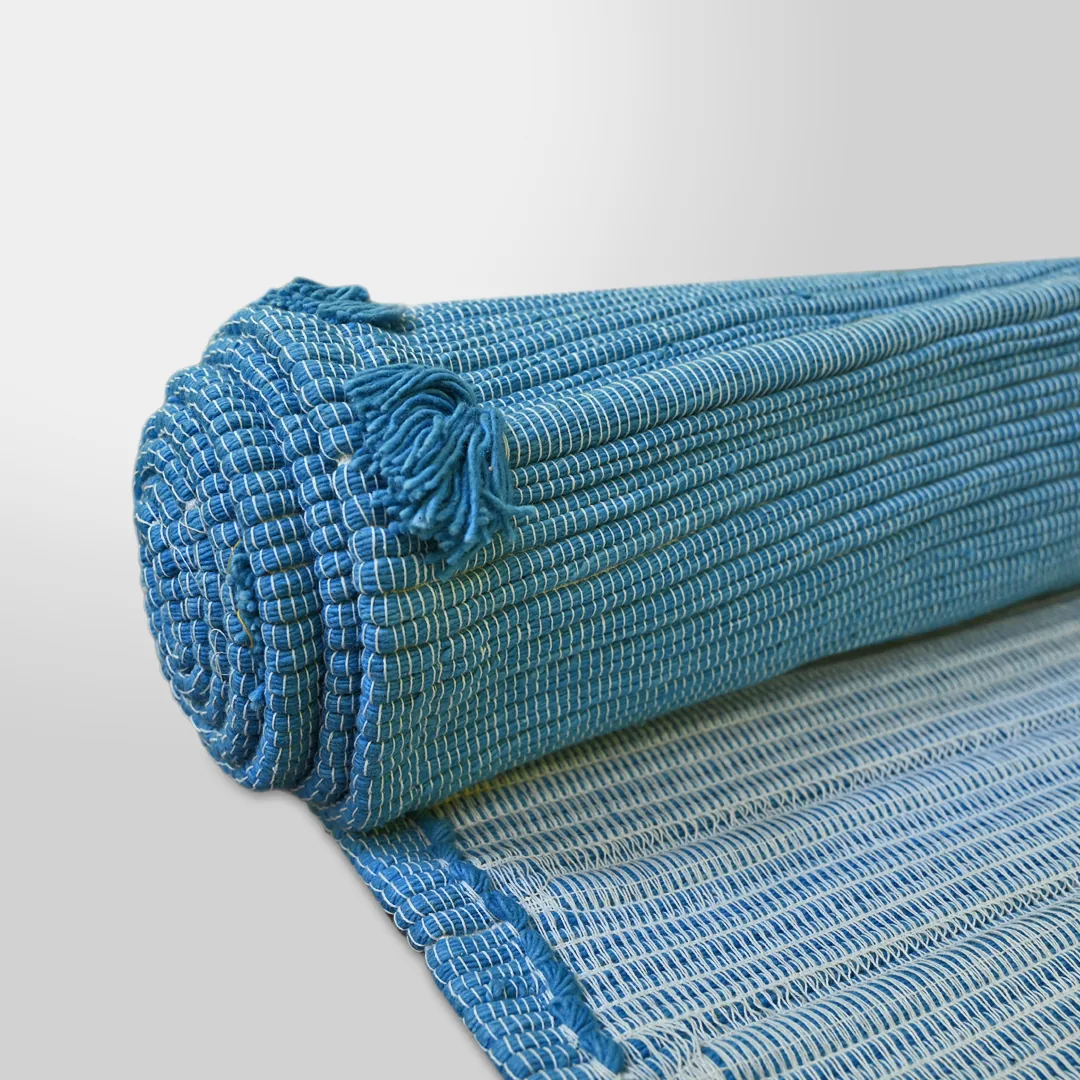
Our mats contain no PVC and no synthetic foam. The Indico is GOTS-certified organic cotton dyed with true indigo, woven in a ribbed weave with hand-knotted tassels. The Sambu Diamond is sambhu grass woven with organic cotton. Underneath both is a thin layer of natural tree latex, brushed on by hand, which holds the mat on tile, marble and wood and can be refreshed with a thin coat when it softens. If you are allergic to natural latex, choose with care and write to us first.
We are equally plain about the limits: cotton is firmer than foam, heavier, and needs washing rather than wiping. It is a different kind of mat, not a magic one.
Frequently asked questions
What are PVC yoga mats made of?
Polyvinyl chloride, a synthetic plastic that is rigid on its own, mixed with plasticisers to make it soft and then foamed to give it cushioning. The plasticisers have most commonly been phthalates, though other plasticisers are also used. The polymer, the plasticiser and the air cells together make the familiar spongy sticky mat.
Are PVC yoga mats toxic?
The material name alone does not answer that. Regulators restrict certain phthalate plasticisers in children's products and say health effects are possible above certain exposure levels but not at all levels. Plasticisers are not chemically bound to PVC and can migrate out over time. Ask the seller which plasticiser is used and whether the mat has been tested to a named standard.
Why do PVC mats crack and flake with age?
Because the plasticiser that keeps PVC soft is not locked into the polymer. It leaves slowly through migration and abrasion, and as it goes the material loses flexibility and becomes brittle. On a foamed mat that shows as hardened edges, cracks and surface flaking.
Is a PVC mat better than a cotton mat?
For soft cushioning, dry grip, waterproofing and low price, PVC does well. For grip when sweaty, washability, repairability and a surface made from plant fibre rather than plasticised polymer, woven cotton does well. Neither is best for everyone; choose for your practice and your floor.
What is a phthalate-free mat?
A mat whose plasticiser is not from the phthalate family. It is a specific claim that a seller should be able to back with the plasticiser's name or a test report. It still means the mat is plasticised PVC or another polymer, so it says nothing about how the mat wears or what it is made of beyond that one ingredient.
If you would like to compare a woven mat against the one you have, the Indico is the plainest cotton mat we make and the clearest contrast with a foam surface. All of our mats, in cotton, grass and banana fibre, are in the collection.