A non-toxic yoga mat, in the only sense you can check, is one whose materials are named and can be looked up: woven plant fibre, cotton, natural rubber or latex, with no PVC, no synthetic foam and no mystery coatings. The words "non-toxic" on their own are a marketing phrase, not a certification, so the useful question is "what is this mat made of, and who certifies it?" Our mats are handwoven from GOTS-certified organic cotton, sambhu grass, banana fibre and darbha grass, with a thin layer of natural tree latex on the underside of most; the Indico, Banana Fibre and Sambu Diamond are the three we would point to first.

What "non-toxic" can and cannot mean
We are not aware of any standard for yoga mats that defines the word "non-toxic". It is used freely and tells you nothing you can verify. The same goes for "chemical-free": cotton, grass, latex and plant dyes are all chemistry. What you can verify is the material list, the certifications attached to it and the seller's honesty about the parts that are not perfect. This guide walks through the materials, with sources, and ends with the questions we would ask any maker, including us.
PVC and plasticisers
Many inexpensive yoga mats are PVC (polyvinyl chloride) foam. PVC on its own is a rigid material; the polymer in its pure form is described as "a white, brittle solid", and "adding plasticizers makes PVC softer and more flexible" (Polyvinyl chloride, Wikipedia). A soft, bendable yoga mat therefore needs a plasticiser of some kind. The same source notes that the most common class of plasticisers used in PVC is phthalates. The United States Environmental Protection Agency describes phthalates plainly as "chemicals that make plastics more flexible and durable" (EPA, Phthalates).
Which plasticiser a given mat uses, and how much, is information only the maker has. Some PVC mats are sold as "phthalate-free", which means another plasticiser is used; a fair claim if the maker can back it up. We do not say PVC mats are dangerous; we say they are a plastic foam whose softening agents you cannot see, and that a mat with no plastic in it has no such question to answer. Our longer piece on what PVC yoga mats are made of goes further.
TPE and other "eco" foams
Mats labelled TPE, PER or "eco foam" are synthetic foams sold as alternatives to PVC. They avoid PVC and some are lighter and cheaper, but they are still plastic foams, and "eco" or "non-toxic" on the label is no more regulated than on a PVC mat. Ask the same questions.
Natural rubber and natural latex
Natural rubber mats grip very well and cushion generously, and natural rubber is a plant product. The caveat is allergy. Natural rubber latex is a known allergen; the US National Institute for Occupational Safety and Health lists symptoms that "include skin rash and inflammation, respiratory irritation, asthma, and in rare cases shock" (NIOSH alert on latex allergy). This applies to a full rubber mat and, in a smaller way, to the grip layer on ours.
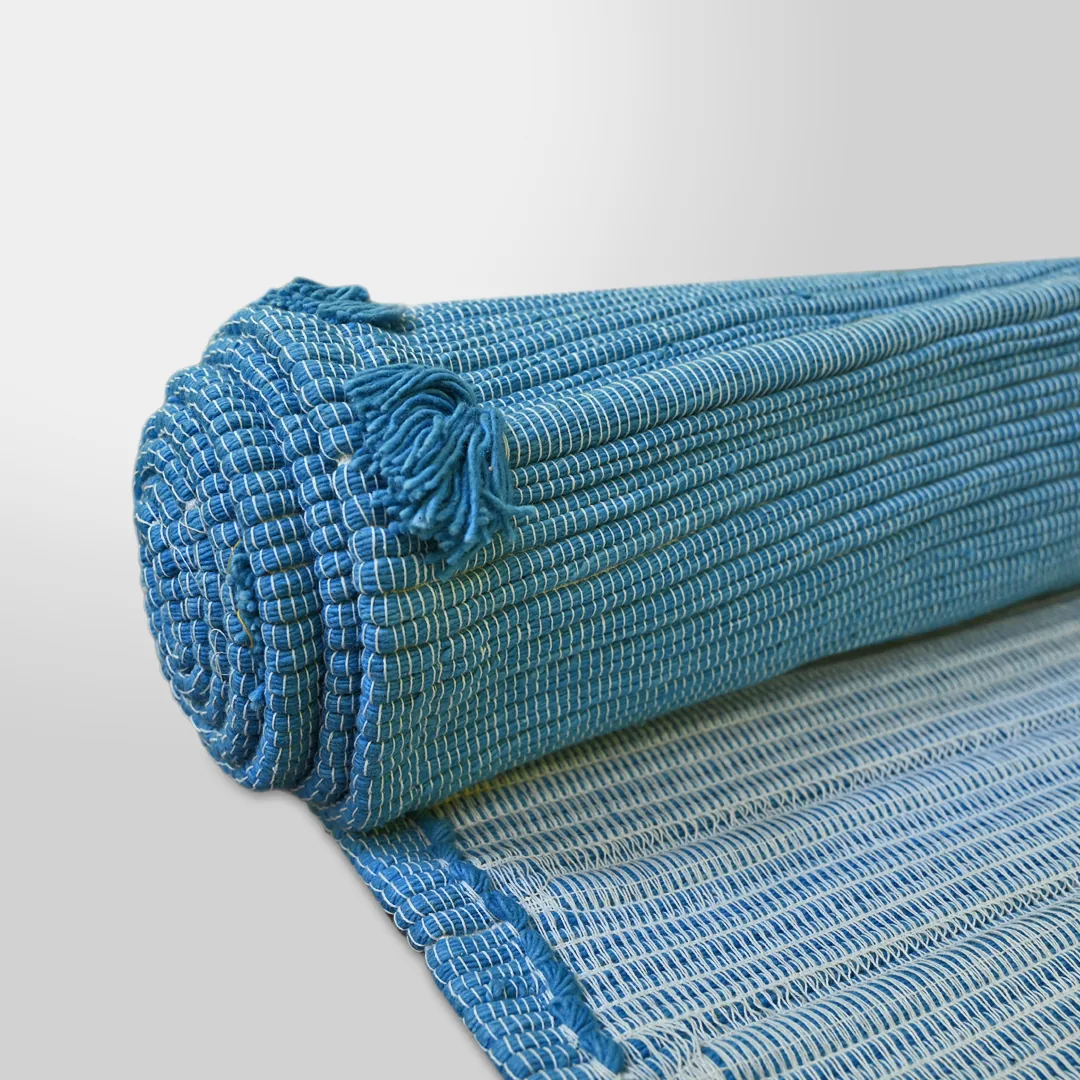
Our cotton, sambhu grass and banana fibre mats have a thin layer of natural tree latex brushed onto the underside by hand, which holds them on tile, marble and wood. The Darbha grass mat has no latex at all; it is backed in cotton cloth. If you are allergic to natural latex, choose with care and write to us first. We have written more in the natural latex grip layer explained.
Cotton and what GOTS covers
With cotton the questions are different: how it was grown, and what was used to process and dye it. This is where a real certification helps. The Global Organic Textile Standard (GOTS) is a standard for organic fibre textiles that, in its own words, "covers every step of production, from fibre processing and spinning to wet processing, manufacturing and trading", with requirements on chemical inputs, wastewater treatment and human rights criteria, and "each company involved in the processing of the product must be certified by an approved independent Certification Body" (GOTS, Global Standards).
Two honest notes about how we use it. First, we hold GOTS certification for our organic cotton, so the correct wording on our site is "GOTS-certified organic cotton", never "GOTS-certified mat": the certification is about the cotton, not about the latex layer or the grass. Second, GOTS certifies textiles made from certified organic fibres such as our cotton; our grass and banana-fibre mats are not GOTS-certified. Our explainer on what GOTS-certified organic cotton means sets out the scope in detail.
Plant fibres: grass and banana
Sambhu grass, darbha grass and banana fibre are the simplest materials in our range: a plant, cut, prepared and woven, with cotton to bind it. There is nothing to plasticise and nothing foamed. They are firm rather than cushioned, must never be soaked, and banana fibre sheds a little fuzz when new.
Plant dyes, honestly
Our colours come from plants: indigo leaves, turmeric, alkanet root, tulsi and neem among more than twenty herbs on the chakra rugs. Colours vary between batches, release a little in the first rinse and soften over years; that is the nature of plant colour. Dye baths still have to be prepared and fixed, and we are happy to answer questions about our process through the Contact page. We make no health claims for any dye.
Three of our mats, and what is in each
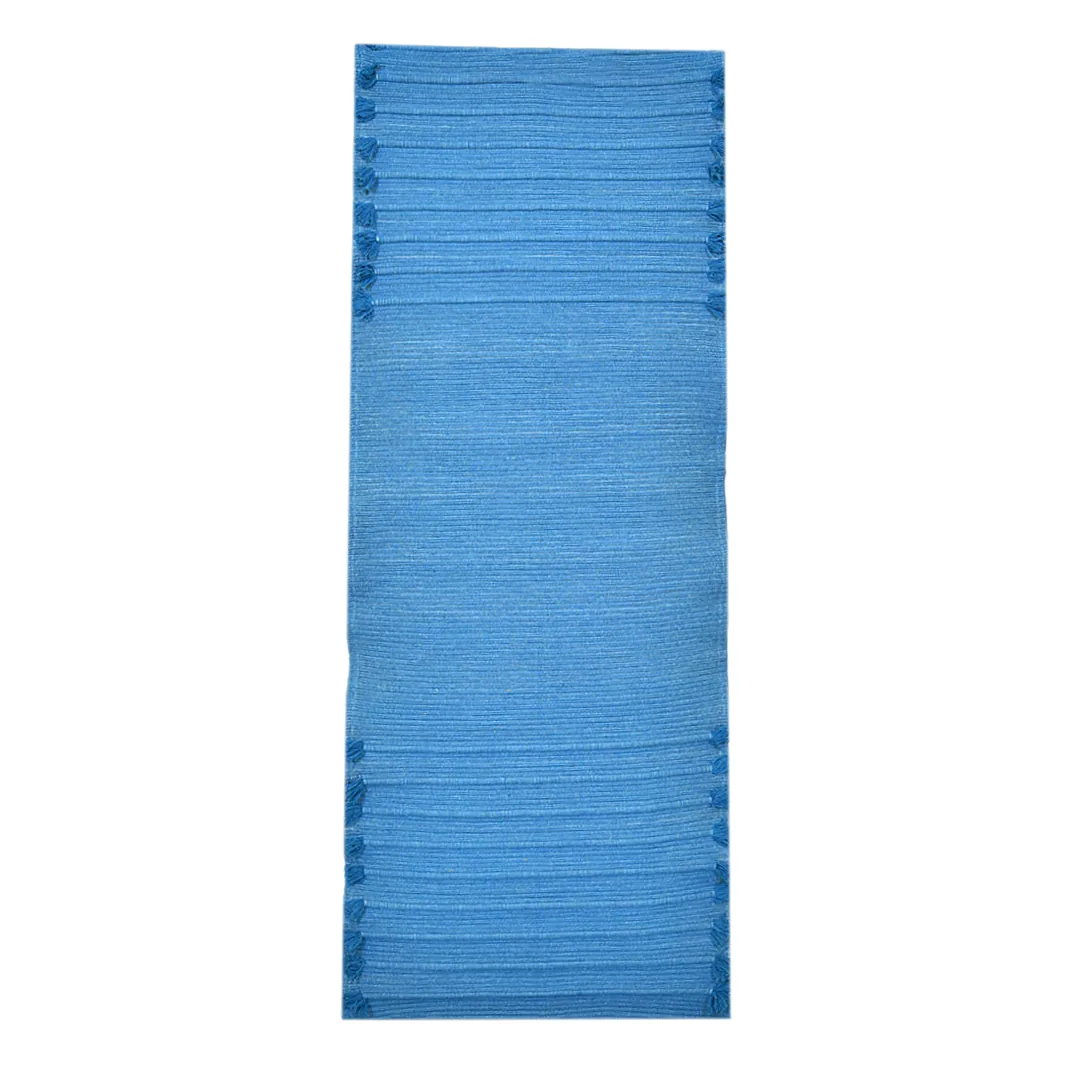
| Indico | Banana Fibre | Sambu Diamond | |
|---|---|---|---|
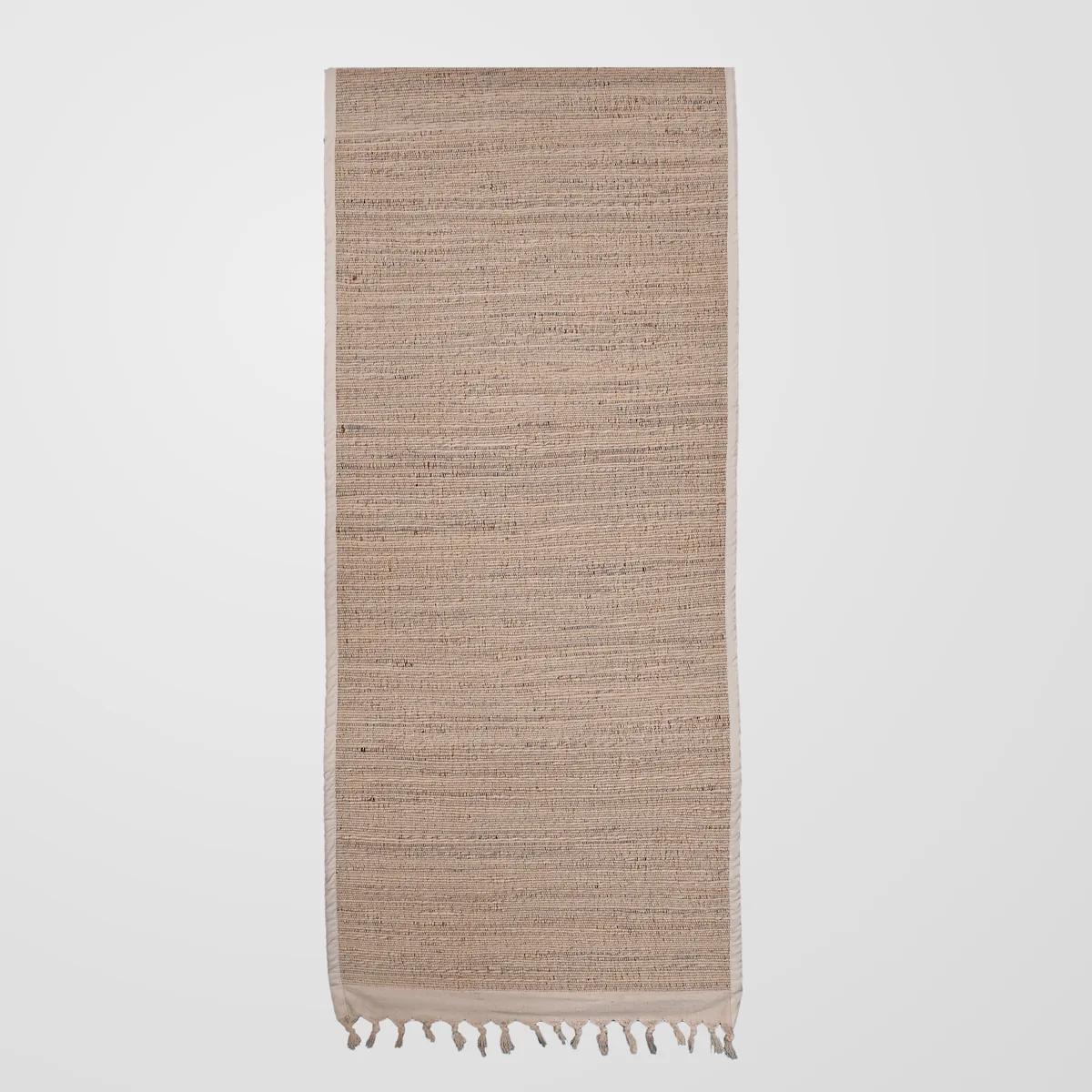
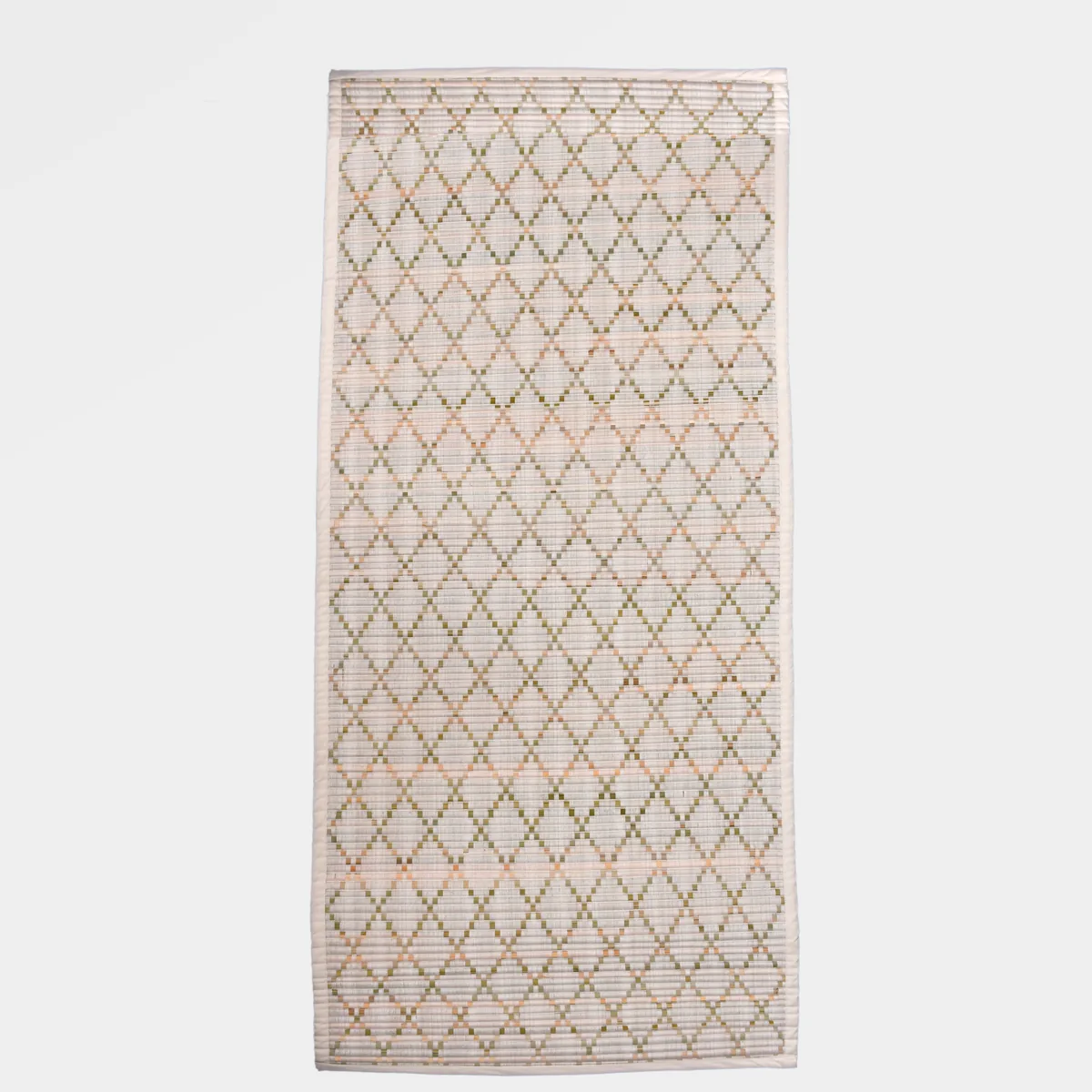
| Surface | GOTS-certified organic cotton, indigo-dyed | Banana bark and fibre, undyed, cotton-bound | Sambhu grass woven with organic cotton, plant-dyed lattice |
| Underside | Natural tree latex, hand-brushed | Natural tree latex, hand-brushed | Natural tree latex, hand-brushed |
| Plastic content | None | None | None |
| Thickness and weight | 5 mm, ≈1.4 kg | 3 mm, ≈1 kg | 3 mm, ≈1 kg |
| Care | Hand wash cold, separately at first | Wipe, never soak | Wipe, never soak |
| Price at the time of writing | ₹4,499 | ₹2,000 | ₹1,999 |
The Indico is the one to choose for a full cotton practice mat: 183 × 68 cm, ribbed weave, hand-knotted tassels, one plant for the colour. The Banana Fibre mat is the plainest thing we make, undyed and firm, for seated practice and gentle yoga. The Sambu Diamond is light and cool, with a plant-dyed lattice, for hot rooms and travel. All three come in plastic-free packaging.
Questions to ask any seller, including us
- What is the top surface made of, exactly? A fibre name, not a feeling.
- What is the backing or grip layer made of?
- If it is a foam, what plasticiser is used? If "phthalate-free", what replaced it?
- Which certification applies, and to which part of the mat? Ask to see the certificate.
- How is it dyed, and does the colour run?
- Is there natural latex anywhere in it?
- What are the honest limits?
Ours: cotton can slip when bone dry and grips better once slightly damp; grass mats are firm and not cushioned; plant colours fade gently; the latex layer is an allergen for some people; and handwoven goods vary slightly from piece to piece.
Frequently asked questions
What does "non-toxic" mean on a yoga mat?
Nothing fixed. We are not aware of any yoga-mat standard that defines the phrase, so it is a marketing description rather than a certification. The checkable alternative is the material list: ask what the surface and the backing are made of, which certification applies to which part, and whether any plasticiser or natural latex is present.
Are PVC yoga mats toxic?
PVC is a rigid plastic that needs plasticisers to become a soft mat, and the most common class used in PVC is phthalates, which the US EPA describes as chemicals that make plastics more flexible and durable. Whether a particular mat uses phthalates or another plasticiser, and in what amount, is something only the maker can tell you. A woven plant-fibre mat has no plasticiser to ask about.
Is a GOTS-certified yoga mat free of chemicals?
GOTS does not mean "no chemicals"; it is a standard for organic fibre textiles that covers the supply chain from fibre processing to trading, with rules on chemical inputs, wastewater and social criteria. It applies to the cotton, so the honest wording is "GOTS-certified organic cotton", not "GOTS-certified mat".
Is natural latex safe?
Natural tree latex is a plant material and most people use it without trouble, but it is a known allergen; NIOSH lists skin rash, respiratory irritation, asthma and, rarely, shock among reactions in sensitive people. Our cotton, sambhu grass and banana fibre mats have a thin latex layer on the underside; the Darbha mat has none. If you are allergic to natural latex, choose with care and write to us first.
If you want a mat whose every part you can name, start with the Indico or browse the whole range on our collection page, where each product lists its fibre, backing and care.