Microplastics are plastic pieces smaller than five millimetres, and one of their main sources is the ordinary wear of plastic products in use. A PVC, TPE or other foam yoga mat is a plastic product that is compressed, scuffed and flaked every time it is used, so the crumbs and dust it sheds are microplastics by definition. What nobody has measured, as far as we can find, is how much a mat sheds compared with tyres, paint or clothing, or what that means for a person. A plant-fibre mat sheds fibre and dust, not plastic; that is the honest extent of the claim.

What microplastics are
The US National Oceanic and Atmospheric Administration defines microplastics as small plastic pieces less than five millimetres long and names three main origins: the breakdown of larger plastic debris, pre-production resin pellets, and microbeads added to products. The same page is candid that this is an emerging field in which "not a lot is known" yet.
European monitoring adds the category that matters for mats: microplastics released unintentionally while a product is used. The European Environment Agency lists tyres, paints, textiles and pellets as the largest such sources in the EU, with tyre abrasion and the washing of synthetic clothing as everyday examples, and notes that its figures rest on estimates that vary between studies.
Where yoga mats fit
Yoga mats are not on that list: not because they have been studied, but because nobody has published a measurement we could find. What follows is reasoning from what the materials are, not from mat-specific data.
Foam mats wear by shedding
A PVC or TPE mat is a cellular plastic sheet. With years of use the surface at the hands and feet goes shiny and thin, the edges fray, and eventually the foam flakes into crumbs and a fine powder that ends up on the floor, on clothes and in the wash. Those fragments are plastic pieces under five millimetres. By the standard definition, a flaking foam mat is producing microplastics. How many grams over its life, and where they go, has not been quantified in anything we could cite.
PVC adds a second question
PVC mats are made soft with plasticisers, so their fragments carry those additives with them. We cover what PVC is and what to ask a seller in what PVC yoga mats are made of. TPE is not PVC, but it is still plastic.
In proportion
If you are weighing where to spend your concern, the public data says paints and vehicle tyres are the large sources, with synthetic textiles also on the list. A mat is likely a small one; we say "likely" because nobody has the number.
What is uncertain about health
In 2019 the World Health Organization reviewed microplastics in drinking water and concluded that they do not appear to pose a health risk at current levels, while stressing that data on the smallest particles is extremely limited and calling for more research and standard measurement methods. That is the responsible summary: not shown harmful at observed levels, not shown safe, and poorly measured. For yoga mat dust specifically, by skin contact or breathing, there is no study we could find. Anyone who tells you a foam mat is poisoning you, or that it is certainly fine, is ahead of the evidence.
What a plant-fibre mat does and does not solve
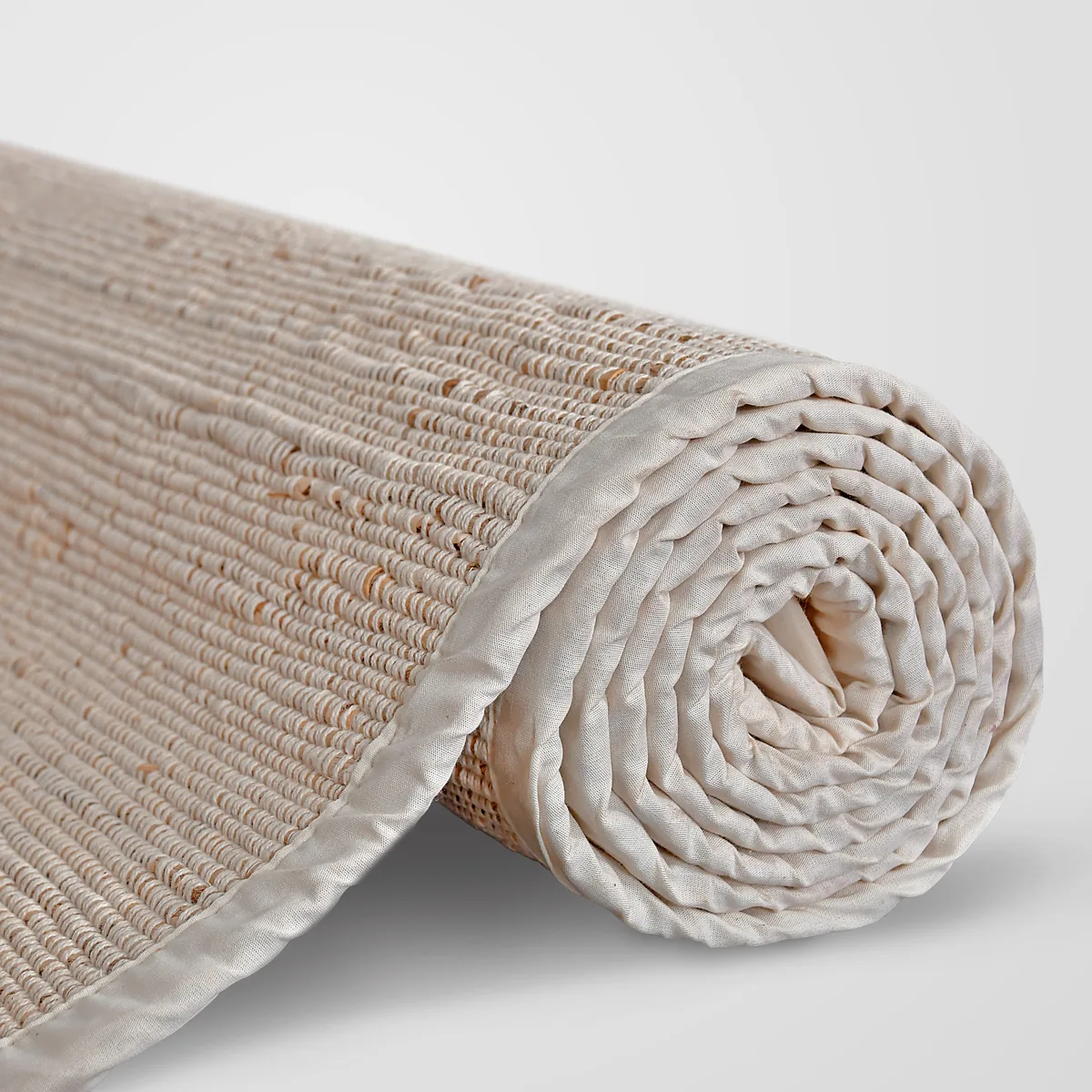
Our mats are woven from cotton, sambhu grass or banana fibre, with a thin layer of natural tree latex brushed onto the underside, except the darbha mat, which is cotton-backed. Here is what that honestly changes.
| Foam mat (PVC or TPE) | Plant-fibre mat (ours) | |
|---|---|---|
| What the surface sheds | Plastic crumbs and dust | Cotton lint, grass or banana-fibre fuzz |
| Are the fragments microplastics? | Yes, by definition | No, they are plant material |
| Does it shed nothing? | No | No: plant fibre sheds too, especially when new |
| Underside | Same plastic | Natural latex, a plant-derived rubber, in a thin layer |
| Washing | Wipe only | Cotton washable; grass and banana wiped, never soaked |
| Certified biodegradable | No | No: we hold no certification and claim none |
We make no claim about how long our fibres take to break down, because we have not had it tested. What we can say plainly is what the mats are and are not: plant fibre, cotton and natural latex; no PVC, no synthetic foam, plastic-free packaging. Where a worn mat goes is in what happens to your mat at the end of its life.
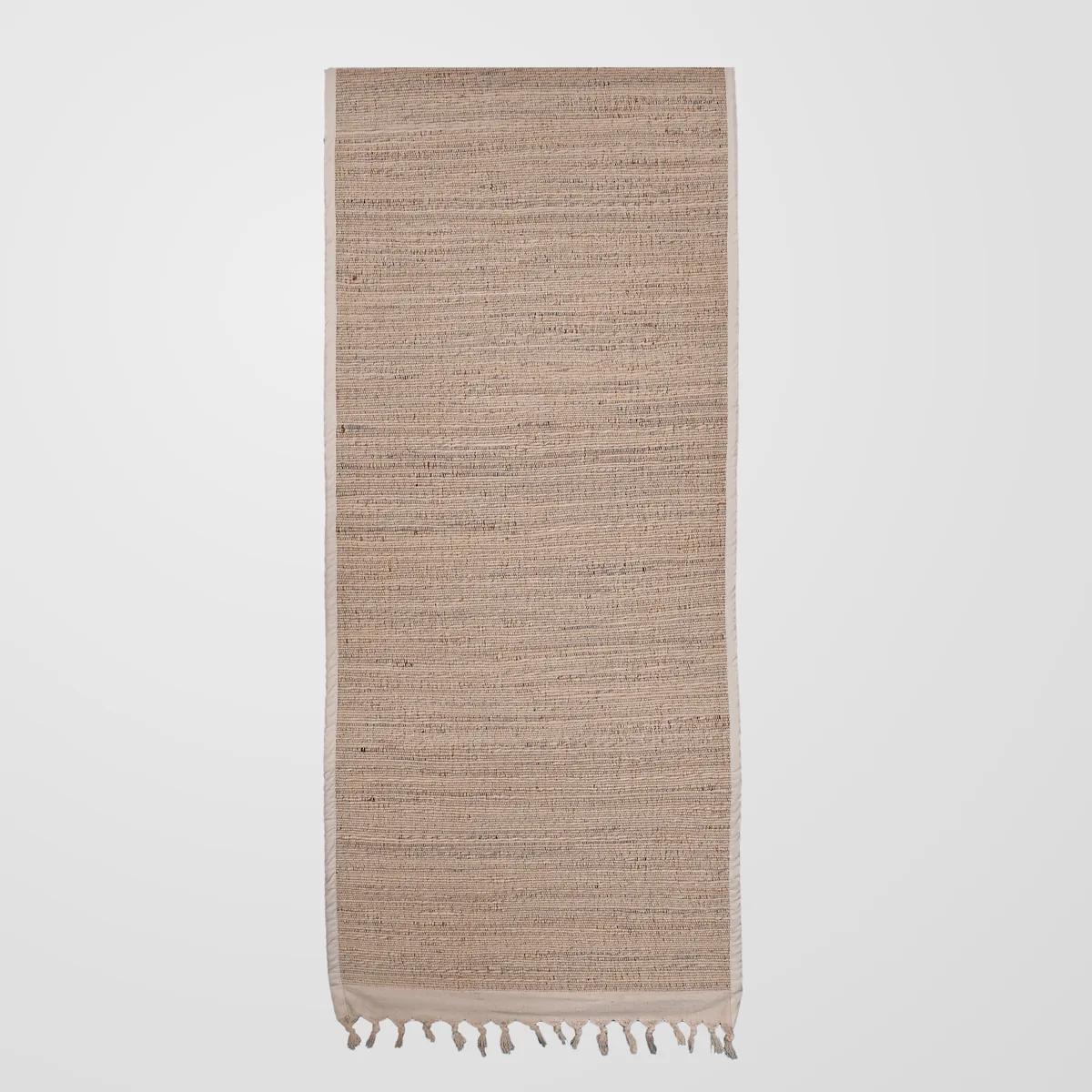
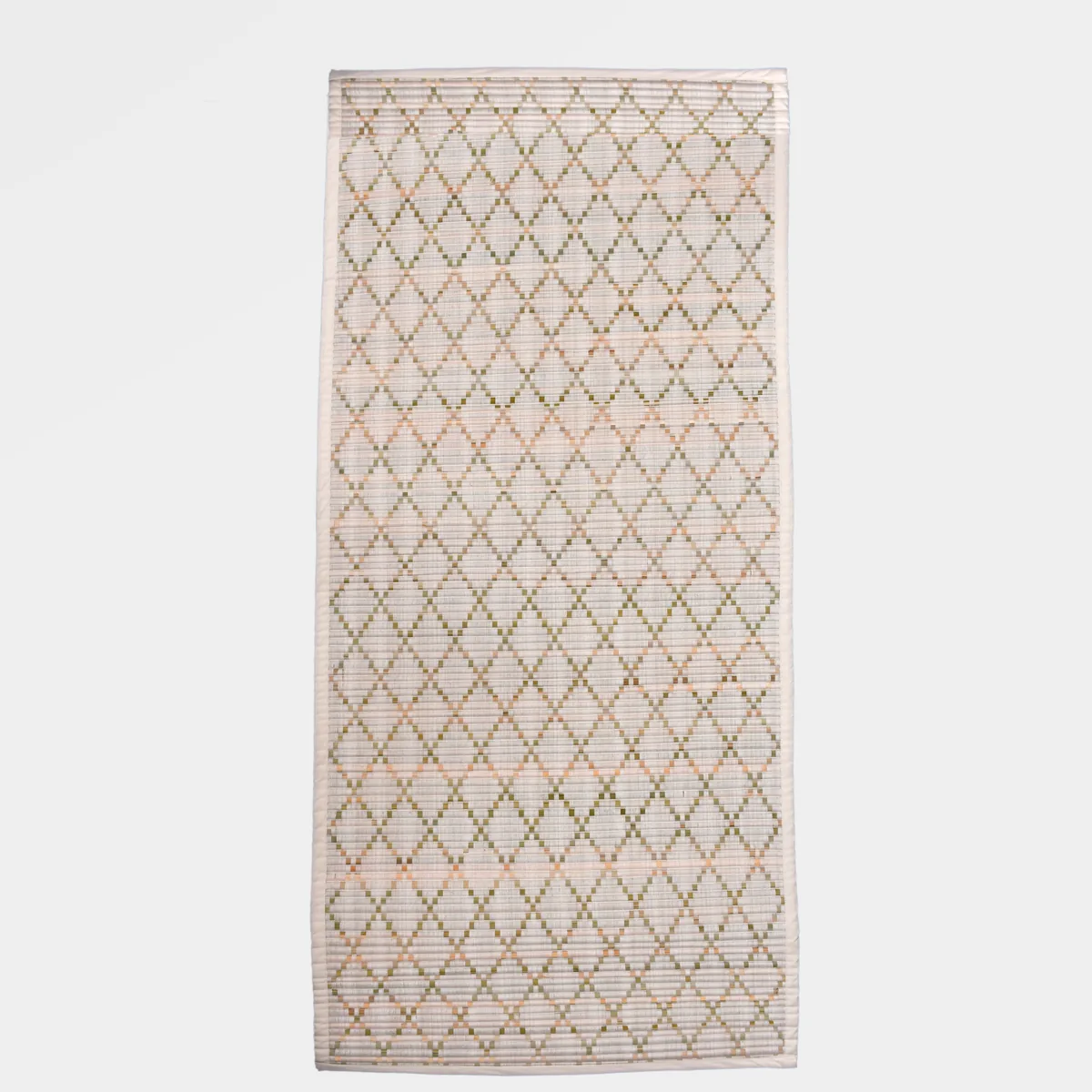
The Banana Fibre mat is woven from the bark and fibre of the banana stem, cotton-bound, 3 mm and about 1 kg. The Sambu Diamond is sambhu grass woven with organic cotton, also 3 mm and about 1 kg. Both are firm rather than cushioned, a real limitation against a 6 mm foam mat if you kneel a lot. Both carry the latex layer underneath. If you are allergic to natural latex, choose with care and write to us first.
Frequently asked questions
Do yoga mats release microplastics?
Foam mats made of PVC, TPE or similar plastics do, in the sense that the crumbs and dust they shed as they wear are plastic pieces under five millimetres, which is the standard definition of a microplastic. How much a mat sheds over its life has not, as far as we can find, been measured or published, so it cannot be compared precisely with larger known sources such as tyres and synthetic clothing.
Are microplastics from a yoga mat dangerous?
Nobody knows with confidence. The World Health Organization's 2019 review found microplastics in drinking water do not appear to pose a risk at current levels but said the evidence on the smallest particles is extremely limited. There is no study specific to yoga mat dust. The fair statement is: not shown to be harmful at observed levels, not shown to be safe, and not well measured.
Is a cotton or grass yoga mat free of microplastics?
The surface is: cotton, sambhu grass and banana fibre are plant materials, and what they shed is plant lint and dust. Our mats also have a thin natural latex layer underneath, which is a plant-derived rubber rather than a petroleum plastic. We do not claim the mats are certified biodegradable, because we have not had that tested.
What should I do with a flaking foam yoga mat?
Stop using it for daily practice, because the flaking only accelerates. Keep it out of sun and heat, and give it a second job where it is handled less, such as a kneeling pad or a pet mat. There is rarely a recycling stream for foam mats in Indian cities, so reuse is the realistic option.
If you would rather practise on something that sheds lint instead of plastic, start with the Banana Fibre or the Sambu Diamond, or see every mat we weave in the collection.