For yin and restorative yoga, the best mat is warm, a little soft, and wide enough to take a bolster and a folded blanket without anything sliding off. Grip matters far less than it does in a flowing class, because you spend the hour lying, kneeling or folded forward. We would suggest the 7 mm Diamond Clay for cushioning, the six-ply Prithvi rug for warmth and length, and the 90 cm wide Darbha grass mat for a cool, firm base in the hot months.

What long holds ask of a mat
In a yin class a shape might be held for three to five minutes; in restorative yoga, longer, fully supported by props. That changes what the mat is for.
Warmth from the floor
Lying still on a tiled or marble floor for twenty minutes draws heat out of the body, and a thin rubber mat does little to stop it. Woven cotton is a textile, and it behaves like one: it feels warm to the touch and insulates a little, which is the difference between settling into a pose and quietly shivering through it. Six-ply cotton is the warmest surface we weave. Our note on yoga nidra and savasana comfort covers blankets and winter floors in more detail.
Softness without wobble
Padding under hips, knees and the backs of the ankles makes long holds easier. But a very thick foam mat can be too soft when you are propped on a bolster, because the bolster sinks and tilts. Dense cotton at 5 to 7 mm is a good middle: enough give for a kneeling hold, firm enough that props stay level.
A surface props do not slide on
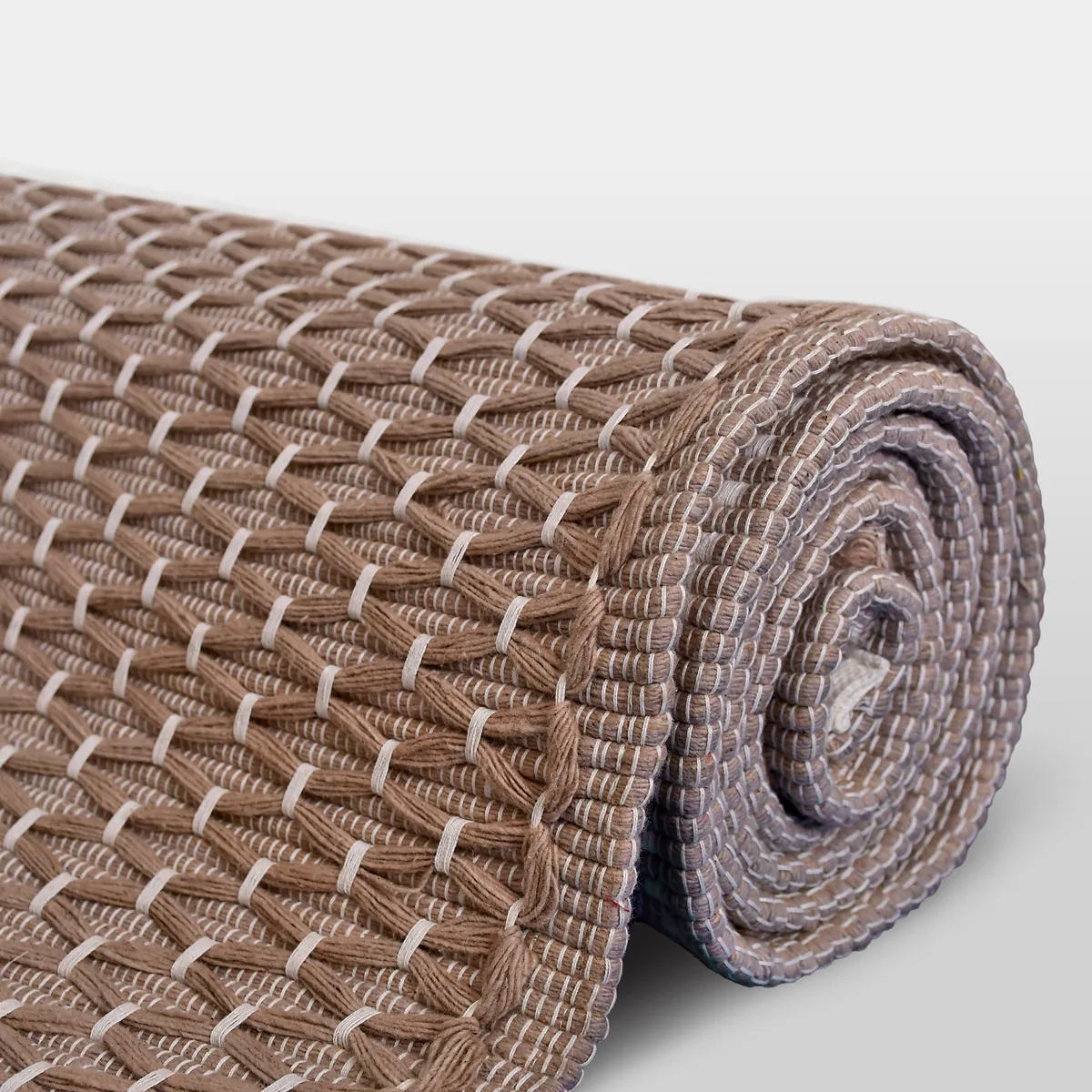
Bolsters, blocks and blankets need to stay where you put them. A woven cotton surface has a slight nap that holds a cotton bolster cover far better than a smooth plastic mat does; the raised lattice of the Diamond mats is especially good at this. Width helps too, since restorative shapes sprawl: our cotton mats are 68 to 69 cm wide and the Darbha is 90 cm.
Three mats for yin and restorative yoga
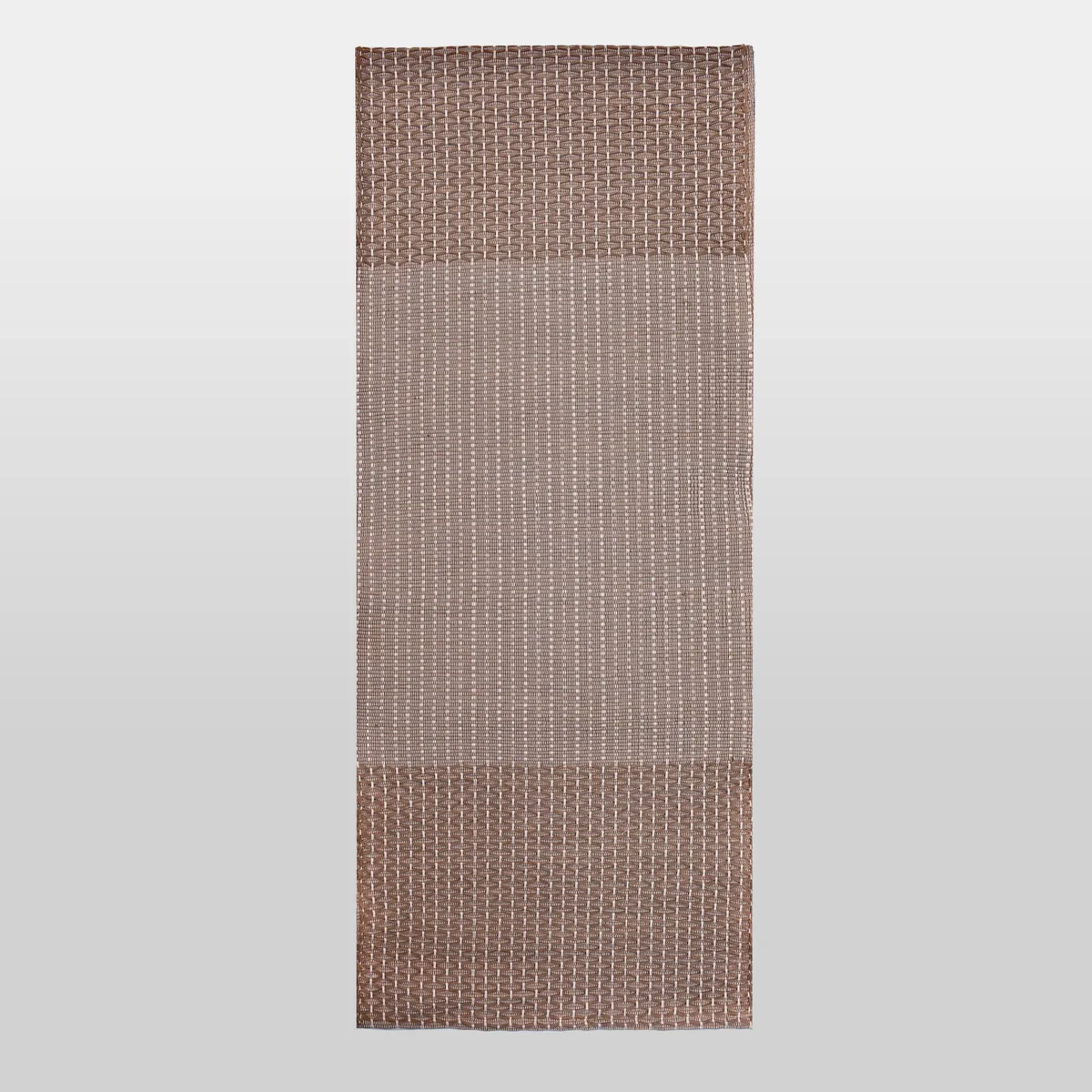
Diamond Clay: the most padding, machine washable
The Diamond Clay is 7 mm of GOTS-certified organic cotton, 183 × 68 cm and about 1.8 kg, with a raised diamond lattice that holds props in place and a clay colour from alkanet root. It can be machine washed on a delicate 30 °C cycle in a laundry bag, which is useful if the mat is shared or used daily. At the time of writing it costs ₹4,450.
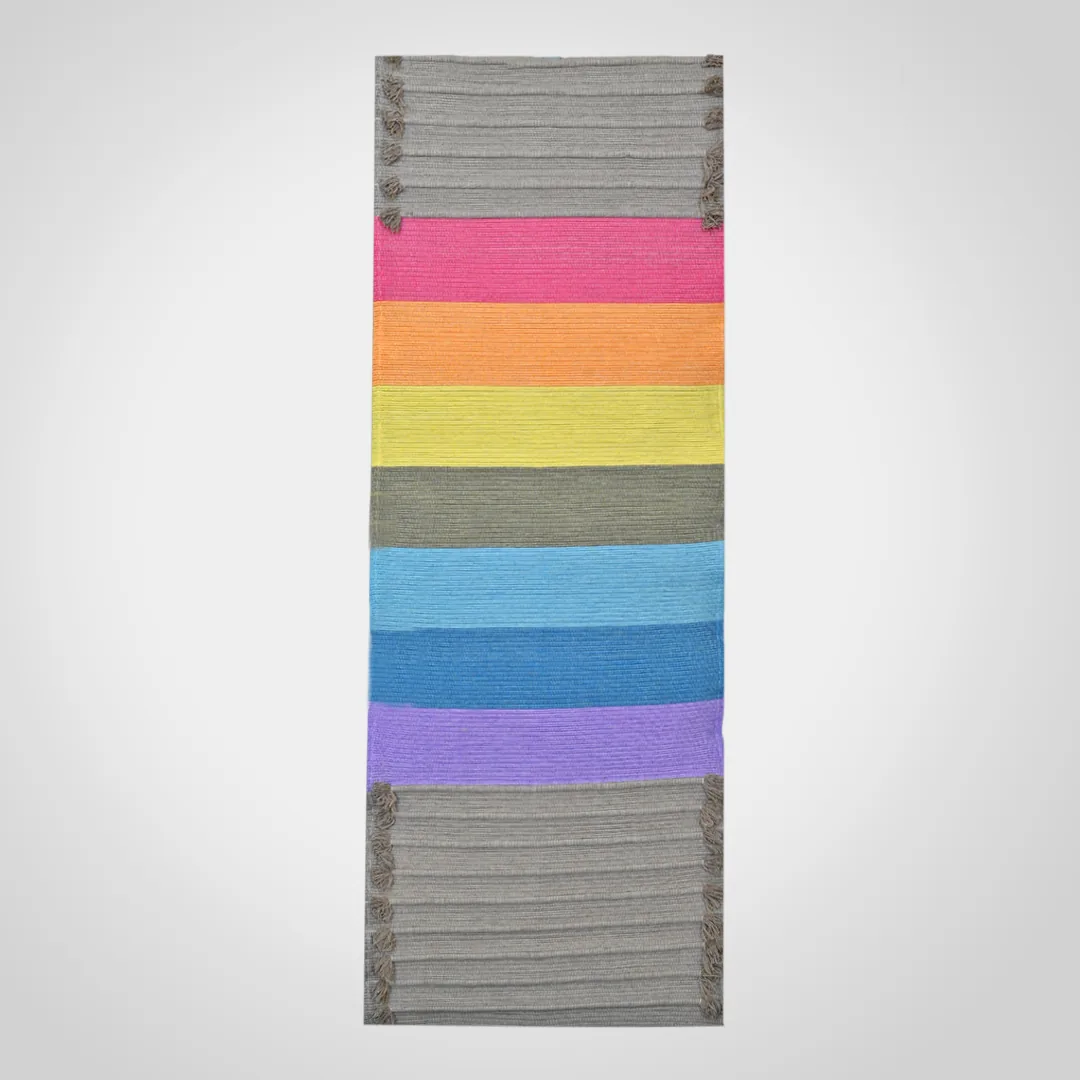
Prithvi: warm, long and soft
The Prithvi is a six-ply cotton rug, 5 mm thick and 188 × 69 cm, about 1.5 kg. The six-ply weave is the warmest and softest surface we make, so it is our pick for a restorative class on a cold floor or for anyone who feels the chill in savasana. It has an earth-toned ground with seven chakra bands and hand-knotted tassels. Hand wash cold and dry flat in shade. At the time of writing it costs ₹4,400.
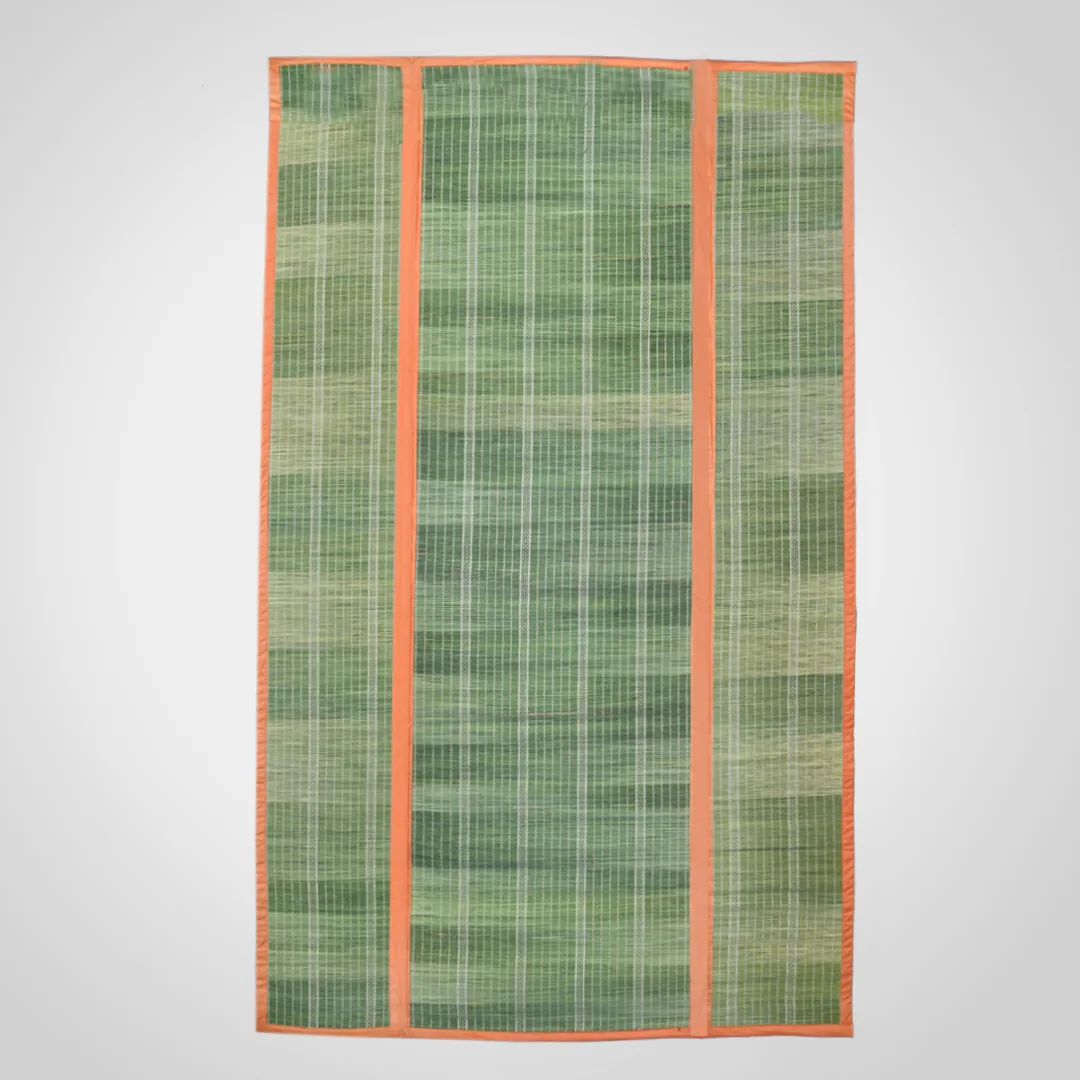
Darbha: a cool, wide base for summer
The Darbha is woven from darbha (kusha) grass in three panels, backed in cotton cloth, about 4 mm thick, 183 × 90 cm and about 1.2 kg. Grass is firm and cool rather than soft, so on its own it is not a cushioned surface. It earns its place in the hot months, as a cool, wide base on which blankets and a bolster do the softening. It folds flat for storage. At the time of writing it costs ₹4,999.
Which to choose
| Diamond Clay | Prithvi | Darbha | |
|---|---|---|---|
| Surface | Dense cotton, raised lattice | Six-ply cotton, soft | Firm grass, cool |
| Thickness | 7 mm | 5 mm | ≈4 mm |
| Width | 68 cm | 69 cm | 90 cm |
| Warmth on a cold floor | Good | Best | Low (add a blanket) |
| Props stay put | Very well | Well | Well, with cloth on top |
| Cleaning | Machine wash, delicate 30 °C | Hand wash cold | Wipe and air |
| Price at the time of writing | ₹4,450 | ₹4,400 | ₹4,999 |
If your floor is cold for half the year, the Prithvi. If you kneel a lot or share the mat, the Diamond Clay. If you practise through a Tamil Nadu summer with the fan on, the Darbha with a blanket folded on top.
Building the nest
A mat is only the base. Keep a folded cotton blanket for under the head and knees, a bolster or two firm pillows, and something to cover the eyes, and lay them on the mat before you start so you are not reaching mid-hold. If you have a back or hip condition, ask your teacher or doctor which supported shapes suit you; the mat and props are comfort, not treatment.
Frequently asked questions
Is a thick yoga mat better for yin yoga?
Some thickness helps, because yin holds are long and often kneeling or seated, but very soft foam lets bolsters sink and tilt. A dense 5 to 7 mm cotton mat is a good balance: enough give for the knees, firm enough that props stay level. Add a folded blanket under any joint that still complains.
Why does a cotton mat feel warmer than a rubber mat?
Woven cotton is a textile and insulates a little, like a thin blanket, so it does not draw heat from the body the way a thin rubber mat on a tiled floor does. For long, still holds on a cold floor that difference is easy to feel. Six-ply cotton is the warmest weave we make.
Can I use a grass mat for restorative yoga?
Yes, as a base. A darbha grass mat is firm and cool, so it is not cushioned on its own, but it is 90 cm wide and stays flat, which makes it a good platform for blankets and a bolster in hot weather. In winter you will want cotton or a blanket layer on top.
For a quiet, warm practice start with the Prithvi, or browse our meditation and seated mats. If most of your practice is sitting rather than lying, our guide to the best meditation mat picks up where this one ends.