A floor feels cold in savasana because tile, marble and cement draw warmth out of your back for as long as you lie still, and in yoga nidra that can be twenty minutes or more. A woven cotton mat keeps you noticeably warmer than a thin rubber or foam one, and a folded blanket under you, another over you, a bolster under the knees and something over the eyes do the rest. Here is how we set up for the long lie-down.

Why the floor feels colder lying down than standing
In standing poses you move, and only your feet touch the floor. In savasana your whole back is in contact, you are still, and your breathing slows. Stone, tile and cement carry heat away from skin faster than wood or cloth do, which is why they feel cold to the touch even in a warm room. Most Indian flats have exactly these floors, and winter mornings in the north, or an air-conditioned studio anywhere, make the effect sharper.
The sweat from your practice adds to it. Lying still, damp skin cools quickly, so even on a warm evening the last pose can leave you shivering if nothing absorbs the moisture.
Cotton warmth versus rubber chill
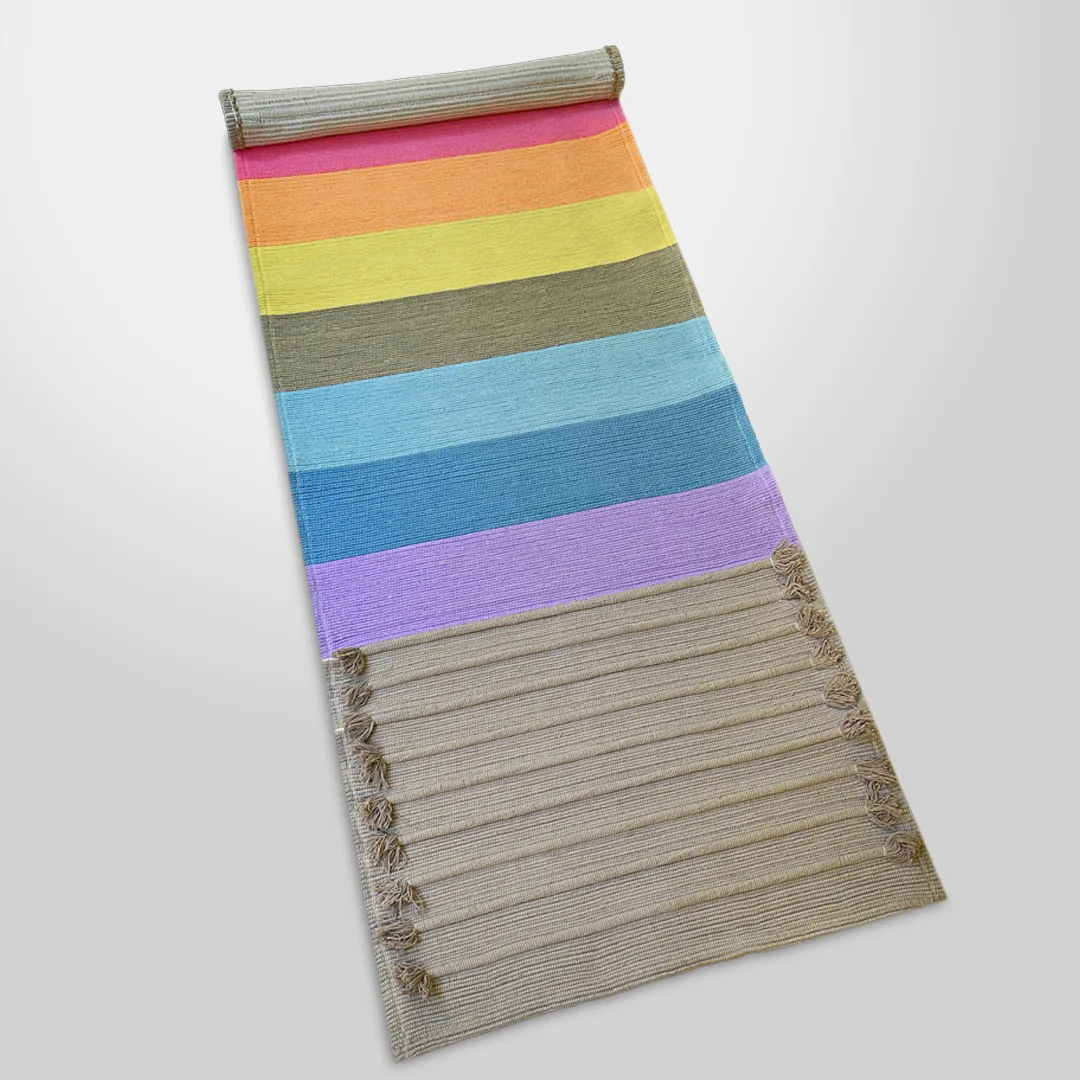
A woven cotton mat holds a layer of air in its fibres and takes up dampness from your skin, so it warms under you the way a bedsheet does. A rubber or foam mat insulates too, and a thick one does it well, but its surface is smooth and non-absorbent: damp skin on rubber feels cool and slightly clammy once you stop moving. If your savasana is always the cold part of class, that is usually why.
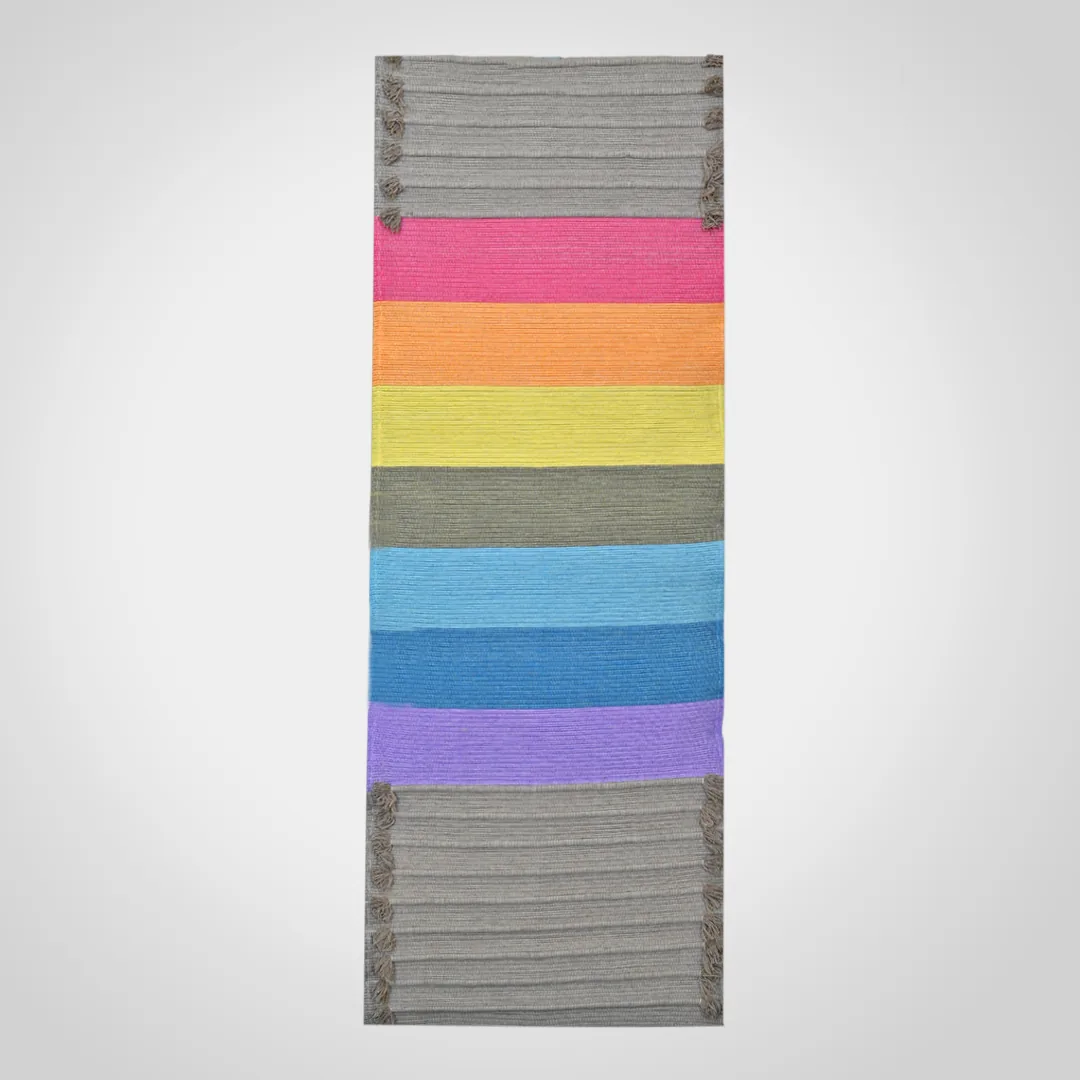
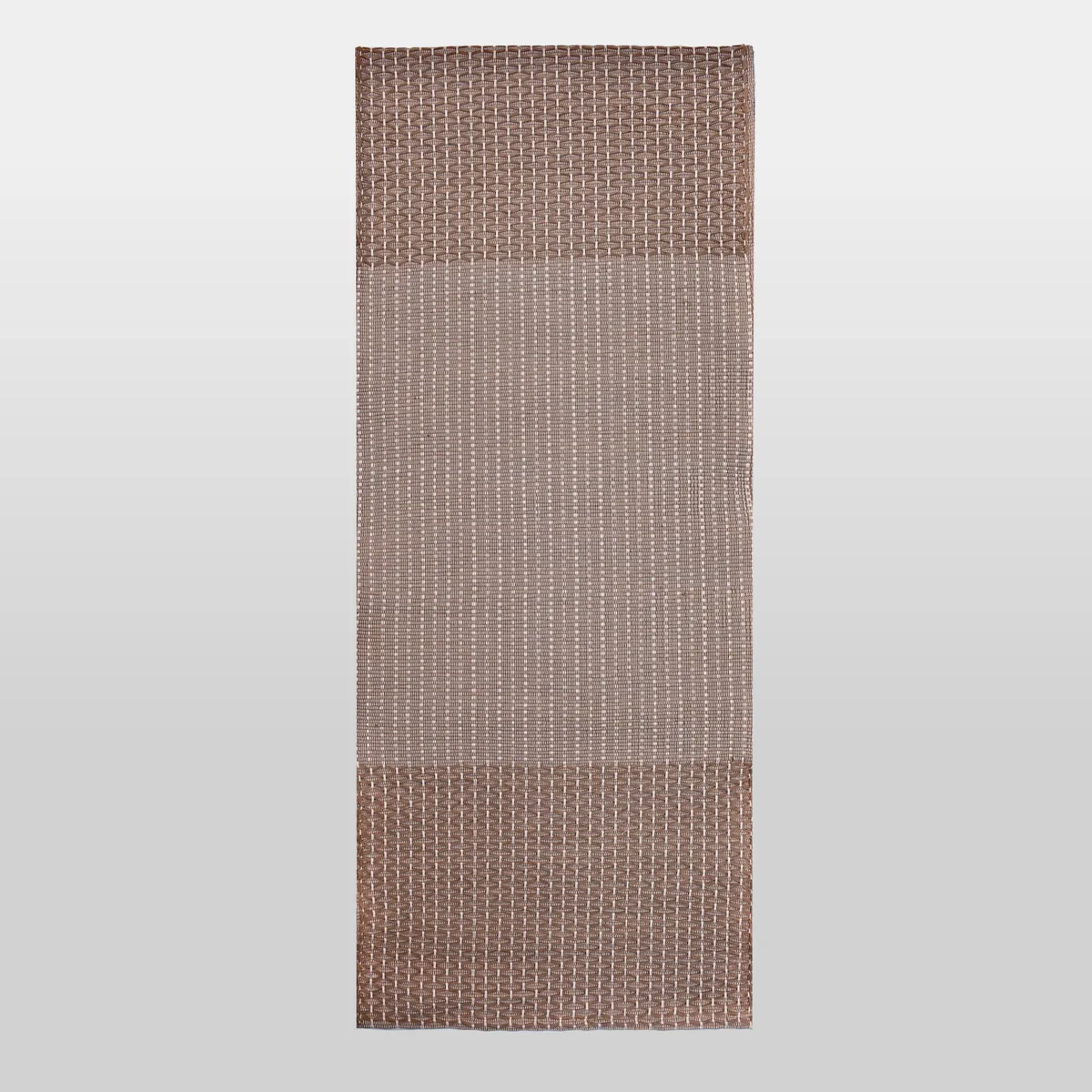
Two of ours suit the long lie-down particularly well. The Prithvi is six-ply GOTS-certified organic cotton, 5 mm thick and 188 cm long, so taller people lie fully on cloth, with earth tones that are easy on half-closed eyes. The Diamond Clay is the thickest mat we weave at 7 mm, and that extra density under the sacrum, shoulder blades and heels is what you feel in a long hold. Both have a thin layer of natural tree latex brushed onto the underside so they stay put on tile. If you are allergic to natural latex, choose with care and write to us first.
Blankets, bolsters and the small adjustments
Under you
Fold a cotton blanket lengthways and lay it along the centre of the mat so your spine, from head to tailbone, rests on two layers of cloth. On a cold floor this matters more than the mat's thickness. If you only have a shawl, fold it under the shoulder blades and head, where the bones are closest to the surface.
Over you
Lay a second blanket or shawl over yourself before you lie down, not after. Once you are settled you will not want to reach for it, and in yoga nidra you should not have to.
Under the knees
A bolster or a tightly rolled blanket under the knees lets the lower back settle towards the floor. A small folded towel under the head helps if your chin tips upwards. Ask your teacher to look at the set-up once; small changes in height make a large difference to comfort.
Over the eyes
An eye pillow or a folded cloth over the eyes shuts out the ceiling light and tells the face to stop working. Draw the curtains in the daytime. In yoga nidra the eyes stay closed for a long time, and even a dim room feels bright through the lids.
Feet and hands
Socks are fine in savasana even if you practise barefoot, and a shawl over the feet is often all the extra warmth you need. Keep a pair by the mat so you do not have to look for them.
A set-up by season
| Where and when | What to lay down | What to add |
|---|---|---|
| Winter morning on tile or marble | Cotton mat plus a folded blanket along the spine | Blanket over you, socks, eye cover |
| Air-conditioned studio | Cotton mat | Shawl over you and the feet, bolster under knees |
| Warm evening, fan on | Cotton mat alone | Thin cotton sheet over you, eye cover; turn the fan down |
| Terrace at dusk | Cotton mat over a sheet to keep off grit | Shawl, eye cover; bring the mat in before dew falls |
After the practice
Cotton takes up sweat and the damp of a still body, so unroll the mat and let it air flat in the shade before you put it away, never in direct sun, which fades plant dyes. The Prithvi is hand washed cold with a mild natural detergent and dried flat in shade; the Diamond Clay can take a delicate 30 °C machine cycle in a laundry bag. Full instructions are on our Mat care page. For the fuller picture on long, slow practice, read our guide to the best mat for yin and restorative yoga, and if you mostly lie or sit rather than flow, the meditation mat guide covers firmer, cooler surfaces too.
Frequently asked questions
Why does the floor feel so cold in savasana?
Tile, marble and cement carry heat away from skin faster than wood or cloth, and in savasana your whole back lies still against the floor for several minutes while your breathing slows. Damp skin after practice cools quickly too. A woven cotton mat and a folded blanket along the spine insulate you from the floor, and a second blanket over you keeps the warmth in.
Is a cotton mat warmer than a rubber mat for savasana?
In our experience, yes. Woven cotton holds air in its fibres and absorbs dampness from the skin, so it warms under you like a bedsheet. A rubber or foam mat insulates as well, but its smooth, non-absorbent surface feels cool and slightly clammy against damp skin once you stop moving. On a cold floor, a blanket under you matters more than either.
What should I put under my knees in savasana?
A bolster or a tightly rolled blanket under the knees lets the lower back settle towards the floor and is the most common comfort adjustment for lying poses. A small folded towel under the head helps if your chin tips upwards. Ask your teacher to check the heights once, because small changes make a large difference.
Can I do yoga nidra on a grass mat?
You can, with a folded blanket on top. Our Darbha grass mat is firm, cool and backed in cotton cloth, which is welcome on a hot night but not on a cold floor. For winter or an air-conditioned room, a cotton mat such as the Prithvi or the 7 mm Diamond Clay with a blanket over it is the warmer choice.
If your savasana is the cold part of class, start with the Prithvi, add a folded blanket, and see whether the shivering stops; the 7 mm Diamond Clay is there if you want more underneath.