A home yoga corner in an Indian flat needs about 2 metres by 1.2 metres of clear floor, a mat that holds on tile or marble, a fan or window you can control, and somewhere to put the mat away so the corner stays inviting. It does not need a separate room. Here is how we would set one up, from the floor upwards.
How much space you actually need
Our mats are 183 to 188 cm long and 68 to 90 cm wide. Add an arm's reach on each side for wide-legged poses and a little at each end for the hands in a forward fold, and you arrive at roughly 2 m by 1.2 to 1.5 m. That is the end of a corridor, the gap beside the bed, or the space between sofa and television once the coffee table is pushed aside. Measure before you decide, and check the ceiling: a standing stretch with raised arms wants a clear run above you, which rules out the spot under the fan at its lowest setting. Our size guide has the numbers for mats and rooms.
The floor: tile, marble, mosaic or wood
Most flats here have vitrified tile, marble or, in older houses, red oxide and mosaic. These floors are hard, cool and dusty, and dust is the real enemy of grip. Sweep or mop the patch before you practise; a dry cloth over the tiles takes ten seconds and makes more difference than any mat feature.
Our cotton and grass mats have a thin layer of natural tree latex brushed onto the underside, which is what holds them on tile, marble and wood. If you are allergic to natural latex, choose with care and write to us first; the Darbha, backed in cotton cloth, is the exception. If the corner has a rug or carpet, pull it aside and practise on the hard floor; mats behave better there. More on this in our guide to mats for tile, marble and wooden floors.
Light and air: window and fan placement
Morning light from a window is the best light to practise in, but direct sun on a mat fades plant dyes, so place the mat where the sun does not fall on it, or roll it away after practice rather than leaving it in the patch of light.
A ceiling fan is a blessing from April to October. Run it on a low setting rather than full: at full speed directly overhead it cools sweat so fast that savasana turns chilly, and it dries the surface of a cotton mat until your palms slip. In an air-conditioned room the air is dry for the same reason, so dampen your palms before Surya Namaskar and let the mat warm up. In the monsoon, open a window after practice and let the mat air flat before it goes away.
Choosing a mat you will see every day
In a shared room the mat is also furniture. Three of ours earn their place on the floor.
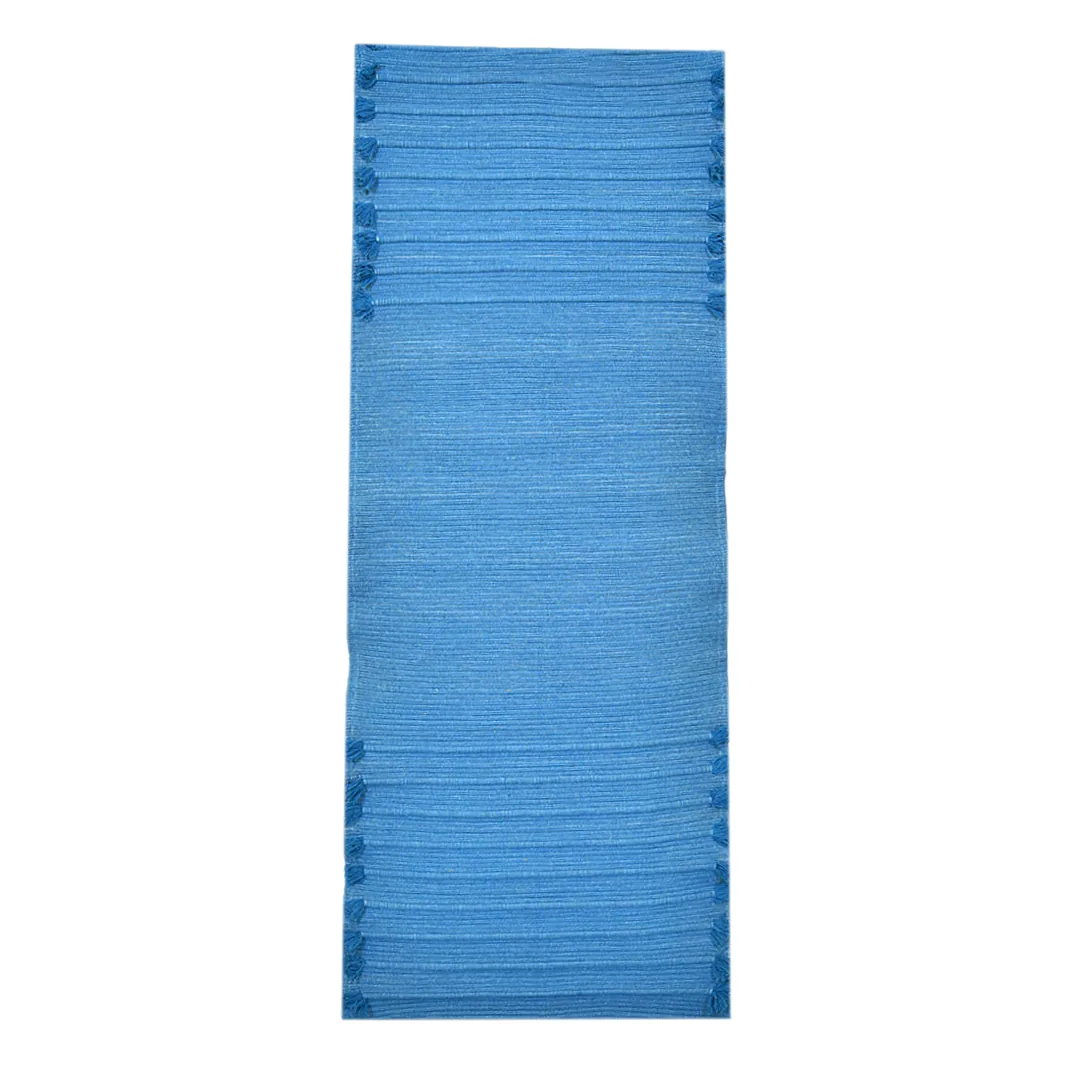
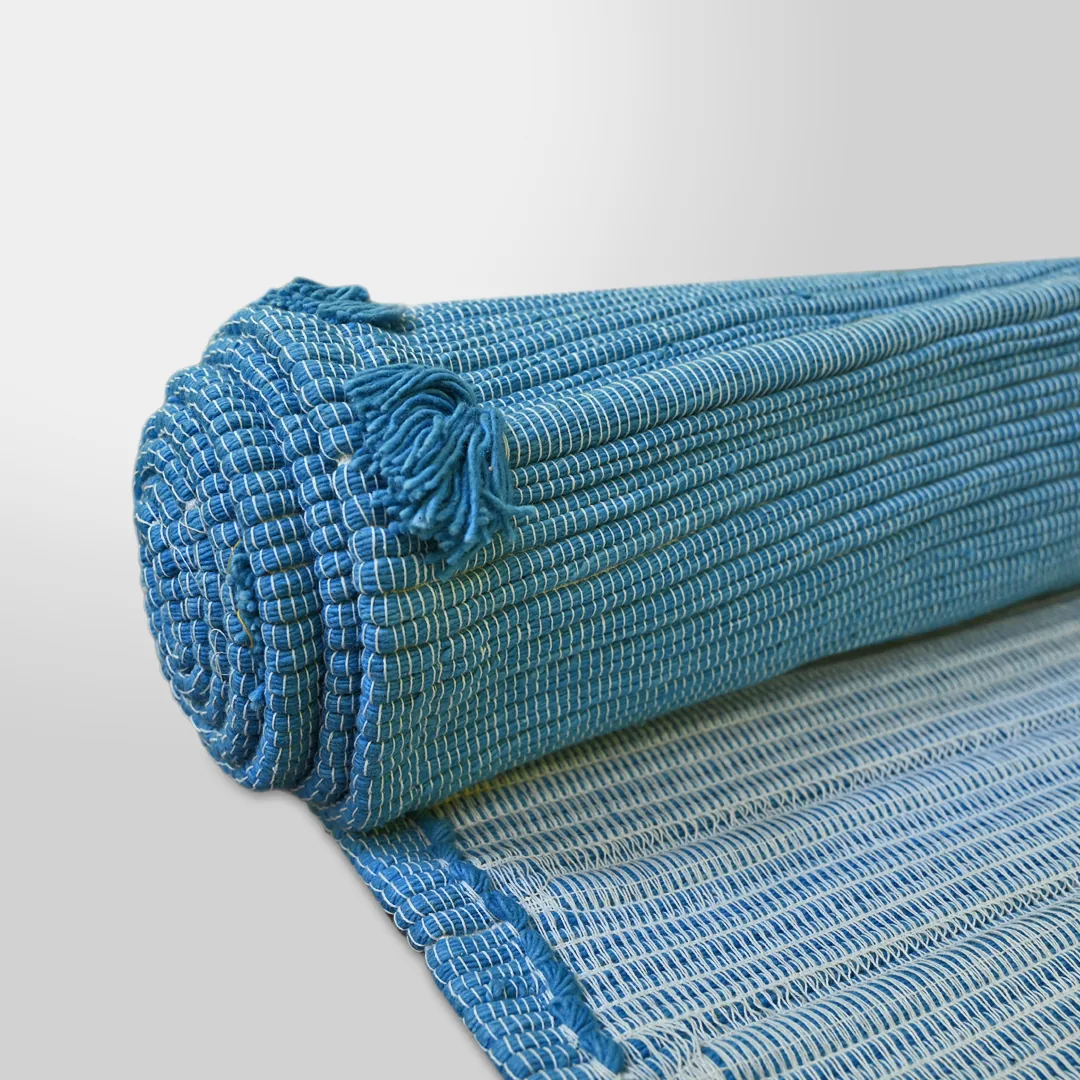
The Indico is plain indigo-dyed organic cotton in a ribbed weave with hand-knotted tassels, 5 mm thick. Unrolled, it reads as a woven rug, and the single colour sits quietly in any room.
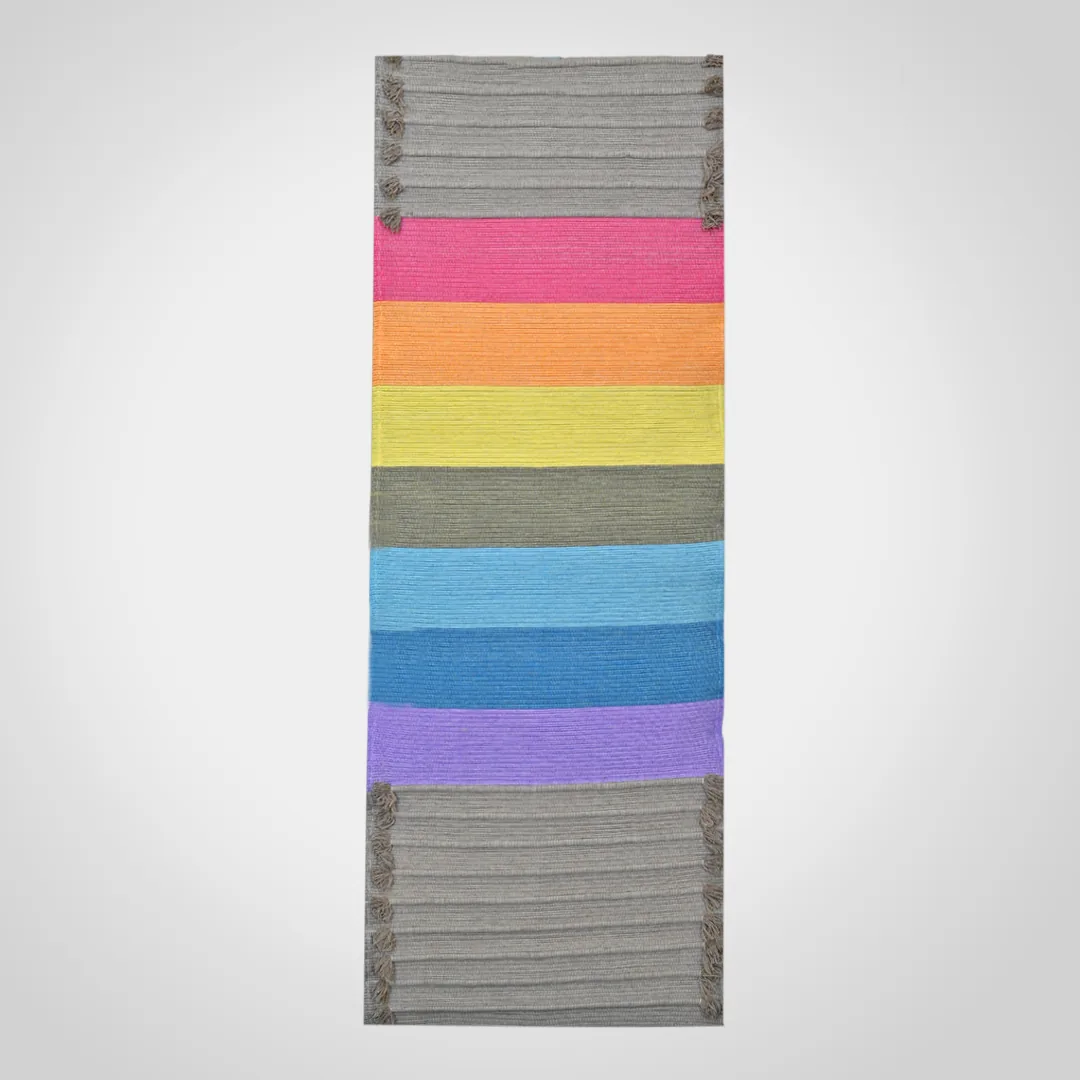
The Prithvi is a six-ply cotton rug with seven chakra colour bands on an earth-toned ground and tassels at both ends. It is the one people leave out, because it looks like it belongs there, and at 188 cm it is our longest.
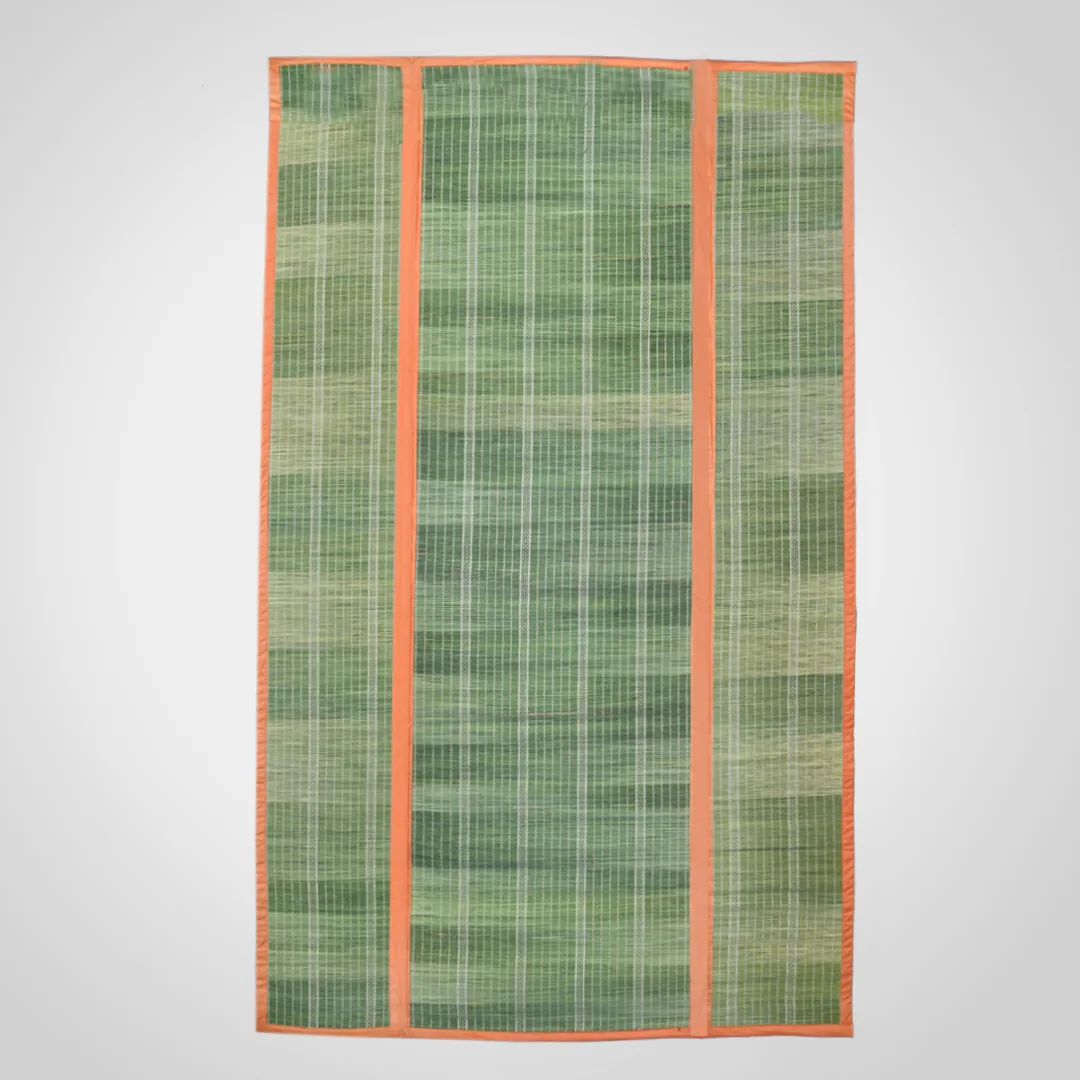
The Darbha is a darbha grass mat in three panels, bound in orange cotton and backed in cloth, so it folds flat into a cupboard. It is wide at 183 × 90 cm, cool, and firm, and on a hot night it doubles as a sleeping mat on the floor, which in a small flat is a second use for the same object.
At the time of writing our mats cost about ₹1,700 to ₹5,000, and the full range is in the collection.

Storage that keeps the corner tidy
Roll cotton and grass mats; fold only the Darbha, along its panels. A tall basket in the corner, a hook on the wall with a cotton strap, or a cotton bag under the bed all work. Two rules matter more than where: never roll a mat damp, and never store it in a cupboard that smells of monsoon. Air it flat in shade first. Our note on rolling and folding covers the details.
Keeping it inviting
The corners that get used are the ones that are ready. Keep the floor clear of laundry and bags, so the only thing to do is unroll the mat. Put a block, a folded blanket and an eye cover on one shelf within reach. A lamp at floor level makes evening practice gentler than the overhead light. Leave the phone in another room, or at least face down out of reach. A plant does no harm. Same spot, same time, most days: the corner does the remembering for you.
The corner at a glance
| Element | Minimum | Nice to have |
|---|---|---|
| Floor space | 2 m × 1.2 m, swept | 2 m × 1.5 m, nothing stored on it |
| Floor | Hard tile, marble or wood | Rug pulled aside, dust cloth to hand |
| Mat | One that holds on tile | One you are happy to see unrolled |
| Air | Window or fan on low | Cross-ventilation, fan not directly overhead |
| Light | Indirect daylight | Floor lamp for evenings, curtain for savasana |
| Storage | A dry corner to roll into | Basket or hook, cotton bag |
| Props | A blanket | Block, bolster, eye cover on one shelf |
Frequently asked questions
How much space do I need for yoga at home?
About 2 metres by 1.2 to 1.5 metres of clear floor: a mat is 183 to 188 cm long and 68 to 90 cm wide, and you need an arm's reach either side for wide stances and a little at each end for forward folds. The end of a corridor, the gap beside a bed or the space in front of a sofa once the table is moved is usually enough. Check that you can raise your arms without meeting the fan.
Which yoga mat is best for a tile or marble floor at home?
One that holds without sliding. Our cotton and grass mats have a thin layer of natural tree latex brushed onto the underside for grip on tile, marble and wood. Sweep the floor first, because dust is what makes mats slip. If you are allergic to natural latex, choose with care and write to us first; the cloth-backed Darbha is the mat without latex.
Where should I store a yoga mat in a small flat?
Rolled in a tall basket, hung on a hook with a cotton strap, or in a cotton bag under the bed. The Darbha grass mat folds flat along its panels and fits a cupboard shelf. Never roll a mat while damp and never store it in a musty cupboard; air it flat in shade after practice, out of direct sun.
Can I practise yoga under a ceiling fan?
Yes, on a low setting. At full speed directly overhead a fan cools sweat too fast and leaves you cold in savasana, and it dries the surface of a cotton mat so that palms slip. Set the mat a little to one side of the fan, run it low, and dampen your palms if the air is very dry.
If you are choosing the mat that will live in the corner, the Indico is the quiet one and the Prithvi the one you leave unrolled; both are in our cotton collection.