For yoga on a terrace, in a garden or on a beach, the right mat is light, firm, easy to shake clean and happy to be wiped rather than washed, which means a grass or banana fibre mat rather than a soft cotton rug. Our Darbha folds flat and has a cloth back that takes rough cement without complaint, the Sambu Diamond weighs about a kilo, and the undyed Banana Fibre has no plant colour for the sun to fade. Whatever you take, keep it out of direct sun when you are not on it, and shake it before you roll it.
What an outdoor surface does to a mat
A terrace floor is rough cement or tile, warm by mid-morning, with grit, dust and the occasional gift from a bird. A garden is damp underfoot, uneven, and wet with dew until the sun has been up a while. A beach pushes sand into every weave and leaves salt behind. None of this harms a mat that is firm and wipeable; all of it is a nuisance for a dense 5 or 7 mm cotton rug, which holds sand and grit until it is washed. A cotton mat on a swept terrace at dawn is lovely, but for everyday outdoor practice we reach for grass.

Our three outdoor picks
Darbha: folds flat, cloth-backed
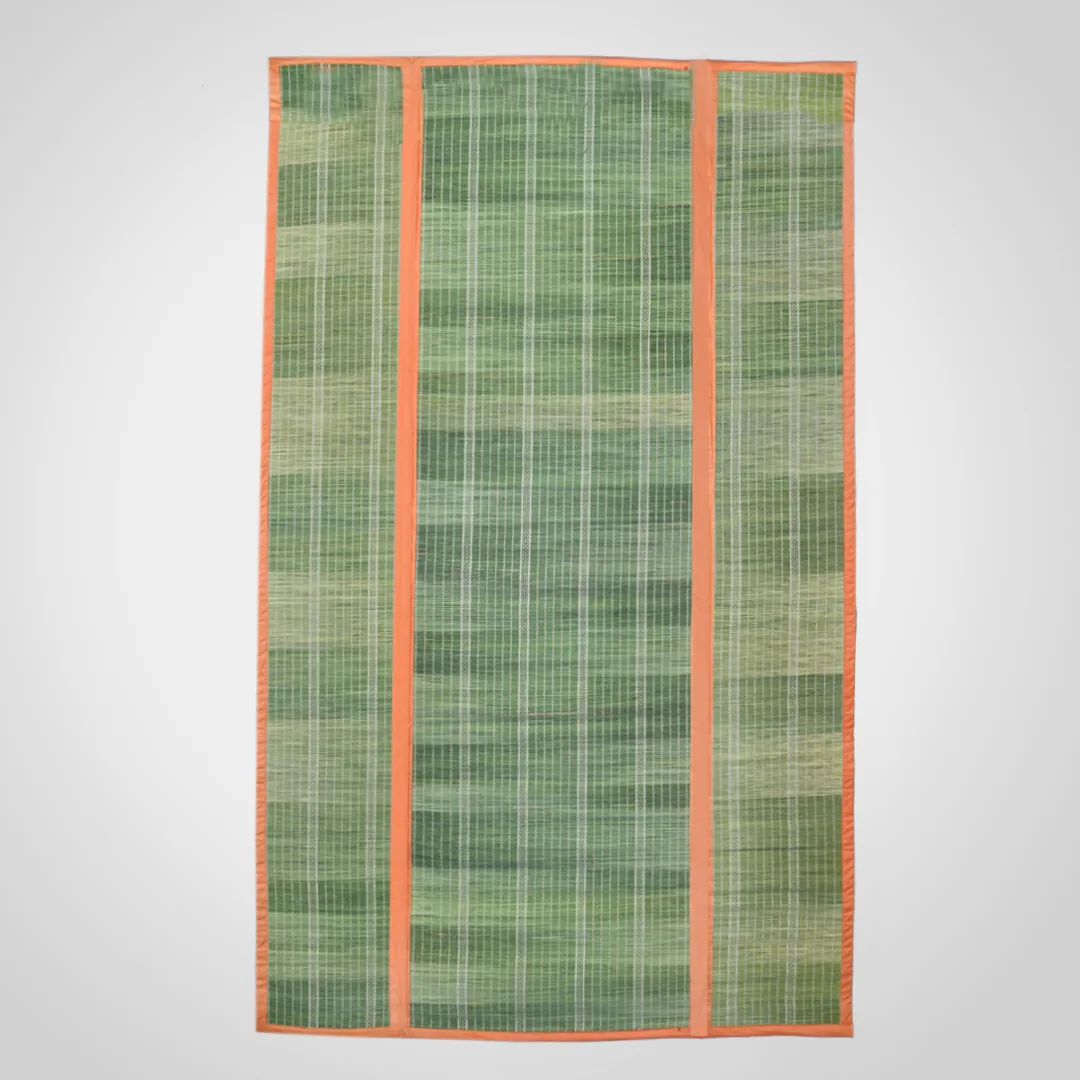
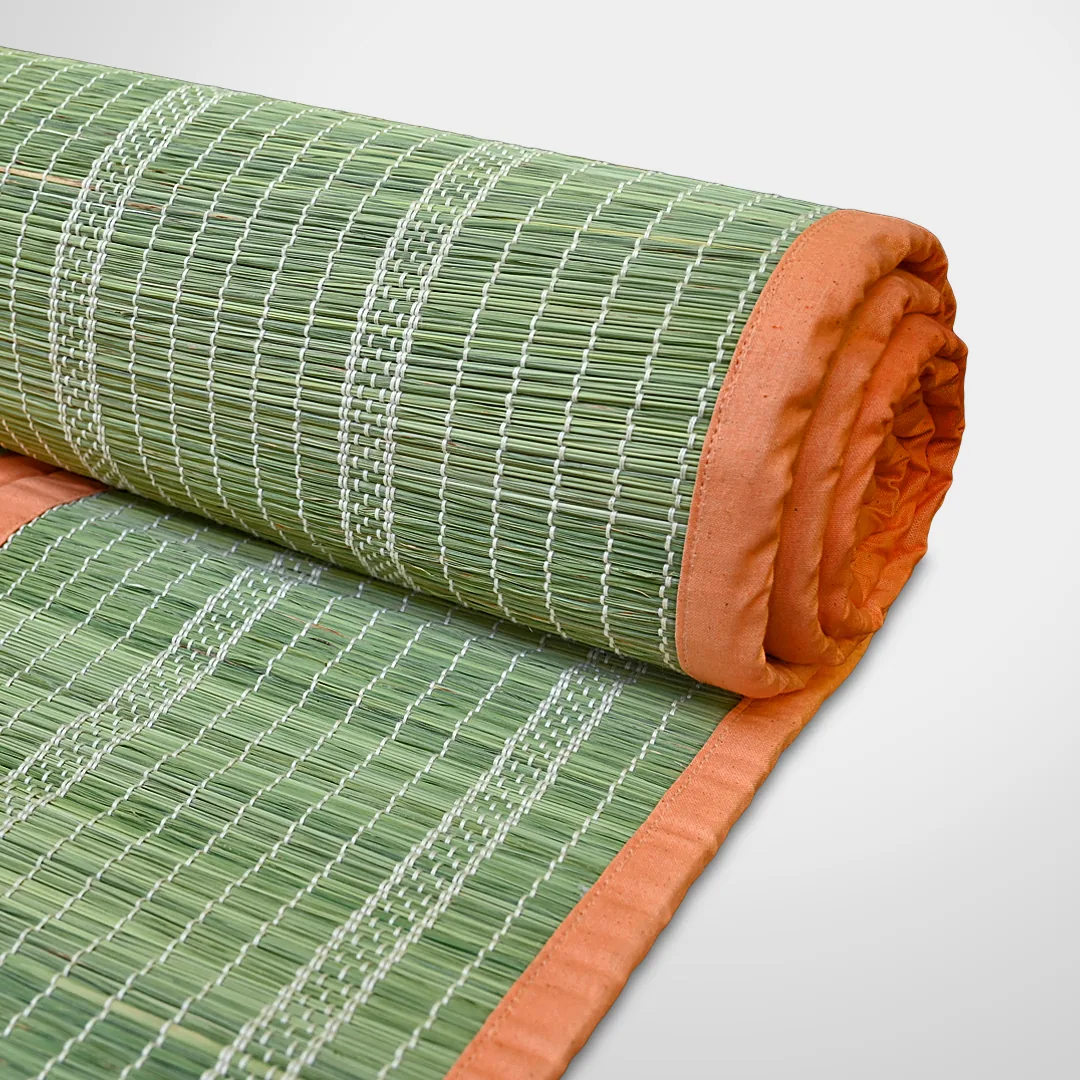
The Darbha is darbha (kusha) grass woven in three panels, bound in orange cotton and backed in cotton cloth, so it folds flat rather than rolling and slips into a bag. At 183 × 90 cm it is wider than our other mats, which is welcome when the ground is uneven and your stance wanders. It is firm and cool, not cushioned, and it has no latex layer: the cloth back is what meets the terrace. Keep it dry; dew is its only real enemy.
Sambu Diamond: a kilo of cool grass
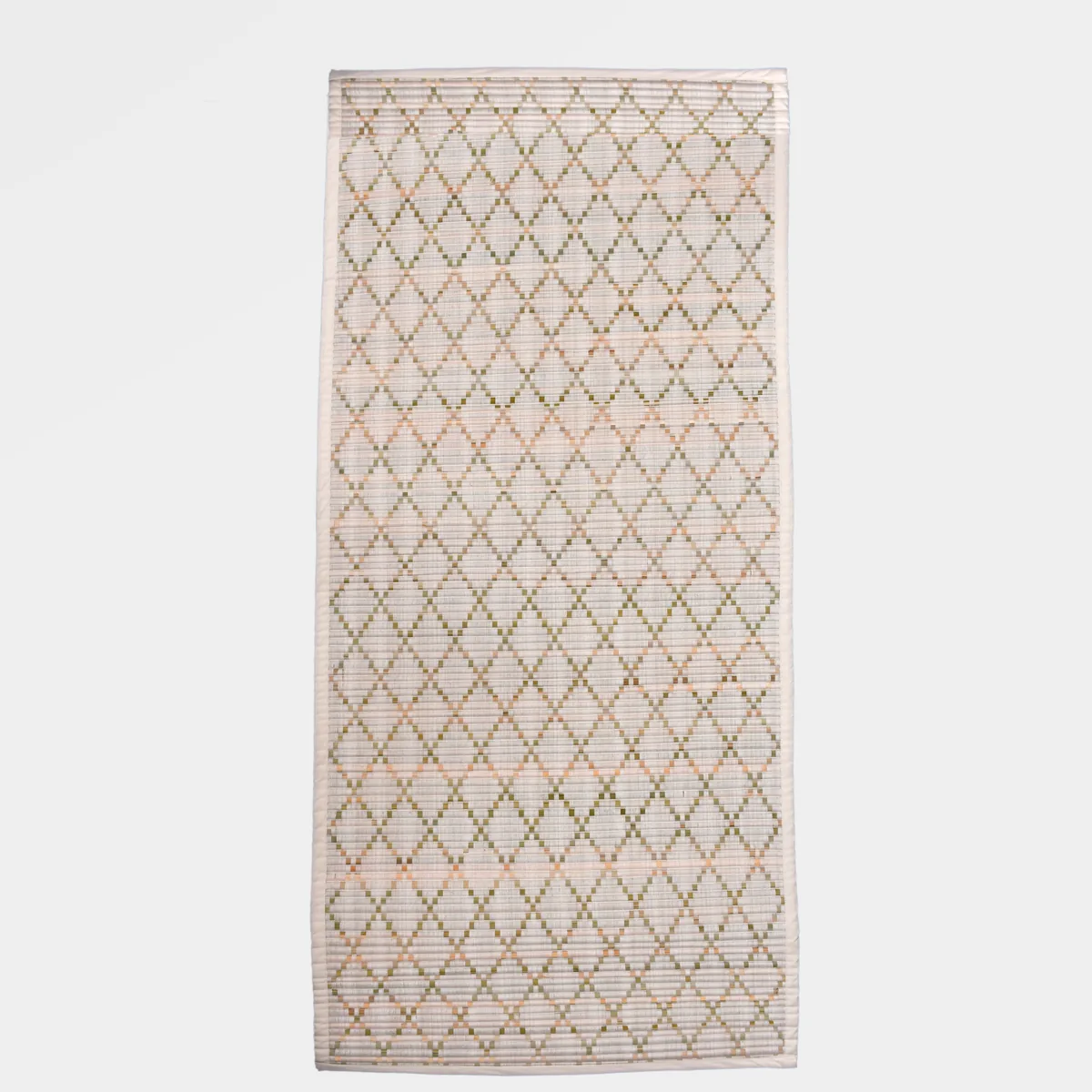
The Sambu Diamond is sambhu grass woven with organic cotton, 3 mm thick and about 1 kg, with a plant-dyed diamond lattice in green and peach. The grass stays cool against the skin on a warm terrace, and the mat shakes clean. A thin layer of natural tree latex on the underside holds it on tile and cement.
Banana Fibre: nothing to fade
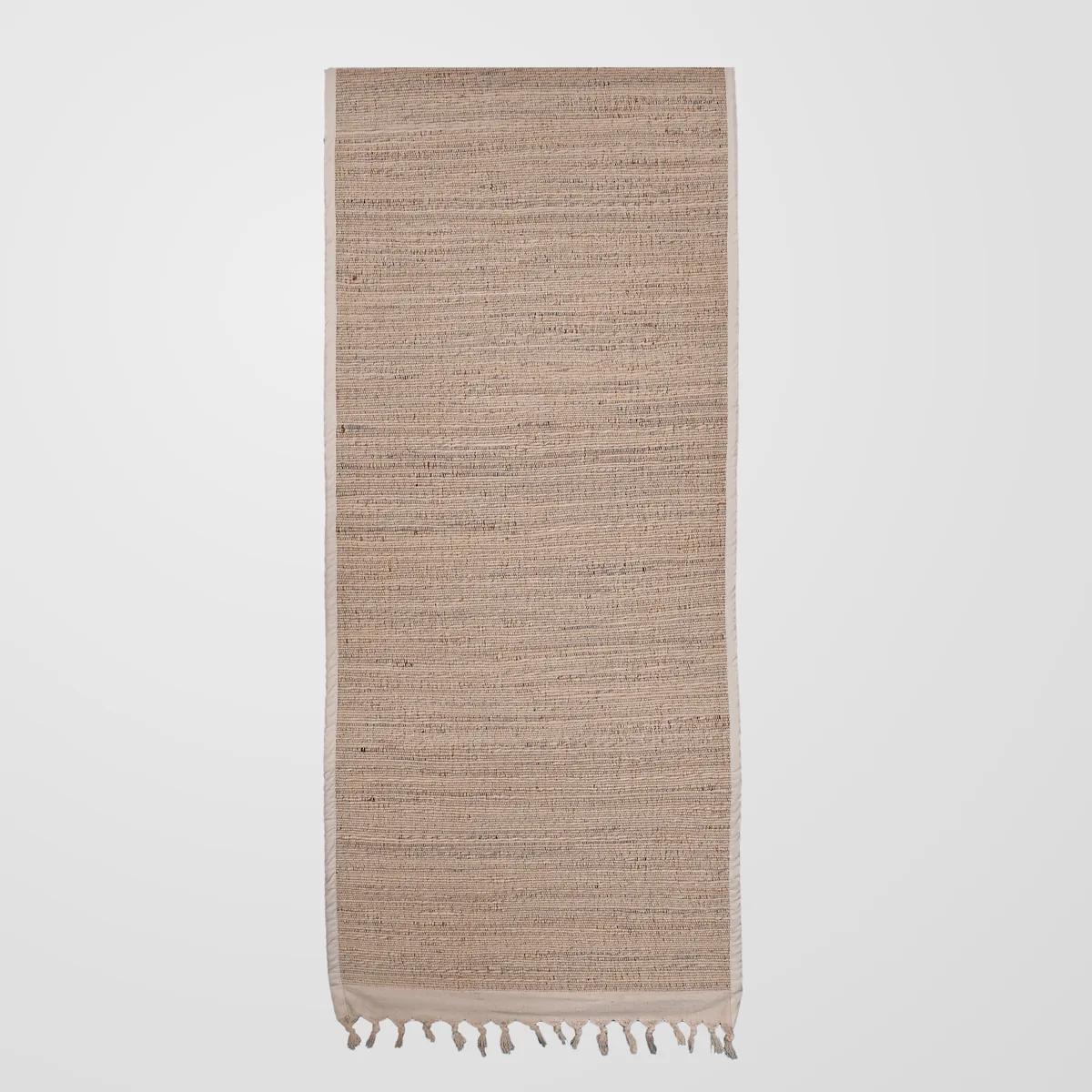
The Banana Fibre mat is natural banana bark and fibre, cotton-bound, 3 mm thick and about 1 kg. It is undyed, so there is no plant colour for the sun to soften, and its firm texture suits seated practice and pranayama on the terrace as well as standing work. Like the Sambu mats it has a natural latex layer underneath.
If you are allergic to natural latex, choose with care and write to us first; the Darbha, with its cloth back, is the one without latex.
Sun and plant dyes
Sun fades plant dyes. That is true of the chakra rugs, the Indico, the Diamond mats and the plant-dyed lattice on the Sambu Diamond, and it is the single biggest reason not to leave a mat lying on the terrace between practices. Practise in early or late light, bring the mat in afterwards, and dry it in shade, never in the sun. For practice in the full midday sun, the undyed Banana Fibre and the natural grass of the Darbha give the sun least to work on, though any natural fibre lightens with long exposure, so even these are better brought indoors.
Dew, damp and sand
On a lawn, wait until the dew has dried or lay a cotton sheet under the mat. Never roll or fold a damp grass mat; air it flat in shade until it is fully dry, or mildew follows. Lawns are also soft and uneven, so balance poses are harder than indoors; choose the firmest patch of ground you can find.
On a beach, shake the mat hard, then brush both sides with a soft brush. Sand clings to the latex underside, so brush that too, but do not wash it off under a tap: grass and banana mats are never soaked. Salt air is damp air, so give the mat a long airing when you get home.
Which mat where
| Surface | Our pick | Watch for |
|---|---|---|
| Cement or tiled terrace | Darbha or Sambu Diamond | Grit; sweep first. Heat by late morning |
| Garden lawn | Darbha (wide, cloth-backed) | Dew and soft ground; dry flat afterwards |
| Beach | Banana Fibre or Sambu Diamond | Sand in the weave; brush, do not wash |
| Shaded verandah | Any, including cotton | Dust; shake and air |
Cleaning afterwards
Grass and banana mats are shaken out, wiped with a damp cloth and aired in shade; never soaked, never machine washed. The Darbha is wiped, aired in shade, kept dry and folded along its panels for storage. Our step-by-step is in how to clean a grass yoga mat, and if your outdoor practice is also a travelling one, the foldable travel mat guide weighs the same three mats for the suitcase. In the wet months, how to dry a mat in the monsoon matters more than anything here.
Frequently asked questions
Can I use a cotton yoga mat outdoors?
Yes, on a swept terrace or verandah in early or late light. The drawbacks are that a dense cotton rug holds sand and grit until it is washed, and that sun fades its plant dyes, so it should never be left out between practices. For regular outdoor practice a grass or banana fibre mat is lighter, firmer and shakes clean.
Which yoga mat is best for a terrace?
A firm, light mat that wipes clean: our Darbha, which folds flat and has a cotton cloth back, or the Sambu Diamond at about 1 kg with a natural latex layer that holds on cement and tile. Sweep the terrace first, practise before the floor heats up, and bring the mat indoors afterwards.
Does sunlight damage a yoga mat?
Sun fades plant dyes, so our dyed mats should be used in soft light and dried in shade. Any natural fibre lightens with long exposure. The undyed Banana Fibre and the natural grass of the Darbha give the sun least to work on, but even these last longer if they are not left out all day.
How do I get sand out of a grass yoga mat?
Shake the mat hard, then brush both sides with a soft brush, including the latex underside, where sand clings. Do not rinse it under a tap or soak it; grass and banana fibre mats are only ever wiped with a damp cloth. Air it flat in shade afterwards, because sea air leaves the fibres damp.
If your practice happens on the terrace, start with the Darbha for its width and cloth back, or the lighter Sambu Diamond if you carry it further; both sit in our travel collection.