Sambhu grass is a river grass that we weave together with organic cotton on handlooms in Komarapalayam, Tamil Nadu. The grass gives a firm, open surface that feels cool and dry against the skin, and the cotton holds it together and takes the colour. The result is a 3 mm mat weighing about a kilo that suits hot weather, sweaty practice and long sits, with the honest limits of any grass mat: it is not cushioned, and it must never be soaked.

What the grass is
We are weavers, not botanists, and we would rather not pin a Latin name on sambhu grass that we cannot stand behind. Here is what we know from working with it. It is a tall grass that grows along rivers and in wet ground in this part of Tamil Nadu. It is harvested and dried before it goes on the loom.
Grass mats have been woven across Tamil Nadu for a very long time, and each district has its own grasses and patterns. Ours are not Pattamadai mats, which are a protected product of Tirunelveli district and a different craft; sambhu mats are our own weave, made in our own workshop.
How the mat is made
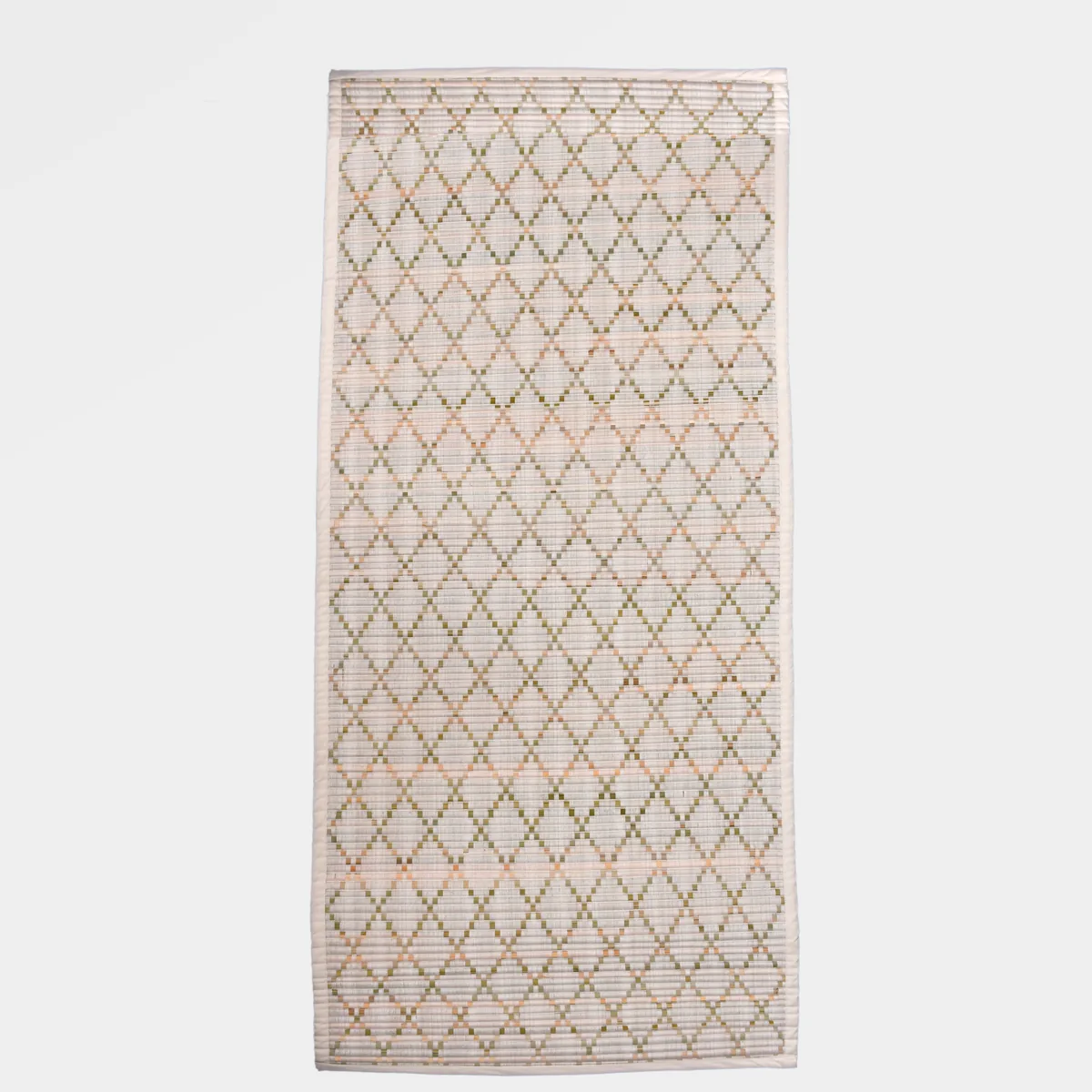
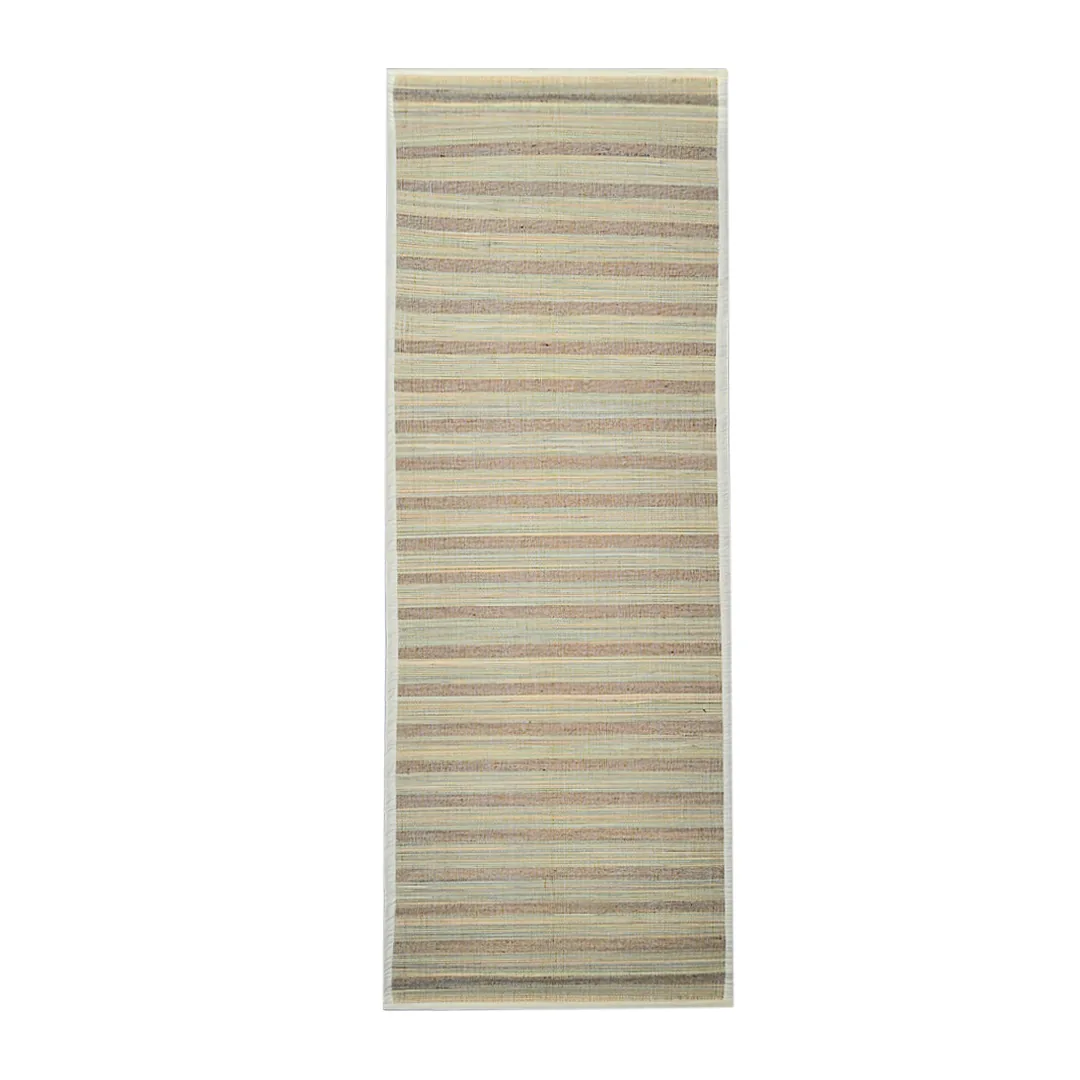
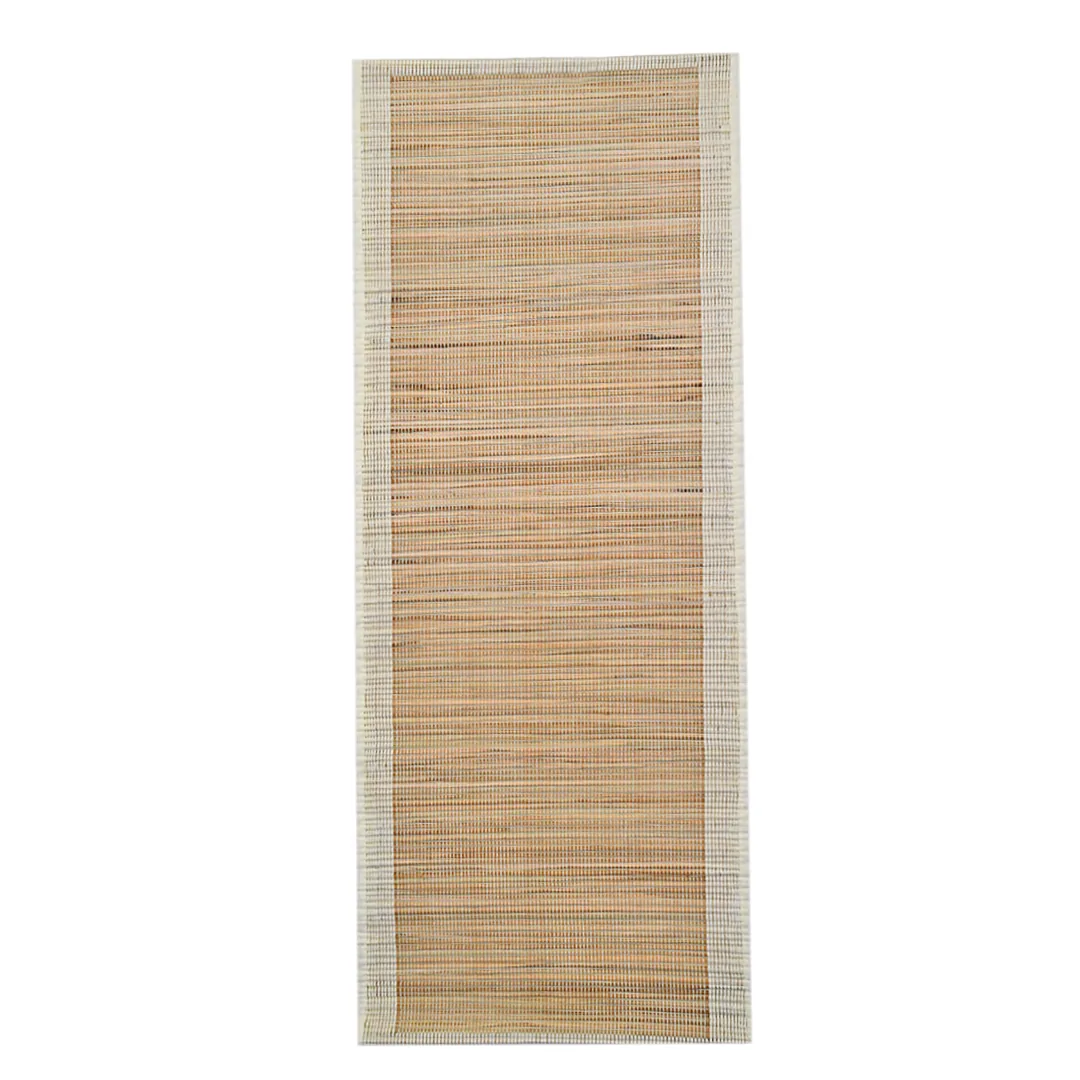
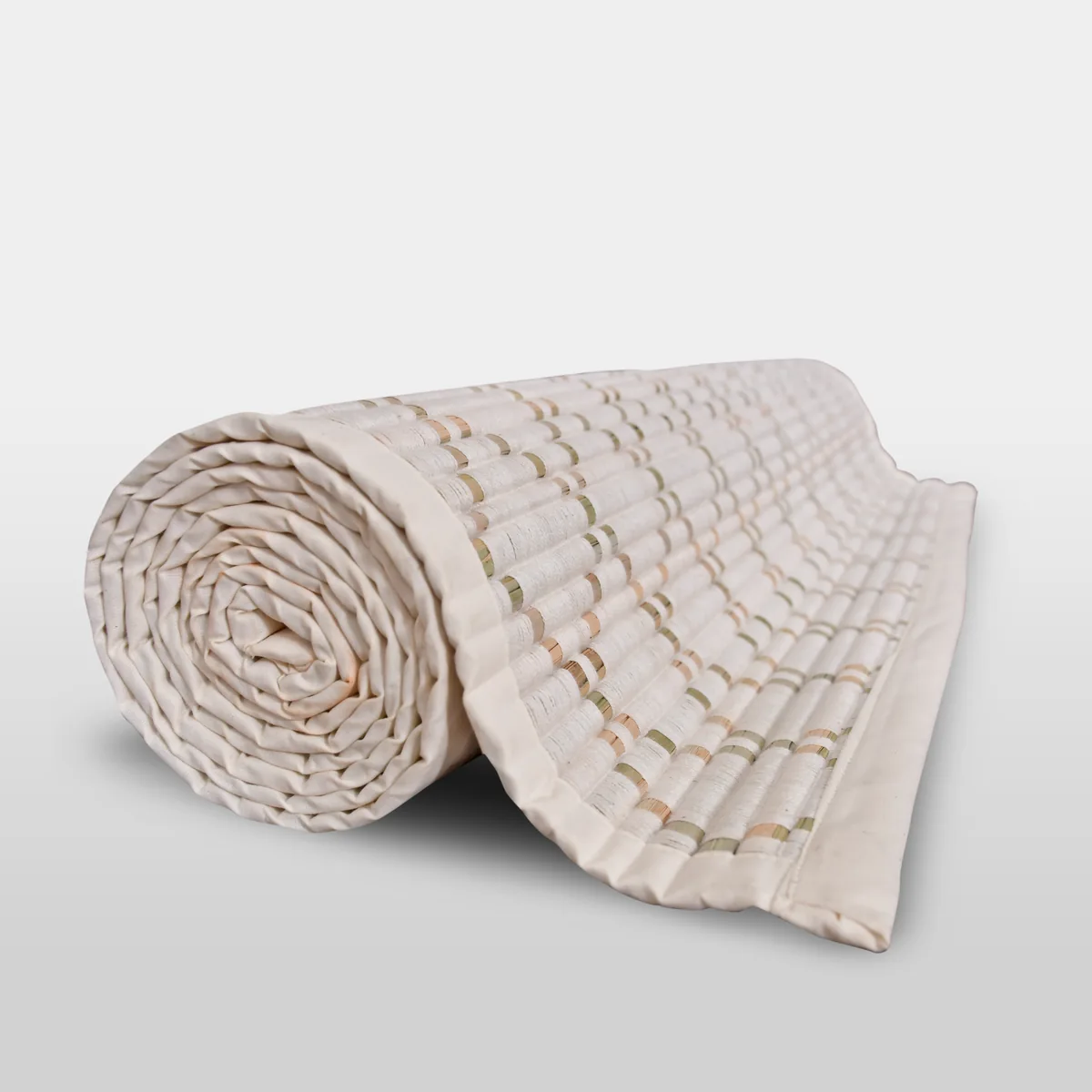
On the loom, the dried grass is woven together with cotton yarn. The cotton does the structural work, holding each stem in place and forming the bound edges, while the grass forms the surface you stand and sit on. Where there is colour, it is plant-dyed cotton, not dyed grass: the green and peach diamonds on Sambu Diamond, the fine stripes on Sambu Jute, the tan field and paler border our weavers call the TV pattern on Sambu Frame.
One naming note. Sambu Jute is a historical name for the striped weave. It contains no jute at all; it is sambhu grass and organic cotton like the other two.
Once woven, a thin layer of natural tree latex is brushed onto the underside by hand. It holds the mat on tile, marble and wood. With long use it can soften; a thin fresh coat of natural latex restores it. If you are allergic to natural latex, choose with care and write to us first.
Why it feels cool
People reach for a grass mat in April for the same reason they sleep on one on a terrace in May: it feels cool and dry under the body. We can describe why from the mat's point of view.
A grass surface is firm and open. It does not hold sweat against the skin the way a closed foam does, so after a hot practice the mat feels dry rather than slick. Grass is stiff, so the mat sits flat and lets air move around you instead of moulding to you. And at 3 mm and about a kilo, there is almost nothing to warm up and hold heat.
That is the honest version. We will not tell you the grass has health effects. It is a cool, firm, breathable surface, and that is enough to make it a pleasure in a Tamil Nadu summer.
What it is good for, and what it is not
Good for
- Hot and humid practice, where a rubber mat turns into a slide; the grass stays firm and dry underfoot.
- Seated work: pranayama, meditation, long holds. Firm and cool is what most people want under a cushion.
- Travel. A kilo rolls tight and goes in a bag.
Not good for
- Cushioning. A 3 mm grass mat is firm. Kneeling needs a folded blanket on top, and if you want padding you want our 7 mm Diamond weave or a 5 mm cotton rug instead.
- Soaking. Grass is not cotton. It will not survive a bucket or a machine.
If you are weighing grass against cotton, our grass mat vs cotton mat article goes through season, practice and floor type.
The three sambhu mats side by side
| Sambu Diamond | Sambu Jute | Sambu Frame | |
|---|---|---|---|
| Fibre | Sambhu grass and organic cotton | Sambhu grass and organic cotton (no jute) | Sambhu grass and GOTS-certified organic cotton |
| Pattern | Pale grass, plant-dyed green and peach diamond lattice | Fine plant-dyed stripes, cream cotton binding | Tan field, paler border |
| Thickness | 3 mm | 3 mm | 3 mm |
| Size | 183 × 68.5 cm (72 × 27 in) | 183 × 68.5 cm (72 × 27 in) | 183 × 68.5 cm (72 × 27 in) |
| Weight | About 1 kg | About 1 kg | About 1 kg |
| Price at the time of writing | ₹1,999 | ₹1,699 | ₹1,799 |
The three are the same mat in different clothes. Choose on pattern, or on price; the feel underfoot is the same.
Caring for a grass mat
Shake it out after practice, wipe sweat spots with a damp cloth, and air it in the shade. Never soak it, machine wash it or dry it in direct sun, and never roll it damp. The full routine is in how to clean a grass yoga mat.
Frequently asked questions
What is a sambhu grass yoga mat made of?
A sambhu grass mat is a river grass from Tamil Nadu woven together with organic cotton on a handloom. The grass forms the surface, the cotton binds it and carries any plant-dyed colour, and a thin layer of natural tree latex is brushed onto the underside for grip. Ours are 3 mm thick, 183 × 68.5 cm and about 1 kg.
Why does a grass mat feel cool?
A grass mat is firm, open and very thin, so it does not hold sweat against the skin or warm up and keep heat the way a closed foam mat does. It sits flat and feels dry after practice. This is a description of the mat, not a health claim; it is simply a comfortable surface in hot weather.
Can I wash a sambhu grass mat?
No. Shake it out, wipe it with a damp cloth and air it in the shade. Grass should never be soaked, machine washed or dried in direct sun. If you want a mat you can wash fully, choose one of our cotton rugs instead.
Does Sambu Jute contain jute?
No. The name is historical and refers to the striped weave. Sambu Jute is sambhu grass woven with organic cotton, like our other sambhu mats, with no jute in it.
All three weaves are together in our sambhu grass collection, with current prices on each page.