A grass mat is thin, firm and cool: 3 to 4 mm, about a kilo, wipe-clean, and at its best in hot weather, for standing poses and for long seated practice. A cotton mat is thicker, softer and absorbent: 5 to 7 mm, warmer under you, kinder to knees in floor work, and washable after a sweaty class. If you mostly sit, or you practise through a Tamil Nadu summer, choose grass. If you flow, sweat and spend time on your knees and back, choose cotton. Many households end up with one of each.

What we mean by a grass mat
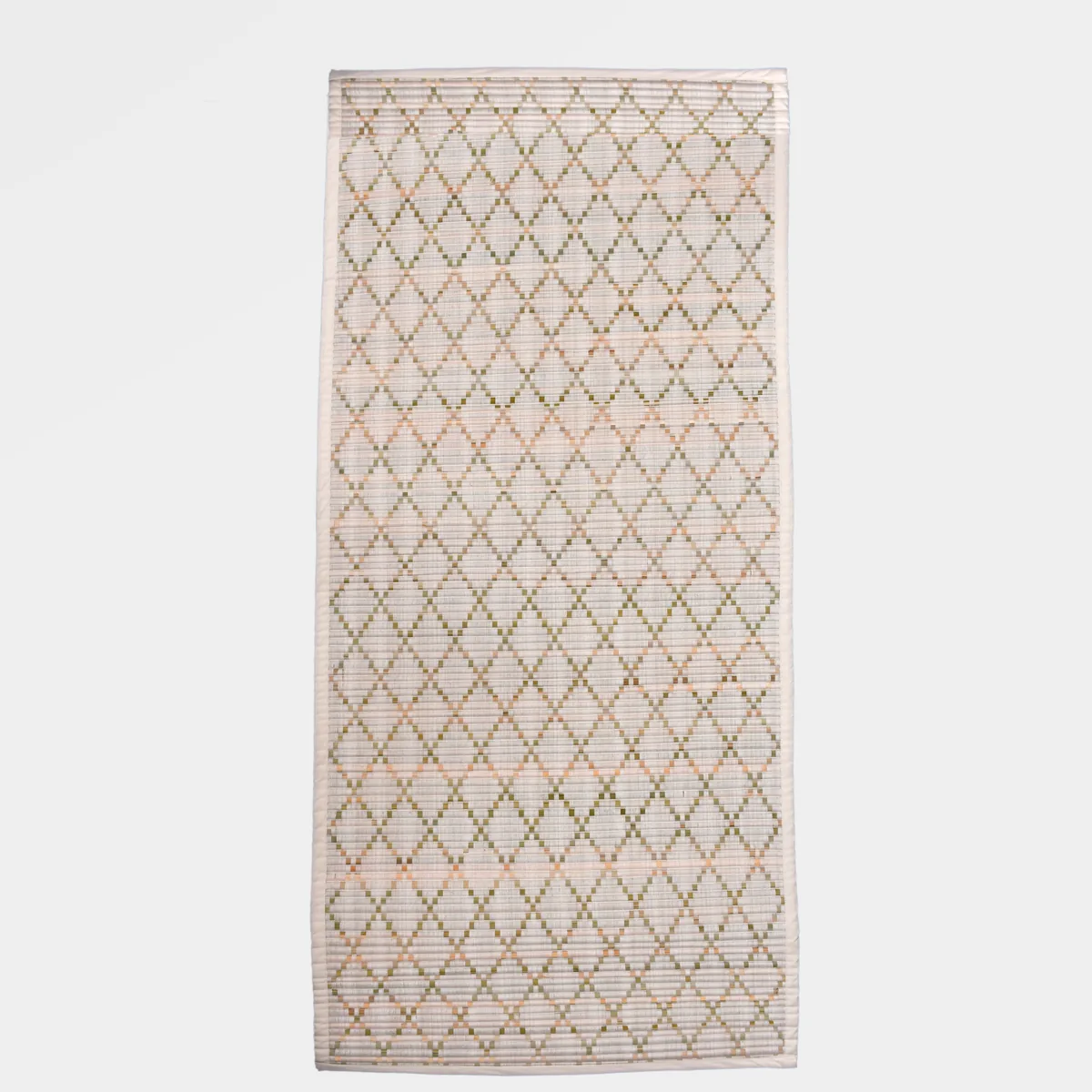
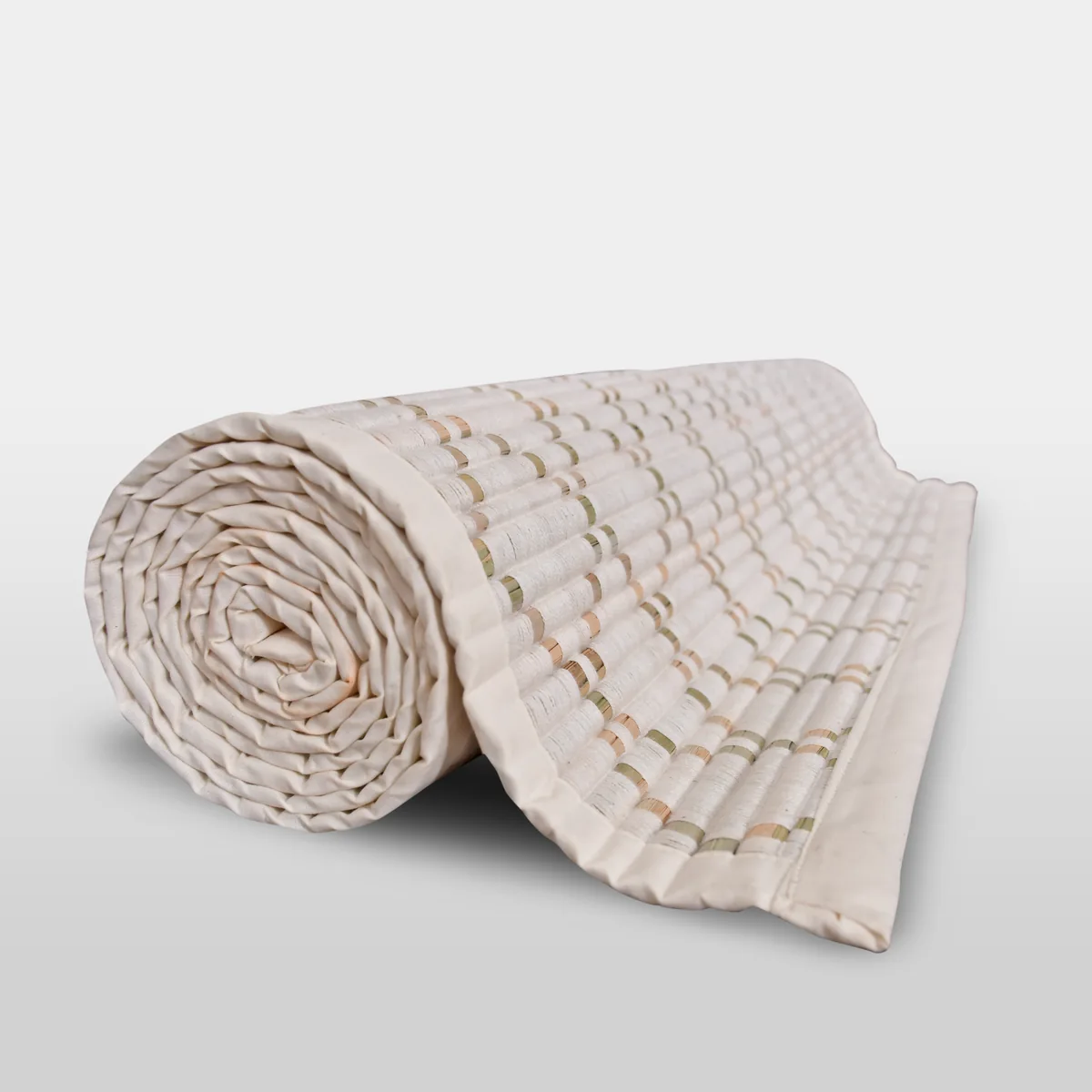
We weave two kinds. Sambu Diamond is sambhu grass woven with organic cotton: a pale grass field with a diamond lattice picked out in plant-dyed green and peach, 3 mm thick, 183 × 68.5 cm, about 1 kg, with a thin layer of natural tree latex brushed onto the underside for grip on tile and wood. It is ₹1,999 at the time of writing. The grass sits cool against the skin and the mat rolls up small. We have written more about the grass itself in Sambhu grass mats: what the grass is and why it feels cool.
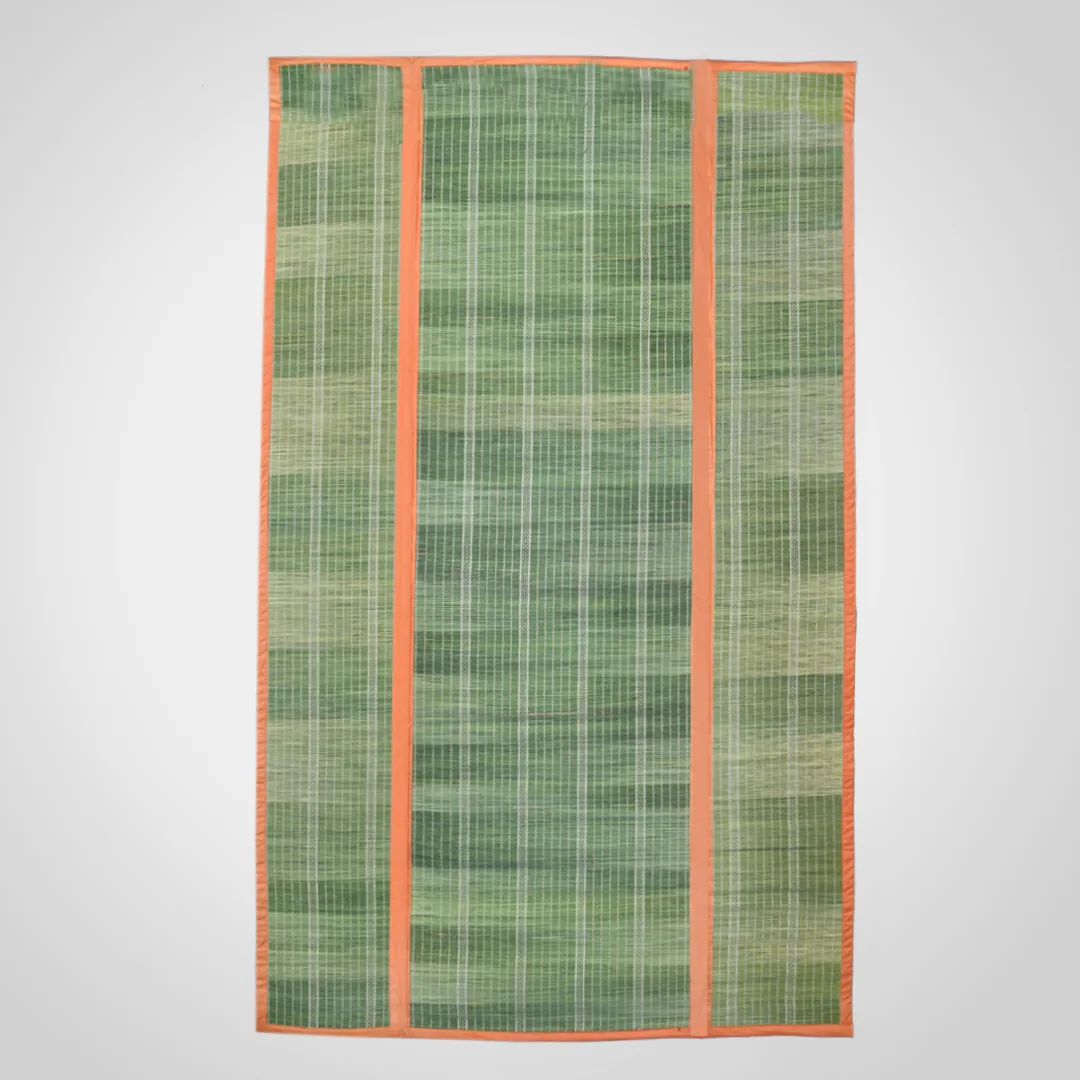
Darbha is different. Darbha, or kusha, is the grass traditionally spread for meditation and ritual across Tamil Nadu. We weave it in three panels, bind it in orange cotton and back it in cotton cloth, so it folds flat rather than rolling. It is about 4 mm thick, 183 × 90 cm, about 1.2 kg, and ₹4,999 at the time of writing. It has no latex layer; the cloth backing is what sits on the floor. Its story is in Darbha (kusha) grass: meaning, tradition and how we weave it.
What we mean by a cotton mat
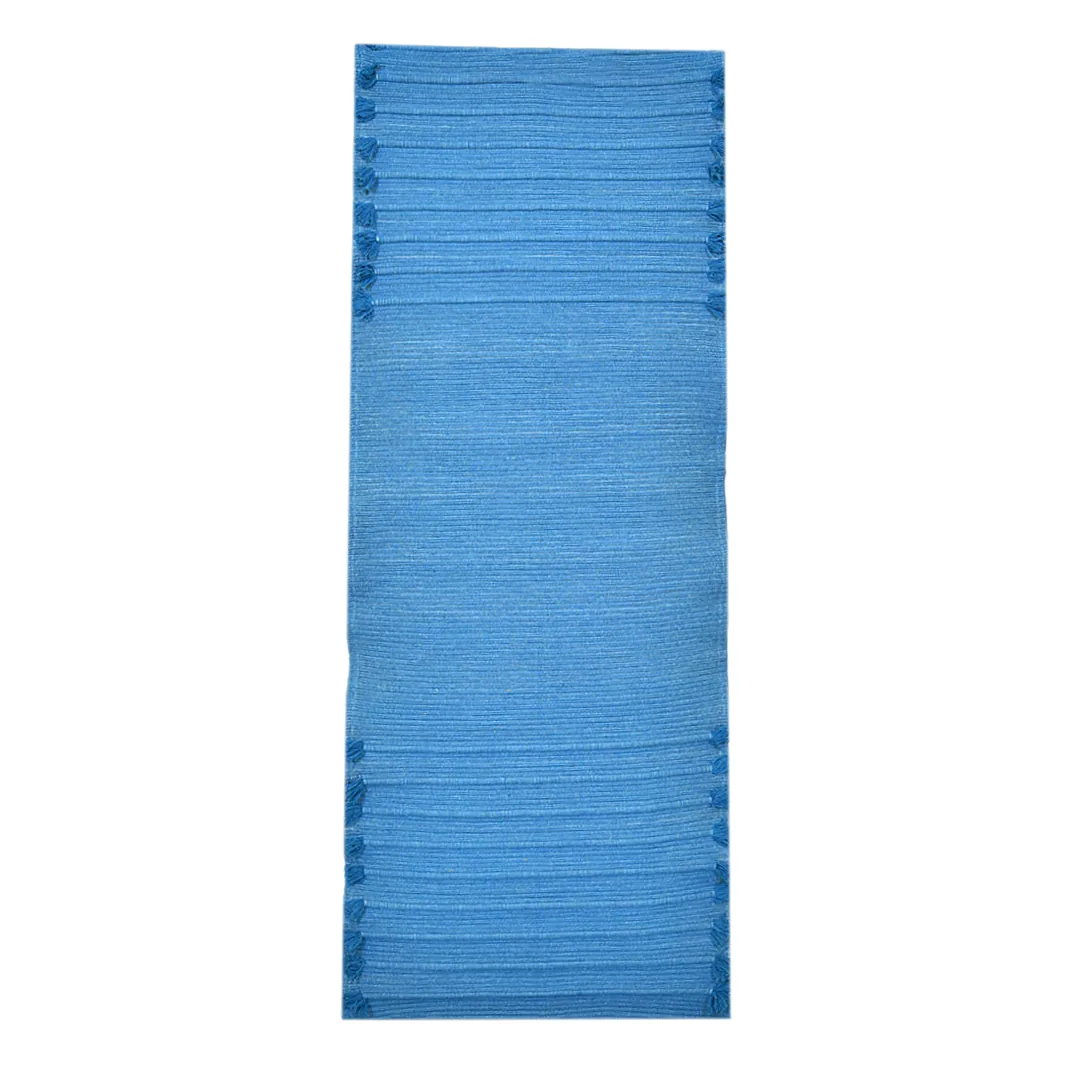
Indico is our plainest cotton mat: GOTS-certified organic cotton dyed in true indigo, handwoven in a ribbed weave with hand-knotted tassels, 5 mm thick, 183 × 68 cm, about 1.4 kg, ₹4,499 at the time of writing. Like the sambhu mats it has a natural latex coat underneath. If you are allergic to natural latex, choose with care and write to us first.
Side by side
| Sambu Diamond (grass) | Darbha (grass) | Indico (cotton) | |
|---|---|---|---|
| Fibre | Sambhu grass with organic cotton | Darbha grass, cotton cloth backing | GOTS-certified organic cotton |
| Thickness | 3 mm | About 4 mm | 5 mm |
| Feel | Cool, firm, textured | Cool, firm, quiet | Soft, warms under you |
| Cushioning | Minimal | Minimal | Moderate, dense |
| Sweat | Stays on the surface; wipe it | Stays on the surface; wipe it | Absorbed into the weave |
| Grip on floor | Natural latex layer | Cloth backing | Natural latex layer |
| Care | Shake, damp cloth, air in shade; never soak | Wipe, keep dry, air in shade; fold to store | Hand wash cold, dry flat in shade |
| Weight | About 1 kg | About 1.2 kg | About 1.4 kg |
| Price (at the time of writing) | ₹1,999 | ₹4,999 | ₹4,499 |
Choosing by season
In the hot months a grass mat is the one you reach for. It does not hold warmth the way cotton does, so a long sit or a slow practice at midday feels cooler on sambhu or darbha than on a cotton rug. In the cooler months, or on a cold tiled floor in the early morning, cotton is the kinder surface for savasana and seated work, and it is the one that does not chill your bare feet.
Choosing by practice
For a flowing, sweaty practice, cotton. It absorbs what you sweat, grips better as your palms dampen, and goes in a bucket of cold water afterwards. Grass does none of those things; sweat sits on it and it must be wiped, never soaked.
For seated practice, pranayama and meditation, grass. It is firm, cool and quiet, and a cushion goes on top of it comfortably. Darbha in particular is traditional for this, and its 90 cm width gives a wide, stable seat. Sambhu is the lighter, cheaper option for the same job.
For standing poses, either works. Grass gives you a direct feel of the floor; cotton gives you a little more give.
For kneeling and lying floor work, cotton. A 3 mm grass mat on a tiled floor is honest about the tile underneath.
Choosing by floor
On tile, marble or wood, Sambu Diamond and Indico both hold through their latex layers. The Darbha's cloth backing sits well on a clean dry floor but does not grip like latex, which suits a still seat better than a vinyasa. On carpet, grass mats are stable where a thick soft mat wobbles.
Choosing by cleaning
This may decide it. Grass mats are low effort day to day: shake out, wipe with a damp cloth, air in shade, keep dry, and never soak or machine wash. Cotton mats are more effort per wash but can be washed properly: cold water, mild natural detergent, flat drying in shade. If hand washing a mat puts you off, grass; if a mat you can never wash puts you off, cotton.
Frequently asked questions
Is a grass yoga mat better than a cotton one?
Neither is better outright. A grass mat is thinner, firmer, cooler and lighter, wipe-clean and well suited to hot weather, seated practice and meditation. A cotton mat is thicker, softer and absorbent, better for sweaty flowing practice and floor work, and can be hand washed. Choose by season, practice and how you prefer to clean.
Can you do yoga on a darbha grass mat?
Yes, with the right expectations. Our Darbha is about 4 mm of kusha grass in three panels, backed in cotton cloth with no latex layer, so it suits seated practice, pranayama, meditation and gentle standing work on a clean dry floor. It is not cushioned for kneeling and it is not meant for a fast, sweaty flow. It folds flat for storage and travel.
How do you clean a grass yoga mat?
Shake it out, wipe it with a damp cloth, and let it air in shade until dry. Never soak it or put it in a machine, and never leave it rolled or folded while damp. Keep it out of direct sun when drying so the plant-dyed cotton binding does not fade. Our Mat care page has the full routine.
Which is better for meditation, grass or cotton?
Most people find grass better for long sits: it is firm, cool and quiet, and a cushion sits well on top of it. Darbha is the traditional choice, and sambhu is a lighter and less expensive alternative. Cotton is warmer and softer, which some prefer on cold floors or for lying practices such as yoga nidra.
Next step
For hot weather and seated practice, start with Sambu Diamond or the traditional Darbha. For a washable mat for flowing practice, Indico. You can browse by fibre at the sambhu collection and the cotton collection.