The most eco-friendly yoga mat you can buy in India is the one whose maker can tell you, specifically, what it is made of layer by layer, how and where it was made, what the dyes are, and what happens to it when it wears out. "Eco", "green" and "sustainable" are not regulated words on a yoga mat, so they tell you very little on their own. Our own mats are handwoven from sambhu grass, banana fibre and GOTS-certified organic cotton, with a thin coat of natural tree latex underneath, and in this guide we hold them to the same questions we would ask any other brand.

Why "eco-friendly" on a mat tells you almost nothing
A label is a claim. A fact is something you can check. "Eco-friendly" is a label, and because nobody polices it on yoga mats, it is used for plastic foam, bonded cork, rubber and woven cotton alike. "Biodegradable" is used just as loosely; we do not use it for our own mats, because we have not had them tested and certified. What you can check instead is a short list of specifics, which follows.
Five questions to ask any mat brand
1. What is it made of, layer by layer?
Most mats are more than one material. A cork mat is usually cork glued to a rubber or plastic base; a jute mat is often jute fibre bonded to plastic foam. Ask for the full list, top to bottom, including the adhesive or backing. If a brand will not answer, that is your answer.
2. How was it made, and where?
Foam mats are made in factories with powered machinery. Handloom mats are woven by a person on a loom that uses no electricity; the pace is slower and the output smaller, which is part of why they cost more. You should be able to find out which made your mat and roughly where. We weave in Kattur, Komarapalayam, in Namakkal district, Tamil Nadu, with our own weavers and our own dyeing; there is no middleman and no resold stock.
3. What are the dyes?
A coloured mat was dyed with something. Ask what. Plant dyes (we use indigo, turmeric, alkanet root, tulsi and neem among others) give softer colours that vary between batches and fade gently over years. That is the nature of plant colour, not a fault, but you should know it before you buy.
4. What happens to it at the end?
Every mat wears out. A foam mat flakes, cracks and is thrown away; whether it can be recycled depends on whether a facility near you accepts it, and often the honest answer is landfill. A woven plant-fibre mat can be cut down into kneelers or door mats, and the fibre itself is plant matter. We go into this in what happens to your mat at the end of its life.
5. What is it packed in?
A natural mat that arrives shrink-wrapped in plastic has undone part of its own argument. Ask. We pack without plastic.
Mat materials compared: what each one actually is
This table replaces labels with the thing itself rather than ranking materials. Foam mats are genuinely better at some things, cushioning and waterproofness above all.
| Material | What it actually is | Worth knowing before you buy |
|---|---|---|
| PVC | Polyvinyl chloride, a plastic that is rigid on its own and made soft with plasticisers (Wikipedia) | Cheap, durable, waterproof. Ask which plasticiser is used. Ask whether a worn mat can be recycled near you. |
| TPE | Thermoplastic elastomer, a plastic that behaves like rubber and can be melted and reprocessed (Wikipedia) | Lighter than rubber; "recyclable" in principle. Ask where a used mat would actually be recycled. |
| Natural rubber | Foamed latex from the rubber tree | Excellent grip and cushion; heavy; strong smell when new. Contains latex. |
| Cork | Bark of the cork oak, stripped without felling the tree (Wikipedia) | Almost always bonded to a rubber or TPE base. Ask what is underneath. |
| Jute | A coarse plant fibre | Often bonded to a plastic foam backing. Ask. |
| Cotton | Woven plant fibre | Washable, lasts years, grips better damp. Growing cotton uses water and farm inputs; organic certification addresses the inputs. |
| Grass and banana fibre | Woven plant stems and bark, bound with cotton | Firm, cool, light. Not cushioned; cannot be soaked. |
Where our mats are honest about their limits
We would rather list these ourselves.
The grip layer is natural latex. All our cotton, sambhu grass and banana fibre mats have a thin layer of natural tree latex brushed onto the underside by hand, so they hold on tile, marble and wood. It is a plant product, but it is not nothing, and after many washes it softens and wants a thin fresh coat. If you are allergic to natural latex, choose with care and write to us first. Our Darbha mat is the exception: it is backed in cotton cloth and has no latex.
Cotton is a crop. Growing it takes water and, on conventional farms, synthetic fertiliser and pesticide. Our cotton is GOTS-certified organic, which governs the inputs and the processing but does not make the water disappear. We have written an honest answer on whether a cotton mat is eco-friendly and a plainer piece on organic versus conventional cotton.
Plant dyes move. A little colour in the first rinse is normal, and the shades soften over years.
Grass is firm. A 3 mm sambhu grass mat is cool and quiet underfoot, but it is not padded. If your knees want cushioning, a grass mat alone will not give it.
Delivery still uses fuel. We ship by courier like everyone else.
Three of ours that fit the brief
Sambu Diamond
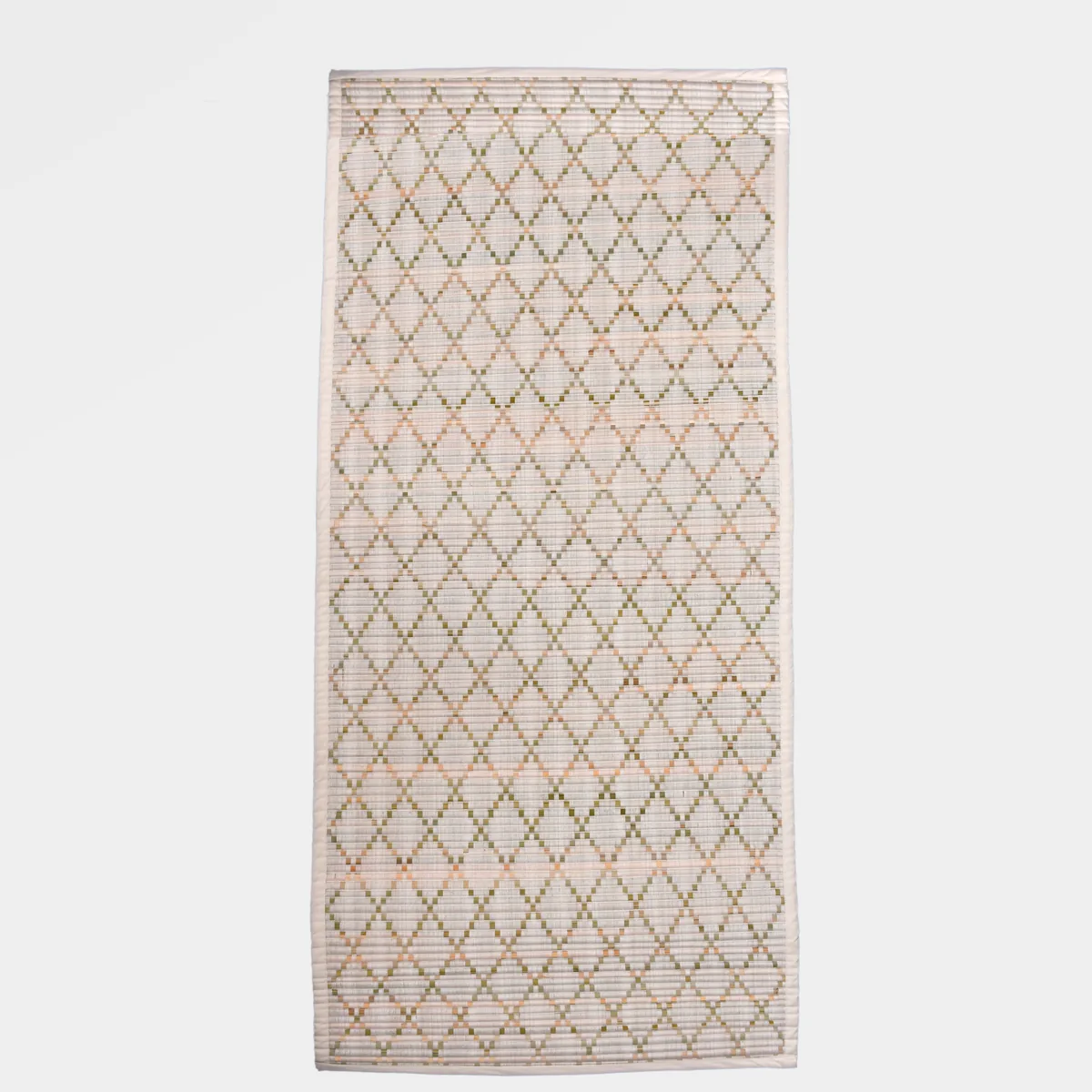
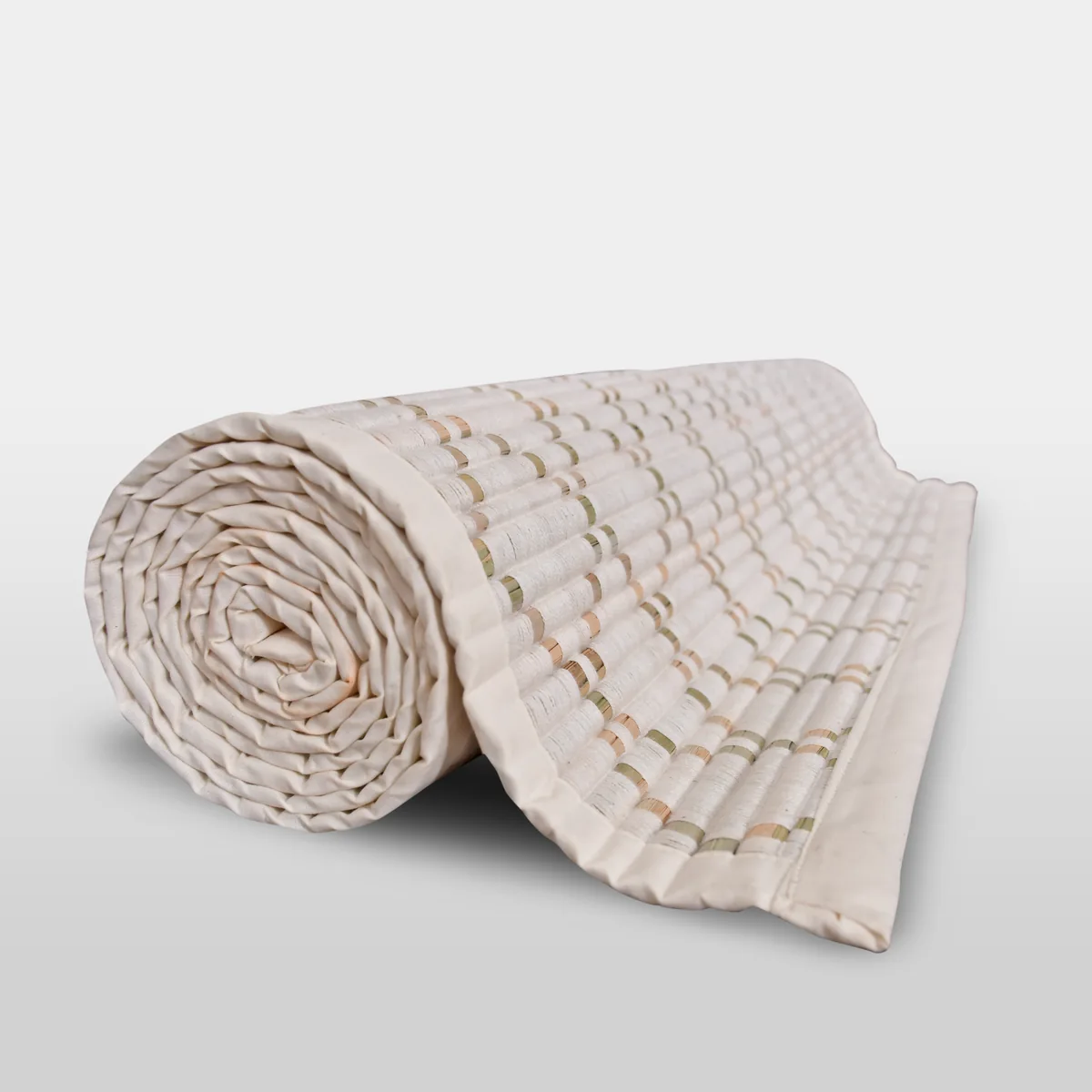
Sambu Diamond is sambhu grass woven with organic cotton, 3 mm thick, 183 × 68.5 cm and about a kilo, with a diamond lattice in plant-dyed green and peach. It stays cool against the skin and wipes clean with a damp cloth. ₹1,999 at the time of writing.
Banana Fibre
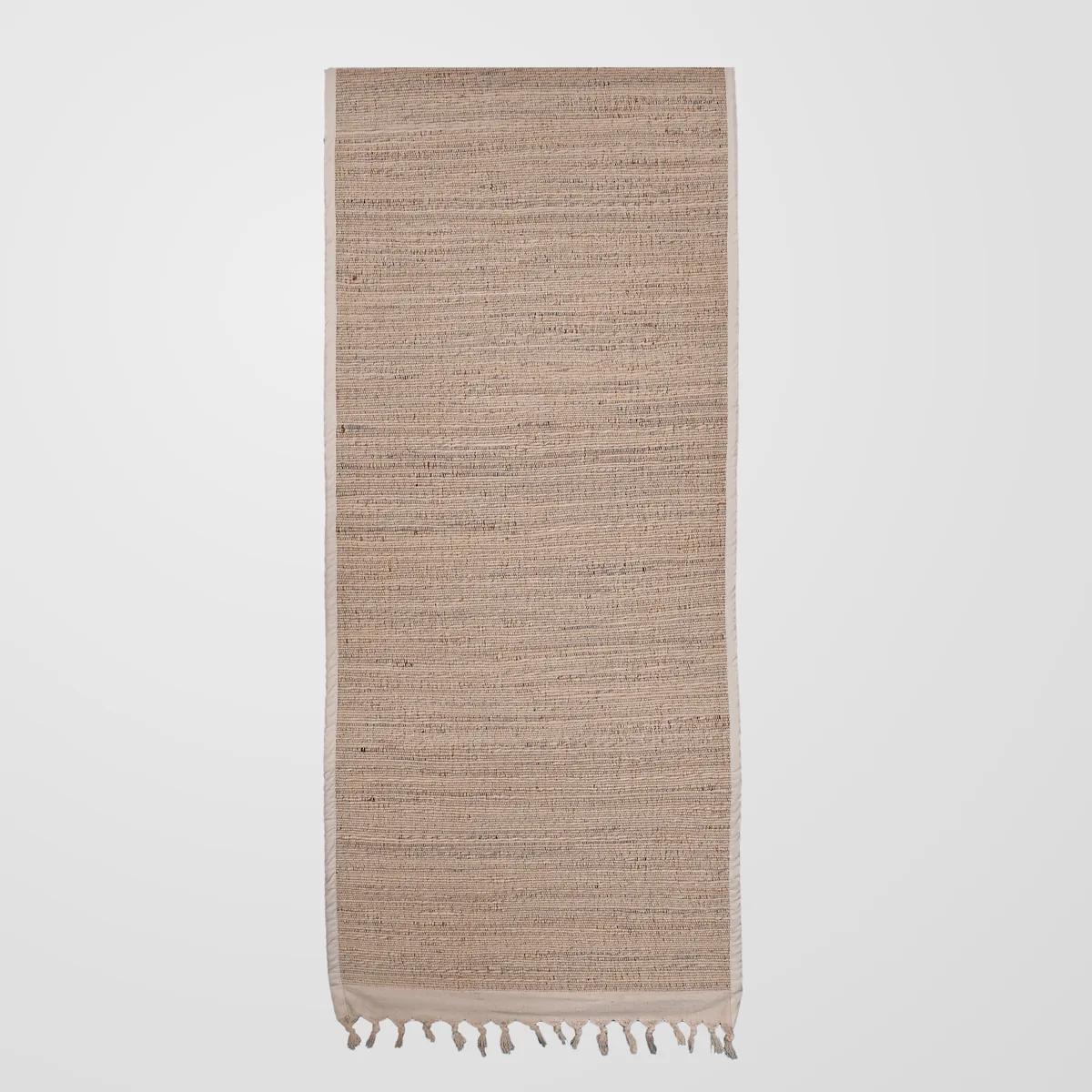
Banana Fibre is woven from banana bark and fibre taken from the stem after the fruit is harvested. Undyed, 3 mm, 183 × 68.5 cm, about 1 kg and cotton-bound; the firm, textured surface suits seated and standing work. ₹2,000 at the time of writing.
Prana Shakti
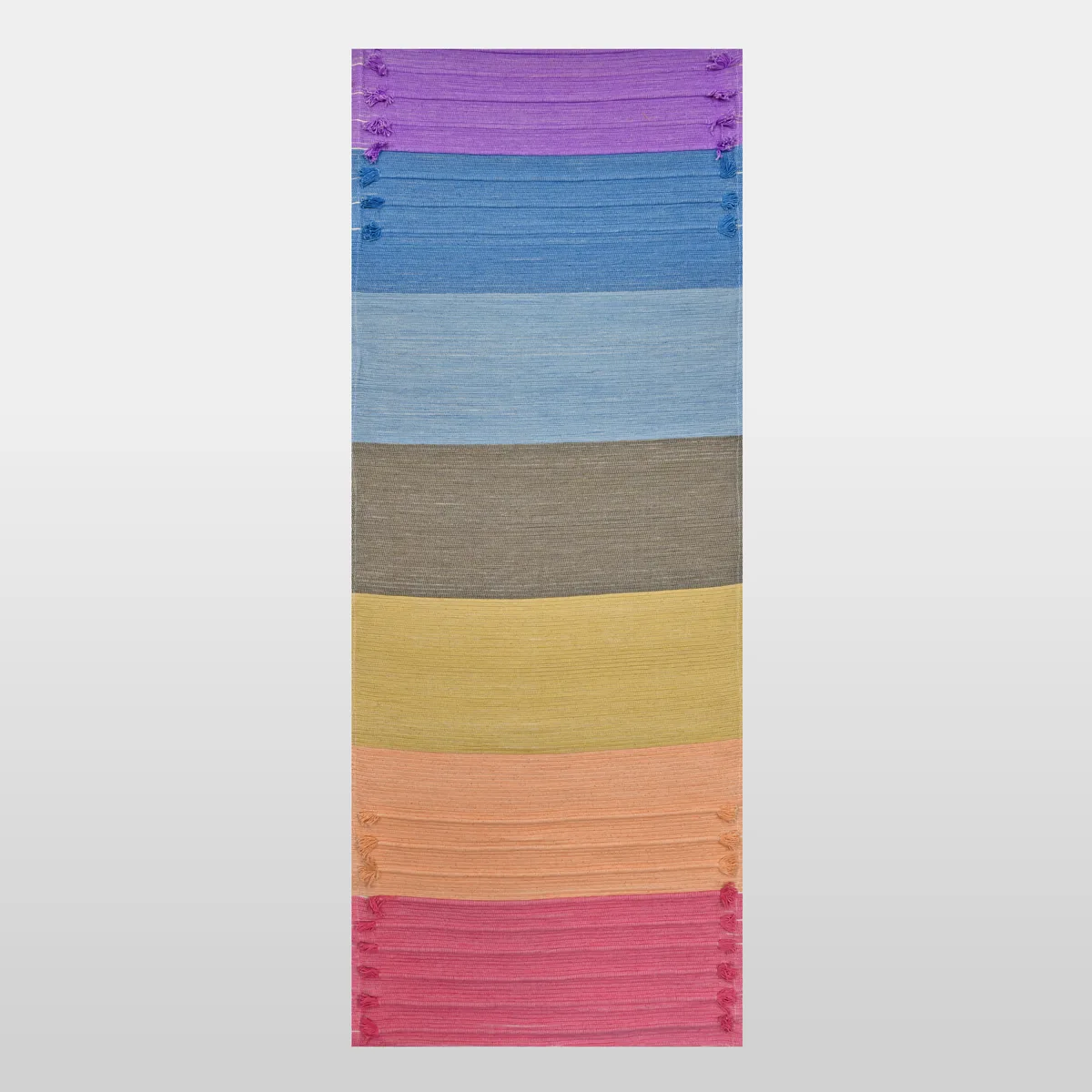
Prana Shakti is for anyone who wants cushioning without foam: six-ply GOTS-certified organic cotton, 5 mm thick, 188 × 69 cm, about 1.5 kg, with seven chakra colour bands on a rose ground, all plant-dyed. Hand wash cold, dry flat in shade. ₹3,499 at the time of writing.
Frequently asked questions
Is a cotton yoga mat eco-friendly?
A cotton yoga mat is made of a plant fibre, is washable, lasts for years and can be cut up and reused when it wears out, but cotton farming uses water and, unless organic, synthetic inputs. We think the honest position is to say exactly that rather than to call it eco-friendly as a bare label; GOTS-certified organic cotton tells you the fibre was grown and processed to a published standard.
Is a TPE yoga mat eco-friendly?
TPE is a thermoplastic elastomer, a plastic that behaves like rubber and can in principle be melted and reprocessed. Whether a worn TPE mat is actually collected and recycled depends on local facilities, and it may well end up in landfill, so ask the brand where and how a used mat would be recycled before treating the label as a fact.
Are natural latex mats safe for people with a latex allergy?
Our cotton, sambhu grass and banana fibre mats have a thin layer of natural tree latex brushed onto the underside, and natural rubber mats are latex throughout. If you are allergic to natural latex, choose with care and write to us first; our Darbha mat is backed in cotton cloth and contains no latex.
Do your mats arrive in plastic packaging?
No. We pack without plastic and ship across India with cash on delivery available; see the Shipping page for current terms.
What should I do with an old natural-fibre mat?
A cotton or grass mat can be cut into kneelers, door mats or pet bedding once it is past practice use, and the fibres themselves are plant matter. We have not had our mats certified as biodegradable or compostable, so we do not claim that.
To see the three mats above side by side, start with the sambhu grass mats or browse the full collection, and read the care notes on each product page before you choose.