A premium yoga mat should cost more for reasons you can check: the fibre it is made of, the time a person spent making it, how it was dyed, how long it will last and whether its grip can be renewed rather than replaced. It should not cost more because of a logo, a celebrity or a word like "luxury". Our own top-priced mats sit at about ₹4,400 to ₹5,000 at the time of writing, and below we set out exactly what that money buys and what it does not.

What should make a mat cost more
A person's time on a loom
A handloom runs on the weaver's arms and feet, not electricity. It makes one mat at a time, at the pace of a person, and the weaver is paid for that time. A power loom makes many mats in the same hours. The difference is not a flaw in either; it is simply where the money goes. We weave in Komarapalayam, Namakkal district, Tamil Nadu, with our own weavers and no middlemen, and we describe the whole process in how a handloom yoga mat is woven.
Ask any premium brand the same question: who wove it, where, and on what?
The fibre
Cotton grown and processed to the Global Organic Textile Standard costs more than conventional cotton because the standard covers every step from fibre processing and spinning through wet processing, manufacturing and trading, with requirements on chemical inputs and on human rights, and relies on separately certified organic farming before that (global-standards.org). Our cotton mats are woven from GOTS-certified organic cotton. Note the wording: our certification is for the cotton, which is why we say "GOTS-certified organic cotton" rather than "GOTS-certified mat".
The dye
Plant dyeing is slower than synthetic dyeing and the result varies between batches. We use indigo leaves for the Indico, alkanet root for the Diamond Clay, and more than twenty herbs, including turmeric, neem and tulsi, for the chakra rugs. The colours soften over years and a little colour comes out in the first rinse; that is the nature of plant colour and part of what you are paying for. A premium mat with a perfectly uniform, unfading colour was probably dyed synthetically, which is fine, but should be said.
Longevity and renewal
A premium price is only justified if the mat lasts. The questions to ask are: can it be washed, and what happens when the grip wears? A glued foam base cannot be renewed; once it crumbles the mat is done. Our cotton mats have a thin layer of natural tree latex brushed onto the underside by hand. It holds on tile, marble and wood, it survives hand washing, and when it softens after many washes a thin fresh coat restores it. If you are allergic to natural latex, choose with care and write to us first.
What premium should not mean
- Branding alone. A logo in the corner adds nothing to the weave.
- Thickness for its own sake. A thick foam mat is not more premium than a dense 5 mm cotton rug; it is a different object for a different practice.
- Vague words. "Luxury", "eco", "artisanal" and "handcrafted" are not specifications. Ask what they mean in this case.
- Invented heritage. We are a small handloom maker in a textile town; we do not claim centuries of anything. Be wary of brands that do without saying where.
The yoga mat price guide walks through the bands from foam to handloom if you want the wider picture.
Our three at the top of the range
Prices are at the time of writing and can change; each product page has the current figure.
| Diamond Clay | Prithvi | Indico | |
|---|---|---|---|
| Cotton | GOTS-certified organic | GOTS-certified organic, six-ply | GOTS-certified organic |
| Thickness | 7 mm | 5 mm | 5 mm |
| Size | 183 × 68 cm | 188 × 69 cm | 183 × 68 cm |
| Weight | ≈1.8 kg | ≈1.5 kg | ≈1.4 kg |
| Colour | Clay from alkanet root; raised diamond lattice | Earth-toned ground, seven chakra bands, hand-knotted tassels | True indigo; ribbed weave, hand-knotted tassels |
| Washing | Machine wash delicate 30 °C in a laundry bag, or hand wash | Hand wash cold, dry flat in shade | Hand wash cold, dry flat in shade |
| Price now | ₹4,450 | ₹4,400 | ₹4,499 |
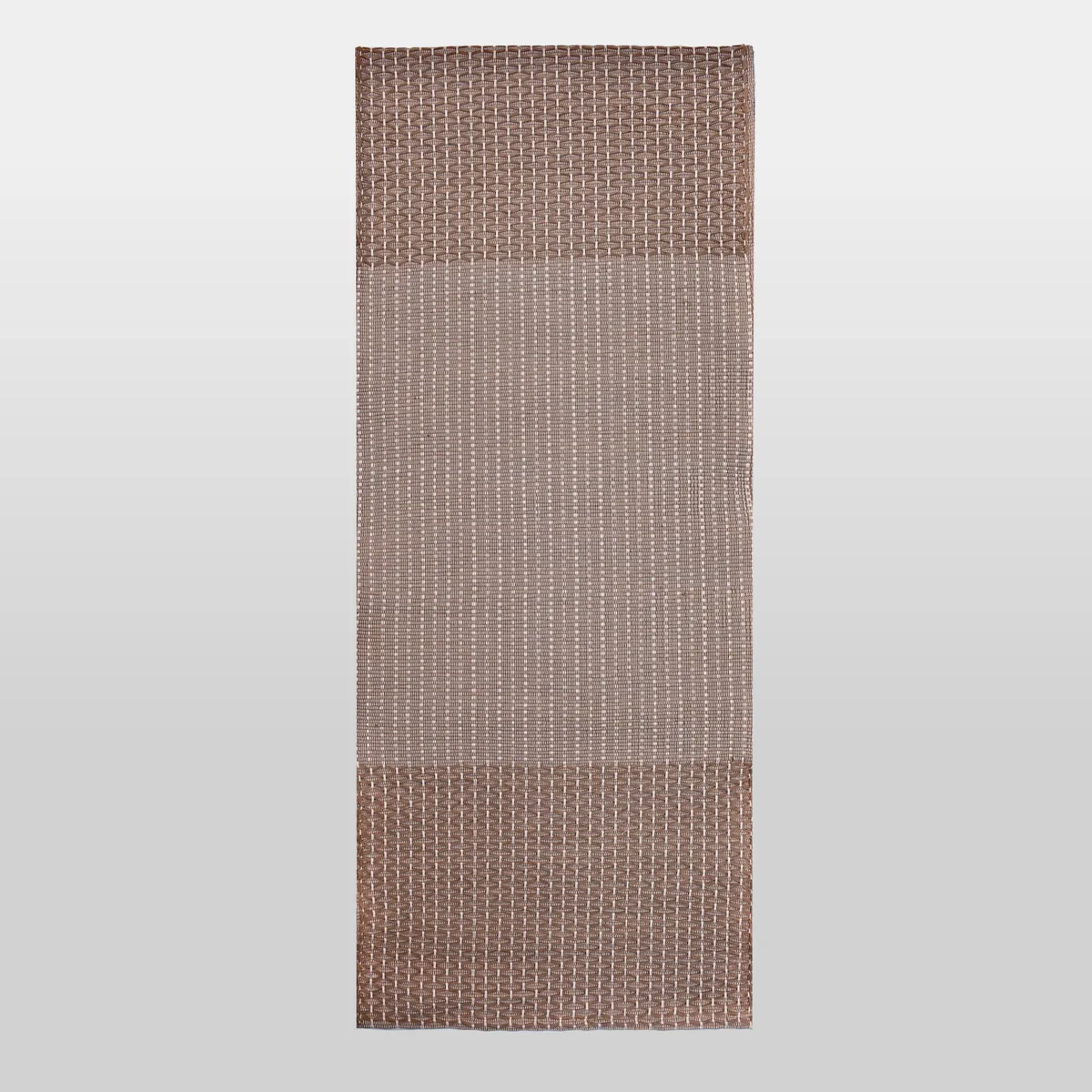
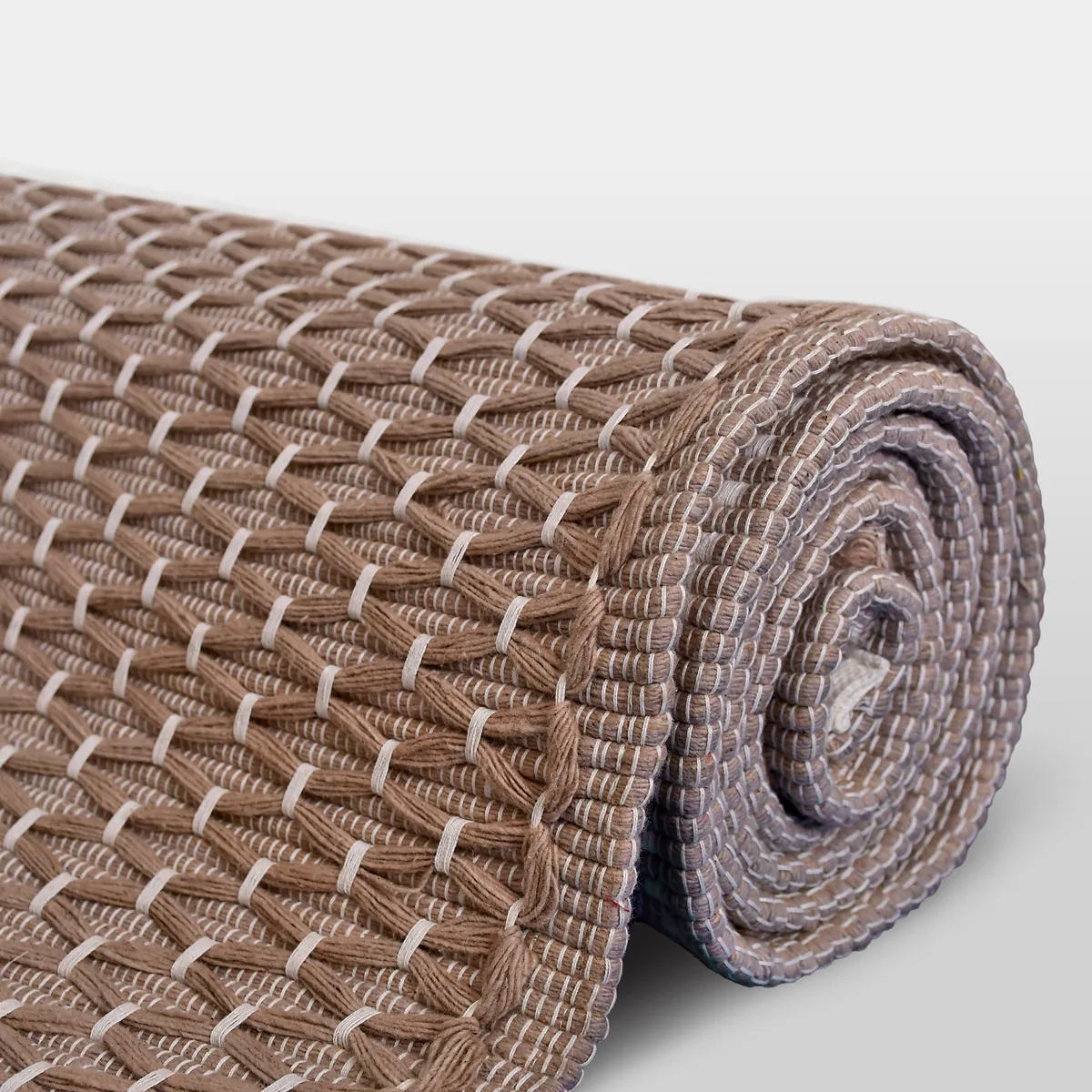
Diamond Clay is, with Diamond Orange, the thickest mat we weave. The raised lattice gives the butterfly-eye pattern its grip and doubles as an alignment grid; the clay colour comes from alkanet root. It is also the only one of the three we are happy to see machine washed.
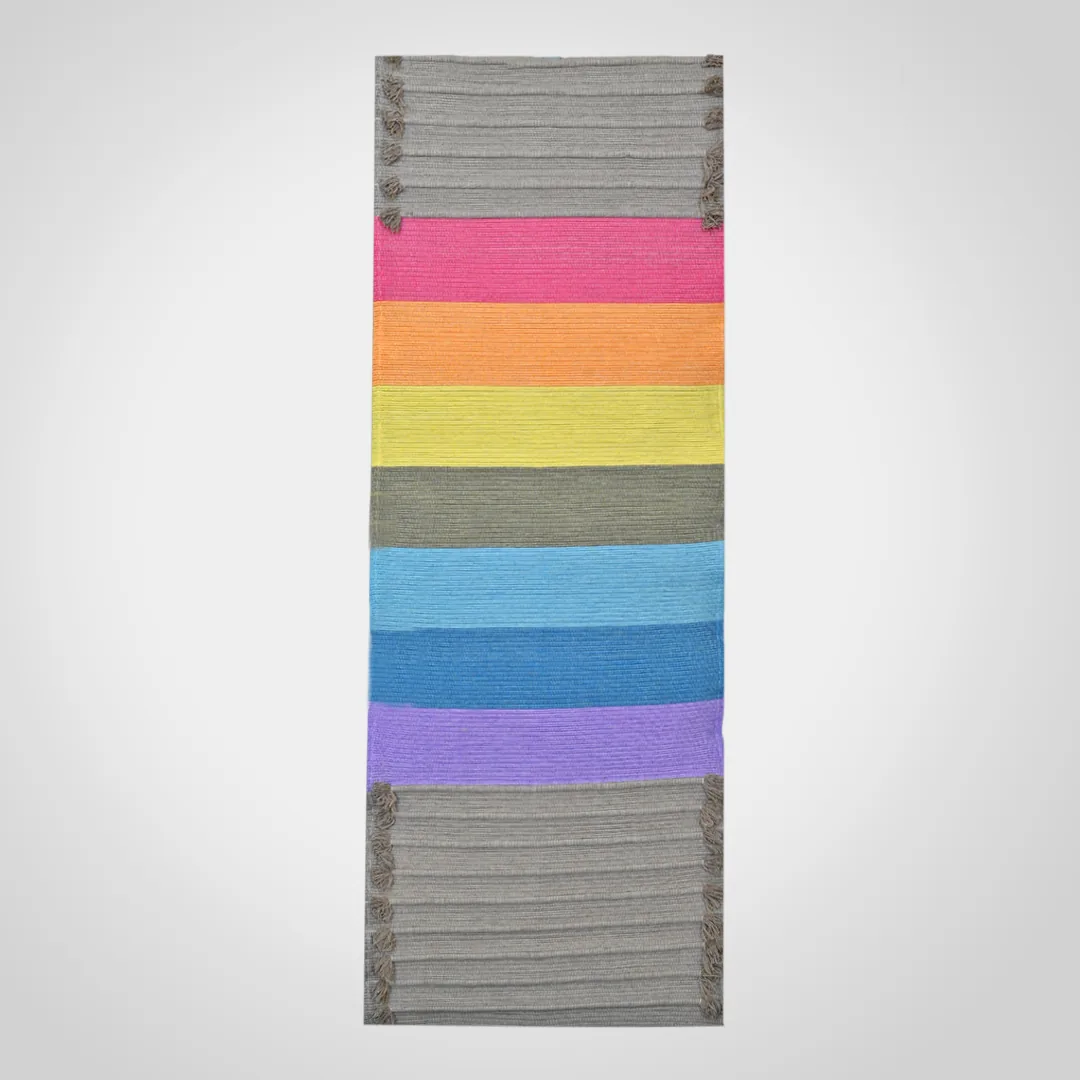
Prithvi means earth. An earth-toned six-ply ground carries the seven chakra colours across its centre, with hand-knotted tassels at either end. At 188 cm it is the longest of the three.
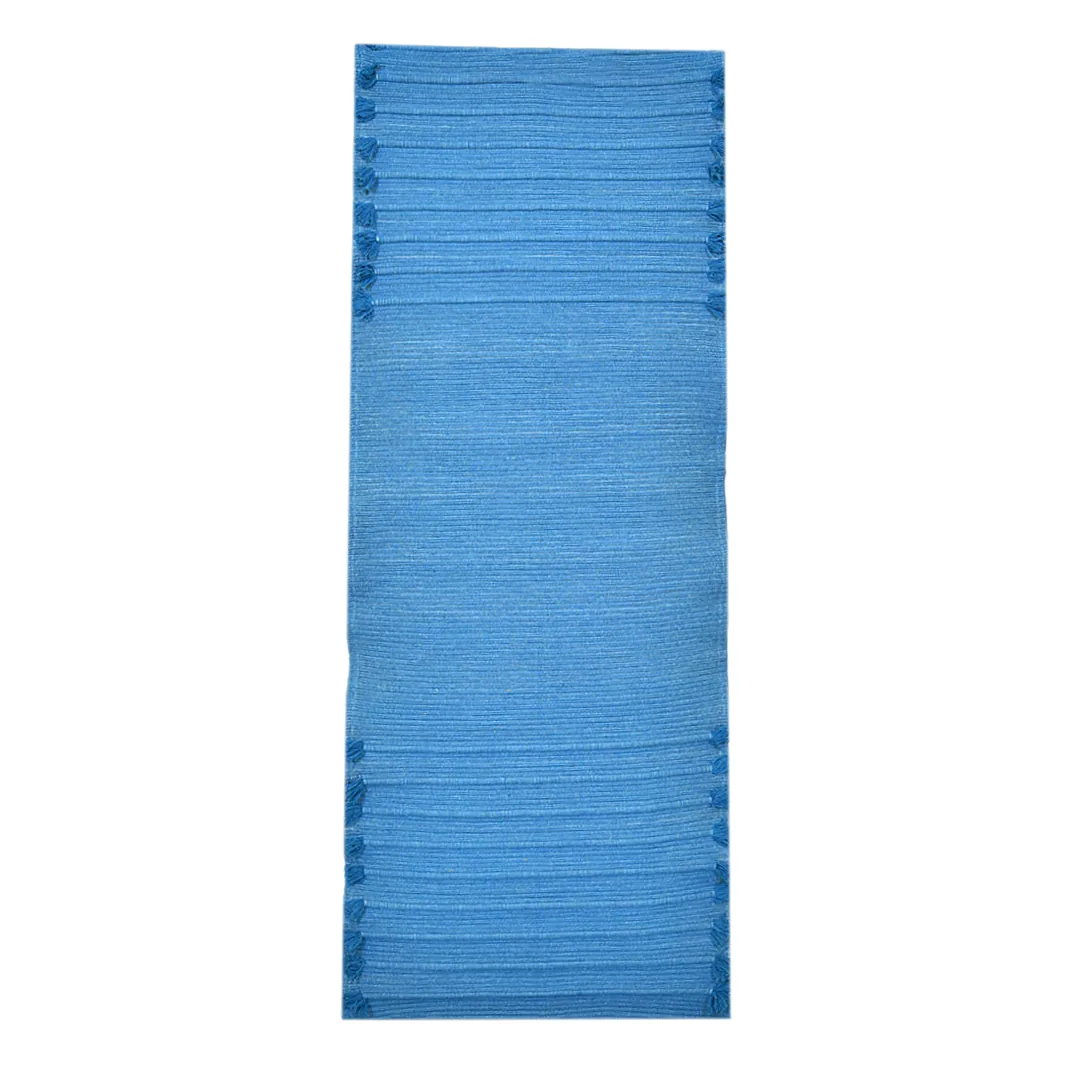
Indico is one colour from one plant. The ribbed weave shows the handloom work most plainly, which is why we often suggest it to people who want to see what they are paying for.
Frequently asked questions
What makes a yoga mat premium?
A mat deserves a higher price when you can point to what the money bought: certified fibre, hand-weaving by a named maker in a named place, plant or otherwise disclosed dyes, and a construction that can be washed and renewed so it lasts for years. Branding, thickness and words like "luxury" are not reasons on their own.
Are expensive yoga mats worth it?
They are worth it when the price reflects materials and labour you can verify and the mat will last long enough to cost less per year than a cheaper one replaced repeatedly. They are not worth it when the price is mostly marketing, so ask the maker specific questions about fibre, weaving, dye and care before deciding.
How much does a premium yoga mat cost in India?
Handwoven mats in GOTS-certified organic cotton with plant dyes and a hand-applied natural latex grip sit at roughly ₹3,500 to ₹5,000 at the time of writing; our Indico, Diamond Clay and Prithvi are ₹4,499, ₹4,450 and ₹4,400 respectively. Prices change, so check the product page before ordering.
How long does a handwoven cotton yoga mat last?
With cold hand washing, flat drying in shade and a fresh coat of natural latex when the grip softens, a densely woven cotton mat lasts for years of daily practice; we do not put a fixed number on it because use varies so much. Plant colours will soften over that time, which is normal.
Do premium cotton mats need special care?
They need simple, consistent care: cold water only, a mild natural detergent, no bleach, no fabric softener, no tumble dryer, and drying flat out of direct sun. Our Diamond mats can take a delicate 30 °C machine cycle in a laundry bag; the chakra rugs and Indico are better washed by hand.
If you would like to see the weave before you decide anything else, the Indico page shows it most clearly, and the cotton mats together let you compare all three with their care notes.