In India you can buy a yoga mat for a few hundred rupees or pay several thousand, and the difference is mostly material and labour, not branding. Mass-produced foam mats sit at the bottom, rubber, cork and machine-woven natural mats in the middle, and handwoven cotton and grass mats towards the top. Our own handwoven mats cost between ₹1,699 and ₹4,999 at the time of writing.
The price levels, roughly
These are broad bands, not a price list. Prices move with sales, sizes and thickness, so use the table to see what changes as you go up.
| Level | Typical materials | What you mainly pay for | Trade-offs |
|---|---|---|---|
| Entry (often under ₹1,000) | PVC or TPE foam, factory-made | Cushioning at low cost | Can tear or flake with heavy use |
| Middle (roughly ₹1,000–₹3,000) | Thicker foam, rubber, cork on rubber, machine-woven jute or cotton, handwoven grass | Better grip or natural materials | Rubber is heavy; grass is firm |
| Upper (roughly ₹3,000 and above) | Natural rubber, handwoven cotton rugs, organic or plant-dyed fibres | Labour, certified fibre, dye work | Higher cost; cotton gives less cushioning than foam |
What the cheapest mats are made of
Most low-priced mats are foam. PVC is, in the words of the encyclopaedia entry on polyvinyl chloride, the "third-most widely produced synthetic polymer of plastic", and it is made soft with plasticisers. TPE, a thermoplastic elastomer, combines rubber-like stretch with plastic processing. Both are cheap to make in volume and genuinely cushioned; if you want soft padding for little money, foam does that well.
What adds to the price of a handwoven mat
Labour
Hand-weaving is the largest single cost in our mats. A weaver throws the shuttle, works the treadles and beats each pass of weft in by hand, with no motor. A thick cotton rug takes longer than a thin grass mat, and the price follows the hours. We explain the steps in how a handloom yoga mat is woven.
Fibre
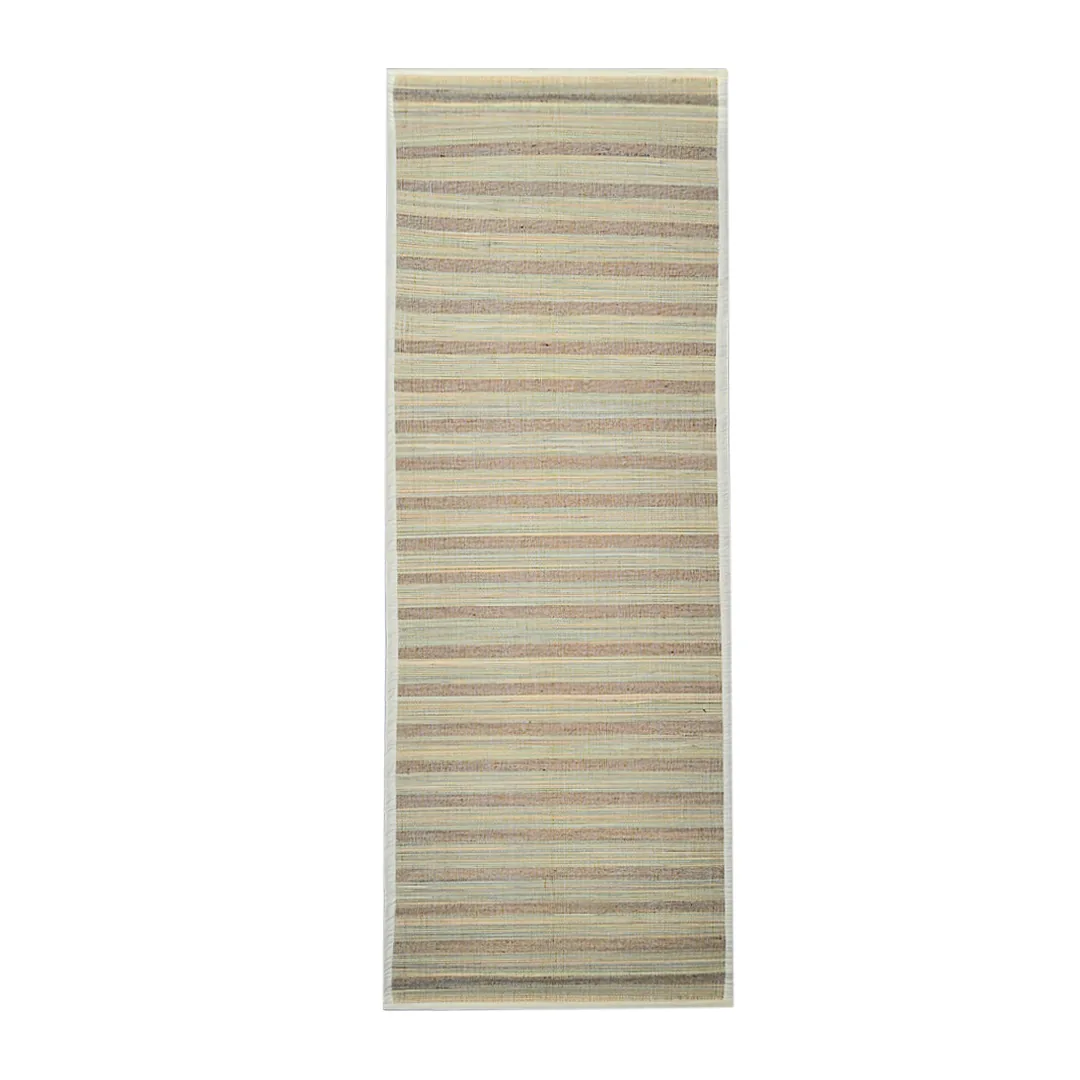
Organic cotton costs more than conventional cotton, and certification adds checks along the chain. We hold GOTS certification for our organic cotton; the GOTS standard requires certified organic fibres and certification of every company involved in production. Our cotton mats are made with GOTS-certified organic cotton. Our thinner grass mats, sambhu grass woven with organic cotton, are a lighter weave and cost less.
Dye
Plant dyes take time. Indigo, turmeric, alkanet root, tulsi and neem are among the plants we use, and dyeing with them means time in the dye bath, careful drying in shade and colour that varies a little from batch to batch. A mat that is left undyed, like our banana fibre mat, skips that step.
Backing
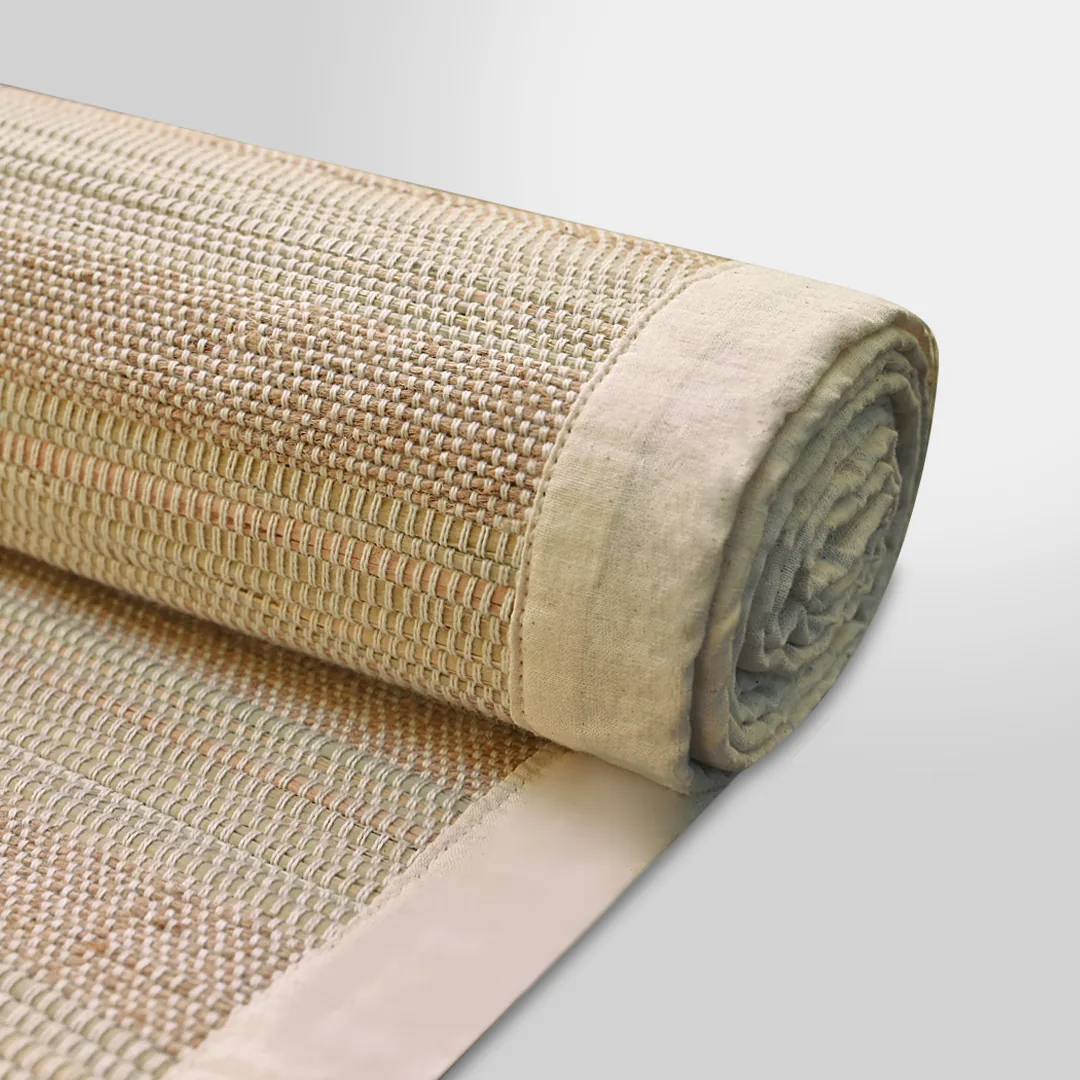
Most of our mats have a thin layer of natural tree latex brushed onto the underside by hand, which holds them on tile, marble and wood. If you are allergic to natural latex, choose with care and write to us first. The Darbha is different: it is backed in cotton cloth and folds flat, with no latex layer.
Thickness and weight
More cotton means more yarn and more weaving. A 7 mm cotton mat at about 1.8 kg simply contains more material than a 3 mm grass mat at about 1 kg.
Our range at the time of writing

| Mat | Fibre | Thickness | Price at the time of writing |
|---|---|---|---|
| Sambu Jute | Sambhu grass and organic cotton | 3 mm | ₹1,699 |
| Sambu Frame | Sambhu grass and GOTS-certified organic cotton | 3 mm | ₹1,799 |
| Sambu Diamond | Sambhu grass and organic cotton | 3 mm | ₹1,999 |
| Banana Fibre | Banana bark and fibre, cotton-bound | 3 mm | ₹2,000 |
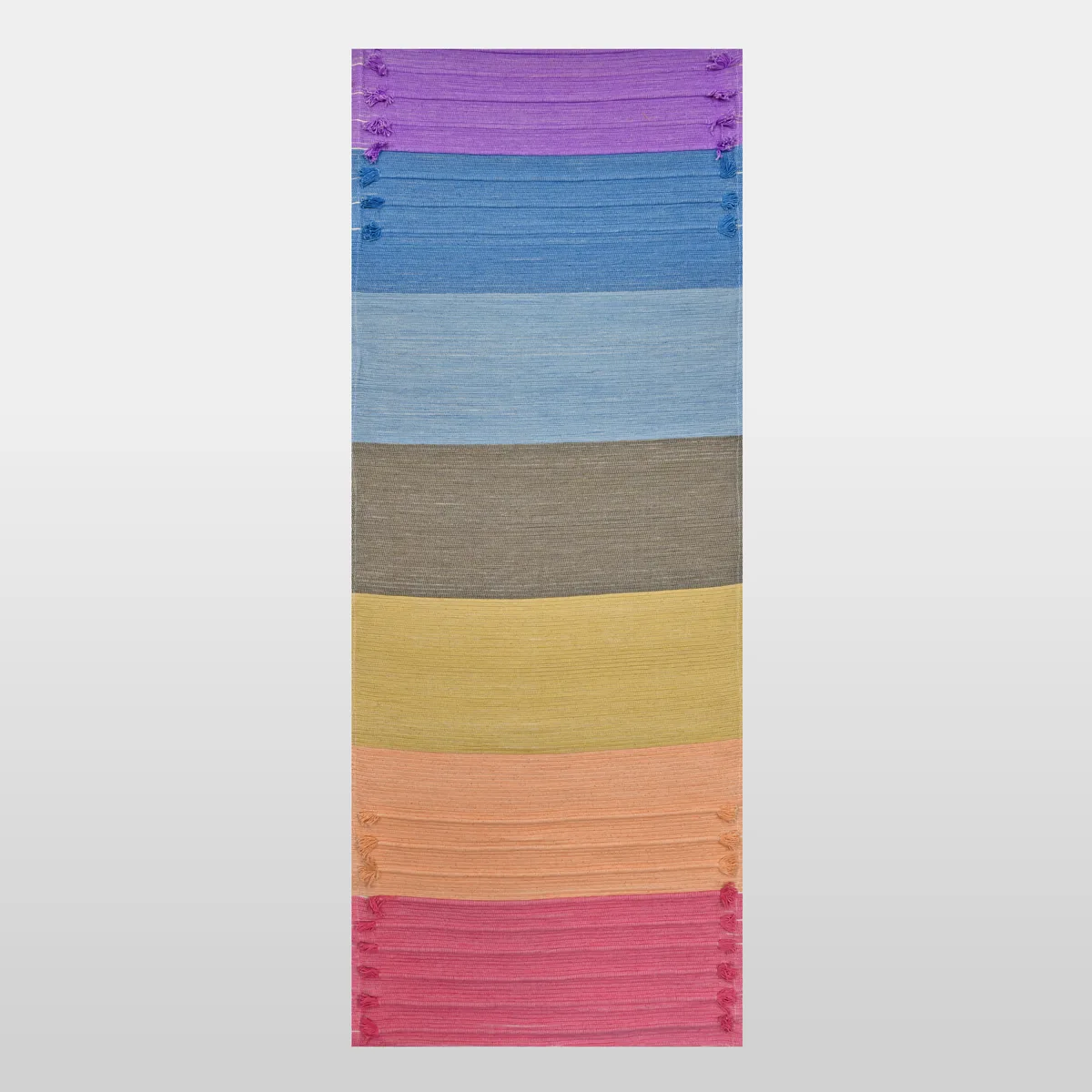
| Prana Shakti | GOTS-certified organic cotton, six-ply | 5 mm | ₹3,499 |
| Prithvi | GOTS-certified organic cotton, six-ply | 5 mm | ₹4,400 |
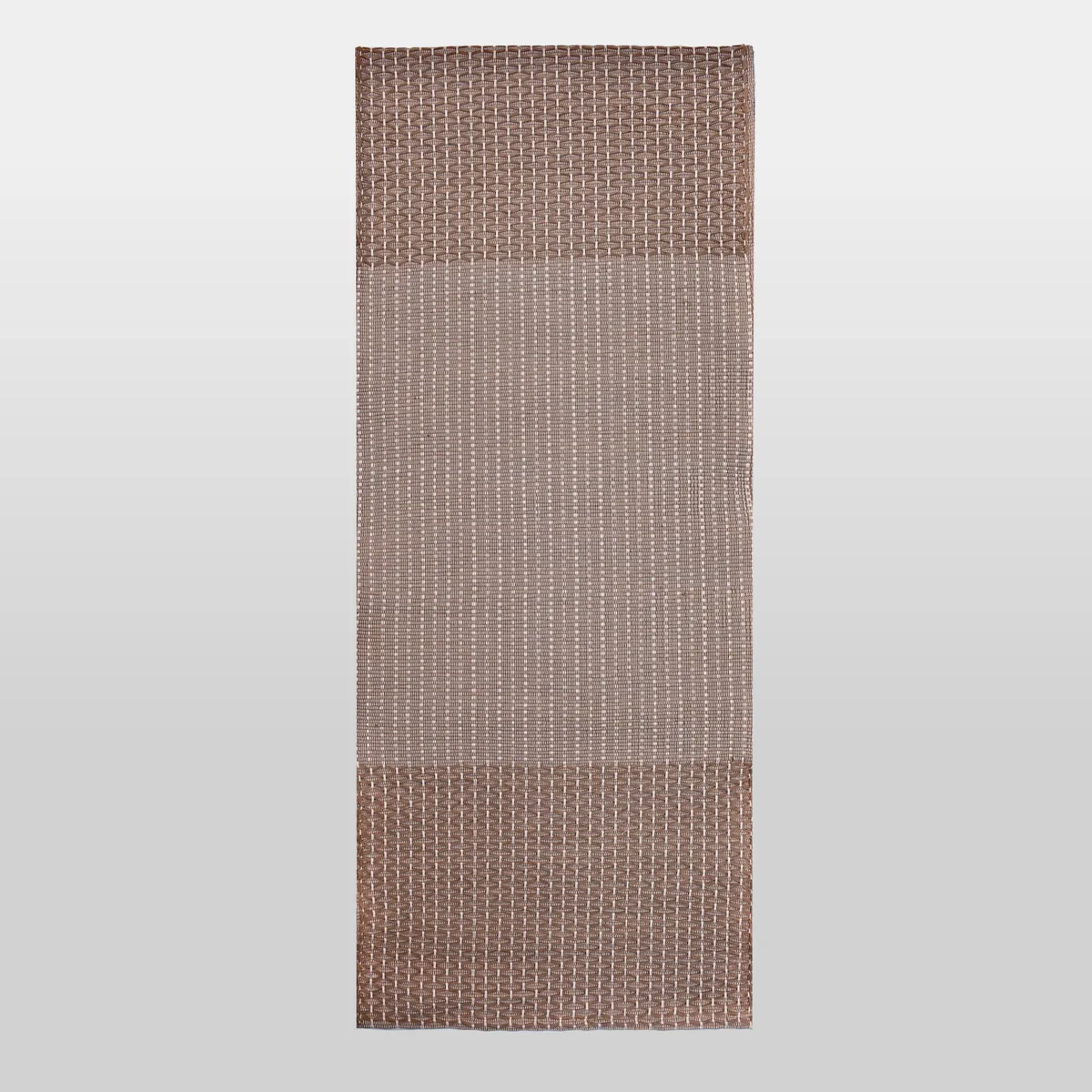
| Diamond Clay and Diamond Orange | GOTS-certified organic cotton | 7 mm | ₹4,450 |
| Indico | GOTS-certified organic cotton, true indigo | 5 mm | ₹4,499 |
| Darbha | Darbha grass, cotton cloth backing | ≈4 mm | ₹4,999 |
Despite its name, the Sambu Jute contains no jute. The Prana Shakti is a six-ply cotton rug coloured with plant dyes, and the Diamond mats are our thickest at 7 mm. For delivery costs, see the Shipping page for current terms.
How to judge whether a price is fair
- Check the material in plain words. "Natural" or "eco" on its own tells you nothing; a fibre name does.
- Ask how it was made. Handwoven, machine-woven and moulded mats cost very different amounts to produce.
- Look for certification scope. A certificate usually covers a fibre or a process, not the whole product.
- Compare thickness and weight together. A heavier mat of the same size usually has more material in it.
- Read the care instructions. A mat you can wash and keep for years may cost less over time than one you replace.
- Be wary of a handloom claim at a machine price. Our guide on how to spot a genuine handloom product explains what to check.
If your budget is firm, our guide to good yoga mats under ₹2,000 is honest about what you give up. If you are weighing a bigger spend, premium yoga mats in India looks at what should and should not justify it.
Frequently asked questions
How much does a good yoga mat cost in India?
It depends on what you need. Foam mats are often under ₹1,000 and give good cushioning. Natural and handwoven mats usually cost more because of the fibre and the hours of work. Our handwoven mats run from ₹1,699 to ₹4,999 at the time of writing, with the sambhu grass mats at the lower end and the cotton rugs and the Darbha at the upper end.
Why are handwoven cotton yoga mats more expensive than foam mats?
A foam mat is made by machine in volume, while a handwoven cotton mat is woven pass by pass by a weaver, often with organic cotton and plant dyes. Labour is the largest part of the cost. In return you get a dense, washable mat that can be repaired by hand, though with less cushioning than thick foam.
What is the cheapest TwinsPoles mat?
At the time of writing it is the Sambu Jute at ₹1,699, a 3 mm mat of sambhu grass woven with organic cotton. Despite the name it contains no jute. Like our other grass mats, it is firm rather than cushioned, has a hand-brushed natural latex layer underneath (if you are allergic to natural latex, choose with care and write to us first), and should be wiped clean rather than soaked.
If you would like the lowest-priced way into a handwoven mat, start with the Sambu Jute; if you want a thick cotton rug, compare the Prana Shakti and the Diamond Clay side by side.