To spot a genuine handloom product, look at the long edges, the evenness of the weave and the way the ends are finished, then look for the Government of India Handloom Mark label and ask the seller how and where it was woven. No single sign is proof, but together they are hard to fake, and a price too low for the work deserves a question.
Six checks you can make with your hands and eyes
Lay the piece flat in good light.
- The selvedge. Handloom edges are usually slightly uneven, because the weaver turns the weft by hand. Machine-woven edges tend to be ruler-straight.
- The beat. On a handloom the weft passes sit a touch closer or wider here and there, because each is beaten in by arm. Power loom cloth is even from end to end.
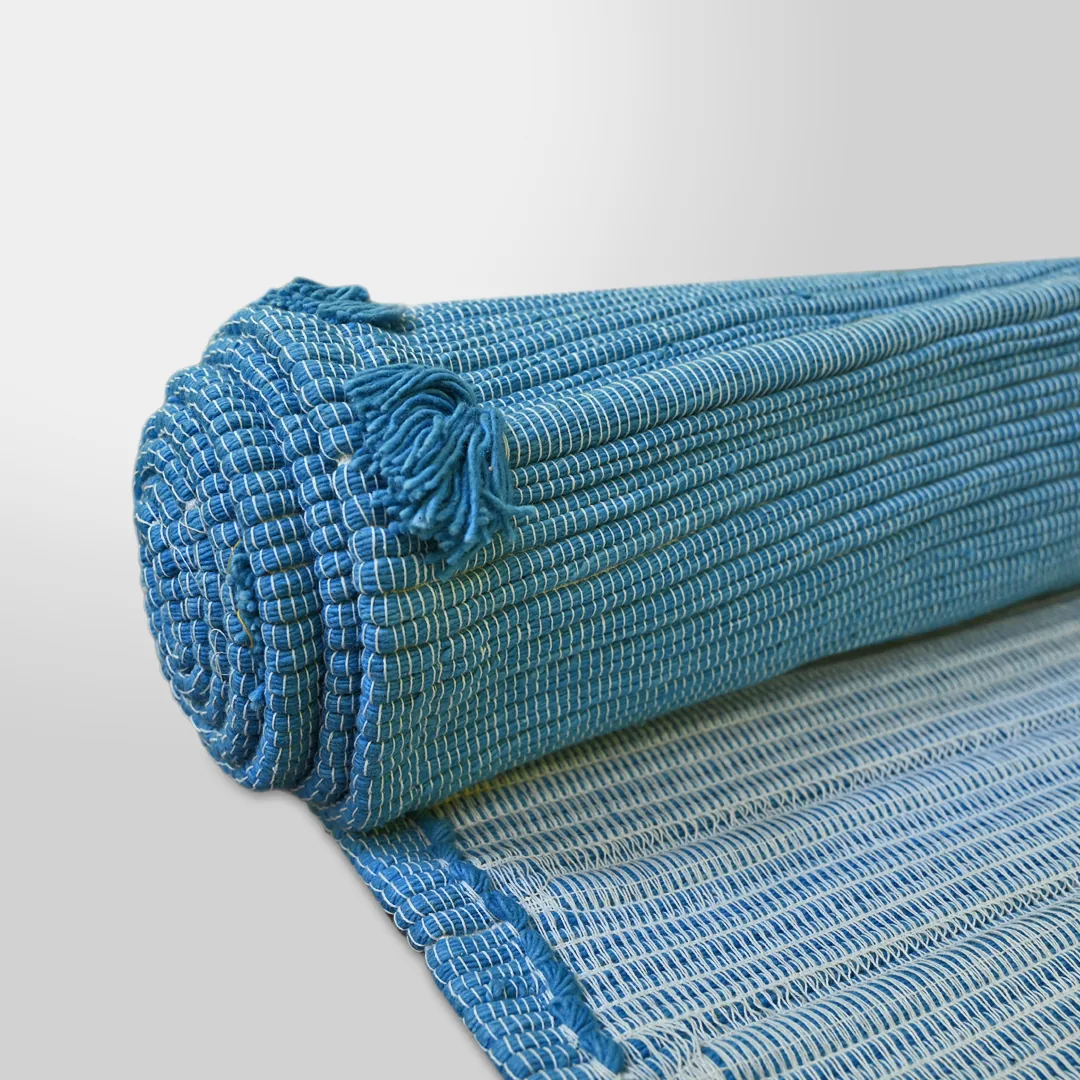
- The ends. Hand-knotted tassels or a hand-finished hem point to hand work; machine-stitched hems or cut warp ends are more typical of mill cloth.
- Colour joins. Where bands or patterns meet, hand weaving often shows a slight softness at the boundary rather than a perfectly crisp line.
- Small slubs and variations. Occasional thicker spots in the yarn and small shifts in shade are normal in handwoven cloth.
- Two pieces of the same design. Handwoven pieces differ slightly in width and shade; machine-woven ones are close to identical.

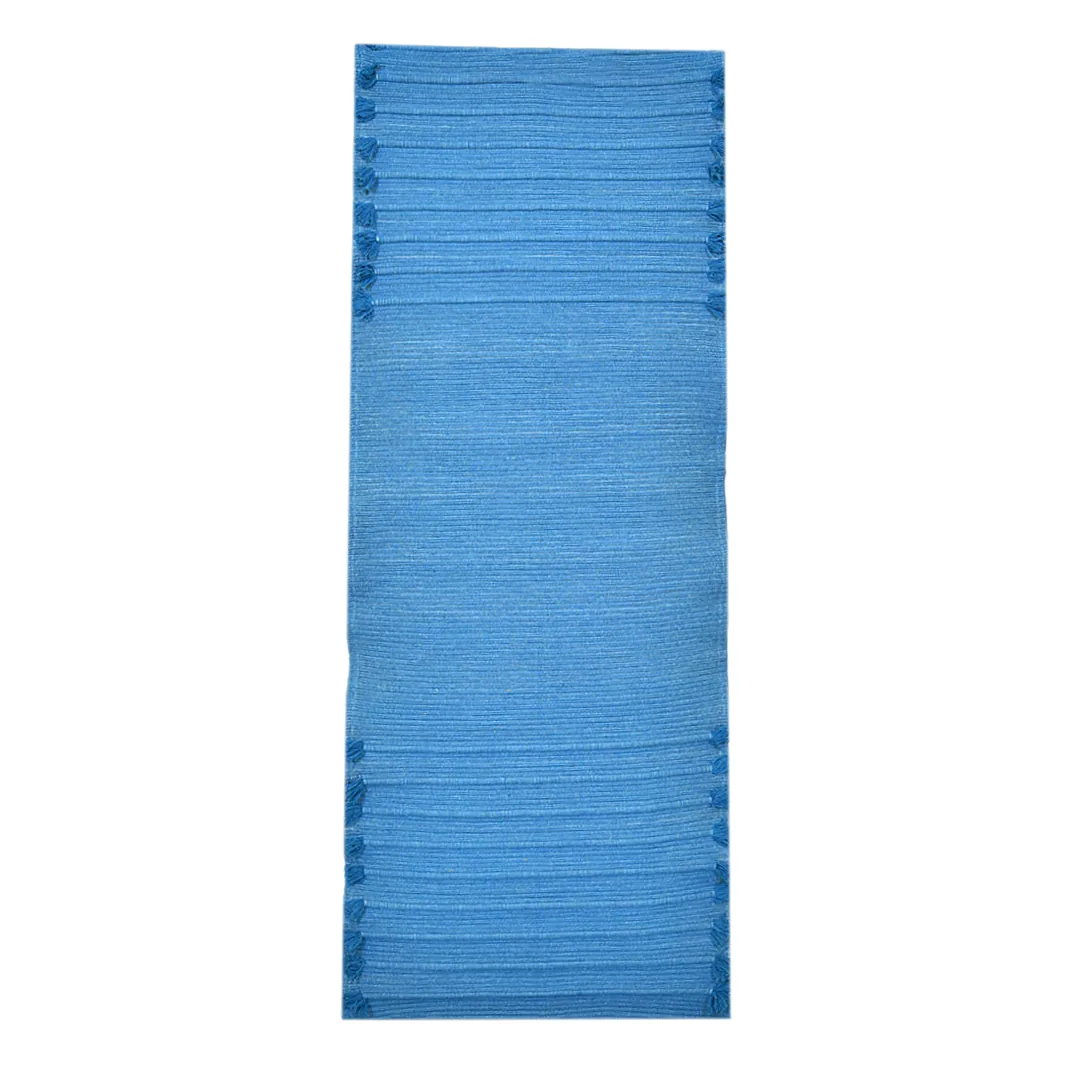
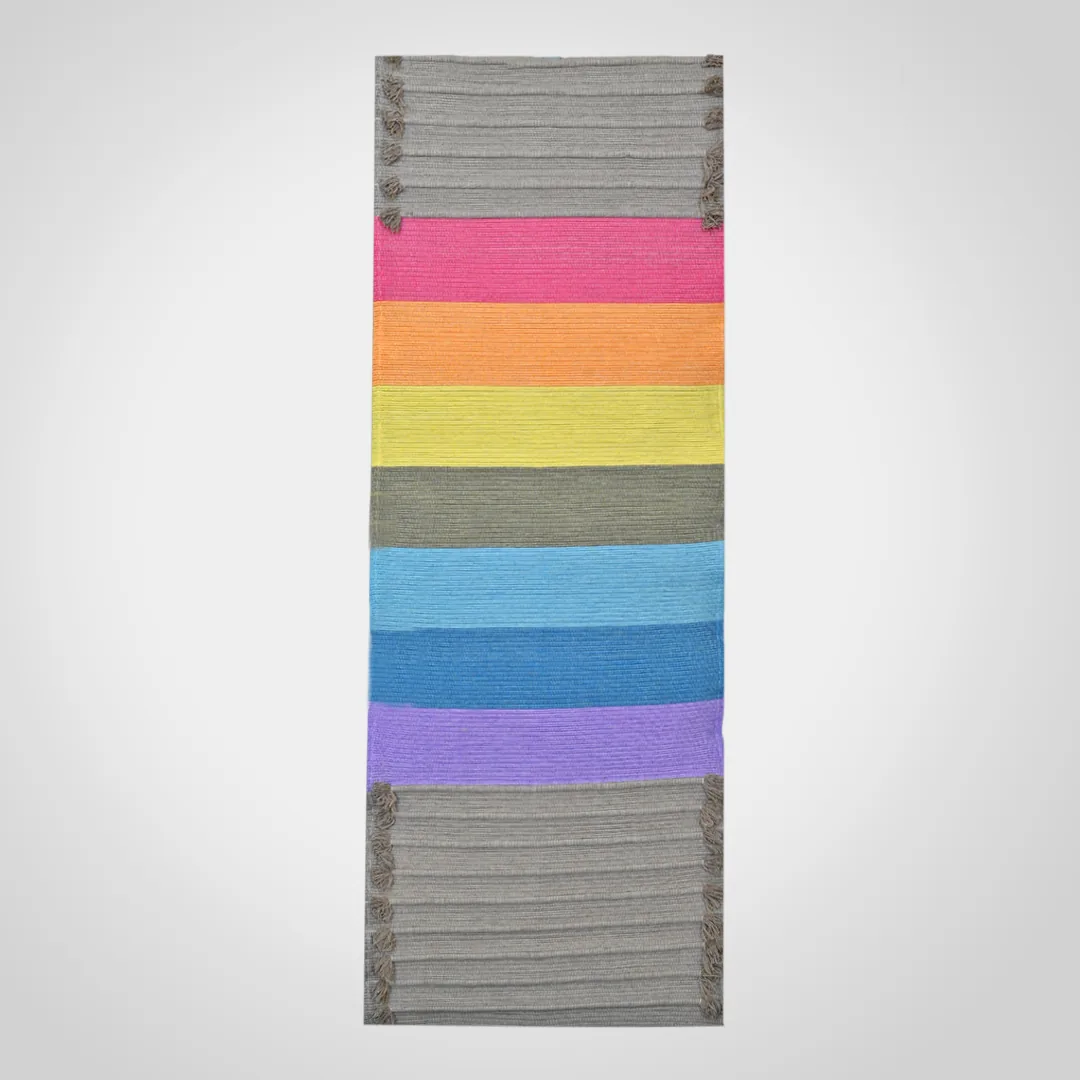
On our Prithvi you can see the hand-knotted tassels and an edge that is not perfectly regular. Our Indico shows the beat of the loom in its ribbed weave. We explain the differences in more depth in handloom vs power loom yoga mats.
The Handloom Mark: a buyer's tool
The Government of India's Handloom Mark scheme gives buyers more than their eyes to go on. National handloom marketing guidelines, as published by Assam's Directorate of Handloom and Textiles, state that the Mark "distinguishes handloom products from powerloom and mill products" and serves as a guarantee that the product is genuinely hand-woven. Weavers, master weavers, retailers, co-operatives and exporters are among those who can take part.
The labels are numbered. A Directorate General of Foreign Trade circular refers to Handloom Mark label numbers obtained from the Textiles Committee, with one label number for each piece exported.
How to use it as a buyer:
- Look for the Handloom Mark label on the product or its tag, and note its number alongside your bill.
- Not every handloom maker is registered, so a missing label does not prove a piece is machine-made; a genuine label is a strong sign that it is not.
We do not currently hold Handloom Mark registration, and we would rather say so plainly. Our article on the Handloom Mark and what it means covers the scheme in more detail.
Questions to ask the seller
A maker who weaves by hand can usually answer these easily.
- Who wove this, and where?
- Is the loom worked by hand and foot, or by motor?
- What fibre is it, and is any certification about the fibre or the whole product?
- How were the ends and edges finished?
- Can you show photographs of the loom or the workshop?
- Is the product registered under the Handloom Mark?
Vague answers or "handloom-style" wording are a reason to look closer. You can ask us any of these through the Contact page.
Price sanity
Hand-weaving is slow, and the weaver's time is the main cost of a handloom piece. If a "handloom" product costs the same as a similar machine-made one, it is fair to ask how. A high price proves nothing either way, but a very low one deserves a question. Our cotton rugs cost between about ₹3,500 and ₹4,500 at the time of writing; our price guide explains where that money goes.
Frequently asked questions
How can I tell handloom from powerloom quickly?
Check the long edges, which on a handloom are slightly uneven; the weave, where the beat varies a little; and the ends, which are often hand-knotted or hand-hemmed. Then look for a Handloom Mark label. Together these give a reliable picture.
What does the Handloom Mark guarantee?
The Handloom Mark is a Government of India scheme that serves as a guarantee to the buyer that a labelled product is genuinely hand-woven rather than made on a power loom or in a mill. Labels carry numbers obtained from the Textiles Committee. Not every handloom maker is registered, so an unlabelled product is not necessarily machine-made.
Are irregularities a sign of poor quality in handloom?
Usually not. Slight unevenness at the edges, small slubs and a little variation in shade or width are natural results of weaving by hand. Faults are different: broken warp threads, holes and loose tassels.
Is TwinsPoles registered under the Handloom Mark?
Not at present. All of our mats are handwoven by our own weavers in Komarapalayam, and we are happy to answer any question in this guide about how and where a mat was made, through our Contact page.
If you would like to practise these checks on a real piece, the Indico shows the hand beat most plainly, and the Prithvi shows hand-knotted tassels and colour bands meeting on a handloom.