The Handloom Mark is a Government of India label, launched in 2006, that assures a buyer the product carrying it is genuinely handwoven. Individual weavers, master weavers, retailers, traders and exporters can register under the scheme, whose implementing agency is the Textiles Committee, and registered users attach the label to their products. TwinsPoles does not currently hold Handloom Mark registration; this article explains the Mark as a tool for you as a buyer, not as a badge of ours.
What the Handloom Mark is
The Ministry of Textiles describes the Handloom Mark scheme as giving handloom products "a collective and distinctive identity": it promotes handwoven goods while assuring buyers that what they purchase is genuinely handwoven, and it helps identify the product or its manufacturer. By 30 June 2026, 29,402 Handloom Mark registrations had been issued and 815 retail outlets were selling products carrying the label (PIB backgrounder, National Handloom Day 2026).
The scheme was launched on 28 June 2006, and the Textiles Committee is its implementing agency, responsible for promoting registration through workshops, seminars and awareness programmes (PIB, Registration of Handloom Mark, 2011). The Office of the Development Commissioner (Handlooms) lists the Handloom Mark among its programmes alongside the India Handloom Brand (handlooms.nic.in).
Who can register
The 2011 release lists the categories of stakeholder registered under the scheme, among them individual weavers, master weavers, retailers and traders, manufacturer exporters, merchant exporters and co-operative societies (PIB, 2011). In other words, the Mark can be carried by the person who wove the cloth, by someone who commissions weavers, or by a shop that sells handloom goods made by others. A label on a product tells you the product is handwoven; it does not by itself tell you which of those the seller is. That is worth asking.
What the Mark guarantees, and what it does not
| The Handloom Mark tells you | The Handloom Mark does not tell you |
|---|---|
| The product is genuinely handwoven, not power loom | What fibre it is, or whether the cotton is organic |
| The seller is registered under a Government of India scheme | How it was dyed, or with what |
| Where to start if you have a complaint about authenticity | Whether the weave is dense, the finish sound or the price fair |
| Who wove it, or under what conditions |
This is not a criticism of the Mark. It is a label with one job, and it does that job. But "handloom" is a statement about the loom, not about the cotton, the dye or the backing, and a buyer who wants all of those answered needs to ask separately. We go through those separate questions in Handloom vs power loom yoga mats.
How to check a product
- Look for the label itself. Registered stakeholders attach the Handloom Mark label to their products. If a seller describes a product as "handloom" but there is no label, ask whether they are registered; many genuine small weavers are not, and we are one of them.
- Ask who holds the registration. Because retailers and traders can register as well as weavers, ask whether the label belongs to the shop or to the maker, and who the maker is.
- Use the scheme's agency. The Textiles Committee is the implementing agency for the Mark; questions about a label or a registration can be taken to it.
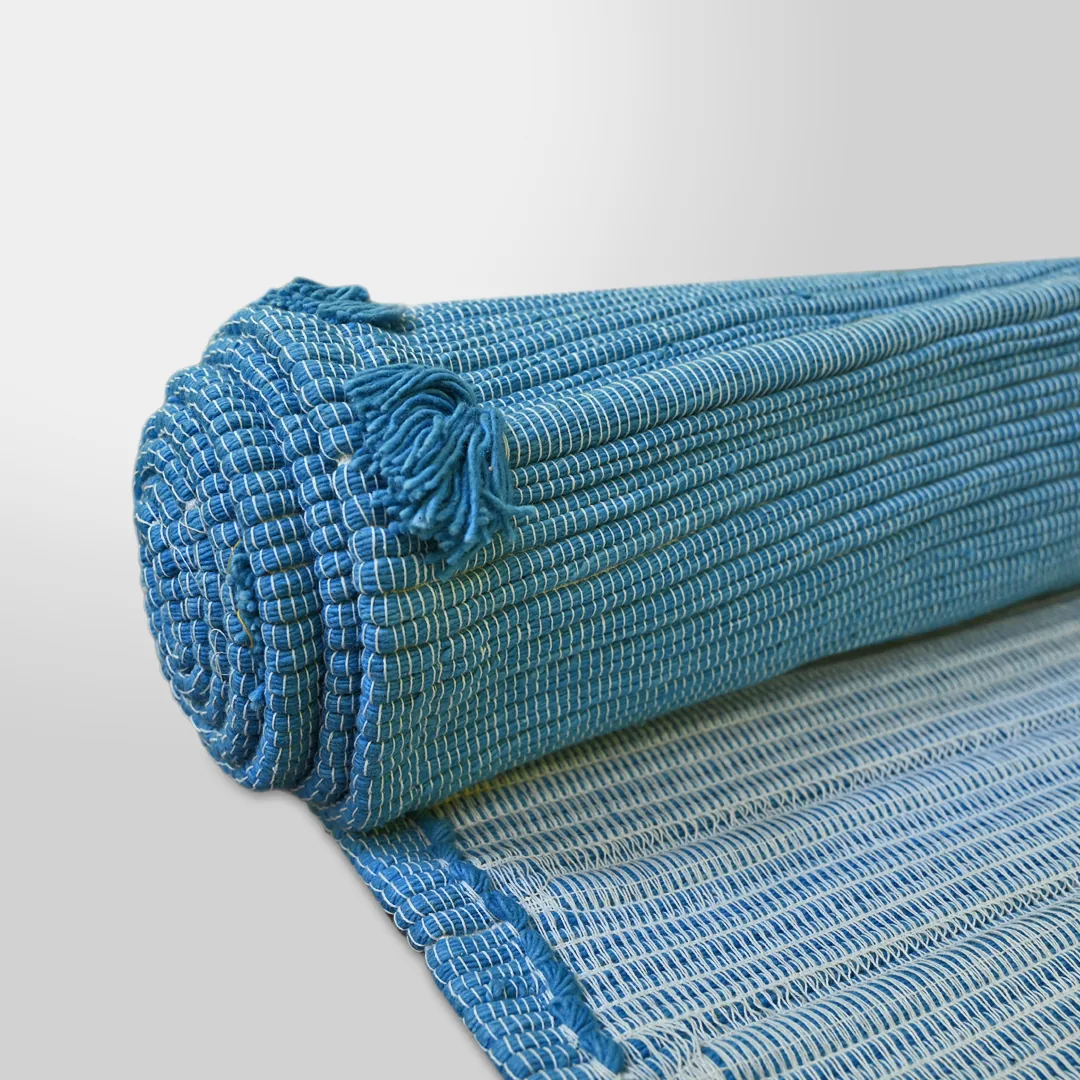
- Check the cloth too. A label can be checked, but so can the selvedge, the tassels and the beat of the weave. The practical checks are in How to spot a genuine handloom product.
There is a second, separate label to know about. The India Handloom Brand was launched on the first National Handloom Day, 7 August 2015, and is positioned by the Ministry as adding quality assurance on top of the handloom identity (PIB backgrounder, 2026). It is not the same thing as the Handloom Mark, and we do not hold it either.
Where we stand
We weave every mat by hand in our own workshop in Komarapalayam, and we are not currently registered under the Handloom Mark scheme. We would rather say that plainly than let a reader assume otherwise from the word "handloom" on our pages. If and when we register, we will say so here.
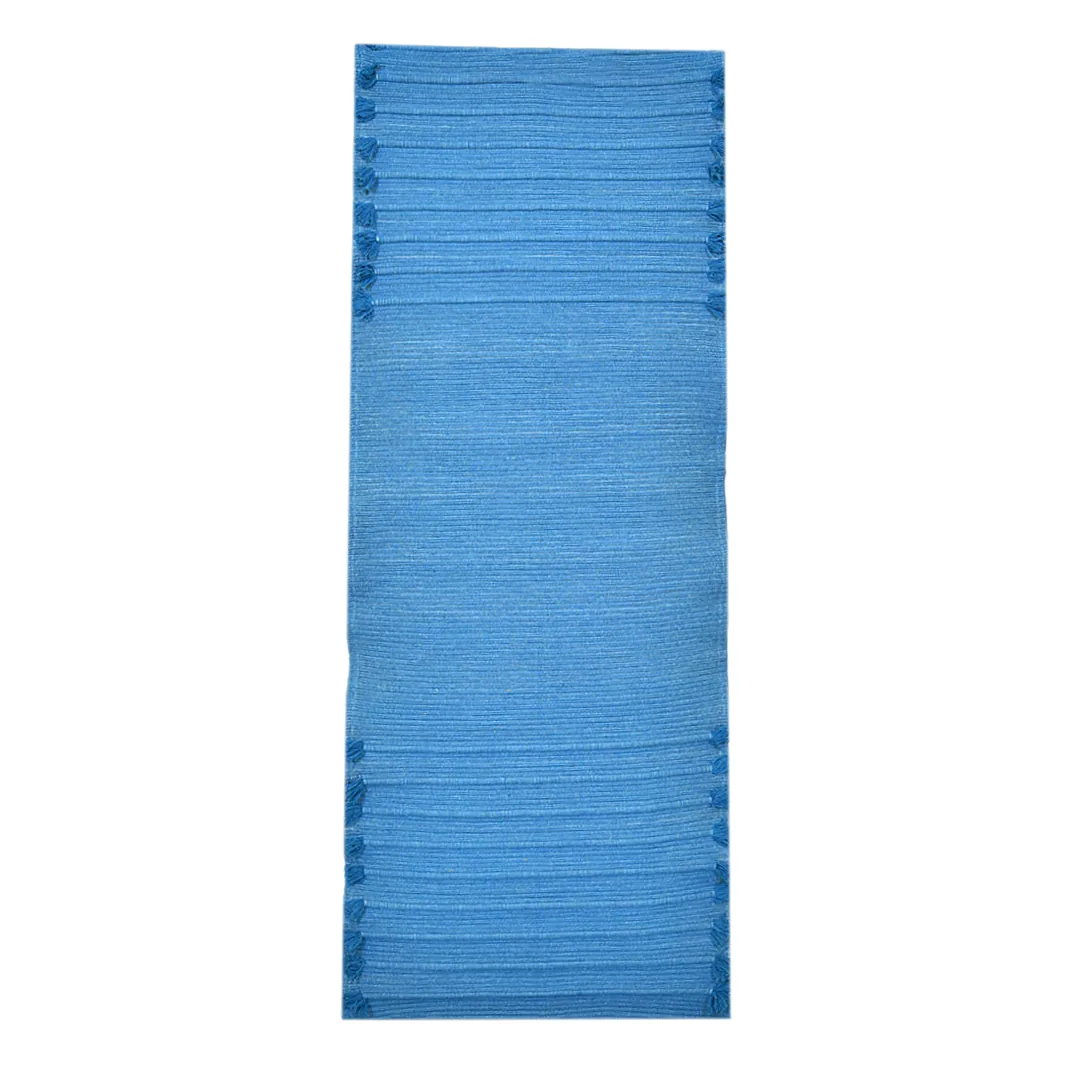
In the meantime, our evidence is the mat. The Indico is a single-colour ribbed rug in GOTS-certified organic cotton whose weave shows the hand beat more clearly than anything else we make; the Prithvi shows how seven colour bands meet on a handloom, with the slight softness at each boundary that a machine does not leave. And you can ask us directly, through the Contact page, how and where any mat was woven.
Frequently asked questions
What does the Handloom Mark mean?
It is a Government of India label, launched on 28 June 2006, that assures the buyer a product is genuinely handwoven rather than made on a power loom. The scheme gives handloom products a collective identity and helps identify the product or its manufacturer. The Textiles Committee is the implementing agency, and registered weavers, traders and exporters attach the label to their goods.
Who can use the Handloom Mark?
Stakeholders registered with the Textiles Committee under the scheme. The categories listed by the Ministry of Textiles include individual weavers, master weavers, retailers and traders, manufacturer exporters and merchant exporters. Because sellers as well as makers can register, it is reasonable to ask whose registration a label belongs to.
Does the Handloom Mark mean the product is organic or naturally dyed?
No. The Mark certifies only that the product is handwoven. Fibre, organic status, dye and backing are separate questions with separate evidence; organic cotton, for example, is covered by GOTS certification of the cotton, not by the Handloom Mark. Ask about each on its own.
Does TwinsPoles have the Handloom Mark?
No. Our mats are handwoven by our own weavers in Komarapalayam, but we are not currently registered under the Handloom Mark scheme, and we do not use the label. We say so plainly so that nobody assumes otherwise. We hold GOTS certification for our organic cotton, which is a different certification about a different thing.
If you want to look at the handwoven signs for yourself before you look for a label, start with the Indico, and read How to spot a genuine handloom product alongside it.