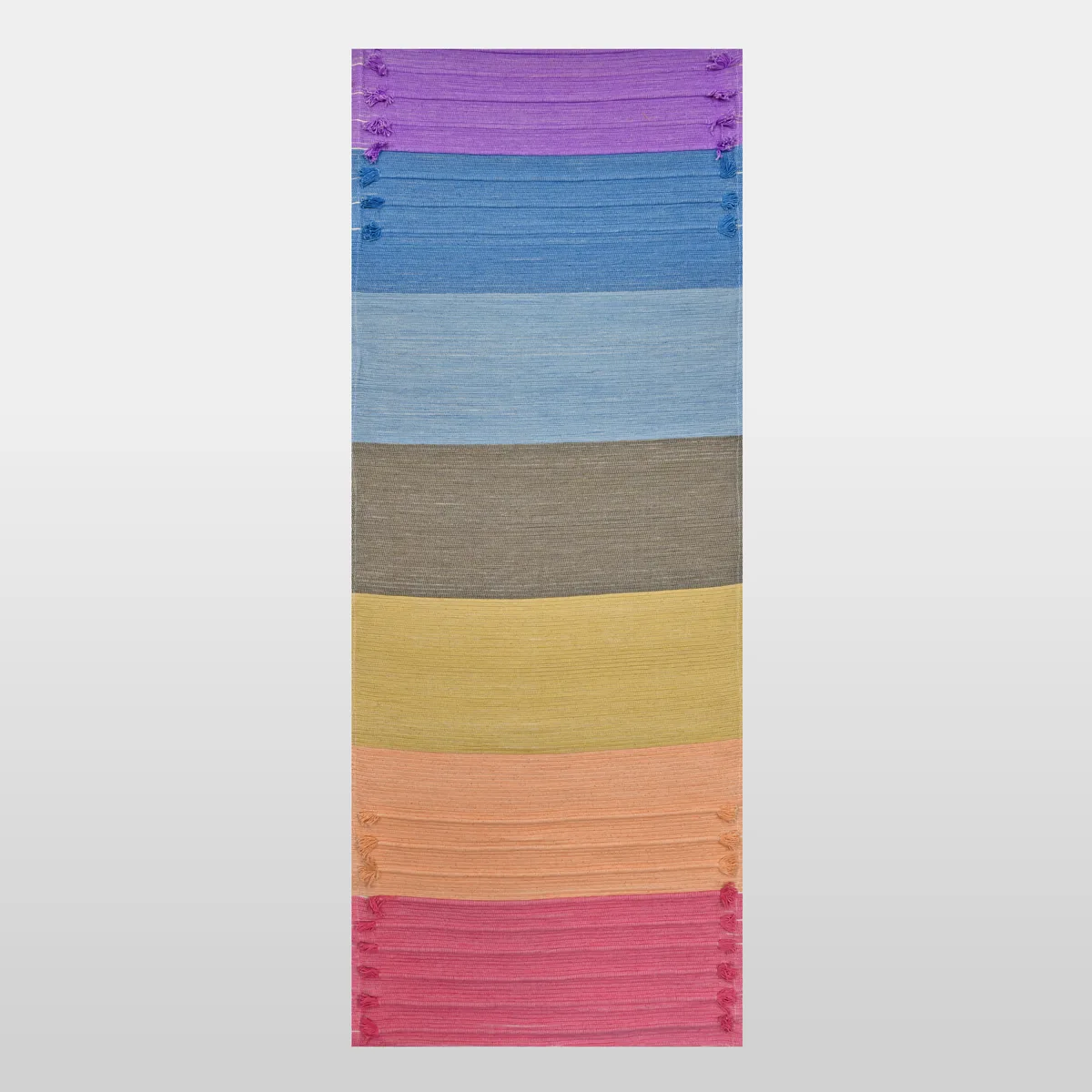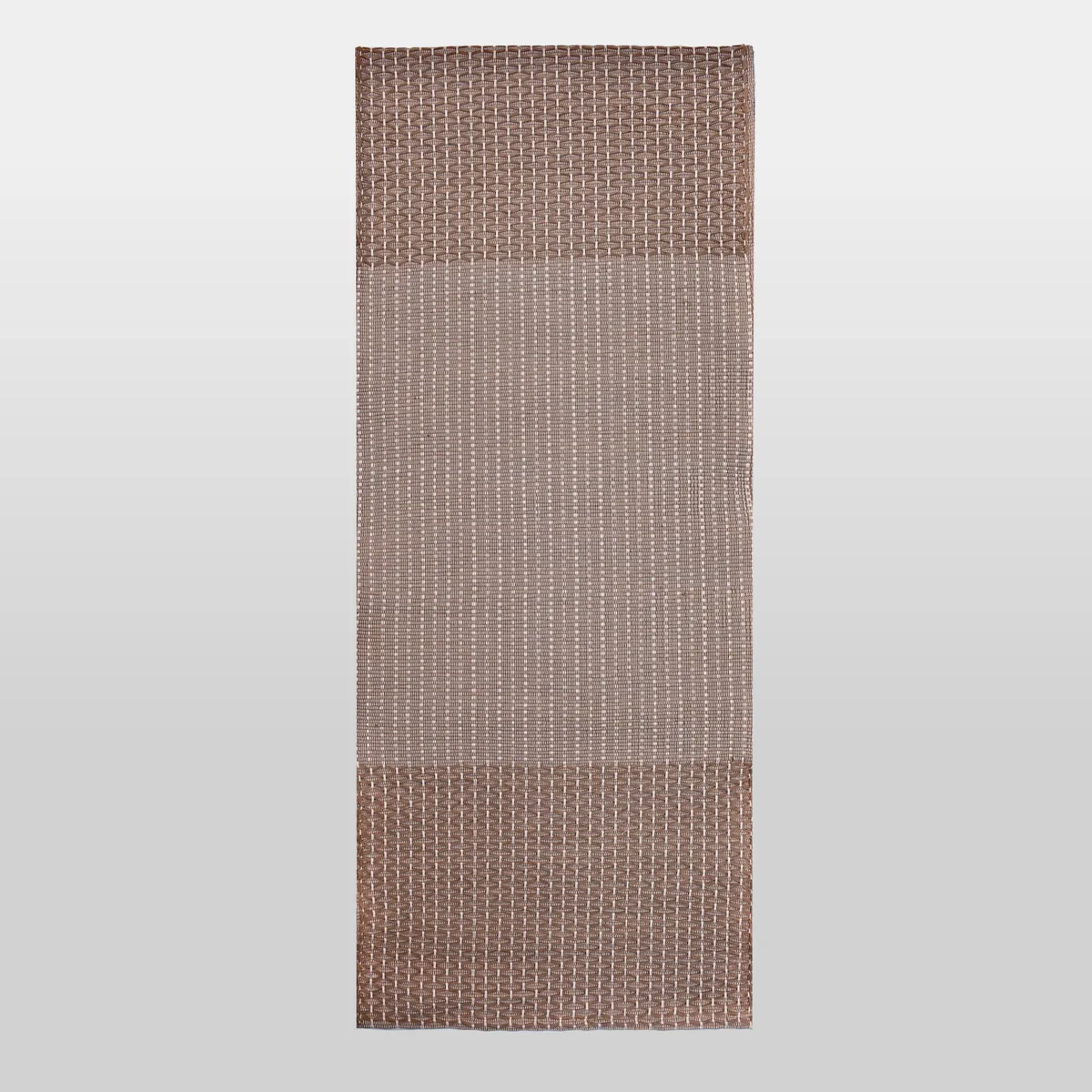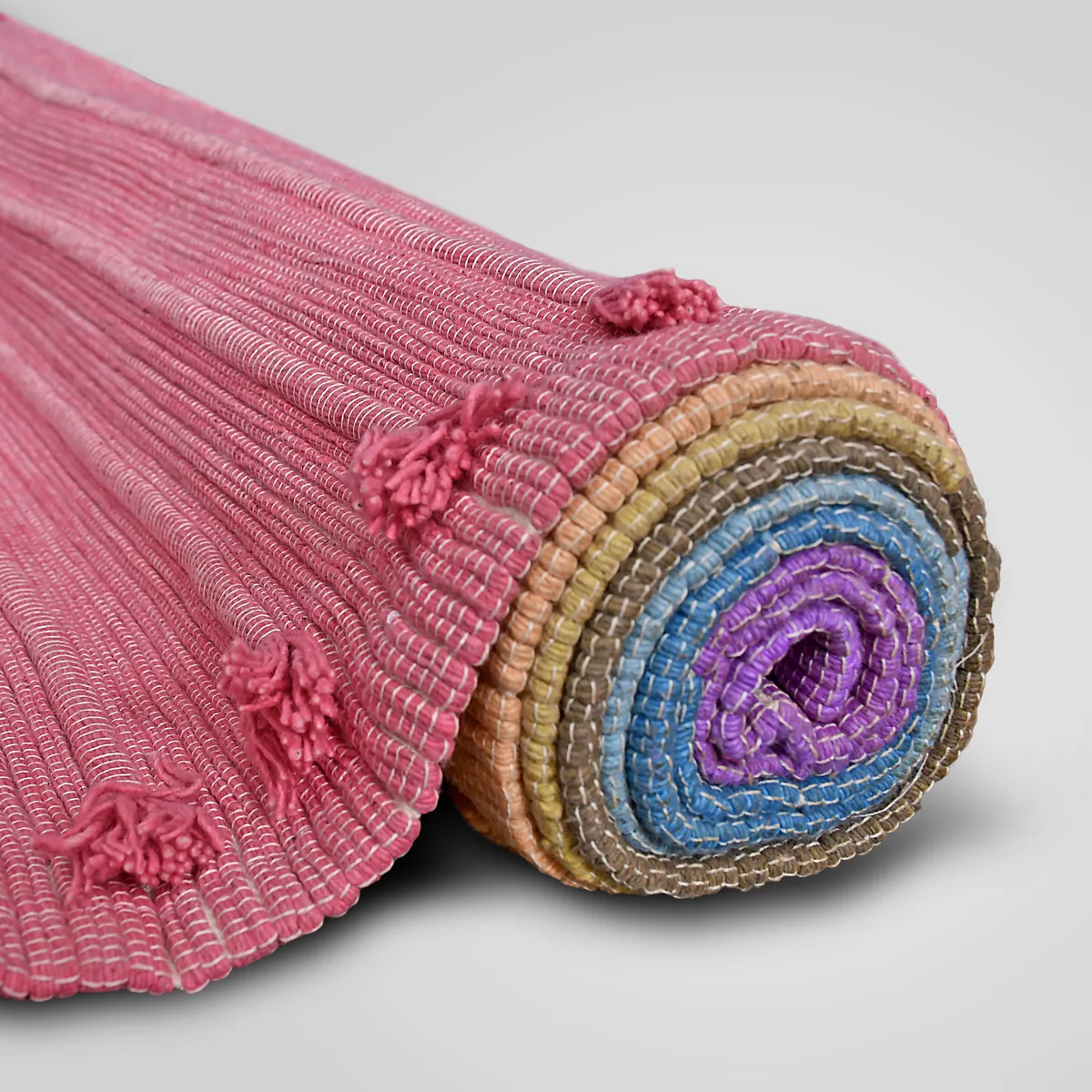
Plant colour gets into cotton in stages: the yarn is scoured clean, treated with a mordant so the dye will bind, steeped in a bath made from the plant, rinsed and dried in shade. Indigo is the exception: it is a vat dye that goes onto the yarn in an alkaline vat and turns blue when it meets the air. This is the way we work in our dye shed in Komarapalayam, described in general terms rather than as a timetable, because no two days in a dye shed are the same.

Before any colour: scouring
Raw cotton yarn is not ready for dye. It carries natural waxes and whatever it picked up in spinning and handling, and if those stay on, the colour takes patchily. So the first job in the shed is scouring: the yarn is washed hot with a mild alkali, rinsed until the water runs clear and left clean and open. It looks like nothing has happened. Everything that happens afterwards depends on it.
We dye yarn, not finished mats. Colour goes into the thread before it goes onto the loom, which is why the bands on a chakra rug are woven in rather than printed on.
Mordanting
Most plant dyes will not simply stay on cotton. They need a mordant, which is a substance used to set or bind a dye on the fibre; mordants are commonly metal salts such as alum, and the mordant chosen affects the shade the dye finally gives (Wikipedia: Mordant). We pre-mordant, which means the yarn is treated with the mordant first and then dyed, so the bond between mordant and dye forms on the fibre itself.
We will not pretend to publish our mordant recipes, partly because they are ours and partly because they shift with the water, the season and the yarn. What we can say is that the same dye plant gives us more than one tone depending on how the yarn was prepared, which is how a small set of plants becomes a wide palette.
The dye baths
The plant material is prepared, steeped and strained, and the mordanted yarn goes into the warm bath. It stays until the dyer judges the depth of colour by eye against a reference skein, is lifted, rinsed and hung. There is no dial for "clay" or "rose"; there is a person looking at wet yarn in daylight.
The plants we name are the ones we actually use: indigo leaves for blue, turmeric rhizome for yellow, alkanet root (Alkanna tinctoria) for the muted clay of the Diamond Clay, and tulsi and neem among the more than twenty herbs that go into the palette of our chakra rugs. On the Prana Shakti, the rose ground and the seven chakra bands are all plant colour on GOTS-certified organic cotton. Where we have not published the plant behind a colour, as with the orange of the Diamond Orange, we say "plant-dyed" and leave it there.
These dyes are plant-based and traditionally used in Tamil Nadu. We make no claims about what they do for your body, because we cannot support any, and a dye shed is not a clinic.
The indigo vat
Indigo breaks the rules above. It is a natural dye obtained from the leaves of plants of the Indigofera genus, particularly Indigofera tinctoria, and it is insoluble in water, which is why it is also referred to as a pigment. To use it, the dyer reduces it in the vat to a soluble form known as white indigo or leuco-indigo. The yarn goes in and comes out looking pale and yellowish; then, in the dyer's words, it blooms: the white indigo combines with oxygen in the air and reverts to the insoluble, intensely coloured blue (Wikipedia: Indigo dye).
So indigo is built in dips, each followed by airing, rather than by soaking longer, and the same source notes that indigo allows repeated dyeing to produce a range of shades. A deep blue is many dips. Because it is a pigment held at the surface of the fibre rather than a dye bonded through a mordant, new indigo rubs off a little and softens with washing. We explain what that means for the Indico mat in Natural indigo on cotton.
Drying in shade
Dyed yarn is rinsed until the water is nearly clear and then dried in shade with air moving through it, never in direct sun. Sun is the fastest way to fade a plant colour before it has even reached the loom, so the shed has more shade than you might expect of a place that depends on warmth. The same rule follows the finished mat into your home: dry flat, in shade, never in direct sun. The Mat care page has the routine for each mat family.
Why no two baths match
Plant colour varies between batches. The turmeric is from a different harvest, the water is a little harder after the rains, the yarn took the mordant a shade differently. We keep reference skeins and we aim for consistency, but we would be lying if we promised two rugs dyed months apart will be identical. We present this as the nature of plant colour, not a fault, and we would rather you knew before ordering. The reasons colour softens over years are in Why plant-dyed mats change colour, and the plants themselves get a fuller treatment in Herbal and plant dyes on yoga mats.
What we do not claim
We do not claim our dyes are antibacterial, therapeutic or healing. We do not claim that natural dyeing uses no water or no chemistry; mordants are chemistry, and rinsing is water. We claim that the colours on our cotton mats come from plants, that we dye the yarn ourselves in our own shed, and that we will tell you which plants where we can.
Frequently asked questions
What are the steps in natural dyeing of cotton?
Scouring, to clean the yarn of waxes and dirt so colour takes evenly; mordanting, to treat the fibre with a dye fixative such as alum so the plant dye will bind; the dye bath, where mordanted yarn is steeped in a strained plant extract until the depth of colour is right; rinsing; and drying in shade. Indigo skips the mordant and is dyed in a vat instead.
What is a mordant and why does cotton need one?
A mordant is a substance used to set, or bind, a dye on a fabric; mordants are commonly metal salts such as alum. Most plant dyes have little affinity for cotton on their own, so the yarn is treated with the mordant first and the dye then forms a complex with it on the fibre. The mordant chosen also changes the shade the dye gives.
Why is indigo dyed differently from other plant dyes?
Because indigo is insoluble in water. The dyer reduces it in an alkaline vat to a soluble pale form called white indigo or leuco-indigo; the yarn is dipped, lifted, and on contact with oxygen in the air the white indigo reverts to insoluble blue indigo on the fibre. Depth of colour comes from repeated dips and airing rather than from a longer soak.
Why does the colour of a plant-dyed mat vary between batches?
Because the plants, the water and the yarn vary. A different harvest of turmeric, slightly harder water or yarn that took the mordant a shade differently will all move the colour. We dye by eye against reference skeins and aim for consistency, but two rugs dyed months apart will not be identical, and plant colours soften gently over years of use.
If you would like to see plant colour on cotton, the Diamond Clay is a single alkanet tone on a 7 mm lattice and the Prana Shakti carries the full chakra palette. All our cotton mats are in the cotton collection.