Komarapalayam is a textile town in Namakkal district, Tamil Nadu, on the banks of the Cauvery, with the town of Bhavani facing it from the opposite bank. It is known for cloth: both power loom weaving and handloom production happen here. Our workshop is in Kattur, in Komarapalayam, and every TwinsPoles mat is handwoven and dyed there by our own weavers.

Where Komarapalayam is
Komarapalayam is a municipality and one of the taluks of Namakkal district, in the west of Tamil Nadu (Namakkal district). The town sits on the banks of the Kaveri, which most of us here call the Cauvery, and of the Bhavani river (Wikipedia: Komarapalayam). Across the water is Bhavani, which belongs to Erode district; the two are described as twin towns separated by the Cauvery. Bhavani stands where the two rivers meet, a confluence known locally as Kooduthurai (Wikipedia: Bhavani).
So when we say our mats come from a river town, that is plain geography rather than a brand story. One bank is Namakkal district, the other is Erode district, and cloth is made on both.
A textile town
Komarapalayam is known for its textile industry, in particular power loom weaving and handloom production (Wikipedia: Komarapalayam). The town is also a centre for sago manufacturing, which has nothing to do with mats but is part of the sound and smell of the place.
We want to be honest about the balance. A great deal of the cloth woven in and around the town today comes off power looms. Handloom work continues alongside it, and that is the part we belong to. We do not have figures for how many looms of each kind there are, and we would rather not guess. What we can say is that in our own workshop the looms are worked by hand and foot, and no electricity is used in the weaving itself. The difference between the two is explained in Handloom vs power loom yoga mats.
Across the river
Bhavani, on the opposite bank, has its own weaving name. The thick cotton blankets and carpets made there are known as Bhavani Jamakkalam, and they carry a geographical indication (Wikipedia: Bhavani). We do not weave jamakkalam and we do not use the name. We mention it because it tells you something about this stretch of the Cauvery: heavy cotton woven by hand is the trade on both banks, and our yoga rugs are one small branch of it. Tamil Nadu's wider mat traditions, including the protected Pattamadai mats of Tirunelveli, which we also do not make, are covered in Traditional mats of Tamil Nadu.
Our place in it
Our workshop is in Kattur, a part of Komarapalayam. We weave and dye under our own roof, with our own weavers, and we sell what we make directly. There are no middlemen between the loom and your door and no resold stock from elsewhere. If a mat is on our site, it was woven here.
That matters in a town like ours because the people who do the work should be the ones known for it. We describe how our weaving day runs, without names or numbers we cannot stand behind, in Who weaves your mat.
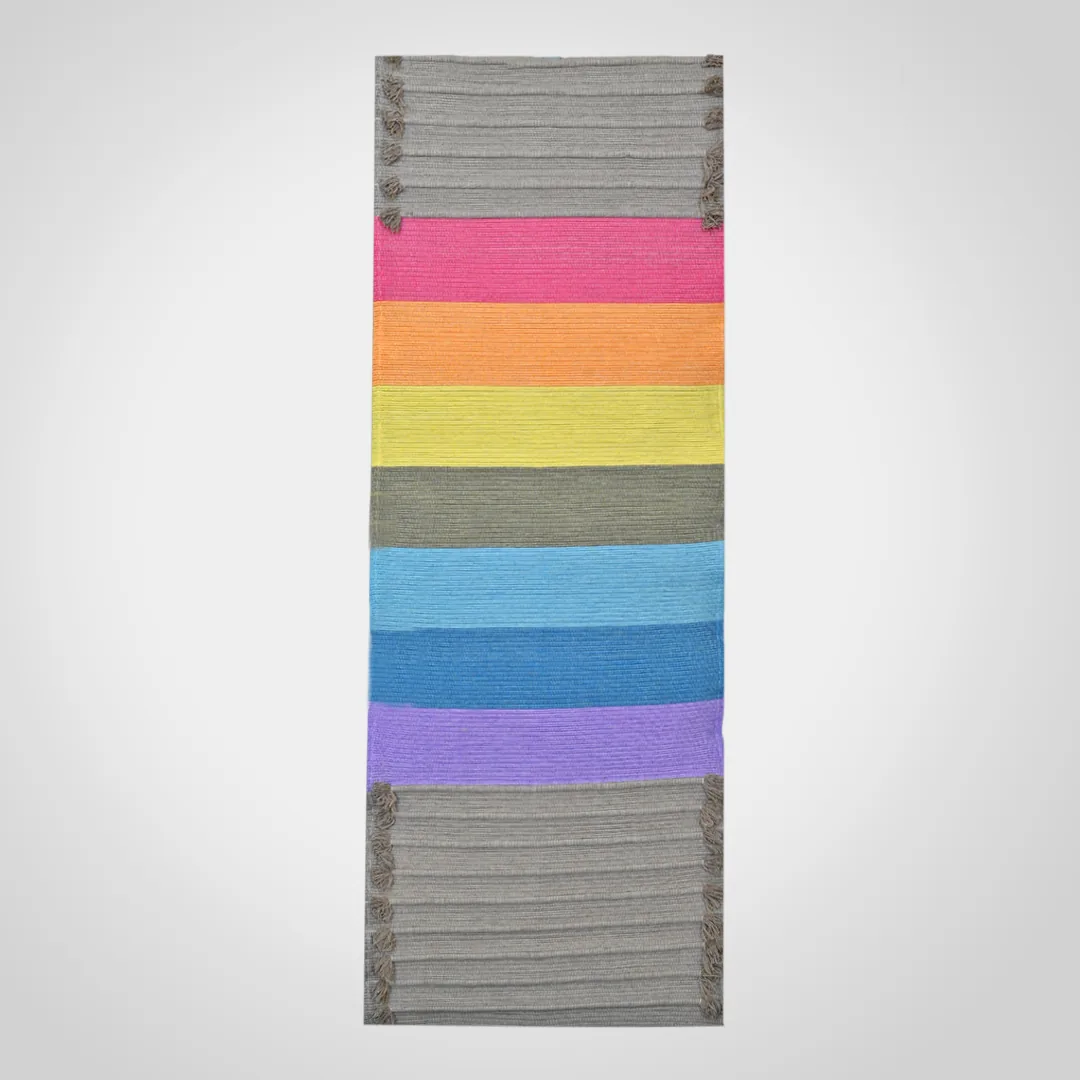
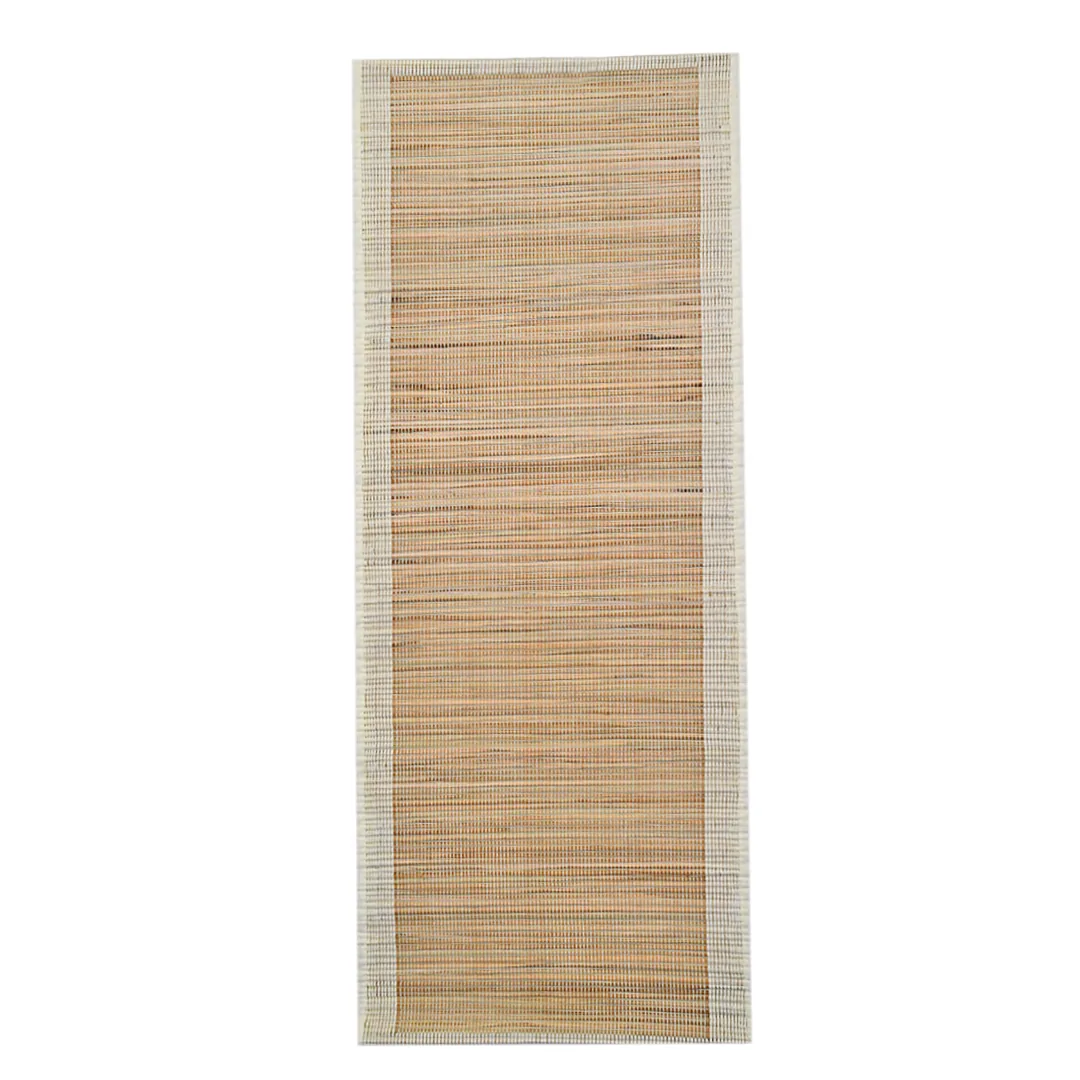
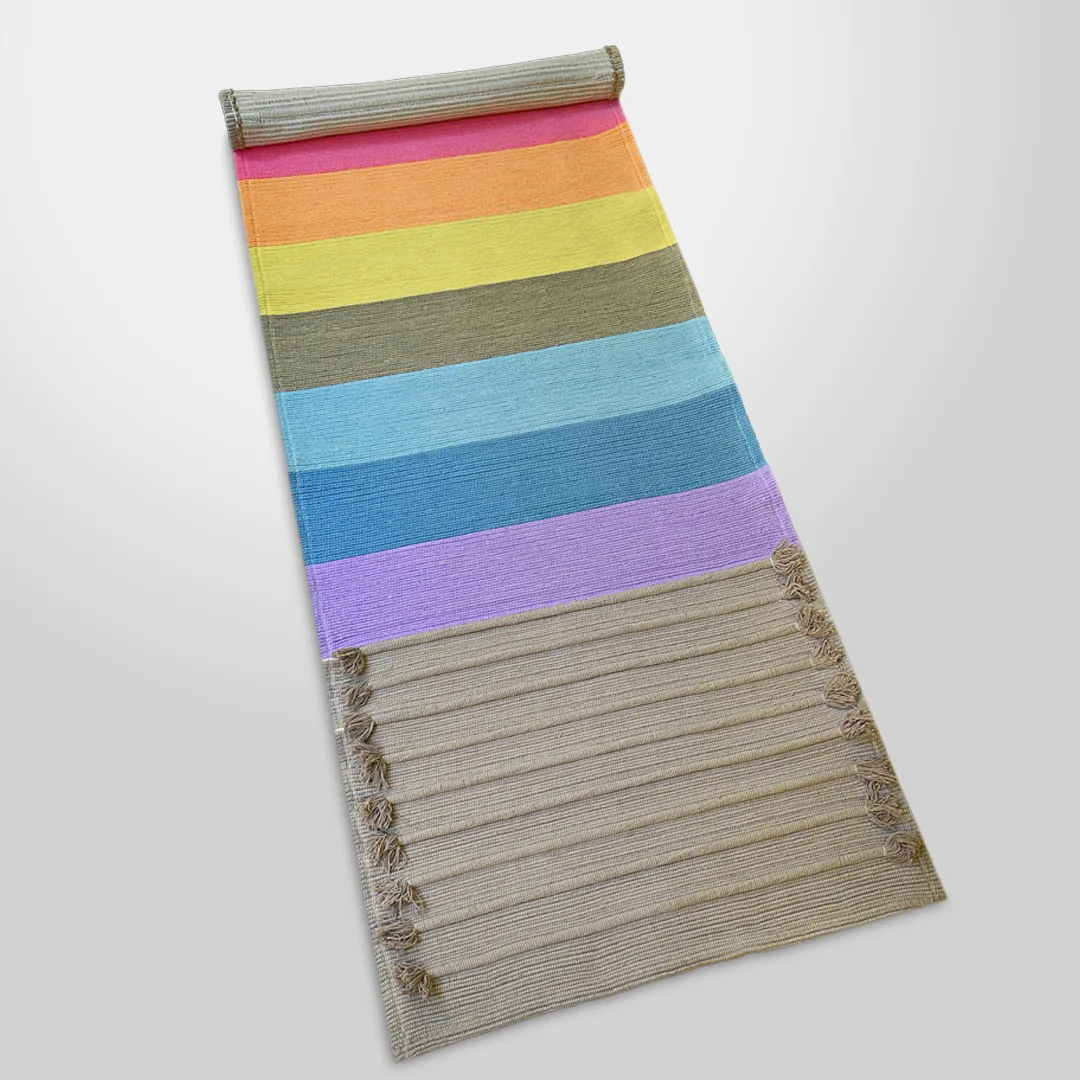
Two mats show the range of what leaves Kattur. The Prithvi is a six-ply yoga rug of GOTS-certified organic cotton, 5 mm thick and 188 × 69 cm, with an earth-toned ground, seven chakra colour bands and hand-knotted tassels. The Sambu Frame is a 3 mm mat of sambhu grass woven with GOTS-certified organic cotton, 183 × 68.5 cm and about 1 kg, with a tan field and a paler border. One is heavy cotton; the other is grass and cotton together. Both come off a handloom here.
What the town gives a mat
We are wary of romance, so here is what we can actually point to.
- Skill close at hand. In a weaving town, people who can warp a loom, mend a broken thread or judge a dye bath by eye are neighbours, not specialists to be sent for.
- Materials in reach. Cotton yarn and grass arrive here as a matter of course, which keeps our supply chain short.
- Dyeing on site. Our dyeing is done in our own dye shed rather than sent away. We describe the way we work in A day in the dye shed.
What the town does not give is uniformity. Handwoven mats vary slightly in shade and width from one to the next, and plant colours soften with time. We think of that as the honest signature of the place rather than a flaw.
Buying from a river town
We ship across India and cash on delivery is available; see the Shipping page for current terms. We do not yet ship internationally. If you want to ask about a particular mat before ordering, the Contact page is the way to reach us.
Frequently asked questions
Where is Komarapalayam?
Komarapalayam is a municipality and taluk in Namakkal district, Tamil Nadu, in the west of the state. It lies on the banks of the Cauvery (Kaveri) and the Bhavani rivers, directly across the Cauvery from the town of Bhavani, which belongs to Erode district. The two towns are often described as twins separated by the river.
What is Komarapalayam known for?
It is known for its textile industry, including both power loom weaving and handloom production, and it is also a centre for sago manufacturing in Tamil Nadu. Our own work belongs to the handloom part of that picture: cotton and grass yoga mats woven by hand and dyed with plants in our workshop in Kattur.
Are TwinsPoles mats really made in Komarapalayam?
Yes. Every mat we sell is handwoven by our own weavers in our own workshop in Kattur, Komarapalayam, and dyed in our own dye shed. We do not buy in finished mats from other makers or resell stock, and there are no middlemen between the loom and the customer.
Is Komarapalayam the same as Bhavani?
No. They face each other across the Cauvery and are close enough to be called twin towns, but Komarapalayam is in Namakkal district and Bhavani is in Erode district. Bhavani is known for its jamakkalam blankets and carpets, which carry a geographical indication; we do not make those.
If you would like a piece of this river town on your floor, start with the Prithvi for a heavy cotton rug or the Sambu Frame for a light grass mat, or browse everything we weave in the collection.