Tamil Nadu has several distinct mat traditions, and they are not interchangeable. The finest are the korai grass mats of Pattamadai in Tirunelveli district, a protected geographical indication that we do not make. Alongside them sit darbha (kusha) grass seats used in ritual and meditation, sambhu grass mats woven with cotton, and the handloom cotton rug of weaving towns like ours. We weave the last three in Komarapalayam; this article explains where each one comes from and how they differ.
Pattamadai korai mats: Tirunelveli's protected craft
The mats most people mean when they say "Tamil Nadu mat" are the korai mats of Pattamadai, in Tirunelveli district in the south of the state. They are woven from korai, a sedge that grows on the banks of the Thamirabarani river; the harvested grass is soaked in water, dried, dyed and woven into mats. According to the encyclopaedia entry on the Pattamadai mat, the craft received geographical indication (GI) status in 2012–13.
A GI means the name belongs to the place. Only mats woven in Pattamadai from local korai in the traditional way may be sold as Pattamadai mats, in the same way that only certain cheeses or teas may carry their regional names. We want to be plain about this: TwinsPoles does not make Pattamadai mats, we do not weave korai, and nothing in our range should be called a Pattamadai mat. If you want one, look for the GI and for a seller who can tell you which Pattamadai weaver made it. We mention the craft here because it is the standard against which every other Tamil mat is measured, and because buyers deserve to know the difference.
Darbha (kusha) grass: the seat of ritual and meditation
Darbha is the Sanskrit name for the grass botanists call Desmostachya bipinnata, a tall, tufted perennial native across north and east Africa, the Middle East and much of Asia, including India. It is also called kusha. The encyclopaedia entry records that Hindu, Jain and Buddhist traditions have long regarded it as a sacred plant, that early Buddhist accounts describe it as the material of the Buddha's meditation seat, and that the Bhagavad Gita names kusha grass as part of the ideal seat for meditation.
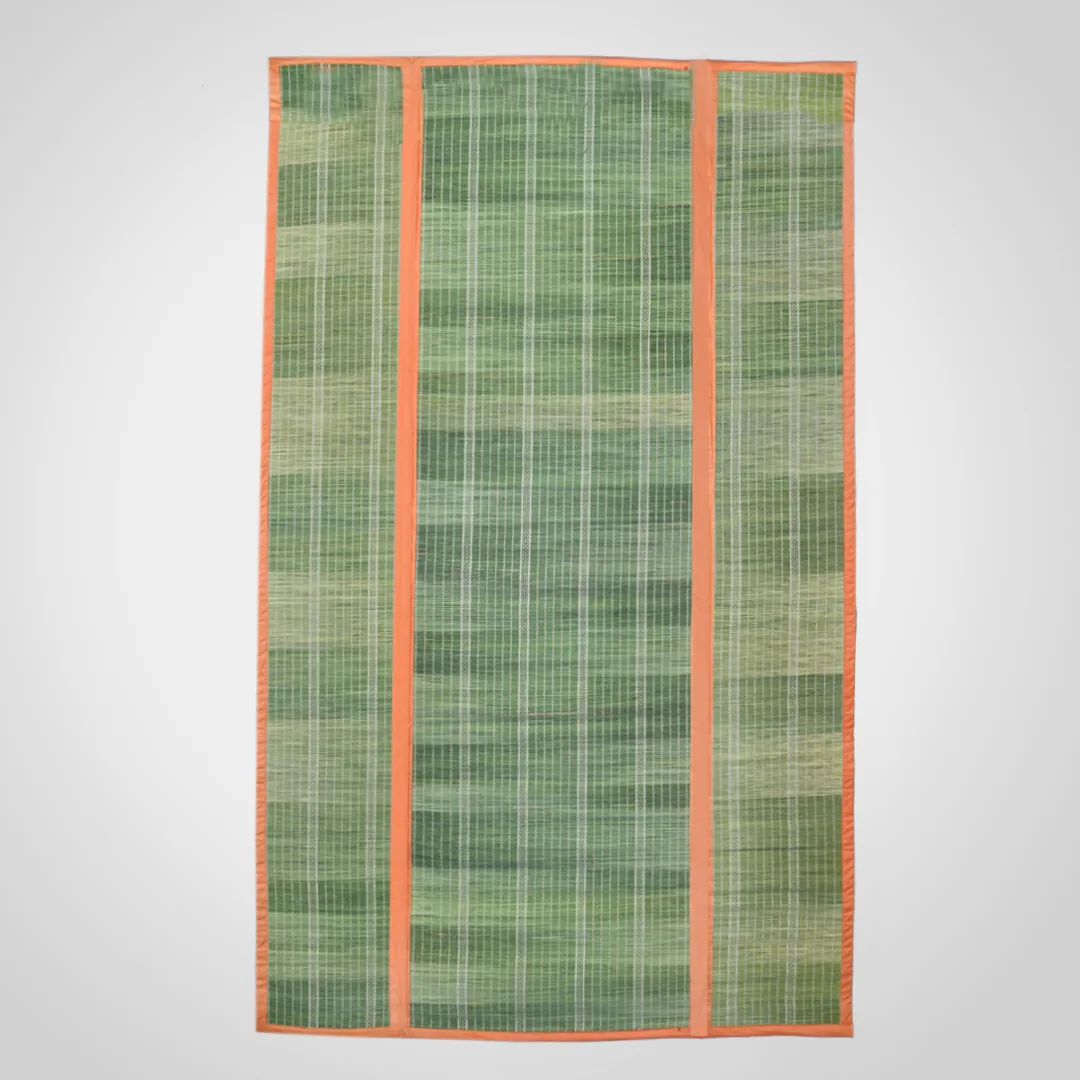
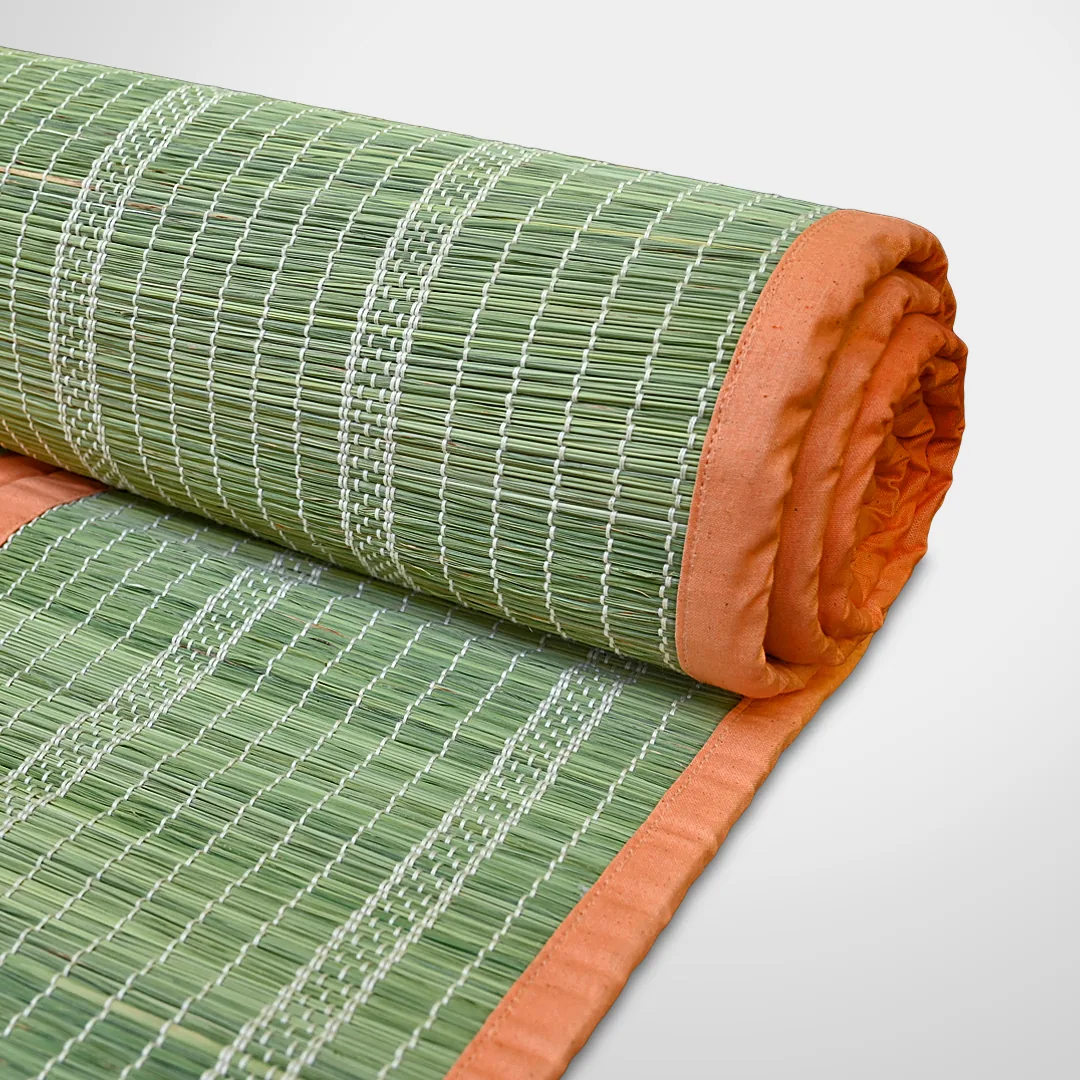
In Tamil homes darbha appears in ritual, as a seat for prayer, and as a cool mat to lie on in summer. Our Darbha is the traditional form: darbha grass laid in three panels, bound and backed in cotton cloth so that it folds flat, with orange cotton binding, 183 × 90 cm and about 1.2 kg. It is roughly 4 mm thick, firm and cool rather than cushioned, and it has no latex layer; the cotton backing is what holds it together and what sits on the floor. We write about the plant, its meaning and how we weave it in Darbha (kusha) grass: meaning, tradition and how we weave it.
Sambhu grass mats: grass woven with cotton
Sambhu grass mats are an everyday grass mat. Rather than being woven grass on grass, the grass is woven together with cotton on a handloom, which gives a mat that is firm and cool on the surface, holds its shape, rolls up, and weighs about a kilogram. Because the cotton takes dye, the weaver can set a lattice, stripes or a border into the mat.
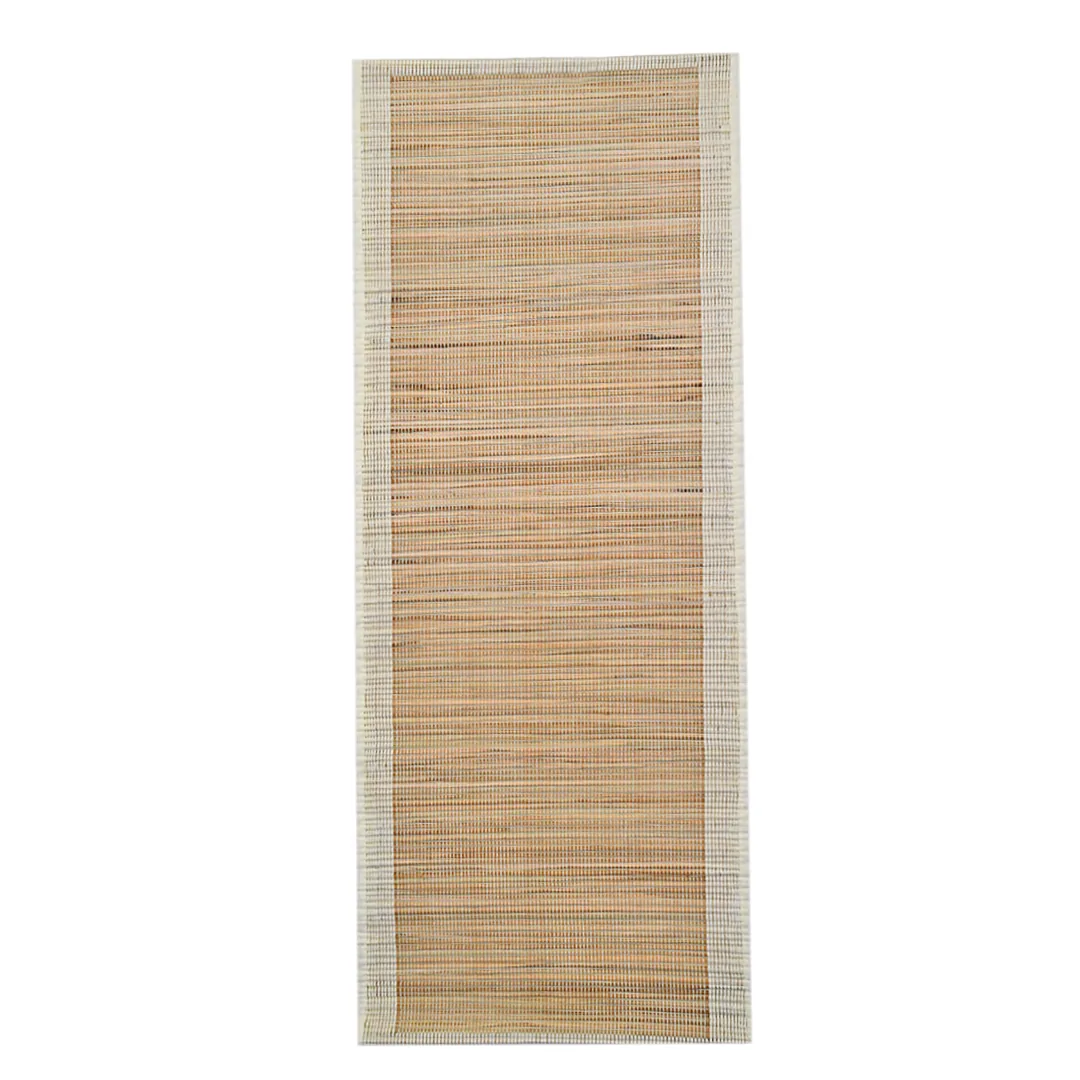
We weave three. The Sambu Frame has a tan field with a paler border, woven from sambhu grass and GOTS-certified organic cotton; the Sambu Diamond carries a plant-dyed green and peach lattice; and the Sambu Jute has fine plant-dyed stripes with a cream cotton binding (the name is historical; it contains no jute). All three are 3 mm thick and 183 × 68.5 cm. They have a thin layer of natural tree latex brushed onto the underside by hand so that they hold on tile, marble and wood. If you are allergic to natural latex, choose with care and write to us first.
Grass mats are not washed: shake them out, wipe with a damp cloth and air them in shade. Never soak them.
The handloom cotton rug
The fourth tradition is cloth rather than grass: the heavy cotton rug woven on handlooms in the textile towns of the Cauvery and its tributaries. Komarapalayam, where we weave, is one of them, a handloom and textile town on the Cauvery opposite Bhavani. We describe the town in Komarapalayam: the weaving town our mats come from.
A handloom rug is woven from thick cotton yarn, beaten in firmly so that the cloth is dense, and often finished with hand-knotted tassels. On our looms it becomes the six-ply chakra rugs, the 7 mm Diamond mats and the ribbed indigo Indico, all in GOTS-certified organic cotton with plant dyes. Hand-weaving on this scale is still a large livelihood: according to the Ministry of Textiles, citing the Fourth All India Handloom Census 2019–20, Tamil Nadu has 1,97,818 handloom weavers and 45,757 allied workers.
The four side by side
| Mat | Material | Where it is made | Typical use | Do we weave it? |
|---|---|---|---|---|
| Pattamadai korai mat | Korai (a sedge) | Pattamadai, Tirunelveli district (GI) | Sleeping and floor mats | No |
| Darbha (kusha) mat | Darbha grass, cotton-backed | Across Tamil Nadu; ours in Komarapalayam | Ritual seat, meditation, summer sleeping | Yes: Darbha |
| Sambhu grass mat | Sambhu grass woven with cotton | Ours in Komarapalayam | Yoga, meditation, floor sitting | Yes: Sambu Frame, Diamond, Jute |
| Handloom cotton rug | Thick cotton yarn, hand-beaten | Handloom towns on the Cauvery | Yoga rug, floor covering | Yes: chakra rugs, Diamond, Indico |
Frequently asked questions
What is a Pattamadai mat?
A Pattamadai mat is a fine mat woven from korai grass in Pattamadai, Tirunelveli district, Tamil Nadu. The grass grows on the banks of the Thamirabarani river, is soaked, dried and dyed, and woven into mats. The name is a registered geographical indication, which means only mats made there in the traditional way may use it. TwinsPoles does not make Pattamadai mats.
What is the difference between darbha and sambhu grass mats?
Darbha, or kusha, is a sacred grass with a long place in ritual and meditation; our Darbha mat is darbha in three panels backed in cotton cloth, with no latex, and it folds flat. Sambhu grass is an everyday mat grass that we weave together with cotton on a handloom, giving a 3 mm mat that rolls, takes dyed patterns in the cotton, and has a natural latex grip layer underneath. If you are allergic to natural latex, choose with care and write to us first.
Are grass mats good for yoga?
They are firm, cool and quiet, which suits seated and standing practice and hot weather, and they weigh about a kilogram. They are not cushioned, so for long floor work on knees many people prefer a cotton rug or a 7 mm Diamond. Grass mats should be wiped, not washed.
Which traditional Tamil Nadu mats does TwinsPoles make?
We weave darbha mats, sambhu grass mats and handloom cotton rugs in our own workshop in Komarapalayam, Namakkal district. We do not weave korai or Pattamadai mats, which belong to Tirunelveli district and carry a GI.
To feel the two grass traditions side by side, start with the Darbha for a folding, cloth-backed seat and the Sambu Frame for a rolling grass-and-cotton mat; the rest of our grass mats are in the sambhu collection.