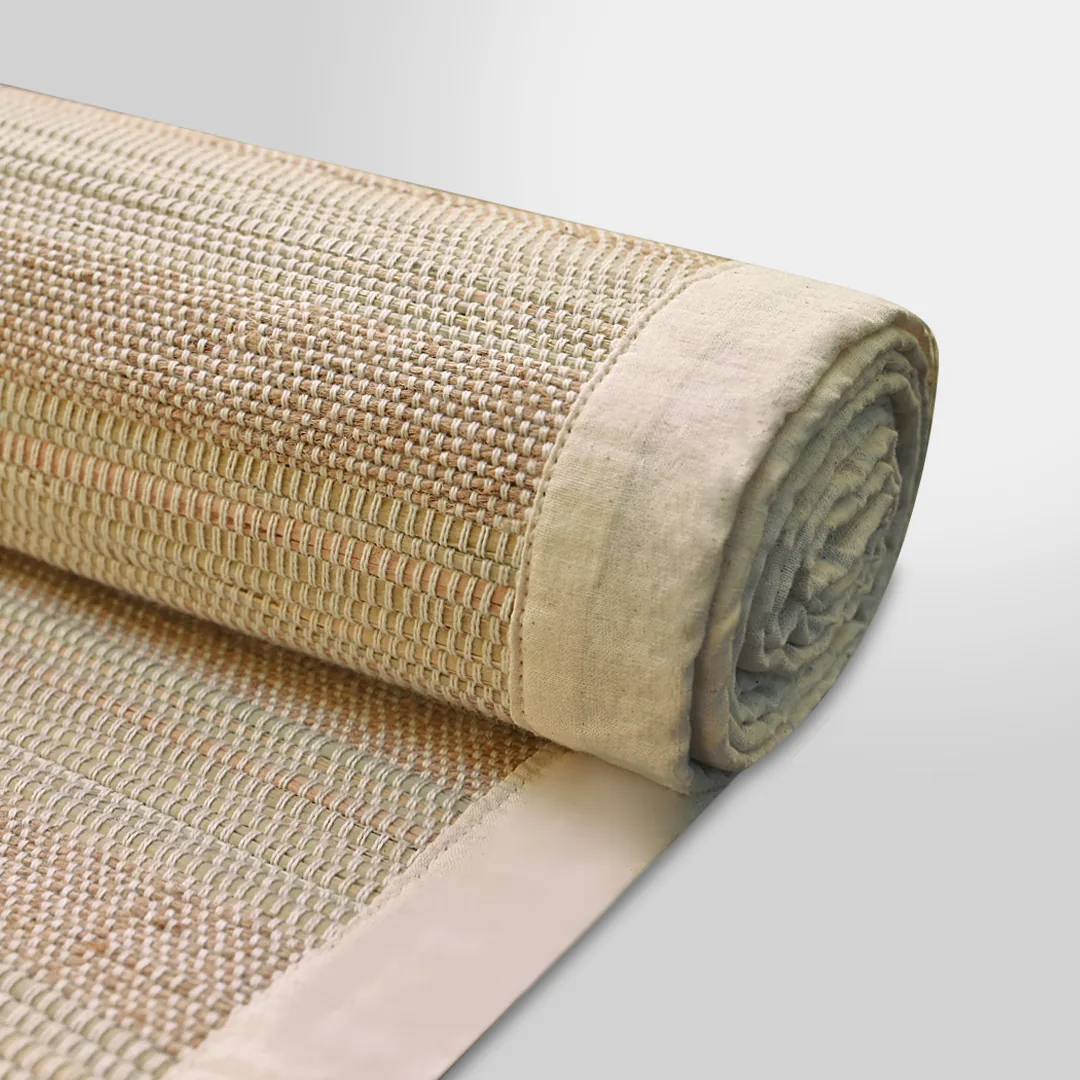
Under ₹2,000 in India you can buy one of two quite different things: a foam mat made of PVC or TPE with real cushioning, or a thin handwoven mat of grass or banana fibre with no foam and no plastic in it. Neither is a compromise if you know what you are getting. At the time of writing our three sambhu grass mats cost ₹1,699 to ₹1,999 and our banana fibre mat ₹2,000 exactly; prices can change, so check the product pages linked below.

What ₹2,000 buys: foam or fibre
At this price the market splits cleanly.
Foam mats give you 4 to 8 mm of soft, waterproof cushioning that is kind to knees and forgiving on a hard floor. They are light, cheap and widely available. They cannot be washed properly, they wear by flaking and cracking, and when they are finished they are thrown away.
Thin natural-fibre mats give you a firm, cool, breathable surface at 3 mm. They are handwoven, they contain no foam or plastic, and they are easy to keep clean with a shake and a damp cloth. They are not cushioned, and they must never be soaked.
Which is right depends on your practice and your floor, so we have put the honest trade-offs first and our own mats second.
What a plastic mat at this price is made of
Most budget foam mats are PVC or TPE.
PVC is polyvinyl chloride, a plastic that is rigid on its own; it is made soft and flexible by adding plasticisers, most commonly phthalates (Wikipedia). That softness is what makes a PVC mat comfortable, and it is also why it is worth asking a seller which plasticiser was used.
TPE is a thermoplastic elastomer, a plastic that behaves like rubber and can be melted and reprocessed (Wikipedia). It is lighter than PVC and often sold as the "eco" foam. It can be recycled in principle; whether a used mat is actually collected and recycled where you live is a separate question, and one to ask.
None of this makes a foam mat a bad buy. If you need cushioning at this price, foam is the only way to get it; we would just rather you bought it knowing what it is.
What you give up with a thin natural mat
We make the natural kind, so here is the honest list.
- No cushioning. A 3 mm grass mat is firm. Standing poses, balances and seated practice feel grounded on it; long kneeling does not. Fold a towel under the knees or add a cushion for seated work.
- No soaking. Sambhu grass and banana fibre are shaken out and wiped with a damp cloth, then aired in shade. They cannot go in a bucket or a machine.
- Slight variation. Each mat is handwoven, so the weave and the plant-dyed colour vary a little from the photograph and between batches.
- A natural latex underside. Our grass and banana mats have a thin layer of natural tree latex brushed onto the back by hand so they hold on tile, marble and wood. If you are allergic to natural latex, choose with care and write to us first.
In return you get a surface that stays cool in a hot room, weighs about a kilo, rolls small, and is made of plants, cotton and natural latex rather than foam. For many people practising on tiles in a warm climate, that is the better trade.
Our mats at or under ₹2,000 at the time of writing
All four are 3 mm, 183 × 68.5 cm (72 × 27 in) and about 1 kg. Prices are current at the time of writing and set on each product page.
| Mat | Fibre | Colour and pattern | Price now |
|---|---|---|---|
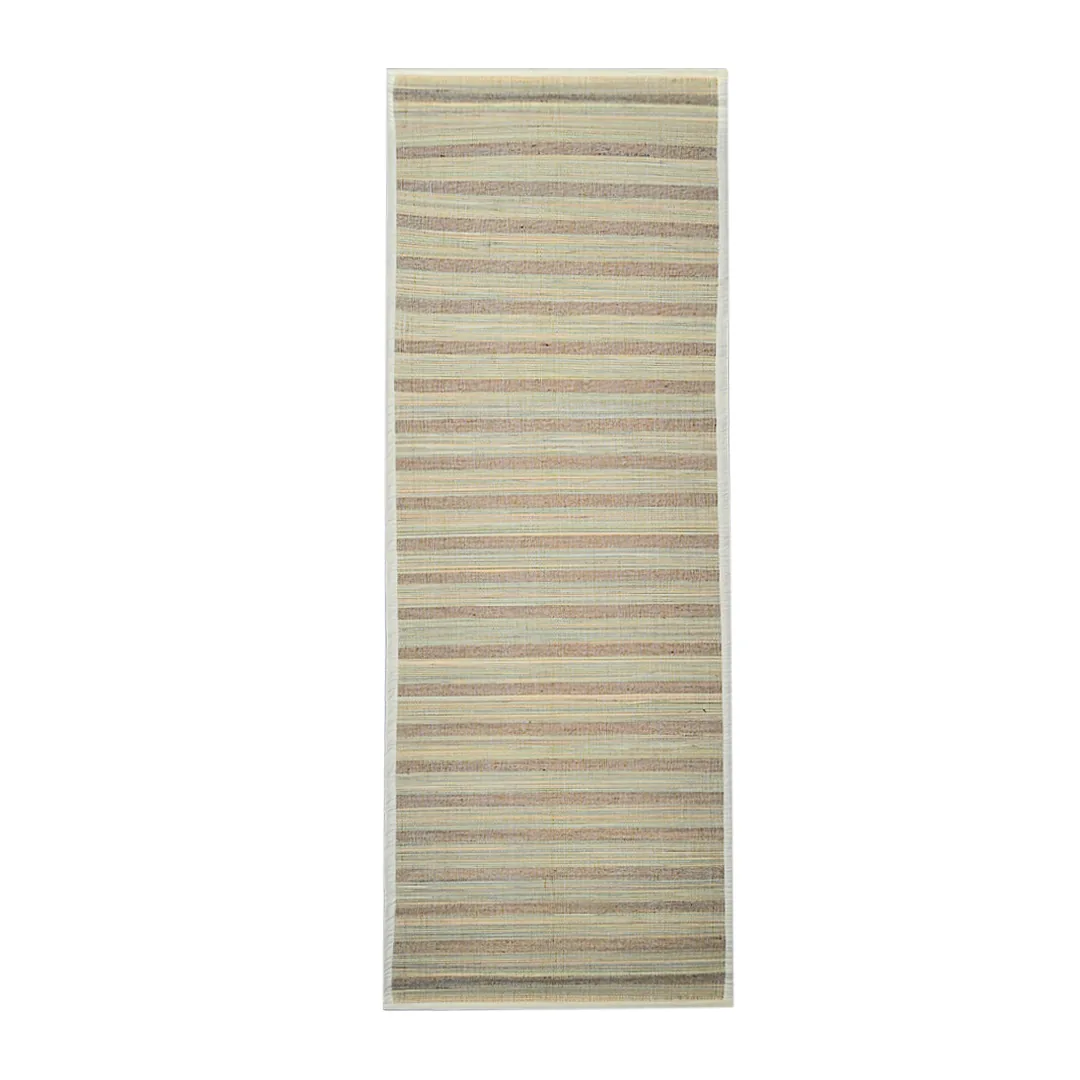
| Sambu Jute | Sambhu grass woven with organic cotton | Fine plant-dyed stripes, cream cotton binding | ₹1,699 |
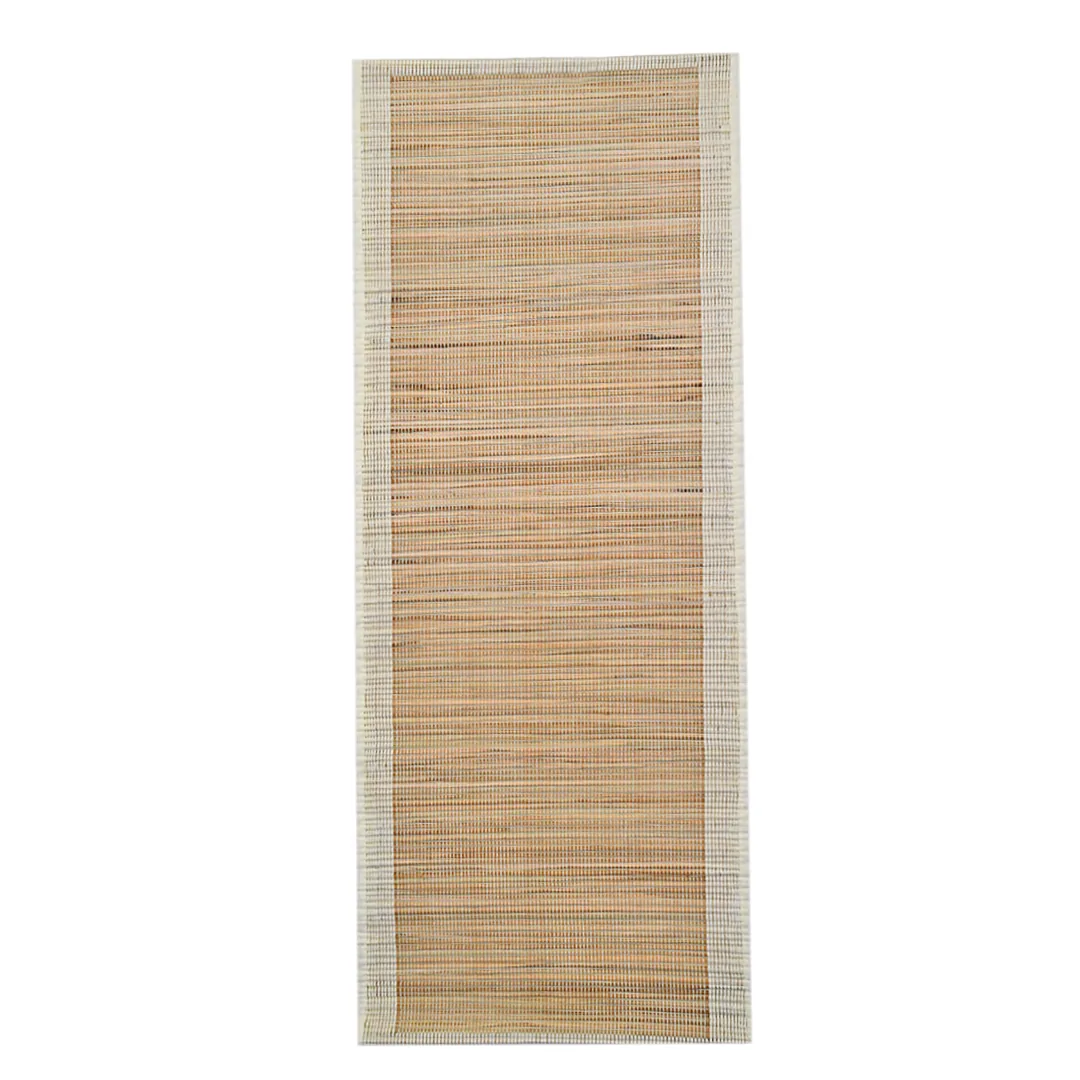
| Sambu Frame | Sambhu grass woven with GOTS-certified organic cotton | Tan field with a paler border | ₹1,799 |
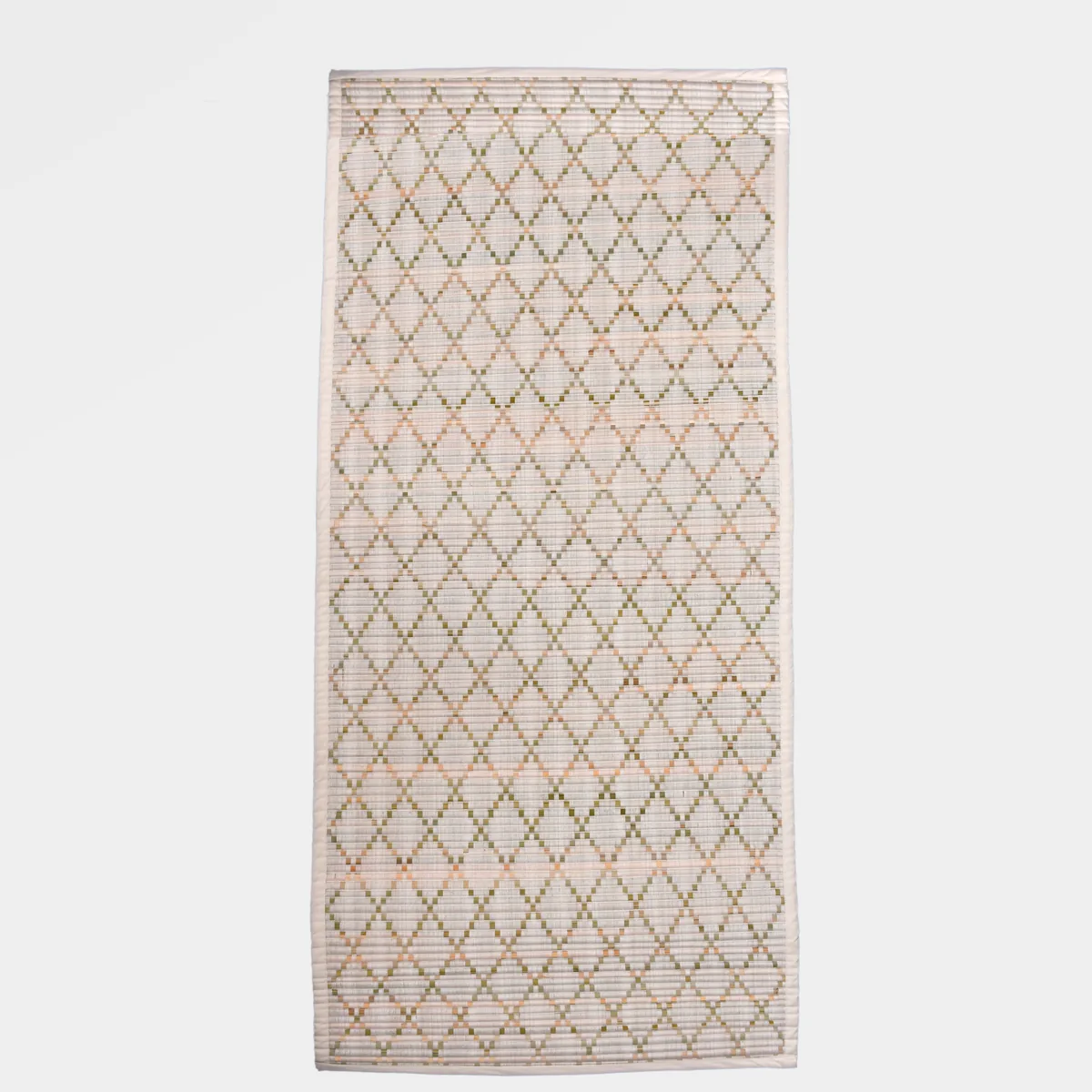
| Sambu Diamond | Sambhu grass woven with organic cotton | Plant-dyed green and peach diamond lattice | ₹1,999 |
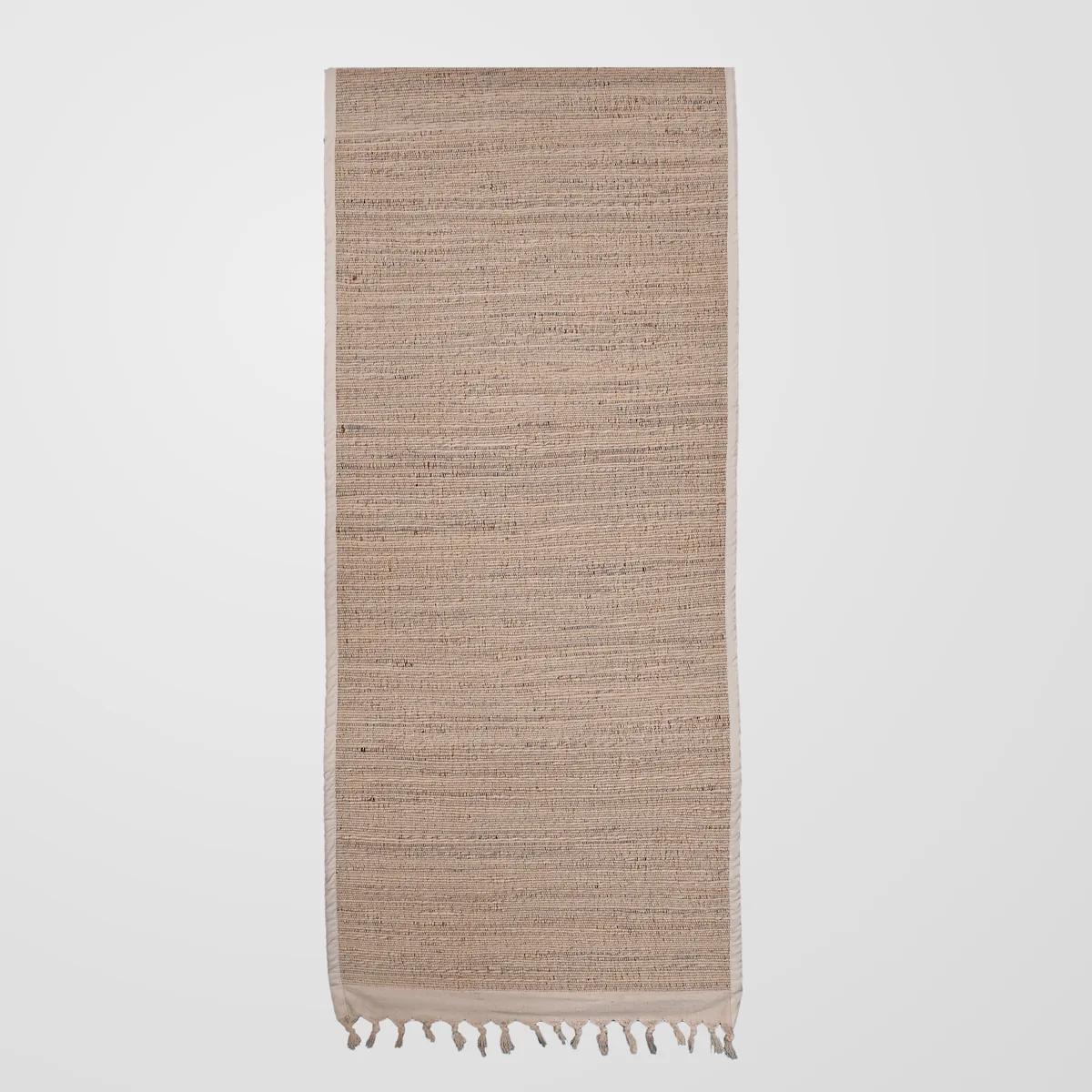
| Banana Fibre | Banana bark and fibre, cotton-bound | Undyed, naturally textured | ₹2,000 |
One naming note: Sambu Jute is a historical name. The mat is sambhu grass and cotton and contains no jute.
Which to pick
Sambu Jute is the least expensive mat we weave and a good first grass mat; the stripes hide wear well.
Sambu Frame is the quietest to look at, a warm tan with a paler border our weavers call the TV pattern, and its cotton is GOTS-certified organic.
Sambu Diamond has the most pattern, a lattice in green and peach, for anyone who wants the mat to be the colour in the room.
Banana Fibre is undyed and slightly more textured than the grass mats. It suits seated practice, pranayama and meditation, and anyone who wants nothing dyed at all.
If you are still deciding between foam and fibre, our yoga mat price guide sets out what you pay for at each level, and sambhu grass mats explained describes the grass and why it feels cool.
Frequently asked questions
Which yoga mat is best under ₹2,000 in India?
It depends on whether you need cushioning. If you do, a PVC or TPE foam mat is the only option at this price. If you practise standing, balancing or seated work on a hard floor in a warm climate and want no plastic, a 3 mm handwoven sambhu grass or banana fibre mat is the better buy; at the time of writing ours cost ₹1,699 to ₹2,000.
Is a ₹2,000 yoga mat good enough for daily practice?
Yes, provided you match it to your practice. A handwoven grass mat at this price will take daily standing and seated practice for years if it is shaken out, wiped and aired rather than soaked. A foam mat at this price will cushion well but wears by flaking and cannot be washed.
Are grass yoga mats comfortable?
Grass mats are firm, cool and quiet rather than soft. Standing poses and balances feel very stable on them, and seated practice is comfortable with a cushion; long kneeling is not, so fold a towel under the knees or choose a thicker cotton mat if that is most of your practice.
How do I clean a sambhu grass or banana fibre mat?
Shake it out after practice, wipe it with a damp cloth where needed and air it in shade. Never soak it, machine wash it or dry it in direct sun; the full method is on our Mat care page.
Start with the sambhu grass mats if you want to compare the three grass weaves side by side, or go straight to Sambu Jute for the least expensive way to try a handwoven mat.