The best yoga mat for a beginner in India is one that stays put on a hard floor, can be washed after a sweaty session, and gives firm rather than squashy support. In practice that means a 3–5 mm mat with a non-slip underside and a surface that does not turn slick as your hands warm up. Of the mats we weave, the Indico (5 mm organic cotton) suits most first-timers, the Prana Shakti (5 mm six-ply) suits anyone who wants a little more under the knees, and the Sambu Diamond (3 mm grass, about 1 kg) is the light, cool, lower-cost way to start. At the time of writing they cost between ₹1,999 and ₹4,499.

What actually matters in a first mat
Four things decide whether you keep practising on a mat or leave it rolled in a corner: grip, cushioning, washability and price. Everything else on a product page is detail.
Grip, on the floor and under your hands
There are two kinds of slip: the mat sliding on the floor, and your hands and feet sliding on the mat. Most Indian homes have tile, marble or mosaic floors, which are harder on a mat than the wooden studio floors most mats are designed for.
Our cotton, grass and banana-fibre mats have a thin layer of natural tree latex brushed onto the underside by hand. It holds on tile, marble and wood. After many washes it can soften, and a thin fresh coat of natural latex restores it. If you are allergic to natural latex, choose with care and write to us first.
Under the hands, cotton behaves the opposite way to foam. A foam mat feels grippy dry and often gets slippery once you sweat. In our experience a cotton mat is a little slick when bone dry and grips better as it dampens. For the first week, wipe your palms with a damp cloth before you start. We say this plainly because it surprises people who have only used foam.
Cushioning: firm beats thick
Thickness is the number everyone looks at and the one that matters least. A beginner spends a lot of time in standing and balancing poses, and those are harder on a soft mat because your foot sinks and wobbles. Floor work needs some cushioning, but 3–5 mm of dense material does that job. Our thickness guide goes through the trade-offs in detail.
The Prana Shakti shows why density matters more than the millimetre figure: woven six-ply, its 5 mm of tightly packed cotton feels more supportive under a knee than 5 mm of light foam, while staying firm enough to balance on.
Washability
Beginners sweat more than they expect. Our cotton mats are hand washed cold with a mild natural detergent and dried flat in shade. Grass mats are simpler still: shake them out, wipe with a damp cloth and air them, but never soak them. Foam mats are wiped, not washed, which is quick but means sweat stays in the surface. Cotton takes longer to dry; that is the honest trade.
Price
A foam mat can be bought for a few hundred rupees and it will do for a first month. What you pay for in a handwoven mat is the weaving time, organic cotton, plant dyes and a hand-applied grip layer, and a mat that is washed rather than replaced. Our mats run from about ₹1,700 to ₹5,000 at the time of writing. Shipping is free above ₹1,999 and cash on delivery is available; see the Shipping page for current terms.
Where cotton helps a beginner, and where it does not
Cotton helps when you sweat, when you want to wash the mat, when the floor is cold tile in winter and when you want a mat that lies flat on day one with no curl and no factory smell.
Cotton does not help if you want deep padding under very sensitive knees, in which case a folded blanket under the knee works better than any mat. It is also heavier than a travel foam mat (our 5 mm cotton mats weigh about 1.4–1.5 kg) and it needs a day to dry after a wash. If you want the full comparison with rubber, we have written it up in cotton vs rubber yoga mats.
Three mats we would hand a beginner
Indico
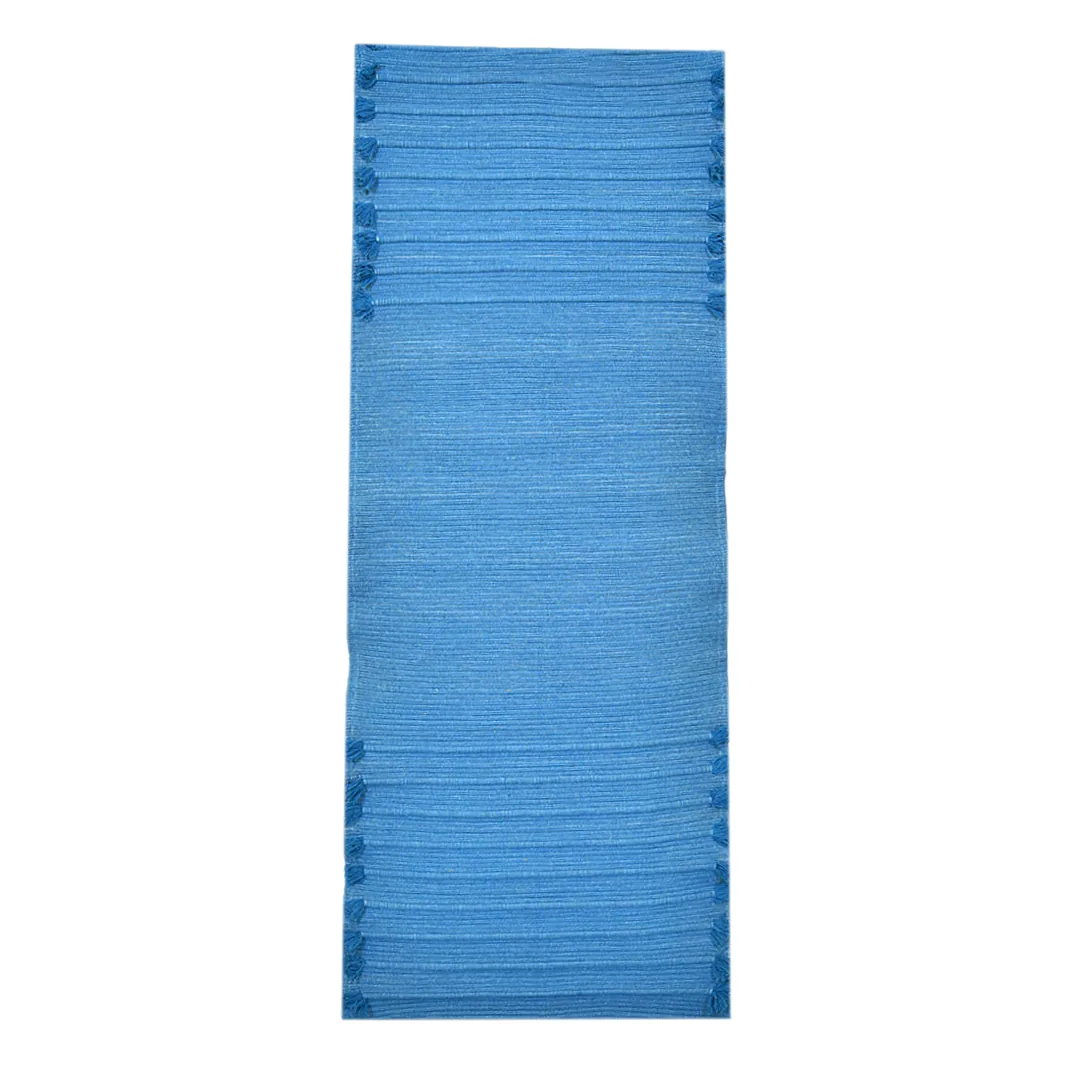
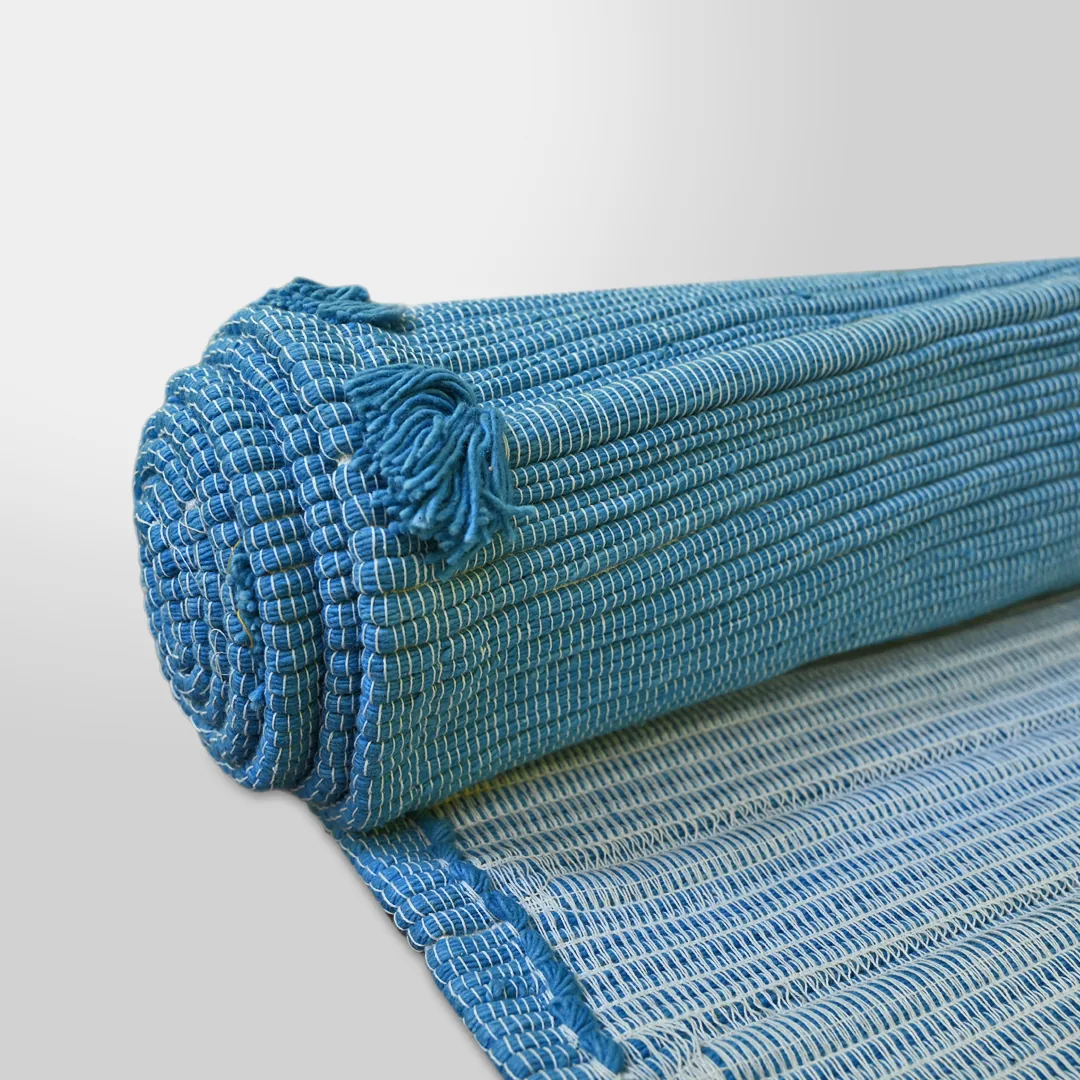
Our plainest mat and the one that shows the weave best. GOTS-certified organic cotton dyed with true indigo, a ribbed weave with hand-knotted tassels, 5 mm thick, 183 × 68 cm, about 1.4 kg. Indigo rubs and softens gently over time, so wash it separately for the first few washes. ₹4,499 at the time of writing.
Prana Shakti
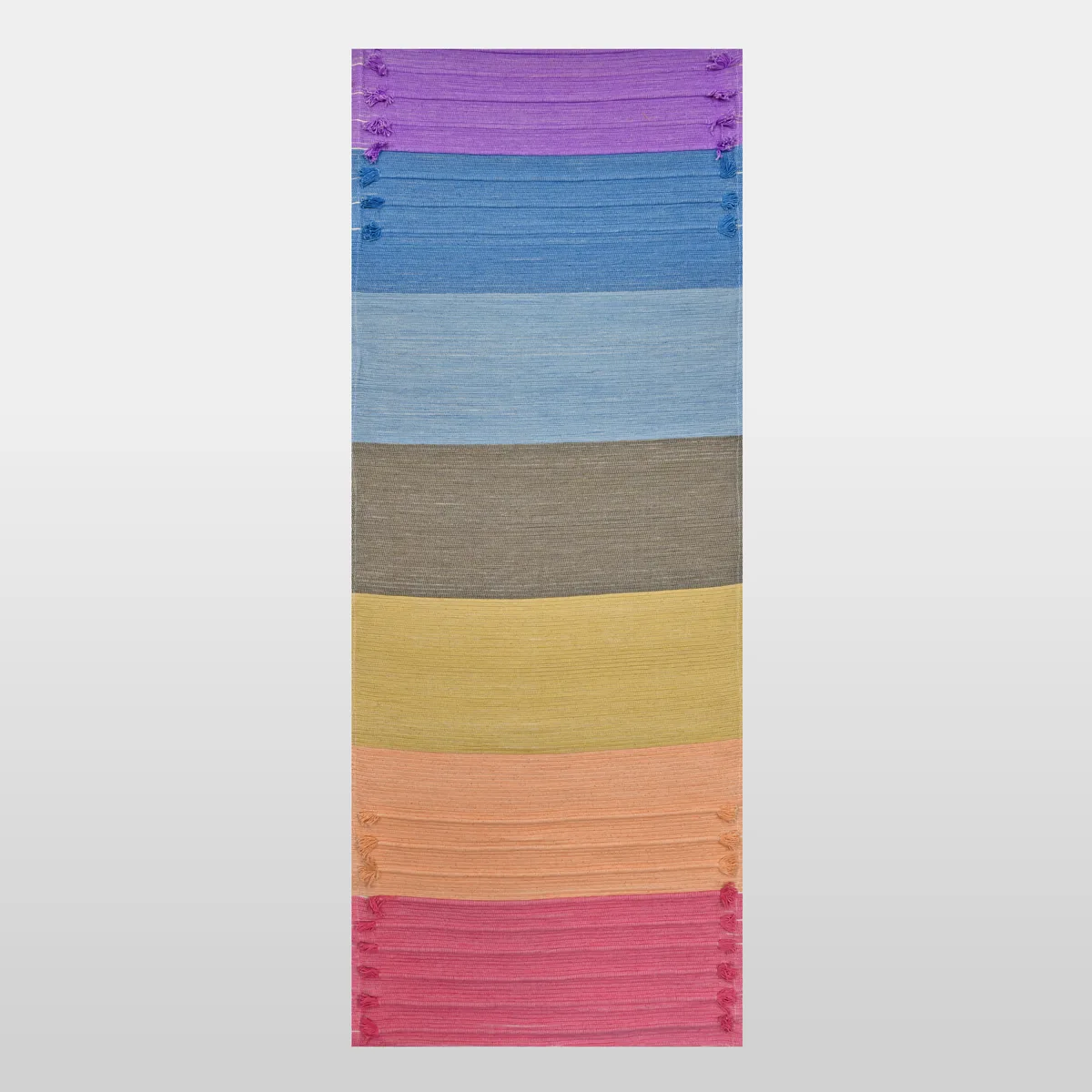
A rose-ground rug banded with the seven chakra colours, drawn from Ayurvedic plant dyes such as turmeric, neem and tulsi among more than twenty herbs. Six-ply GOTS-certified organic cotton, 5 mm, 188 × 69 cm, about 1.5 kg. The extra 5 cm of length helps if you are tall. ₹3,499 at the time of writing.
Sambu Diamond
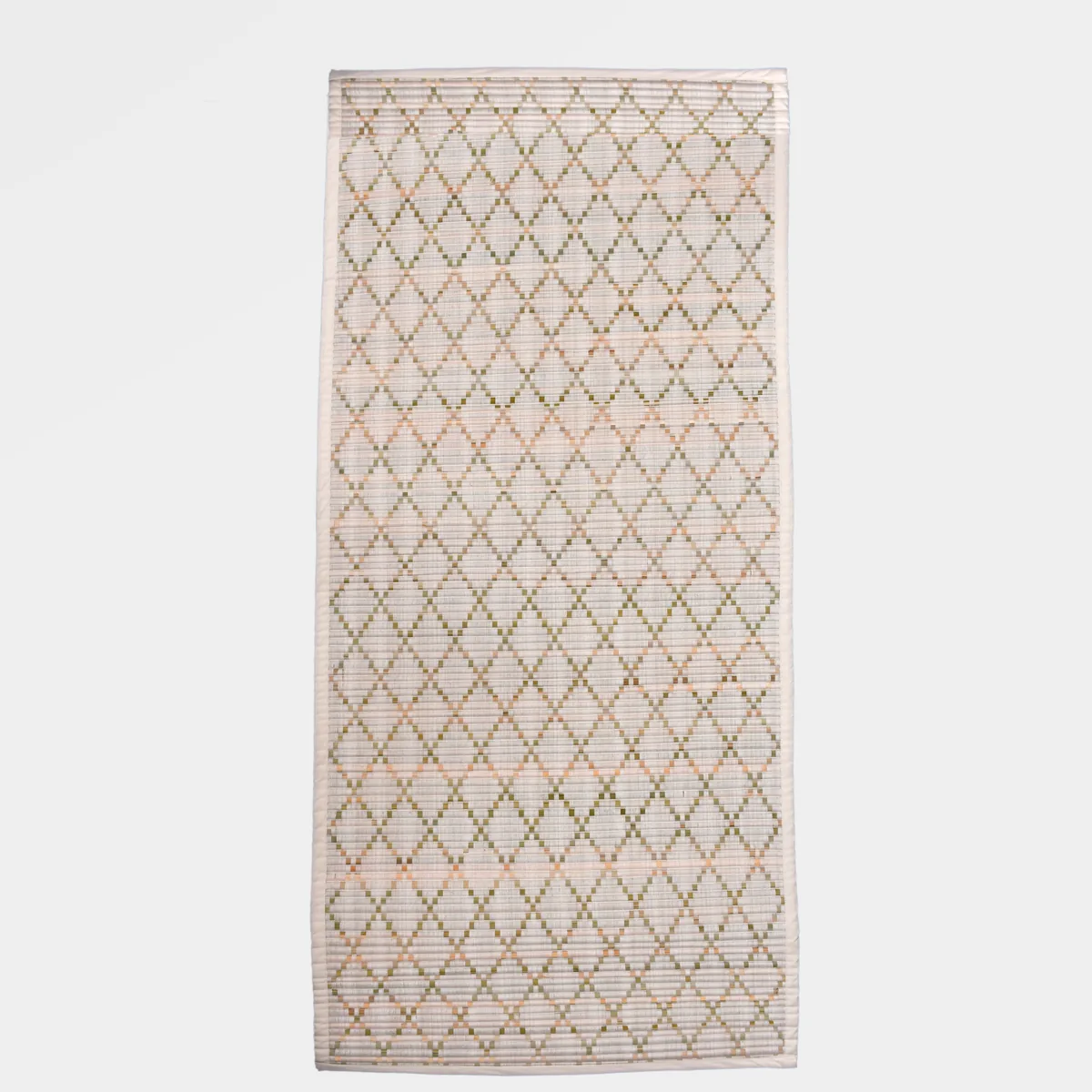
A pale sambhu grass mat woven with organic cotton, with a plant-dyed green and peach diamond lattice. It is 3 mm, 183 × 68.5 cm and weighs about 1 kg, so it is the one to carry to a class or a park. The grass is firm and stays cool against the skin; it is not cushioned. ₹1,999 at the time of writing.
A simple decision table
| If you... | Choose | Why |
|---|---|---|
| Practise on tile in a warm flat and sweat | Indico | Cotton grips better damp; washable; lies flat |
| Want more under the knees and do seated work | Prana Shakti | Six-ply 5 mm; 188 cm long; warm on cold floors |
| Want something light and cool for under ₹2,000 | Sambu Diamond | About 1 kg; cool grass; wipe-clean |
| Have a natural latex allergy | Write to us first | All three have a latex underside |
What to ignore
Ignore thickness as a proxy for quality; past 6 mm you are buying wobble. Ignore "eco" or "antibacterial" labels that do not say what the mat is made of. Ask instead. Many inexpensive mats are foam made from PVC, which is made soft and flexible by adding plasticisers, most commonly phthalates (Wikipedia). That is not a reason for alarm, but it is a reason to ask any seller what is in the mat, how it is cleaned and what happens when the surface starts to flake.
Finally, ignore the idea that a beginner needs a cheap mat "until they are serious". A mat that stays put and can be washed is what makes a daily practice easy enough to keep.
Frequently asked questions
What thickness of yoga mat is best for beginners?
For most beginners a 3–5 mm mat is best. It gives enough cushioning for kneeling and floor work while staying firm enough for standing balances, which wobble on thick soft foam. Choose 5 mm if you have a hard tile floor and do a lot of seated or kneeling work, and 3 mm if you want a lighter mat to carry.
Is a cotton yoga mat good for beginners?
Yes, with one honest caveat. Cotton mats can be washed, lie flat from the first day, stay put on tile thanks to the natural latex underside and grip better as they dampen, which suits a sweaty Indian climate. The caveat is that cotton feels slightly slick when bone dry, so dampen your palms for the first few sessions until your hands learn the surface.
How much should a beginner spend on a yoga mat in India?
A foam mat costs a few hundred rupees and is fine to try yoga for a month. A handwoven cotton or grass mat costs roughly ₹1,700 to ₹5,000 at the time of writing, and the difference buys a mat that is washed rather than replaced, with no foam to flake. Our Sambu Diamond at ₹1,999 is the lowest-cost way to start on a natural mat.
Do cotton yoga mats slip on tiles?
A plain cotton rug can slide on polished tile, which is why our cotton, grass and banana-fibre mats have a thin layer of natural tree latex brushed onto the underside. It holds on tile, marble and wood, and a fresh thin coat restores it if it softens after many washes. If you are allergic to natural latex, choose with care and write to us first.
If you are starting out, the Indico is the mat we would put in your hands first, and our 10-point checklist will help you check the rest. You can see every mat we make in the yoga collection.