For pranayama and seated practice, the best mat is firm, cool and insulating, so that the hips are stable, the legs do not overheat and the floor's chill does not reach you, with a folded blanket or cushion on top to lift the hips above the knees. Soft padding is a disadvantage here: it lets the pelvis sink and rock. We weave three mats for sitting: the traditional Darbha grass mat, the undyed Banana Fibre mat and the Sambu Frame grass-and-cotton mat.

What a seat for breathing needs
Pranayama is done sitting still for ten, twenty or forty minutes, so the mat is judged on how it feels at minute fifteen, not on grip.
Firm, not soft
A stable seat lets the spine stay long without effort. On a soft mat the sitting bones sink unevenly and the body keeps correcting. A firm, thin surface gives the pelvis a level base, and height comes from a cushion or folded blanket placed on top, not from the mat itself. Our article on meditation posture on a grass mat explains the hips-above-knees rule.
Cool against the skin
Legs folded for a long time get warm. Grass and banana fibre feel cool to the touch and let air move through the weave, which is why these mats are the traditional choice for sitting in a South Indian climate.
Insulated from the floor
Firm does not have to mean cold. A grass mat is thin, but the woven layer puts a dry barrier between you and a tiled floor, so an early-morning sit does not start with a chill through the ankles. In winter, add a folded cotton blanket. Woven grass and fibre are also silent when you shift, which a creaking seat is not.
The traditional seat
Darbha grass has a long history as a seat for practice. Its Sanskrit names are kusha, darbha and pavitram, and chapter 6 of the Bhagavad Gita describes an ideal seat for meditation built from kusha grass with deerskin and cloth laid over it (Kusha grass, Wikipedia). We make no claims about what the grass does beyond being a cool, firm, quiet surface; its practical qualities stand on their own. Our guide to seating for pranayama looks at how mat, blanket and cushion fit together.
Three mats for seated practice
Darbha: the traditional grass seat
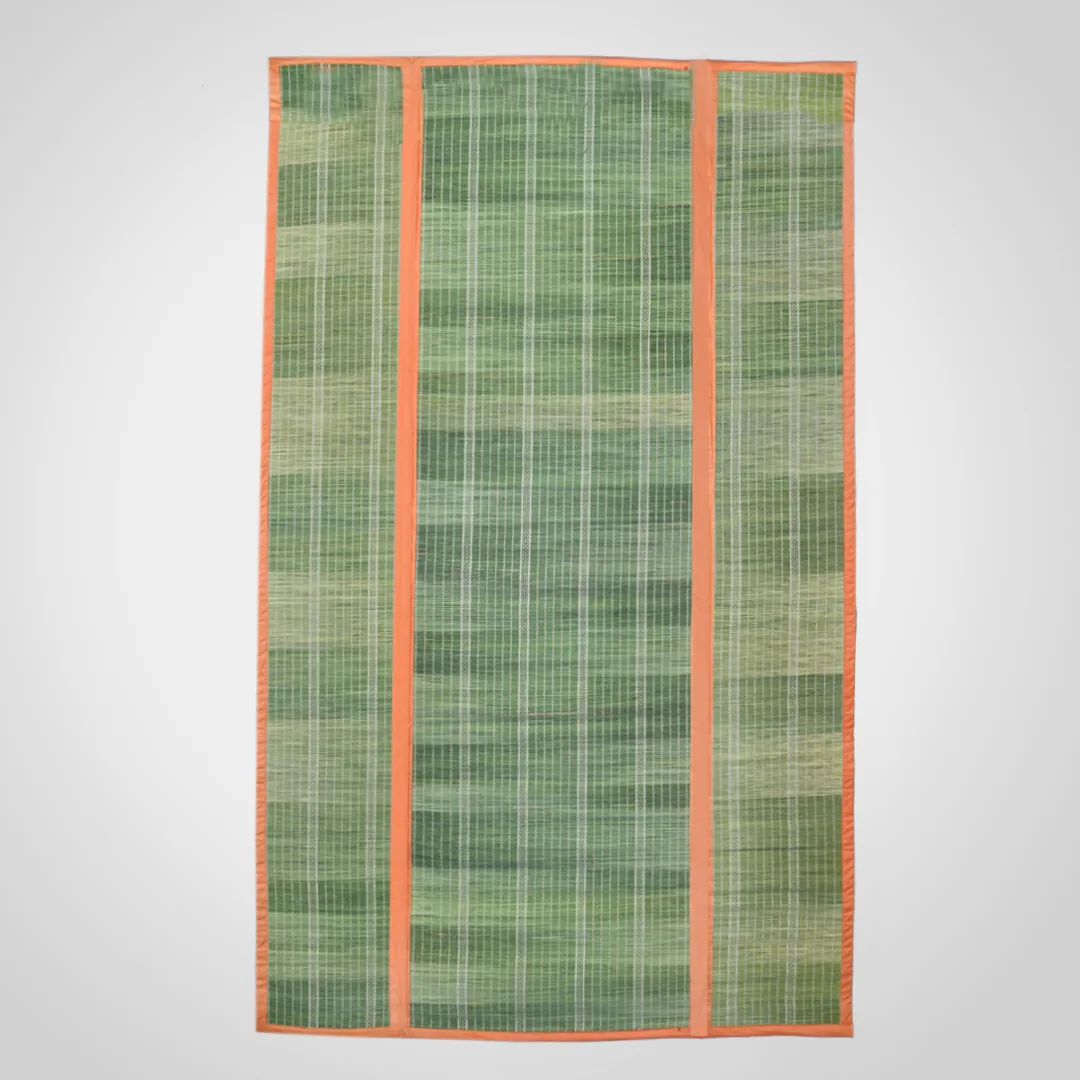
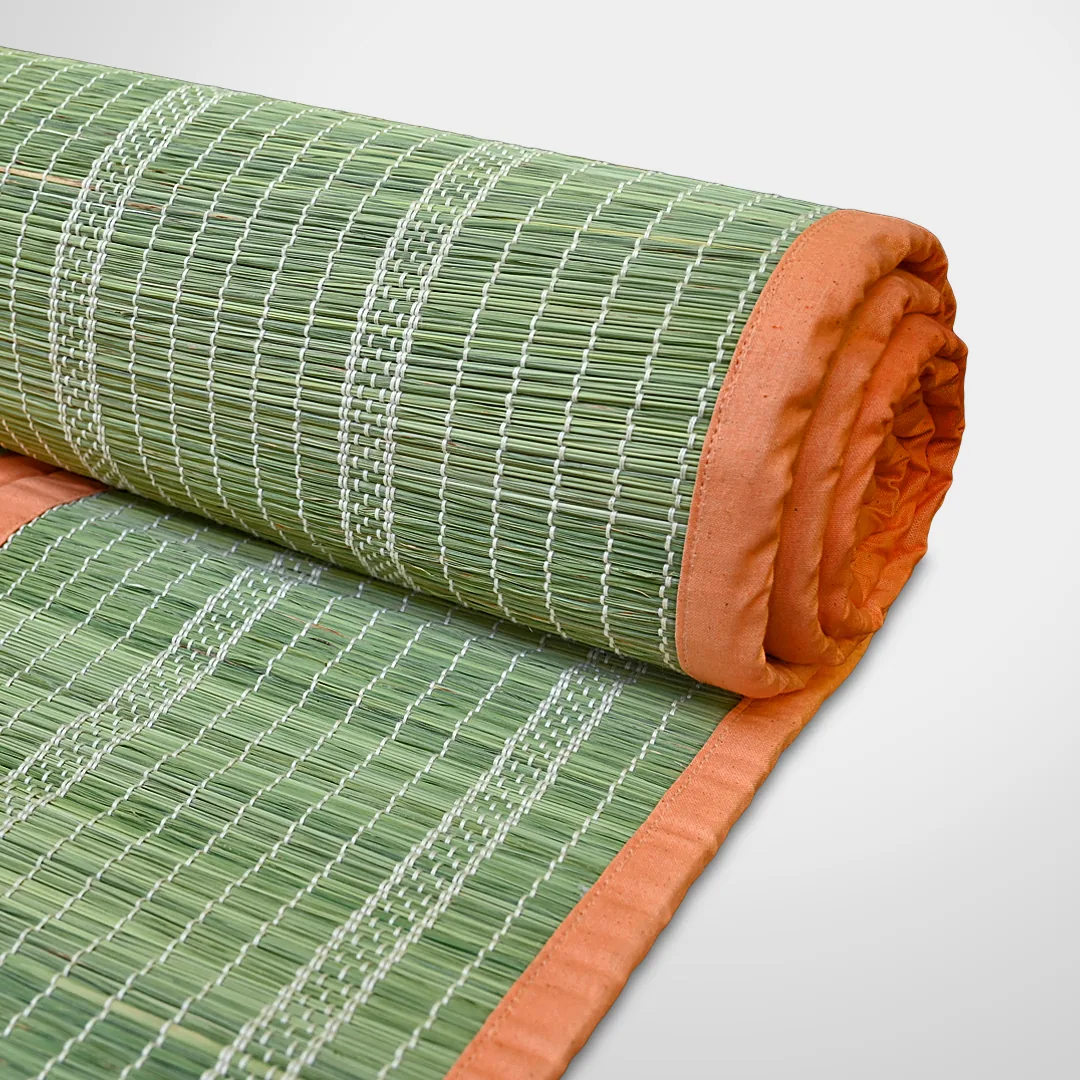
The Darbha is woven from darbha (kusha) grass in three panels, bound in orange cotton and backed in cotton cloth. It is about 4 mm thick, 183 × 90 cm and about 1.2 kg. The 90 cm width suits a cross-legged seat with the knees wide, and the mat folds flat along its panels for storage. It has no latex layer. Wipe it with a damp cloth, air it in shade and keep it dry. At the time of writing it costs ₹4,999.
Banana Fibre: undyed, firm, light
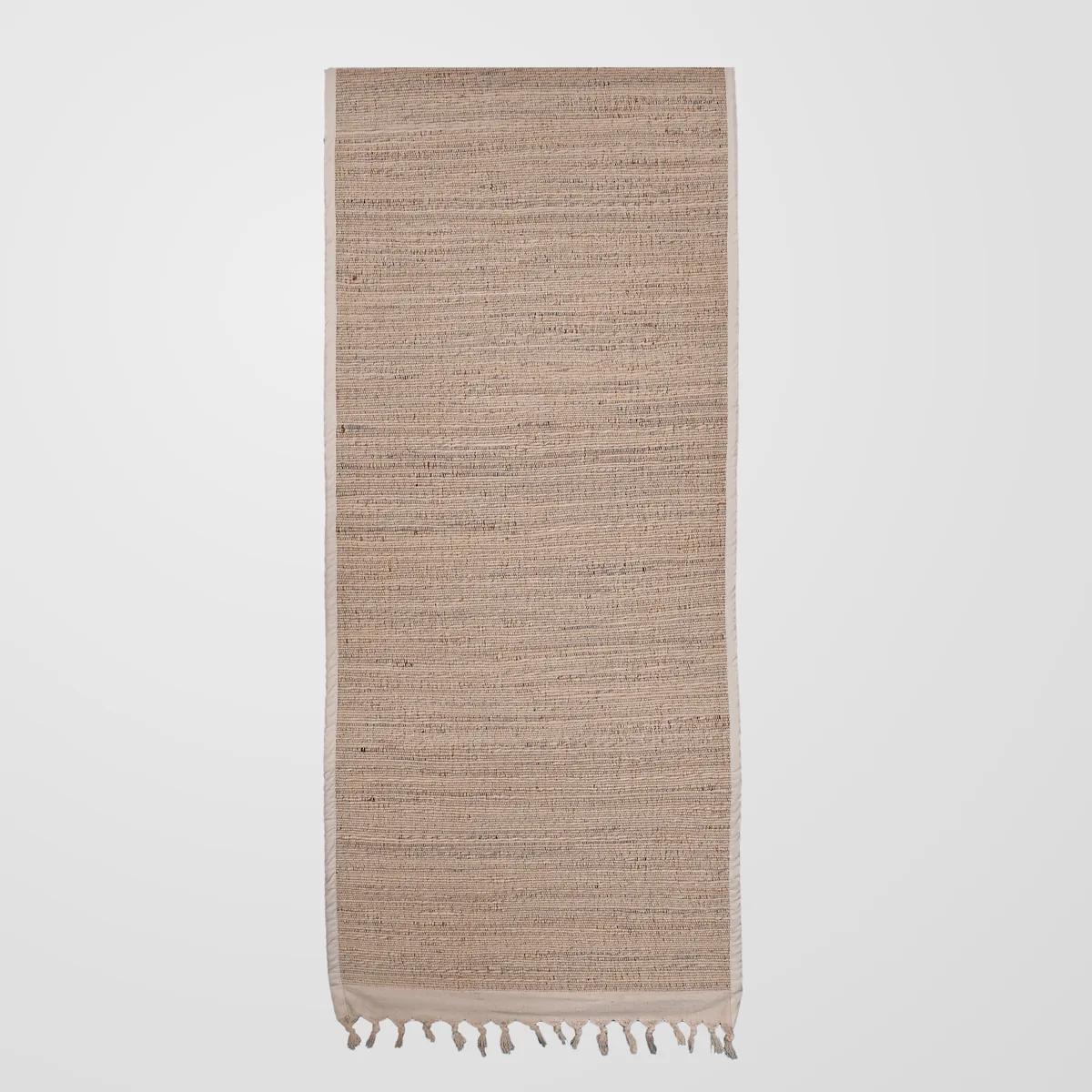
The Banana Fibre mat is woven from banana bark and fibre, bound with cotton, 3 mm thick, 183 × 68.5 cm and about 1 kg. It is undyed, with a slightly coarse, earthy texture. A thin layer of natural tree latex on the underside holds it to tile, marble and wood. Wipe it with a damp cloth; never soak it. At the time of writing it costs ₹2,000. If you are allergic to natural latex, choose with care and write to us first.
Sambu Frame: grass and cotton, the lightest on the purse
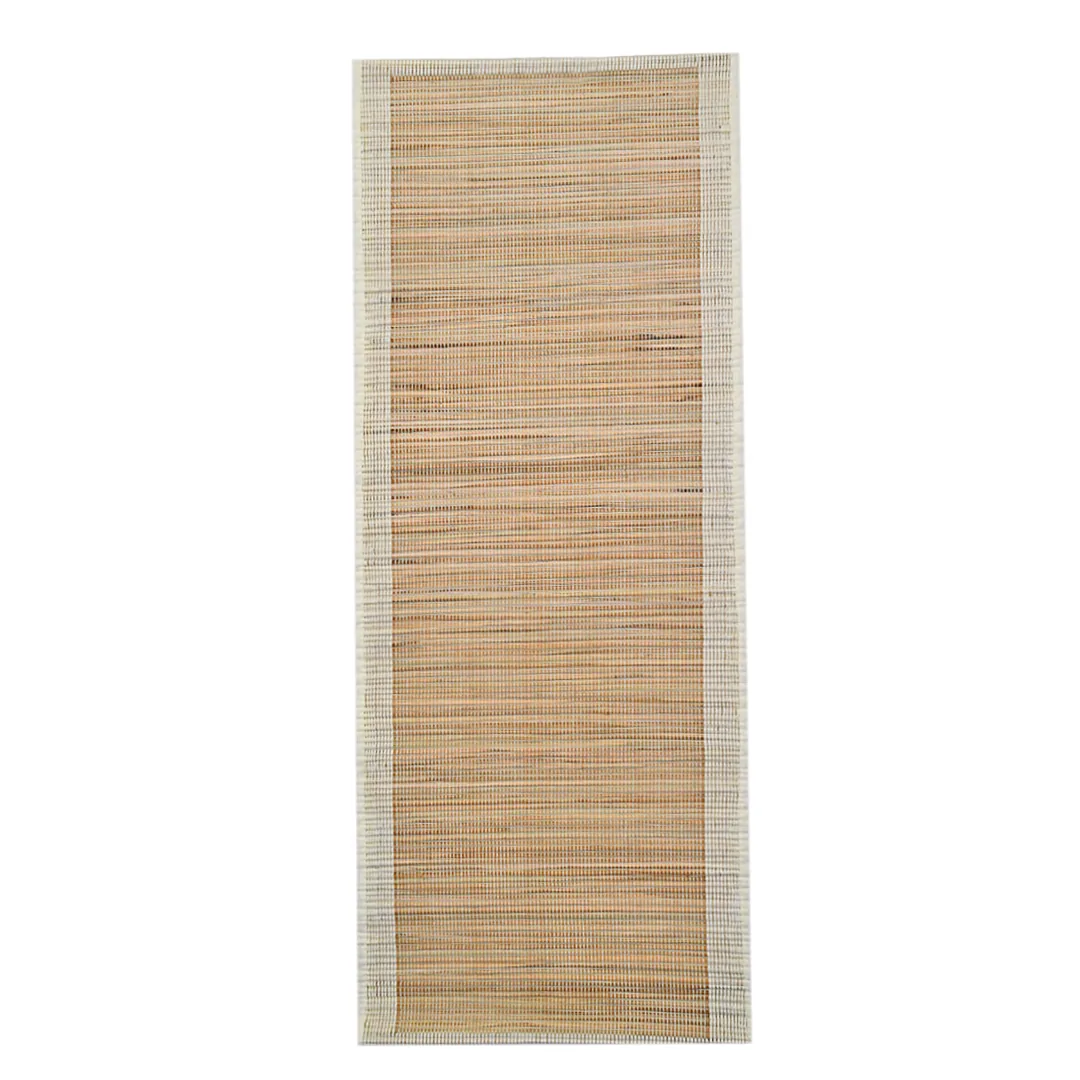
The Sambu Frame is sambhu grass woven with GOTS-certified organic cotton, 3 mm thick, 183 × 68.5 cm and about 1 kg, in a tan field framed by a paler border. The cotton in the weave gives it a smoother face than pure grass, so it suits moving between seated breathing and gentle asana on the same mat. It has the natural latex grip layer underneath. At the time of writing it costs ₹1,799.
Which seat suits you
| Darbha | Banana Fibre | Sambu Frame | |
|---|---|---|---|
| Fibre | Darbha grass, cotton-backed | Banana bark and fibre, cotton-bound | Sambhu grass with organic cotton |
| Thickness | ≈4 mm | 3 mm | 3 mm |
| Size | 183 × 90 cm | 183 × 68.5 cm | 183 × 68.5 cm |
| Weight | ≈1.2 kg | ≈1 kg | ≈1 kg |
| Underside | Cotton cloth, no latex | Natural latex | Natural latex |
| Storage | Folds flat | Rolls | Rolls |
| Also for asana? | Gentle only | Gentle only | Yes, gentle to moderate |
| Price at the time of writing | ₹4,999 | ₹2,000 | ₹1,799 |
Cushion height and placement
Sit on the front third of a firm cushion or a blanket folded to about the height of a fist, so the hips are higher than the knees. Place it in the middle of the mat so the knees and ankles rest on the grass, not the floor. If the knees stay high, use a thicker cushion rather than forcing them down. A mat and cushion are comfort, not treatment; if you have a knee, hip or back condition, ask your teacher or doctor what seat suits you.
Frequently asked questions
Should a pranayama mat be thick or thin?
Thin and firm. A soft mat lets the pelvis sink and rock, so the spine has to work to stay long. Sit on a firm grass or fibre mat and get your height from a cushion or folded blanket placed on top, with the hips above the knees.
Which is cooler to sit on, grass or cotton?
Grass. Darbha, sambhu and banana fibre feel cool against the skin and let air move through the weave, which matters when the legs are folded for a long time in a warm room. Cotton is warmer and is the better choice in winter or on a cold floor.
Does the darbha mat have a latex grip layer?
No. The Darbha is backed in cotton cloth and folds flat, so there is no latex on it. Our banana fibre and sambhu grass mats do have a thin layer of natural tree latex brushed onto the underside. If you are allergic to natural latex, choose with care and write to us first.
If you sit every morning, the Darbha is the seat we would start with; for a lighter purse, the Sambu Frame. All three are in our meditation collection.