A grass mat helps meditation posture because it is firm, flat and does not move. With a cushion placed on top so the hips sit a little higher than the knees, the pelvis can tilt forward, the spine stacks without effort, and the mat keeps the chill of the floor off your legs. Soft surfaces let the hips sink and the back round; a firm seat does the opposite. That is the plain reason seats of grass and cloth have been used for sitting practice for a very long time.
What a good seat does
Ask most meditation teachers how to sit and the first thing they check is the height of the hips. When the hips are above the knees, the thighs slope down, the knees can rest towards the floor, and the lower back keeps its natural curve. When the hips are level with or below the knees, as they are for most people sitting flat on the floor, the pelvis tips back and the back rounds within minutes.
A seat, then, has two jobs: raise the hips, and give a stable base that does not shift as you settle. The cushion does the raising. The mat does the base, and three more things besides: it insulates from a cold or hot floor, it marks a place, and it keeps the cushion from sliding.
We are weavers, so we will stop short of telling you how to sit. Your teacher can see your back; we cannot. If any position hurts, change it.
Why firm and cool
Firm
A soft, thick mat feels kind for the first minute and then lets the hips sink unevenly, so the body works to stay upright. A thin, dense mat such as woven grass gives a level base under the cushion and under the knees, and it does not rock when you adjust.
Cool
Sitting still for twenty or forty minutes on a stone floor in a South Indian house, you notice the floor: cold in the early morning, warm by afternoon. A grass mat puts a layer of dry plant fibre between you and the stone, and it breathes, so the legs do not sweat against it the way they can on rubber or foam.
Quiet
This is a small thing that matters in a long sit. Grass and cotton make no sound and have no smell. New foam and rubber have both.
The tradition of the grass seat
Darbha, also called kusha, is the grass Desmostachya bipinnata. The Bhagavad Gita describes a meditation seat "covered with cloth, and antelope skin, and kusha grass", and in Buddhist tradition it "was the material used by Buddha for his meditation seat" (Wikipedia). In Tamil Nadu it is still spread for ritual and for sitting. We describe this as tradition, which it is; we make no claims about what the grass does beyond being firm, cool and quiet under you. Our article on darbha and kusha grass has more on the plant and how we weave it.
Setting up a seat on a grass mat
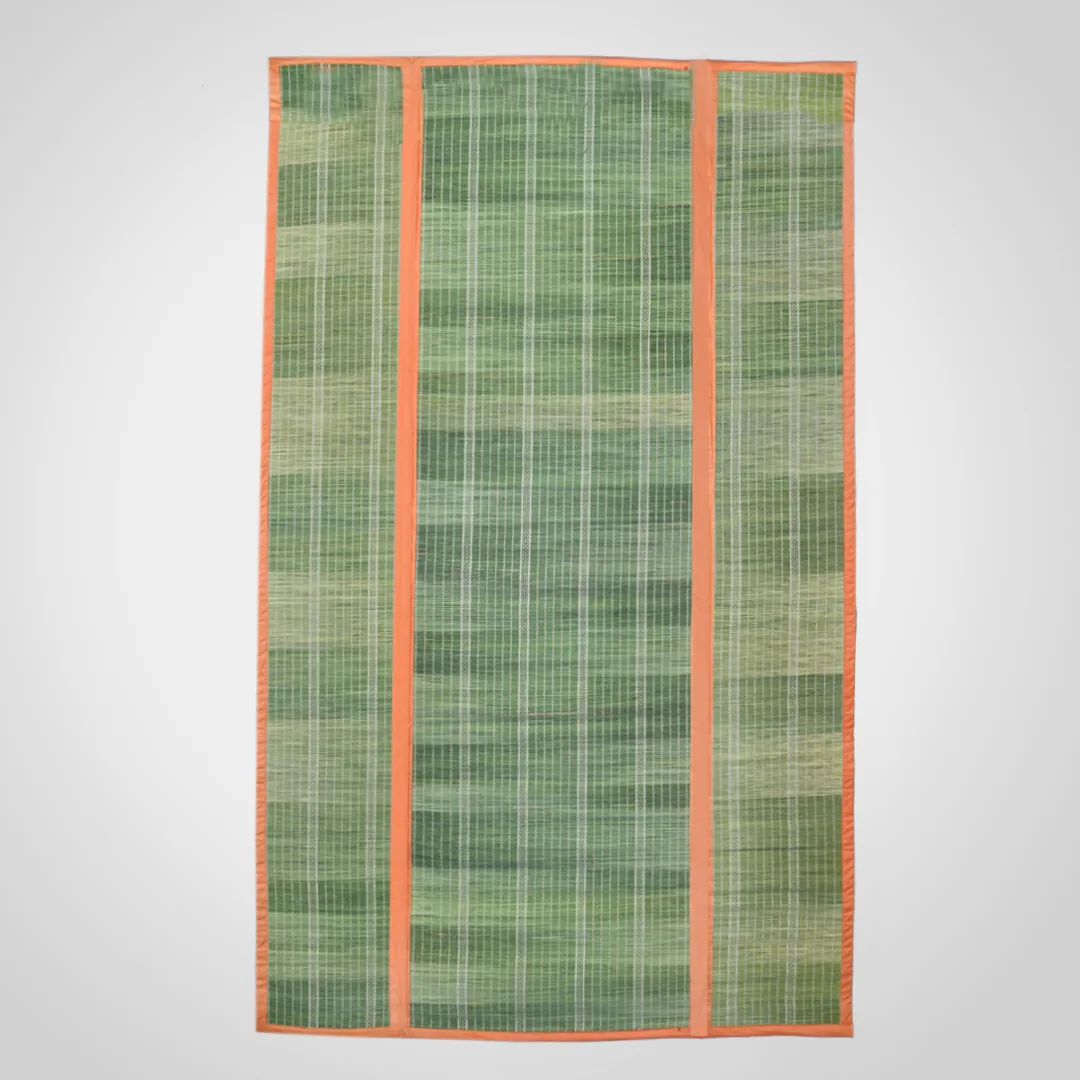
- Lay the mat on a clean, level floor. For the Darbha, unfold it along its three panels and smooth the seams flat.
- Place a firm cushion, folded blanket or wooden block at one end, so you can sit on the front third of it with the knees on the mat.
- Sit, and check: are the hips above the knees? If not, add height. A second folded blanket is fine.
- Let the knees settle towards the mat. If they float, that is your flexibility today, not a fault; a rolled blanket under each knee is a common support. Ask your teacher.
- Put the hands where your tradition puts them, and begin.
Darbha or banana fibre
| Darbha | Banana Fibre | |
|---|---|---|
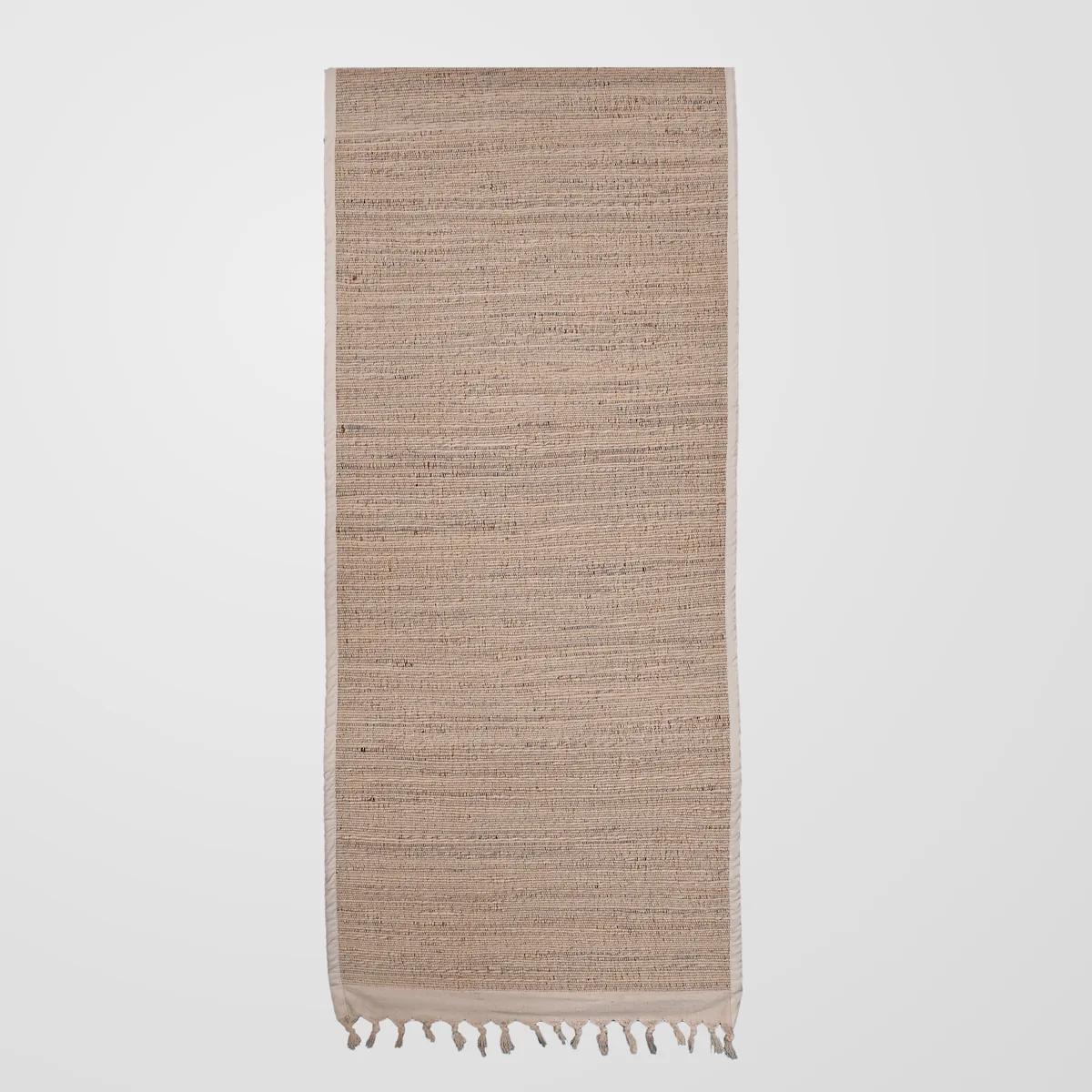
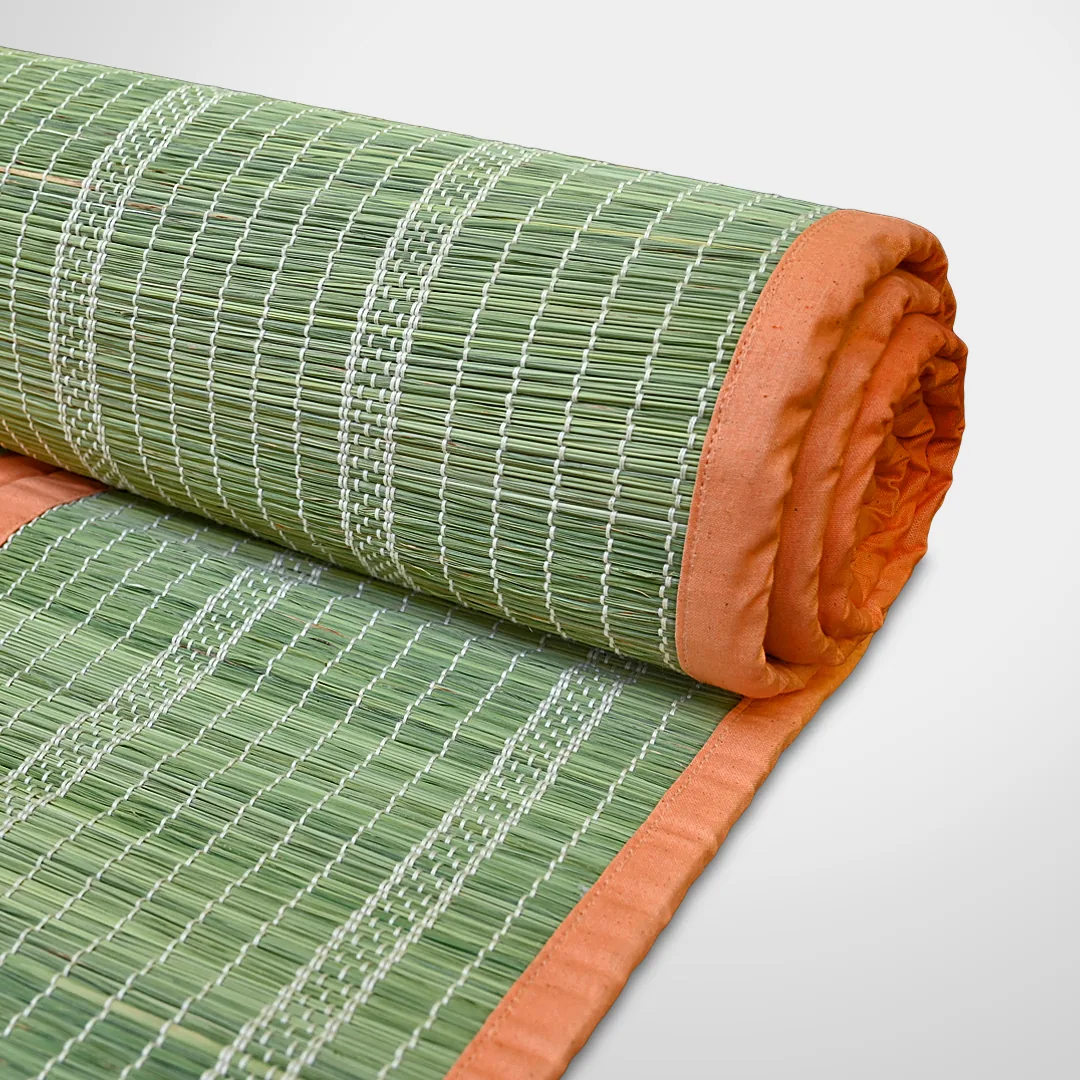
| Fibre | Darbha grass in three panels, backed in cotton cloth | Banana bark and fibre, cotton-bound |
| Thickness | ≈4 mm | 3 mm |
| Size | 183 × 90 cm | 183 × 68.5 cm |
| Weight | ≈1.2 kg | ≈1 kg |
| Underside | Cotton cloth; no latex layer | Thin natural tree latex layer |
| Storage | Folds flat | Rolls |
| Care | Wipe, air in shade, keep dry | Shake, wipe with a damp cloth, never soak |
| Price (at the time of writing) | ₹4,999 | ₹2,000 |
The Darbha is the wider of the two at 90 cm, which gives room for the knees in a cross-legged seat without them hanging off the edge, and it folds for a shelf or a bag. It is backed in cotton cloth, not latex, so it rests on the floor by its own weight and flatness; on a very smooth floor set it against a wall or on a rug. The Banana Fibre is undyed and a little narrower, with a textured surface that feels pleasantly rough under the ankles, and a thin layer of natural tree latex brushed onto the underside to hold it on tile or wood. If you are allergic to natural latex, choose with care and write to us first.

For a fuller comparison, including cotton for colder floors, see best meditation mat. If your seat is also for breathing practice, our note on seating for pranayama adds a few points about height.
Frequently asked questions
Should the hips be higher than the knees for meditation?
Most teachers suggest it. With the hips a little above the knees the pelvis can tilt slightly forward and the spine stays upright with less effort; with the hips level or lower, the back tends to round. Use a firm cushion or folded blanket on top of the mat to get the height, and ask your teacher to check your seat.
Why use a firm mat rather than a soft one for meditation?
A firm, thin mat gives a level base that does not shift or sink unevenly, so you are not using effort to stay upright. The cushion on top provides the lift; the mat provides stability, insulation from the floor and a clean place to sit. Soft, thick mats feel comfortable at first but let the hips sink.
Is darbha grass traditional for meditation?
Yes. Darbha or kusha grass, Desmostachya bipinnata, is named in the Bhagavad Gita as part of a meditation seat and in Buddhist tradition as the grass the Buddha sat on, and it is still spread for ritual and sitting in Tamil Nadu. We describe this as tradition and do not claim effects beyond the grass being firm, cool and quiet.
Can I use a yoga mat for meditation instead?
You can; any clean, level surface works. A thin firm mat is easier to sit on than a thick soft one, and a cushion on top matters more than the mat does. Grass mats are cool and quiet for long sits; a cotton rug is warmer on a cold floor.
If you are setting up a place to sit, start with the Darbha and a cushion you already own; the rest of our meditation collection is here when you want it.