For pranayama you want a seat that keeps the spine upright and the belly and ribs free to move, with no effort going into staying up. In practice that means a firm, thin mat on a clean floor and a cushion or folded blanket on top, high enough that the hips sit a little above the knees. The mat gives a steady base and keeps the floor's cold off the legs; the cushion gives the height. Most of what matters is the height.
Why the seat matters more in pranayama
Pranayama is the fourth of the eight limbs set out in Patanjali's Yoga Sutras (verse 2.29), and the word joins prana, breath, with ayama, which carries the sense of restraint or control (Wikipedia). Asana, the seat or posture, is the limb before it. Whatever else that order means, it is practical: breathing practice is done sitting, often for some time, and a seat that collapses takes the breath with it.
When the hips are low and the pelvis tips back, the lower ribs drop towards the belly and the breath shortens. When the hips are lifted and the spine stacks, the ribs can widen and the belly can move. You feel this within a few breaths if you try both. Your teacher will show you the practices themselves; we only make the thing you sit on, so ask them about technique, duration and whether a practice suits you.
Getting the height right
| Your seat | What usually happens | Try |
|---|---|---|
| Flat on the mat | Knees above hips, back rounds | Add a cushion |
| Cushion, knees still floating | Hips lifted but knees unsupported | Raise the cushion, or a rolled blanket under each knee |
| Hips above knees, knees resting | Spine upright with little effort | This is it |
| Very high cushion | Lower back over-arches | Lower it a little |
Firm cushions hold their height; soft pillows sink and need re-stacking. A folded blanket is the most adjustable thing in the house, because you can add or remove a fold. A low wooden bench works for kneeling seats.
What the mat adds
The mat is not for cushioning. It gives a level, unmoving base for the cushion and the knees, keeps the cold or heat of the floor off the legs, and marks a place. For pranayama we would choose a thin, firm mat over a thick soft one every time.
Darbha
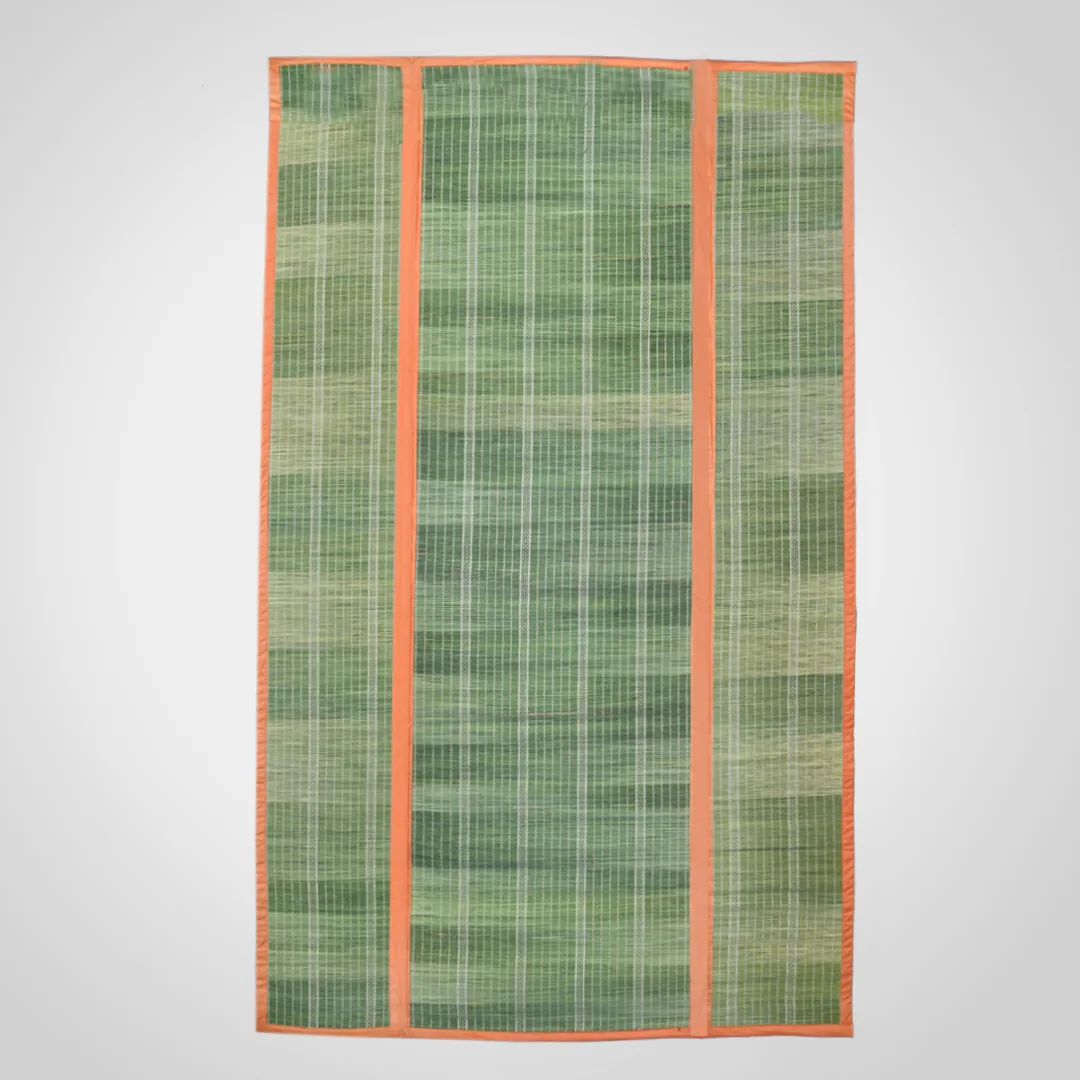
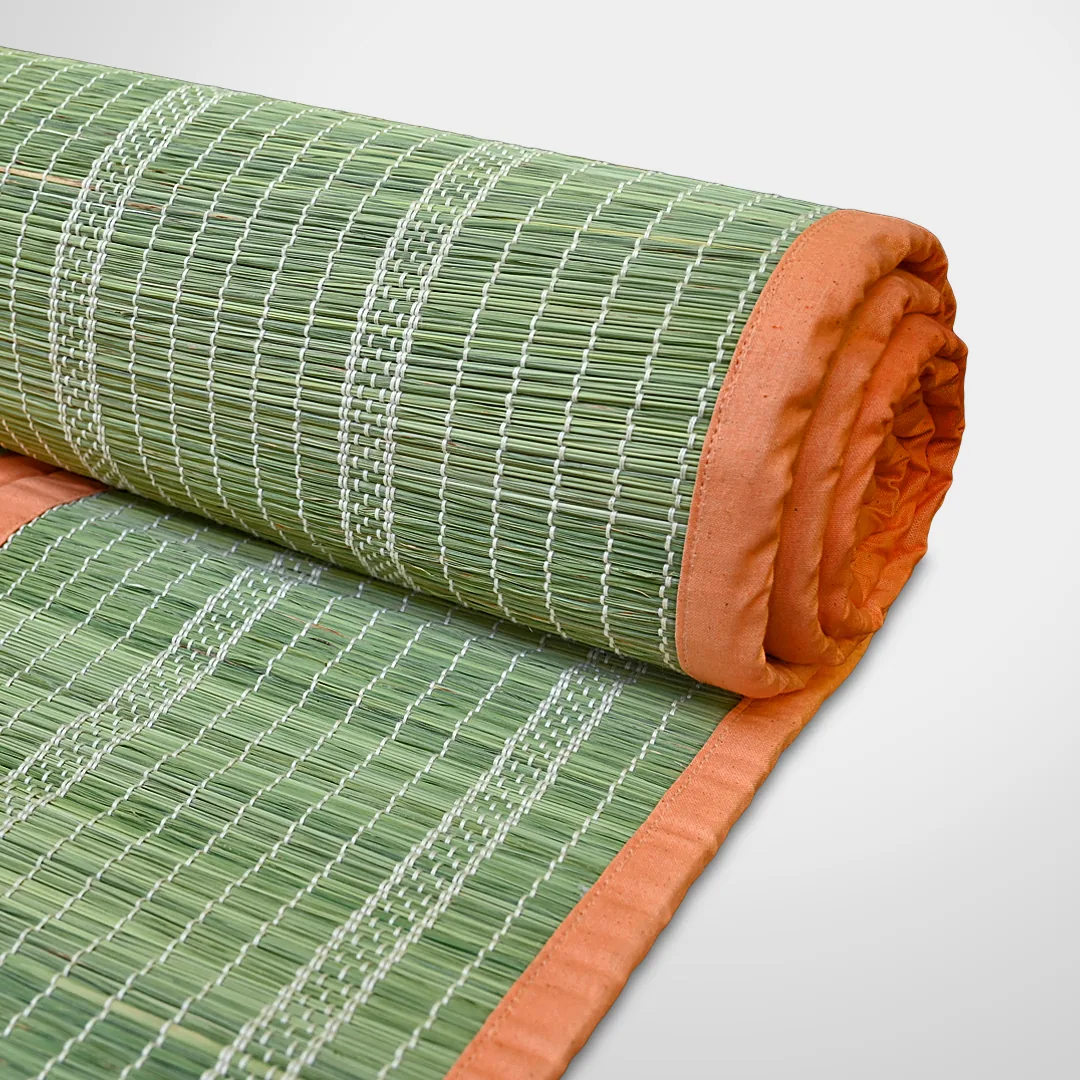
The Darbha is darbha (kusha) grass woven in three panels, bound in orange cotton and backed in cotton cloth, 183 × 90 cm and about 4 mm thick. The width is generous for a cross-legged seat. It folds flat, so it can live on a shelf between sittings. It has no latex layer; it stays put by lying flat on a clean floor. Wipe it clean, air it in shade and keep it dry. Darbha grass is traditionally spread for ritual and sitting in Tamil Nadu, and our article on meditation posture on a grass mat says more about that tradition.
Sambu Frame
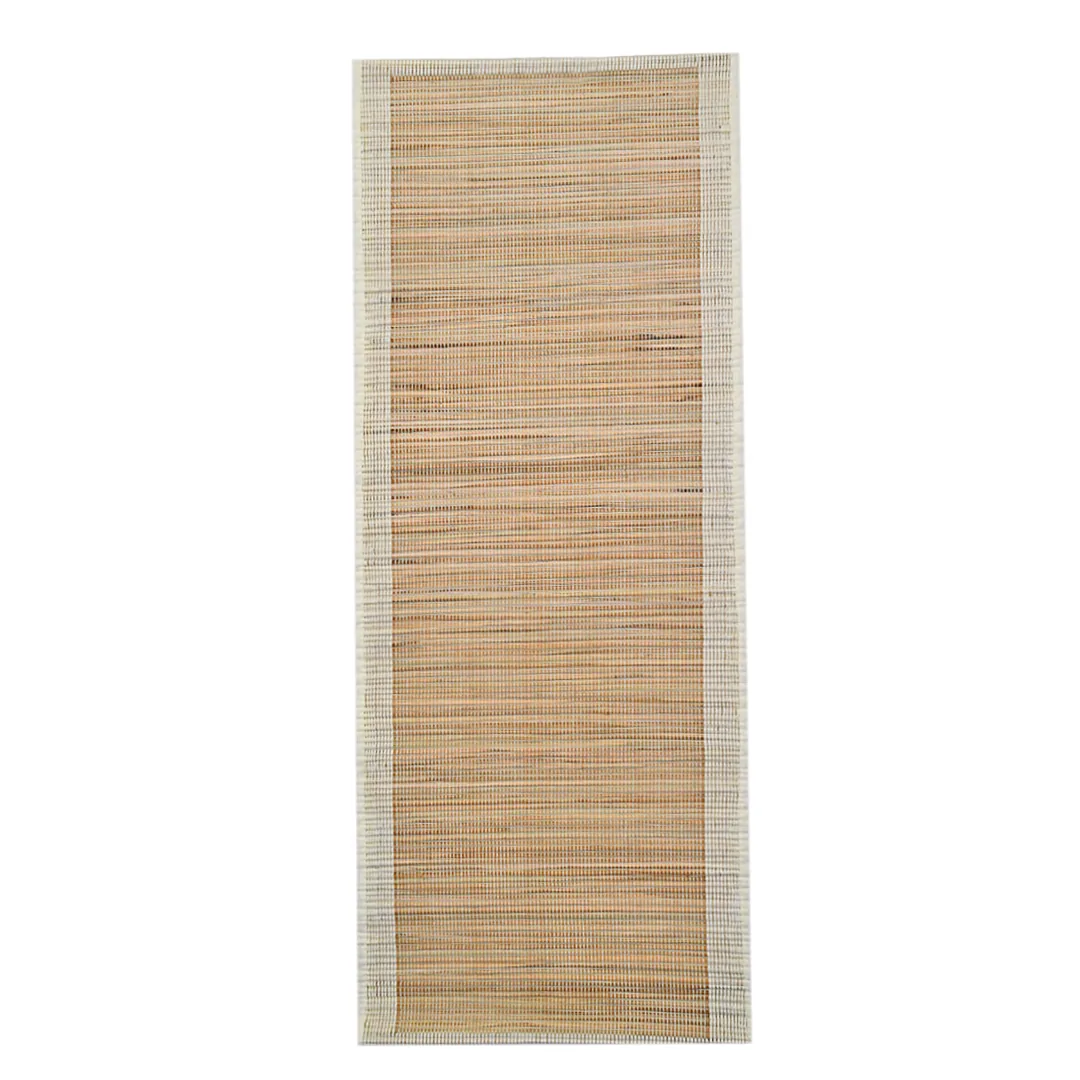
The Sambu Frame is sambhu grass woven with GOTS-certified organic cotton, 3 mm thick, 183 × 68.5 cm and about a kilo, with a tan field and a paler border, the pattern our weavers call the TV frame. Grass stays cool against the skin, which is welcome in a long sit in summer. It has a thin layer of natural tree latex brushed onto the underside so it holds on tile and wood. Shake it out, wipe with a damp cloth, never soak. If you are allergic to natural latex, choose with care and write to us first.

For the full range of seated options, including cotton on cold floors, read best mat for pranayama and seated practice.
A simple setup
- Sweep the floor and lay the mat flat.
- Place the cushion or folded blanket at one end.
- Sit on the front third of it, knees on the mat, and check that the hips are above the knees.
- Adjust the height until the spine is upright without you holding it there.
- Begin as your teacher has shown you.
Frequently asked questions
How high should the cushion be for pranayama?
High enough that your hips sit a little above your knees and your spine is upright without effort, and no higher. For most people that is one firm cushion or a blanket folded a few times; if the knees float, add a little height or support them. Too high and the lower back over-arches.
Do I need a special mat for pranayama?
No. You need a firm, level, clean surface and a cushion for height. A thin grass or cotton mat does the job well because it does not sink, it keeps the floor's cold off the legs and it marks a place to sit; a thick soft mat is harder to sit on.
Can I do pranayama sitting on a chair?
Many teachers teach it that way for people who cannot sit comfortably on the floor: feet flat, spine upright, hips a little above the knees. The same principle applies as on a mat. Ask your teacher what suits you.
Which TwinsPoles mat suits pranayama best?
The Darbha, if you want the traditional grass seat, the width of 90 cm and a mat that folds for storage. The Sambu Frame if you want something lighter and cooler at about a kilo, with a natural latex layer underneath to hold it on tile. Both are firm and thin, which is what a seat needs.
If you already own a cushion, the Darbha is all the mat you need; the whole meditation collection is here otherwise.