A jute yoga mat gives you a coarse, firm, slightly scratchy surface that is usually bonded to a thin layer of foam or rubber; a cotton yoga mat gives you a softer woven surface that takes up sweat, grips better as it dampens and can be washed. If you want a mat you can wash and use for sweaty or floor-based practice, choose cotton. If you want a very firm, cool, textured surface and are happy to wipe rather than wash, jute is a fair choice, though ask what the backing is made of.
One thing to clear up first: our Sambu Jute contains no jute; the name is historical. It is sambhu grass woven with organic cotton, and we come back to it below.

What jute is, and what a jute mat usually is
Jute is a bast fibre taken from the stem of plants in the genus Corchorus. It is "a long, rough, shiny bast fibre" that is "spun into coarse, strong threads", and India is the world's largest producer (Wikipedia: Jute). It is the fibre of sacking and hessian: strong, textured and not soft under bare feet.
Because woven jute on its own is thin and does not cushion, most jute mats sold for yoga bond a layer of jute to a foam or rubber backing. The backing gives the mat its thickness, cushioning and grip on the floor; the jute is only the surface you touch, and the label often names the backing with a trade term rather than a plain material. Ask the seller what it is made of and whether the mat can be washed. We go into this in Jute yoga mats: pros, cons and the PER-backing question.
What a woven cotton mat is
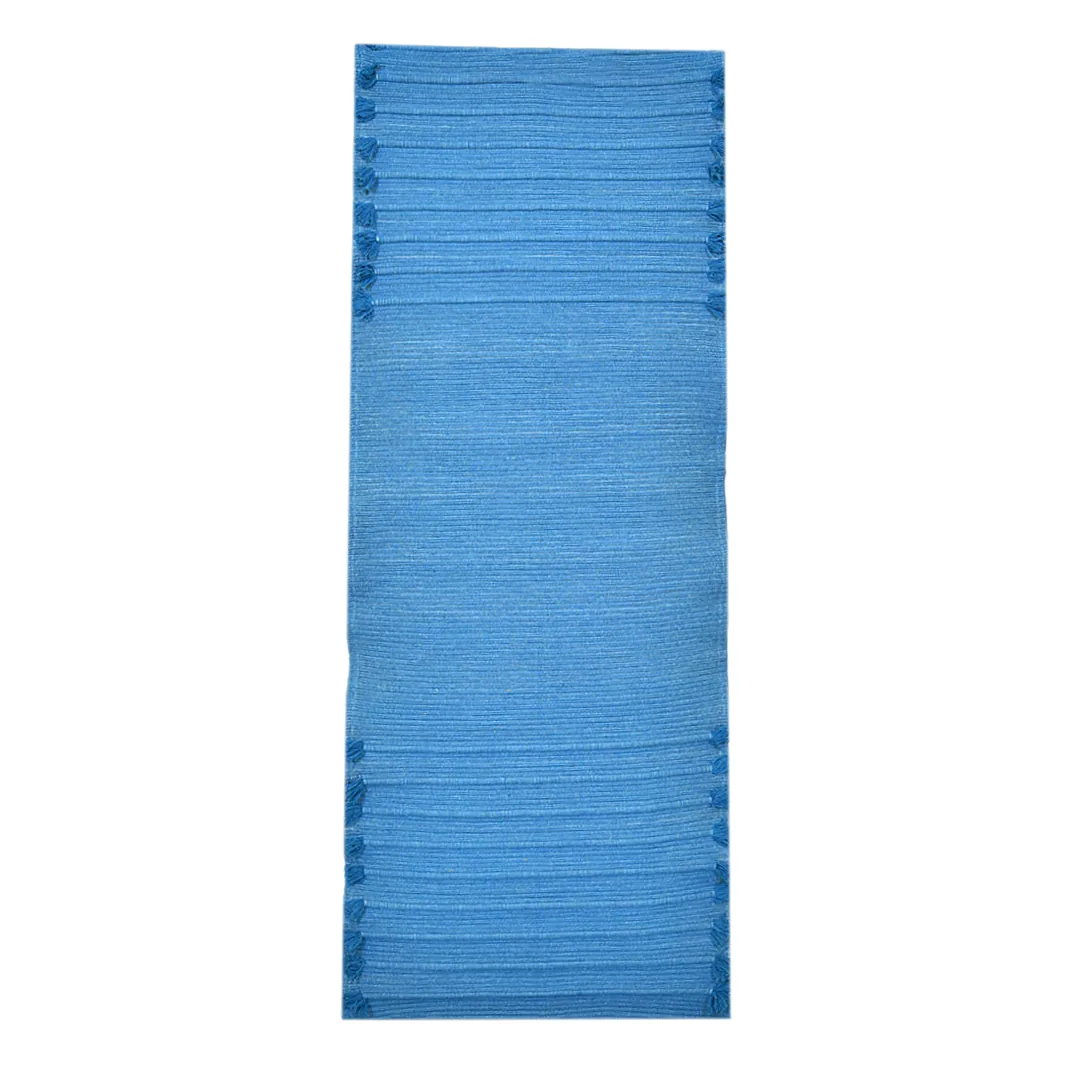
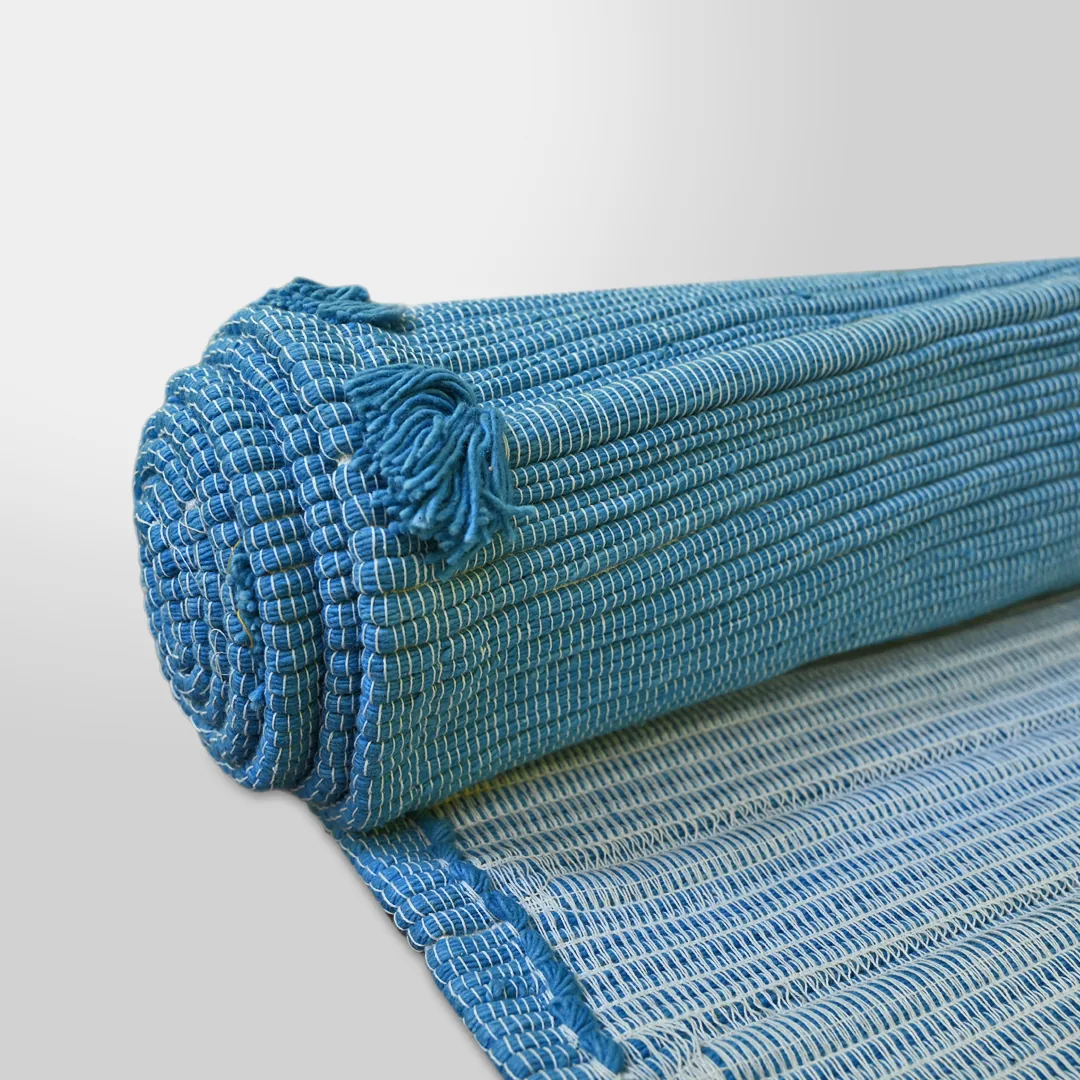
Our cotton mats are handwoven on handlooms in Komarapalayam from GOTS-certified organic cotton; GOTS covers the organic fibre and its processing chain (Global Standard: GOTS). Indico is the plainest example: 5 mm of ribbed, indigo-dyed cotton, 183 × 68 cm, about 1.4 kg, with a thin layer of natural tree latex brushed by hand onto the underside so the mat holds on tile, marble and wood. If you are allergic to natural latex, choose with care and write to us first.
Cotton has one habit worth knowing: bone dry, it can feel slippery under dry palms for the first few minutes, until your hands warm and dampen and the weave holds. In return it absorbs sweat, and when it gets grubby you wash the whole mat.
Cotton vs jute: side by side
| Woven cotton (Indico) | Typical jute yoga mat | |
|---|---|---|
| Surface feel | Soft, ribbed, warms under you | Coarse and textured; can feel scratchy on bare skin |
| Grip for hands | Improves as palms dampen; slippery when bone dry | Texture gives grip from the start; depends on finish |
| Grip on floor | Natural latex layer on the underside | Usually the foam or rubber backing |
| Cushioning | 5 mm of dense weave; firm, not spongy | Depends entirely on the backing |
| Sweat | Absorbed into the fibre | Sits on the surface or soaks the backing |
| Washing | Hand wash cold, dry flat in shade | Usually wipe only; backing may not take soaking |
| Weight | About 1.4 kg | Varies with the backing |
| Price (ours, at the time of writing) | ₹4,499 | Varies widely |
Where jute does better
Jute's texture gives a grip you feel the moment you step on it, with no warm-up, and jute mats are often lighter than a cotton rug of the same size. If you like a hard, cool, textured surface and do not sweat much, a jute mat does the job, and one bonded to a thick backing can be more cushioned than a cotton rug on its own.
Where cotton does better
Cotton wins on sweat and on washing. A hot or Mysore-style practice soaks a mat; cotton takes it up and dries, and you can hand wash the whole thing (see How to wash a cotton yoga mat). It is kinder to bare skin in seated and lying poses, and because it is one woven fibre with a thin latex coat rather than a laminate, there is no backing layer to peel away over the years.
If you want a plant-fibre surface without jute
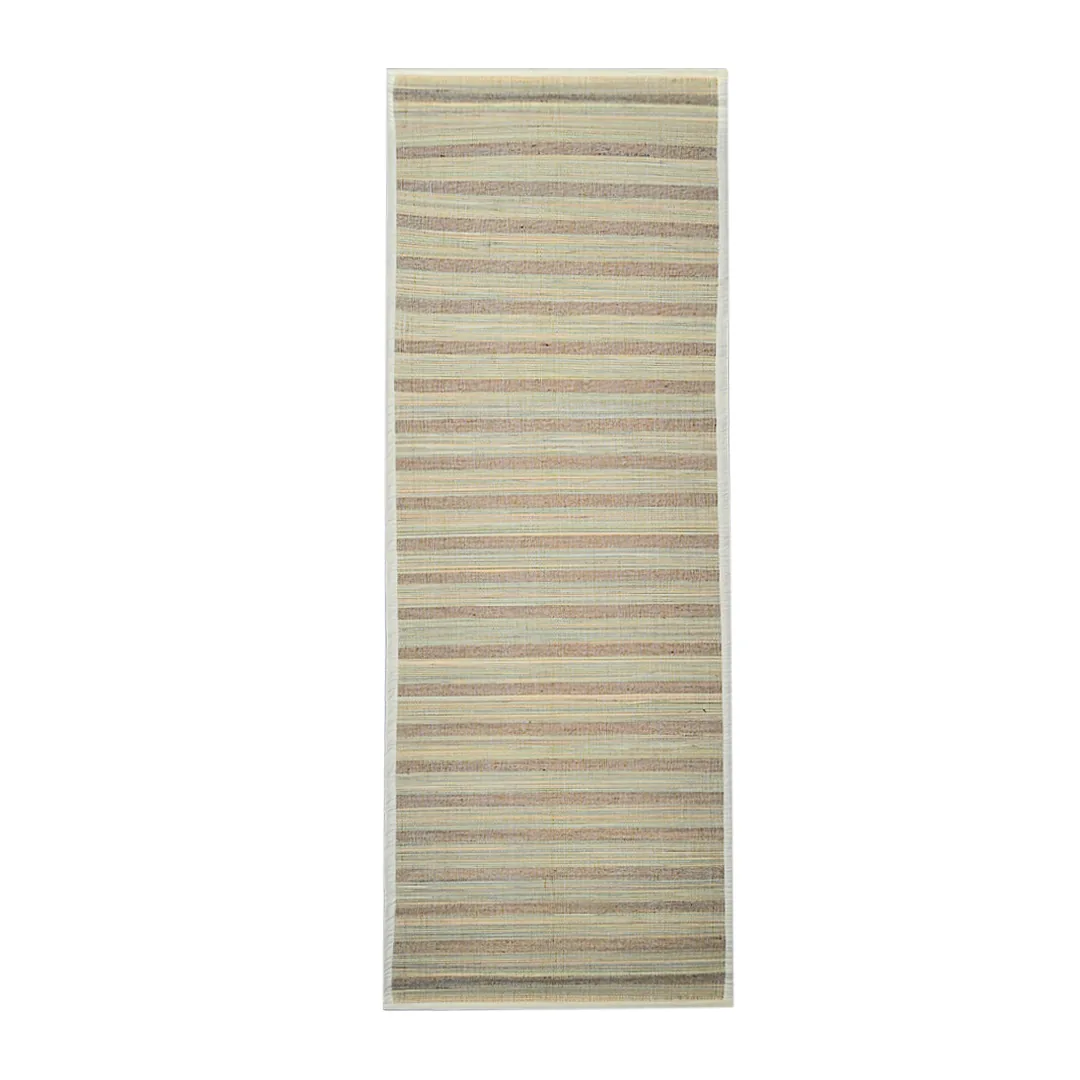
Our Sambu Jute is sambhu grass woven with organic cotton, with no jute in it, finished with fine plant-dyed stripes and cream cotton binding: 3 mm thick, 183 × 68.5 cm, about 1 kg, and ₹1,699 at the time of writing. It gives the firm, cool, textured feel people go to jute for, held together with cotton rather than foam, with the same natural latex grip underneath. Care is by wiping: shake it out, wipe with a damp cloth, air in shade, and never soak or machine wash it.
Frequently asked questions
Is a jute yoga mat better than a cotton one?
Neither is better in every case. A jute mat gives a firm, coarse, textured surface with grip you feel immediately, but most jute yoga mats are bonded to a foam or rubber backing and are wipe-clean only. A woven cotton mat is softer, absorbs sweat, grips better as your palms dampen and can be hand washed. Choose jute for a hard textured feel and low sweat; choose cotton for sweaty practice, floor work and washability.
Does the TwinsPoles Sambu Jute mat contain jute?
No. The name is historical. Sambu Jute is sambhu grass woven with organic cotton, finished with cream cotton binding and a thin natural tree latex layer underneath. It has the firm, cool texture people look for in a jute mat, with no jute fibre in it.
Can you wash a jute yoga mat?
It depends on the backing, and that is the first question to ask the seller. Jute fibre itself can be wiped and aired, but the foam or rubber layer most jute yoga mats are bonded to may not tolerate soaking. Our cotton mats can be hand washed cold and dried flat in shade; our grass mats, including Sambu Jute, should be shaken out, wiped and aired, never soaked.
Next step
If you want washable cotton, start with Indico. For a firm plant-fibre surface at a lower price, Sambu Jute. Every mat we weave is at the collection.